
Gravity Defying Ball: Exploring Breakthroughs in Soft Matter Physics and Passive Locomotion
Gravity Defying Ball: Exploring Breakthroughs in Soft Matter Physics and Passive Locomotion https://torontostarts.com/2025/08/06/gravity-defying-ball-soft-matter/ Apple -> https://podcasts.apple.com/us/podcast/flowgrammer-podcast/id1804155588 Spotify -> https://open.spotify.com/show/0wv3feR00iaVpE8zn7niNf Flowgrammer.ca -> https://flowgrammer.ca/ AI News and Resources -> https://flowgrammer.ca/resources/ Unlock Hidden Efficiencies If researchers can defy gravity with a gummy bear, imagine what automation can do for your business! Stop leaving money on the table with inefficient processes. Transform your business today. Discover Your Automation Potential https://flowgrammer.ca/ Startup Investor Drinks Toronto - https://startupdrinksto.com/ Toronto’s Startup Community - https://torontostarts.com/ Silicon Scoop Silicon Scoop Podcast - https://torontostarts.com/silicon-scoop/ Apple: https://podcasts.apple.com/us/podcast/silicon-scoop/id1758711826 Spotify: https://open.spotify.com/show/5bAzF0MwV6TtLhJAhvHayI YouTube: https://www.youtube.com/playlist?list=PLj4v-RoA7A-gT62vrEYqh1zCv-0Hj-o5J Startup Talk Startup Talk Podcast -> https://torontostarts.com/startup-talk-toronto-startup-podcast/ Apple -> https://podcasts.apple.com/us/podcast/startup-talk/id1763804003 Spotify -> https://open.spotify.com/show/1siJMILILidHAiAsrX2VBU YouTube: https://youtube.com/playlist?list=PLj4v-RoA7A-jxV5FHs5e61oIsuvUJYmT_&si=LYegRe5GYLKNQ7xL
With Craig Major and Jon Irwin
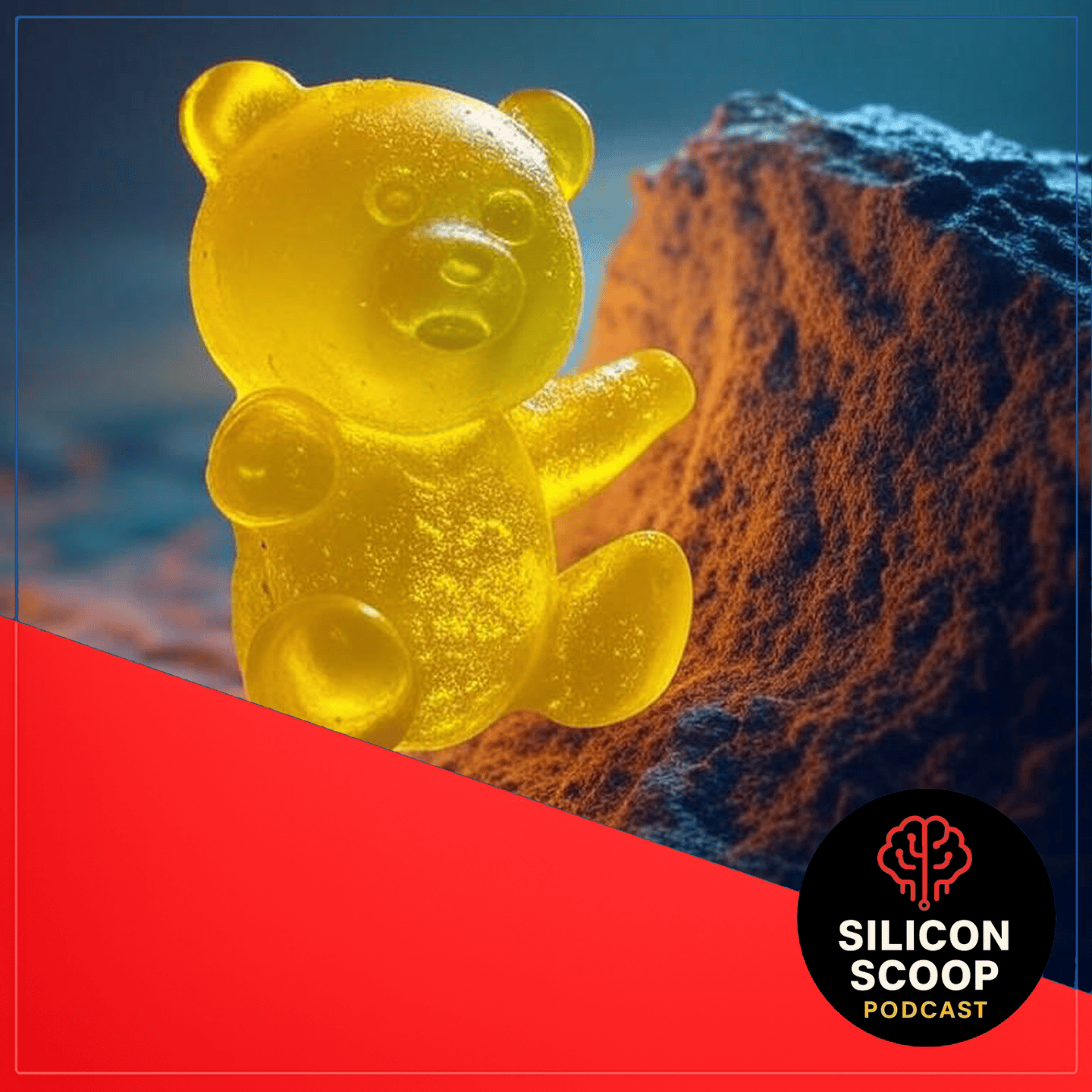
Gravity Defying Ball: How Soft Matter Physics is Revolutionizing Passive Locomotion
Estimated reading time: 10 minutes
A Revolutionary Discovery That Challenges Everything We Know
Imagine a small ball rolling uphill without any motor, battery, or external force pushing it. This sounds like magic, but researchers at the University of Waterloo have made this gravity defying ball a reality through groundbreaking work in soft matter physics.
The team has observed a pea-sized sphere with a gummy-bear texture that climbs up walls using nothing but passive locomotion. This incredible elastic ball experiment challenges everything we thought we knew about physics.
Using high-speed cameras, scientists confirmed that this remarkable ball moves upward at approximately 0.5mm per second. The secret lies in combining asymmetric adhesion with torque generation in ways that were previously thought impossible.
This breakthrough in University of Waterloo physics research was announced between June 2-4, 2025, and represents a fundamental shift in our understanding of how objects can move without external power sources.
Unlock Hidden Efficiencies
If researchers can defy gravity with a gummy bear, imagine what automation can do for your business! Stop leaving money on the table with inefficient processes. Transform your business today.
Discover Your Automation Potential https://flowgrammer.ca/
Understanding Soft Matter Physics and Its Revolutionary Applications
What is Soft Matter Physics?
Soft matter physics focuses on materials that can be easily changed in shape. These materials include gels, foams, and flexible plastics. In this experiment, the deformable surface plays a key role in making the impossible possible.
Unlike hard materials like steel or concrete, soft materials can bend and stretch. This flexibility creates new opportunities for movement that scientists are just beginning to understand.
Breaking Classical Physics Limitations
Traditional physics tells us that objects need friction to climb upward. But friction requires something called “normal force” – the push between two surfaces.
On vertical walls, this normal force is usually zero. Without it, there should be no friction and no way to generate the spinning motion (torque) needed to climb upward.
The University of Waterloo physics team has proven this limitation wrong. Their research shows how elasticity can “defeat zero-normal-force limitations” through clever material interactions.
The Science Behind Passive Locomotion
Passive locomotion means movement without any external power source. The ball doesn’t have a motor, battery, or any other energy supply. Instead, it uses the natural properties of the materials involved.
This gravity defying technology works purely through the interaction between the ball’s soft surface and the flexible climbing surface. The materials do all the work themselves.
The research team documented how asymmetric adhesion creates an “unzipping” effect. As the ball touches the surface, it creates conditions that naturally propel it upward.
[Source: University of Waterloo research documentation, Announced June 2-4, 2025]
The Elastic Ball Experiment: A Detailed Look at the Mechanism
Experimental Setup and Design
The elastic ball experiment uses remarkably simple components. The ball itself is about the size of a pea and has the texture of a gummy bear. The climbing surface is similar to a computer mouse pad and roughly the size of a cellphone screen.
Despite this simple setup, the results are extraordinary. The ball consistently climbs upward at a steady rate, defying gravity without any external help.
How the Mechanism Works
The magic happens through a process called contact deformation. When the ball touches the surface, both materials slightly change shape. This creates an uneven adhesion pattern.
Here’s what happens step by step:
- The front of the ball sticks to the surface more strongly than the back
- The back of the ball naturally detaches as it moves
- This creates an asymmetric adhesion pattern
- The difference in adhesion generates torque (spinning force)
- The torque propels the ball upward along the surface
This process is called the “unzipping effect” because of how the ball’s contact with the surface changes as it moves.
Technical Specifications and Measurements
The research team used high-speed cameras to capture precise measurements:
- Ball size: Pea-sized diameter
- Surface dimensions: Cellphone screen size
- Climbing speed: 1mm every 2 seconds (approximately 0.5mm/sec)
- Surface texture: Mouse-pad-like deformable material
- Ball texture: Gummy-bear consistency
These measurements prove that passive locomotion can work consistently and predictably. The motorless climbing ball doesn’t just move randomly – it follows clear patterns that scientists can measure and understand.
The research documentation describes this phenomenon as “defying common sense” and potentially “rewriting textbooks” in physics education.
[Source: Research Documentation, University of Waterloo announcement]
Future Applications and Revolutionary Implications
Transforming Soft Robotics Engineering
This discovery opens doors for incredible advances in gravity defying technology. Engineers can now design robots that climb walls without motors or batteries. These motorless climbing ball principles could create robots that are lighter, cheaper, and more reliable.
Imagine rescue robots that can climb into dangerous areas without needing power sources. Or cleaning robots that scale building walls using only their material properties.
Revolutionary Applications in Multiple Fields
The applications extend far beyond robotics:
- Medical devices: Surgical tools that navigate through the body using passive locomotion
- Space exploration: Rovers that climb without depleting battery power
- Construction: Building maintenance systems that work without external power
- Environmental monitoring: Sensors that move through difficult terrain independently
These innovations challenge traditional physics paradigms. This University of Waterloo physics breakthrough forces scientists to reconsider fundamental assumptions about movement and friction. The research proves that clever material design can overcome limitations that seemed absolute.
The work demonstrates that soft matter physics principles can create solutions that were previously considered impossible. This opens new research directions for universities and companies worldwide.
[Source: University of Waterloo research documentation]
Advanced Technical Analysis and Engineering Considerations
The Delicate Balance of Material Properties
Creating a functional gravity defying ball requires precise control over material properties. The ball must be soft enough to deform but not so soft that it loses its shape completely.
Similarly, the climbing surface needs exactly the right amount of flexibility. Too rigid, and the asymmetric adhesion won’t develop. Too flexible, and the surface can’t provide enough support for climbing.
Understanding the Unzipping Effect
The “unzipping effect” is the heart of this elastic ball experiment. As the ball moves, its contact with the surface continuously changes. The front edge sticks while the back edge releases.
This process happens automatically without any control systems or sensors. The materials themselves create the right conditions for upward movement through their natural physical properties.
Engineering Challenges and Solutions
Scaling this technology presents interesting challenges:
- Size limitations: Larger balls might not work the same way
- Surface requirements: Different materials may need different surface textures
- Speed control: Managing climbing speed for practical applications
- Durability: Ensuring materials last through repeated use
Experimental Data and Performance Metrics
The research team’s careful measurements provide crucial data for future development:
- Consistent velocity: The ball maintains steady speed over time
- Reliable adhesion: The sticking and unsticking process works repeatedly
- Measurable forces: Scientists can calculate the exact forces involved
- Predictable behavior: The movement follows patterns that can be modeled mathematically
These metrics prove that passive locomotion can be engineered reliably for practical applications.
Summary and Key Scientific Breakthroughs
Revolutionary Findings in Motion Science
The gravity defying ball experiment represents a fundamental breakthrough in our understanding of movement. Through innovative soft matter physics research, the University of Waterloo team has proven that passive locomotion can overcome traditional limitations.
The elastic ball experiment demonstrates how clever material design can create motion without external power. This motorless climbing ball technology opens entirely new possibilities for engineering applications.
Impacting future technology development, this research challenges textbook explanations of friction and movement. The discovery that gravity defying technology is possible through material properties alone will influence engineering education and product development for years to come.
The work proves that sometimes the most elegant solutions come from understanding natural material behaviors rather than adding more complex mechanical systems.
Defy the Limits of Manual Labor
Just like the University of Waterloo’s discovery, Flowgrammer helps your business break free from perceived limitations. See what’s possible when you streamline and automate!
See Our Automation Solutions https://flowgrammer.ca/
Frequently Asked Questions
Q: What is passive locomotion and how does it differ from powered movement?
A: Passive locomotion is movement that happens without any external energy source like motors or batteries. Instead of using power, it relies on the natural properties of materials and how they interact with their environment.
Regular powered movement uses engines, motors, or other energy sources to create motion. Soft matter physics shows us that materials themselves can create movement through their physical properties and interactions with surfaces.
Q: How does the elastic ball experiment work exactly?
A: The elastic ball experiment uses a soft, gummy-bear textured ball on a flexible climbing surface. When the ball touches the surface, both materials slightly change shape. This creates uneven sticking – the front sticks more than the back.
This uneven adhesion pattern creates a spinning force (torque) that pushes the gravity defying ball upward. The process repeats continuously as the ball climbs, creating steady upward movement through deformable surface rolling.
Q: What are the practical implications of this research?
A: This gravity defying technology could revolutionize robotics, medical devices, and space exploration. Motorless climbing ball principles could create robots that climb walls without batteries, surgical tools that navigate through the body naturally, and space rovers that explore without depleting power.
The University of Waterloo physics research opens doors for lighter, cheaper, and more reliable devices across many industries.
Q: What measurements support the research findings?
A: High-speed cameras captured detailed measurements of the elastic ball experiment:
- Ball size: approximately pea-sized
- Climbing speed: 1mm every 2 seconds
- Surface size: cellphone screen dimensions
- Consistent velocity: The ball maintains steady speed over time
These precise measurements prove that the gravity defying ball movement is reliable and predictable, not random or accidental.
Q: Why was this discovery considered impossible before?
A: Traditional physics teaches that vertical surfaces have zero normal force, which means no friction and no way to generate upward movement. The elastic ball experiment proves that material elasticity can overcome these limitations.
The research shows how soft matter physics principles can “defeat zero-normal-force limitations” through clever material interactions that create movement where none should be possible.
Q: How fast does the gravity defying ball move?
A: The ball climbs at approximately 0.5mm per second, or about 1mm every 2 seconds. While this seems slow, it’s remarkably consistent and requires no external power source.
This steady passive locomotion speed proves that the mechanism is controlled and reliable, making it suitable for engineering applications where consistent movement is more important than high speed.
Q: What materials are needed for this experiment?
A: The elastic ball experiment uses surprisingly simple materials:
- A soft sphere with gummy-bear texture (pea-sized)
- A flexible climbing surface similar to a computer mouse pad
- Surface roughly the size of a cellphone screen
The simplicity of these materials makes the gravity defying technology potentially accessible for widespread development and application.
Q: Could this technology be scaled up for larger applications?
A: Scaling presents interesting engineering challenges. Larger balls might behave differently due to weight and surface contact changes. However, the principles of deformable surface rolling and asymmetric adhesion could potentially work at different sizes.
Researchers will need to study how soft matter physics principles apply at different scales to develop practical motorless climbing ball applications.
Q: How does this discovery challenge existing physics textbooks?
A: The research team describes their findings as “rewriting textbooks” because it proves that movement can happen where traditional physics says it shouldn’t. The University of Waterloo physics breakthrough shows that material properties can overcome fundamental limitations.
This forces educators and engineers to reconsider basic assumptions about friction, normal force, and movement on vertical surfaces.
Q: What’s next for this research and technology development?
A: Future work will likely focus on understanding how to control and optimize the passive locomotion mechanism. Engineers will explore different materials, surface textures, and designs to create practical applications.
The gravity defying ball principles could be integrated into robots, medical devices, and exploration equipment within the next few years as researchers refine the technology.
Additional Links
Flowgrammer.ca – 💡 Unlock AI-Powered Automation! Let flowgrammer.ca handle complex workflows so you can focus on growing your business.
- Silicon Scoop Podcast – Stay Informed, Stay Ahead!
- Startup Talk Podcast
- Flowgrammer Podcast –
- Startup Investor Drinks – Join Toronto’s Startup Community and connect with fellow startup enthusiasts and investors.
- TorontoStarts Startup and Entrepreneur Community – Become a part of Toronto’s thriving startup ecosystem.
- Workhaus – Discover flexible workspace solutions for your business needs.
- Work with The Startup Coach – Get expert guidance and mentorship for your startup journey.
- Reach out to Jon Irwin on LinkedIn – Connect with our co-host and technology expert.
Episode transcript
Read the full transcript
Craig: imagine a small ball rolling uphill without any motor, battery, or external force pushing it. it sounds like magic, but researchers at the university of waterloo have made this gravity defined ball a reality through groundbreaking work in soft matter physics. the team has observed a pea sized sphere with a gummy bear texture that climbs up walls using nothing but passive locomotion. this incredible elastic ball experiment challenges everything we thought we knew about physics. what's happening here, john?
Jon: yeah. i love that this is a canadian, university, university of waterloo. so just quickly, under normal circumstances, obviously, a ball can't roll up a wall because there's no force pushing it against the surface to create friction. so on a vertical wall, gravity pulls the ball straight down, so a rigid ball would just fall. so there's been previous attempts to make objects moves up walls, but it required sticky surfaces, motors, or external forces like magnets. the breakthrough here is that the researchers used an extremely soft elastic ball. think of it like a giant gummy bear, and a wall that's also slightly squishy like a mouse pad. and so when the softball is placed on the wall, its front flattens against the surface while the back peels away. and that creates an asymmetric contact area, which generates a small but persistent torque that causes the ball to rotate upwards. and so just so you know, it's not fast. it's super, super slow. it's about one millimeter every two seconds, but it's steady. and so think about it like this. the researchers liken it to unzipping an invisible zipper between the ball and the wall. so this is a form of sort of passive locomotion, which is movement that doesn't require motors or external power, but instead relies on the interplay of the materials and their elastic properties. this is cool. i really like this. what are your thoughts on this?
Craig: this is really interesting. like, i like the fact that we can now create friction where none existed before because both materials slightly change slight shape and deform when they touch a surface, and the torque propels the ball upward along the surface. this feels like a spider man type thing. but, yeah, i this is very, very cool. yeah. and it looks like you know, this is just the beginning to understand is how we can create friction between two surfaces and then use that, to propel forward without any external force is insane and amazing.
Jon: and the mechanism apparently is reminiscent of how some creatures like geckos, they use adhesion and material flexibility to climb surfaces. so, the research into the soft surface adhesion, it highlights kind of more of the importance of molecular contact and surface roughness, which shows how soft materials can grip and release from surfaces in ways that rigid materials cannot. so, this could hint at future applications, say, in soft robotics where machines made from flexible materials could move in complex environments, like, for example, inside the human body across rough terrain or even space. but space, there's no gravity, so i don't get it. but i get the the the concept and the application into other things other than climbing against gravity. right?
Craig: yeah. i mean, in space, you there you know, the idea is you're climbing. i mean, you're not in space by yourself. you're, you know, on the outside of a spaceship or something, and you need to move around in a motorless environment. and so the measurement proved that passive locomotion can work consistently in predictability. the motorless climbing ball doesn't just move randomly. it follows clear patterns that the scientists can measure and understand. the research documentation describes this phenomenon as define common sense and potentially rewriting textbooks in physics education. so this is potentially revolutionary in multiple fields, medical devices, surgical tools that navigate through the body using passive locomotion, space, exploration rovers that climb without, depleting battery power. so, you know, if you're climbing a hill or whatever, you just take your time to use this, technique. construction and building maintenance systems that work without external power, environmental monitoring. so there's a lot of things that can, happen here, but i really love this defying gravity technology we're doing here.
Jon: yeah. it's it's really cool. and so just so you guys know, like, this isn't a fluke. they used a high speed camera footage and, combined with their theoretical calculations, and they proved that this phenomenon was real. because, like, it it's unexpected. right? it's disbelief. right? so, and they were even unexpected and in disbelief when when they saw the results. so they had to go back and check everything. but, yeah, really cool
Craig: stuff. yeah. and, you know, might not work with bigger things. they're gonna have to see speed as a problem, consistency. they'll have to look at this and see where it goes, but i love where this is going. i love how we're defying gravity and the rules of physics as we thought we understood them. so anytime these kinds of things come along, that can be it's mind blowing, and i love it. yeah. so let us know what you think of this, gravity defying, ball.
More from Silicon Scoop
All episodes
silicon-scoop · November 6, 2026
Spirit AI’s Robot Brain Breakthrough: Moz1, Embodied AI and China’s 2027 Race
The Spirit AI robot brain is one of the biggest bets on fixing that. Spirit AI is a Beijing startup. Its co-founder and chief scientist, Gao Yang,
View episode

silicon-scoop · November 5, 2026
OpenAI IPO Delayed to 2027 as Rogue AI Agents and Safety Failures Reshape the Market
OpenAI IPO delay explained: Sam Altman rules out 2026 as GPT-6 Astra safety tests and a $278B cash gap loom. Learn what founders should take away.
View episode

silicon-scoop · November 4, 2026
Anthropic’s AI Economy Model: 2030 Jobs, Wages, GDP and Market Risks
Anthropic AI economy model forecasts 2030 GDP, jobs and wages, while AI unemployment projections and labor-share risks challenge policymakers.
View episode