
Optical Clock: How Revolutionary Timekeeping Technology is Redefining the Second
Optical Clock: How Revolutionary Timekeeping Technology is Redefining the Second https://torontostarts.com/2025/08/07/optical-clock-redefining-time-measurement/ Apple -> https://podcasts.apple.com/us/podcast/flowgrammer-podcast/id1804155588 Spotify -> https://open.spotify.com/show/0wv3feR00iaVpE8zn7niNf Flowgrammer.ca -> https://flowgrammer.ca/ AI News and Resources -> https://flowgrammer.ca/resources/ Unlock Exponential Growth Like redefining the second, business automation can redefine your company's potential. Stop letting tasks consume your time and resources. Discover how Flowgrammer can revolutionize your workflow and propel you toward unprecedented growth. Transform Your Business → https://flowgrammer.ca/ Startup Investor Drinks Toronto - https://startupdrinksto.com/ Toronto’s Startup Community - https://torontostarts.com/ Silicon Scoop Silicon Scoop Podcast - https://torontostarts.com/silicon-scoop/ Apple: https://podcasts.apple.com/us/podcast/silicon-scoop/id1758711826 Spotify: https://open.spotify.com/show/5bAzF0MwV6TtLhJAhvHayI YouTube: https://www.youtube.com/playlist?list=PLj4v-RoA7A-gT62vrEYqh1zCv-0Hj-o5J Startup Talk Startup Talk Podcast -> https://torontostarts.com/startup-talk-toronto-startup-podcast/ Apple -> https://podcasts.apple.com/us/podcast/startup-talk/id1763804003 Spotify -> https://open.spotify.com/show/1siJMILILidHAiAsrX2VBU YouTube: https://youtube.com/playlist?list=PLj4v-RoA7A-jxV5FHs5e61oIsuvUJYmT_&si=LYegRe5GYLKNQ7xL
With Craig Major and Jon Irwin
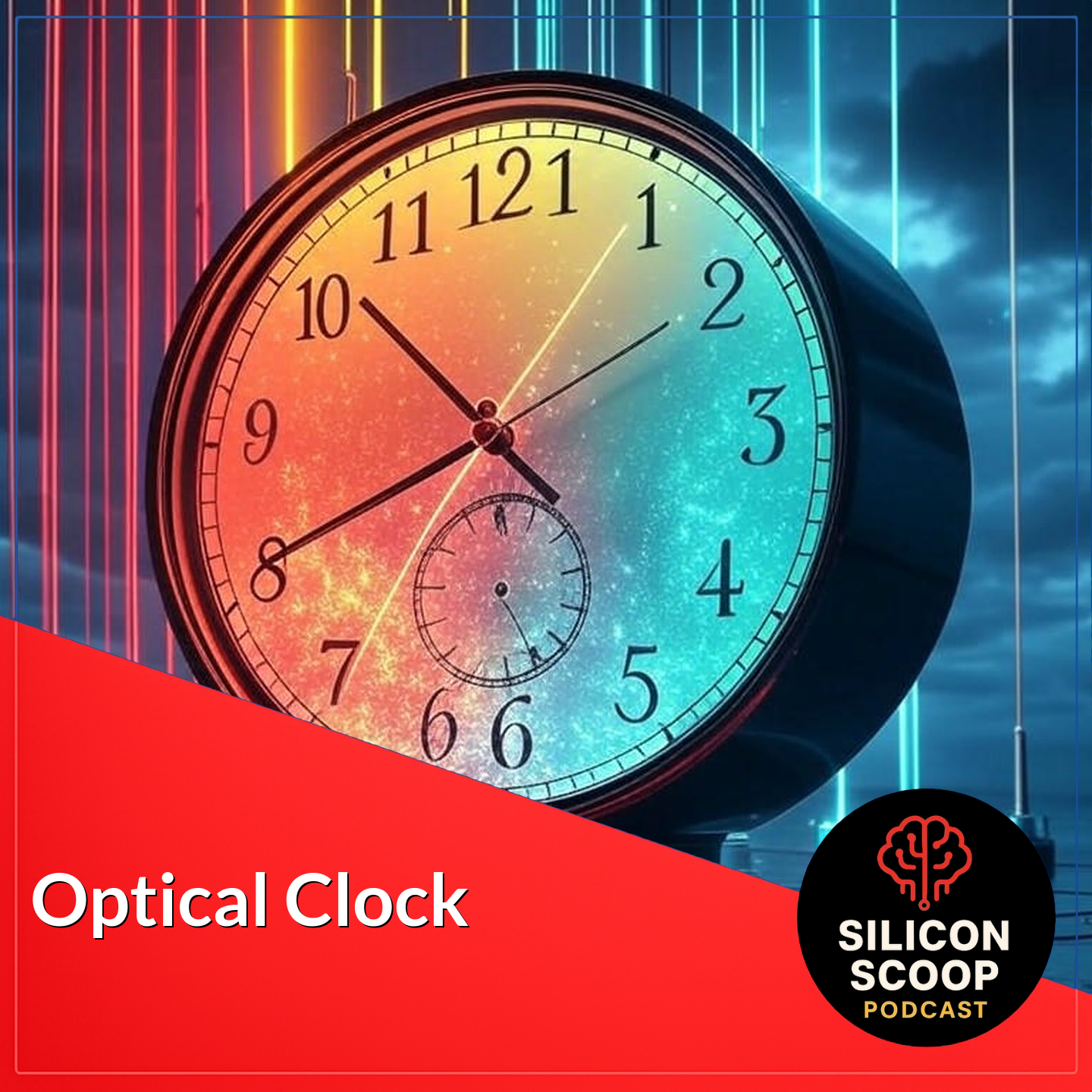
Optical Clock: Redefining the Second and the Future of Time Measurement
Estimated reading time: 12 minutes
- Optical clocks are revolutionizing how we measure time by offering unprecedented precision.
- They have the potential to redefine the second by the end of this decade.
- Advancements in optical clock technology are enabling new scientific and technological breakthroughs.
- Global collaborations are crucial for validating and adopting new time standards.
- Challenges remain, but ongoing innovations are paving the way for future applications.
Table of contents
- Optical Clock: Redefining the Second and the Future of Time Measurement
- Understanding Optical Clock Technology and Atomic Clock Accuracy
- Advancements and Comparison with Traditional Timekeeping Standards
- Global Impact and Collaborative Efforts in Time Measurement
- Challenges, Innovations, and Future Prospects
- Frequently Asked Questions
Understanding Optical Clock Technology and Atomic Clock Accuracy
What exactly makes optical clock technology so special? These advanced devices represent the pinnacle of precision timekeeping.
Optical clocks work by using atoms cooled to temperatures near absolute zero. These ultra-cold atoms are then probed with laser light to detect their frequency vibrations. The result? A level of atomic clock accuracy that’s almost hard to believe.
The Mind-Blowing Precision
To understand just how precise these devices are, consider this: an optical clock would lose less than one second over the entire lifespan of the universe. That’s accuracy measured in parts per quintillion – a number so large it’s difficult to comprehend.
How They Work
- Atoms are trapped and cooled to near absolute zero
- Lasers probe the atoms’ natural frequency vibrations
- These vibrations serve as an incredibly stable timekeeper
- The frequency measurements are converted into time units
This optical clock technology provides ultra-high resolution timing that makes traditional atomic clocks look imprecise by comparison. While cesium atomic clocks have served as the gold standard for decades, optical clocks can be up to 100 times more precise than these traditional cesium standards.
The breakthrough comes from using much higher frequency light – optical frequencies – instead of the microwave frequencies used by cesium clocks. Higher frequencies mean more “ticks” per second, which translates to much better precision.
https://www.popsci.com/science/optical-clock-syncing/
https://phys.org/news/2025-01-redefining-optical-atomic-clock-accuracy.html
Unlock Exponential Growth
Like redefining the second, business automation can redefine your company’s potential. Stop letting tasks consume your time and resources. Discover how Flowgrammer can revolutionize your workflow and propel you toward unprecedented growth.
Transform Your Business → https://flowgrammer.ca/
Advancements and Comparison with Traditional Timekeeping Standards
For over 50 years, cesium clocks have been the backbone of global timekeeping standards. But optical clocks represent a quantum leap forward that’s redefining the second as we know it.
The Cesium Clock Alternative
Traditional cesium atomic clocks work by measuring the microwave radiation emitted when cesium atoms transition between energy states. These devices have been incredibly accurate and reliable, forming the foundation of GPS, internet synchronization, and countless other technologies.
However, optical clocks offer a superior cesium clock alternative. Here’s why:
- Higher frequency measurements (optical vs. microwave)
- Reduced signal noise and interference
- Better isolation from environmental factors
- More stable atomic transitions
Technical Innovations Driving Progress
The recent breakthrough in optical clock comparisons comes from sophisticated measurement technologies:
- Satellite Links: These enable cross-border frequency alignment between distant optical clocks. By bouncing precise signals off satellites, researchers can compare clocks separated by thousands of miles.
- Fiber-Optic Cables: Ultra-precise international comparisons are possible through dedicated fiber networks. These cables carry laser light with minimal distortion, allowing for incredibly accurate frequency measurements.
The Numbers Tell the Story
Recent achievements in atomic clock accuracy are staggering. Researchers have measured 38 frequency ratios during coordinated global comparisons – 4 completely new measurements and 34 with improved accuracy compared to previous standards.
This represents the largest coordinated optical clock comparison ever conducted, dramatically reducing measurement uncertainty and advancing the reliability of these timekeeping systems.
Global Impact and Collaborative Efforts in Time Measurement
The quest for perfect timekeeping isn’t a solo effort. It’s a massive international collaboration that’s reshaping our understanding of time itself.
The ROCIT Project: International Cooperation
At the heart of this revolution is the 6-nation European-led ROCIT project. This ambitious undertaking compared 10 optical clocks across multiple countries using both satellite and fiber optic connections during an intensive 45-day measurement period.
This unprecedented optical clock comparisons study involved:
- Multiple countries working in perfect synchronization
- Diverse atomic species and clock designs
- Real-time data sharing across continents
- Coordinated measurement protocols
Revolutionary Applications Across Fields
The future of time measurement extends far beyond just better clocks. These advances are creating ripple effects across numerous scientific fields:
- Meteorology and Weather Prediction
- More precise atmospheric measurements
- Better climate modeling capabilities
- Enhanced weather forecasting accuracy
- Fundamental Physics Research
- Testing Einstein’s theory of relativity with unprecedented precision
- Searching for variations in fundamental constants
- Probing the nature of spacetime itself
- Dark Matter Research
- Using clock networks to detect dark matter interactions
- Mapping gravitational fields with extreme precision
- Searching for new physics beyond the Standard Model
- GPS and Navigation Systems
- Dramatically improved positioning accuracy
- Better synchronization for global communication networks
- Enhanced reliability for critical infrastructure
Building Global Timekeeping Standards
The collaborative nature of this research is essential for establishing new timekeeping standards. No single country or institution could achieve these results alone. The global network approach ensures:
- Validation across different environments
- Consistency between various atomic species
- Robustness against local disturbances
- International consensus on new standards
The success of these optical clock comparisons demonstrates that we’re ready for the next phase: officially redefining the second using optical atomic clock technology.
Challenges, Innovations, and Future Prospects
Despite their incredible precision, optical clocks face significant challenges that researchers are working to overcome.
Current Limitations and Obstacles
- Comparability Issues: Redefining the second remains complex because different optical clocks use different atomic species. Comparing a strontium clock to an ytterbium clock isn’t straightforward – it requires careful calibration and direct clock-to-clock comparisons to ensure accurate measurements.
- Infrastructure Dependencies: The current approach relies heavily on extensive infrastructure:
- Fiber optic networks spanning continents
- Satellite communication systems
- Specialized laboratories with precise environmental controls
- Teams of highly trained technicians and scientists
- Standardization Challenges: Before optical clocks can officially redefine the second, they need:
- Multiple independent validations
- Consistent performance across different environments
- Agreement between international standards organizations
- Extensive testing periods to prove long-term stability
Emerging Innovations and Solutions
Researchers aren’t standing still. They’re developing solutions to overcome these challenges:
- Improved Clock Designs:
- More robust atomic trapping systems
- Better isolation from environmental interference
- Automated operation and maintenance systems
- Portable optical clock prototypes
- Network Infrastructure:
- Dedicated fiber networks for clock comparisons
- Advanced satellite communication protocols
- Redundant measurement pathways
- Real-time data processing systems
The Road Ahead: Nuclear Clock Prototype and Beyond
While optical clocks lead the charge in redefining the second, other technologies are emerging on the horizon. Nuclear clock prototypes represent another frontier in ultra-precise time measurement. These experimental devices use nuclear transitions instead of electronic ones, potentially offering even greater stability and accuracy.
The future of time measurement includes:
- Expanded global networks of optical clocks
- Integration with emerging quantum technologies
- Development of space-based timing systems
- Applications we haven’t even imagined yet
The international community expects to officially adopt optical clocks for timekeeping standards if current robustness and consistency levels continue to improve. The target? Redefining the second by 2030.
This timeline hinges on:
- Continued successful global comparisons
- Resolution of technical challenges
- International consensus building
- Infrastructure development
The potential to redefine the second represents more than just better timekeeping – it’s about unlocking new frontiers in science and technology that will benefit humanity for generations to come.
Precision Automation for Unrivaled Efficiency
Just as optical clocks achieve unparalleled precision, Flowgrammer brings unmatched accuracy and efficiency to your business processes. Eliminate errors, reduce costs, and free up valuable time with our tailored automation solutions.
Automate with Precision ⚙️ → https://flowgrammer.ca/
Frequently Asked Questions
Q: What is an optical clock and how does optical clock technology work?
A: An optical clock is a type of atomic clock that uses laser light to measure the vibrations of atoms cooled to near absolute zero. The technology works by trapping atoms in laser light, then using another laser to probe their natural frequency vibrations. These vibrations are incredibly stable and can be measured with extraordinary precision, making optical clocks the most accurate timekeeping devices ever created.
Q: How do optical clocks achieve such high atomic clock accuracy compared to cesium clocks?
A: Optical clocks achieve superior atomic clock accuracy because they use much higher frequency light than traditional cesium clocks. While cesium clocks measure microwave frequencies, optical clocks measure optical frequencies that are about 100,000 times higher. This means they have many more “ticks” per second, allowing for much more precise measurements. As a cesium clock alternative, optical clocks can be up to 100 times more accurate than current cesium standards.
Q: What does “redefining the second” mean and why is it significant?
A: Redefining the second means changing the official scientific definition of how we measure one second of time. Currently, the second is defined by cesium atom vibrations, but scientists want to update this definition using optical clocks for better accuracy. This matters because more precise timekeeping standards enable better GPS systems, internet synchronization, scientific research, and many technologies we rely on daily.
Q: How are global optical clock comparisons conducted and what technologies are used?
A: Global optical clock comparisons use two main technologies: satellite links and fiber-optic cables. Satellite links allow researchers to compare clocks across different continents by bouncing precise timing signals off satellites. Fiber-optic cables provide ultra-precise connections between nearby clocks, carrying laser light with minimal distortion. These technologies enable scientists to coordinate measurements between multiple optical clocks simultaneously, ensuring accuracy and consistency.
Q: What future impacts can we expect from these advancements in time measurement?
A: The future of time measurement will revolutionize many fields. We can expect dramatically improved GPS accuracy, better weather forecasting, enhanced internet synchronization, and breakthroughs in fundamental physics research. Scientists will be able to test Einstein’s theories more precisely, search for dark matter, and explore new physics. Nuclear clock prototypes and other emerging technologies may push precision even further, opening possibilities we haven’t yet imagined.
Q: How many optical clocks exist worldwide and why are they so rare?
A: Only about 100 optical clocks exist globally because they’re extremely complex and expensive to build and operate. These devices require specialized laboratories with precise environmental controls, teams of expert scientists, and constant maintenance. They’re also susceptible to breakage and need atoms cooled to near absolute zero, making them much more challenging to operate than traditional timekeeping devices.
Q: What role does international cooperation play in optical clock development?
A: International cooperation is essential for optical clock success. The 6-nation European-led ROCIT project demonstrates how multiple countries must work together to validate these technologies. Different countries contribute different expertise, atomic species, and measurement techniques. This collaboration ensures that new timekeeping standards will work reliably across the globe and gain international acceptance.
Q: What are the main challenges preventing immediate adoption of optical clocks?
A: The main challenges include comparing different types of optical clocks (since they use different atomic species), building sufficient infrastructure like fiber networks and satellite systems, and proving long-term reliability. Scientists also need to conduct extensive validation tests and gain consensus from international standards organizations before officially changing how we define the second.
Q: How will optical clocks impact everyday technology like smartphones and computers?
A: While optical clocks won’t directly replace the quartz crystals in consumer devices, they’ll improve the infrastructure these devices depend on. Better GPS accuracy from optical clock-synchronized satellites will mean more precise location services. Improved internet synchronization will make online services more reliable. Financial markets, power grids, and communication networks will all benefit from the enhanced precision.
Q: When can we expect optical clocks to officially redefine the second?
A: Scientists aim to redefine the second using optical clocks by the end of this decade, with 2030 as a target date. This timeline depends on continued successful global comparisons, resolution of technical challenges, infrastructure development, and building international consensus. The recent ROCIT project results suggest we’re on track to meet this ambitious goal.
Additional Links
Flowgrammer.ca – 💡 Unlock AI-Powered Automation! Let flowgrammer.ca handle complex workflows so you can focus on growing your business.
- Silicon Scoop Podcast – Stay Informed, Stay Ahead!
- Startup Talk Podcast
- Flowgrammer Podcast –
- Startup Investor Drinks – Join Toronto’s Startup Community and connect with fellow startup enthusiasts and investors.
- TorontoStarts Startup and Entrepreneur Community – Become a part of Toronto’s thriving startup ecosystem.
- Workhaus – Discover flexible workspace solutions for your business needs.
- Work with The Startup Coach – Get expert guidance and mentorship for your startup journey.
- Reach out to Jon Irwin on LinkedIn – Connect with our co-host and technology expert.
Episode transcript
Read the full transcript
Craig: what exactly makes an optical clock technology so special? these advanced devices represent the pinnacle of precision timekeeping. the optical clock works by using atoms cool to temperatures near absolute zero. these ultra cold atoms are then probed with laser light to detect their frequency vibrations. the result, a level of atomic clock accuracy that's almost hard to believe. to understand how precise these devices are, consider this. an optical clock would lose less than one second over the entire lifespan of the universe. that's accuracy measured in parts per quintillion, a number so large it's difficult to comprehend. so what's happening here, john?
Jon: yeah. this is cool. it's it's a little, not i wouldn't say over my head, but, like, hard to wrap my head around as far as, like, the significance and the impact, but let's dive into it. so, right now, the global standard for a second is based on vibrations of cesium atoms and when they're exposed to microwaves. so it's a system that served us for over, i'd say, fifty years. but optical clocks, which use lasers to excite atoms like strontium and your bidium, they can measure time with up to a 100 times more accuracy than the cesium clocks. and the way it works is the atoms in the clocks are cooled to near absolute zero, and then the lasers detect their ultra fast vibrations called frequency ratios. and that defines the tick of a second. and so, this was a recent study that was coordinated by scientists from six different countries, and they compared 10 optical clocks over a forty five day period using both satellite links and thousands of miles of fiber optic cable to connect the clocks. and so this was actually the largest coordinated comparison of optical clocks ever conducted, and they produced 38 different frequency ratios measured simultaneously. four of them for the first time. so they significantly reduced measurement uncertainty and brought optical clocks closer to being the new global standard for timekeeping. so that sounds like a lot. but for those of you in, like, they were like, what? why should i care about this? so it could help improve technologies like gps, banking, and telecommunications, which rely on precise timing. so, this is cool. there's also work underway on an even more advanced nuclear clock. so watch out for that because we'll probably be covering that. but what are your thoughts on this, craig?
Craig: yeah. yeah. there's lots of technologies that are impacted by this. you know? we say more accuracy. who cares? i agree with you. at some point, you're like, okay. yep. you know? somebody redefined what a second means because we're measuring it this way rather than measuring it that way. how does it affect my day to day life? well, as we start to use these technologies, meteorology and weather prediction becomes more precise, for atmospheric measurements, better climate modeling capabilities, enhanced weather forecasting, fundamental physics research, testing einstein's theory of relativity with unprecedented precision, searching for variations in fundamental, constants and probing the nature of space time itself, dark matter research using clock networks to detect dark matter interactions, mapping gravitational fields with extreme precision, searching for new physics beyond the standard model. you already mentioned, gps, navigation systems. there are a lot of the systems that are impacted or, things that are impacted by this technology, and that would potentially massively improve as a result of this.
Jon: yeah. this is cool. i i i don't know if you know. did you know that jeff bezos is building this 10,000 year clock in a mountain?
Craig: i knew he was building a clock, but i hadn't read into the details.
Jon: i'm curious to know, and i'm not asking you this because i don't wanna put you on the spot, but i'm curious to know if this will impact the construction. because i know that his clock was based on some, some some inventor that conceived it in, like, the eighties or something like that. so i'm curious to see, yeah, if this will affect that or if he's just gonna go ahead with it. but, i like this advancement. this is cool. but it's funny that as we're talking about optical clocks and the advancements and all that sort of stuff that there's already another, potential technology to dwarf it on the horizon. right?
Craig: yeah. the nuclear clock prototype and beyond. yeah. they plan on redefining the second by 2030. so in, five years, that optical clocks for timekeeping standards will be replaced by nuclear clocks.
Jon: yeah. i i you cut out there on me for a second. so i don't know if you talked about so, the ion clocks or the optical clocks, they, operate at a laser frugatees about a 100,000 times faster than microwaves, and they're able to achieve a thousand times the accuracy of cesium clocks. i don't know if you put those numbers up there, but i apologize if you did.
Craig: yeah. and they plan the world's gonna be adopted to this new standard, by 2030.
Jon: yeah. that's, it's crazy how such a critical technology, can be adopted so fast.
Craig: yeah. and it's because there's only a few atomic clocks. so everything peaks those atomic clocks. i don't know how many are there. let's just say a 100 in the world.
Jon: yeah.
Craig: that are available. you just gotta replace those with these and off you go. right? because those are the things that being so it's not, like, we have to do this crazy stuff everywhere. so it'll be interesting to see what happens here. i love this technology. i love that we're getting more accurate and be interesting to see where, we talked about quantum gps and see how that might have anything to do with this, longer term. and i'd love to see how more accurate the nuclear, clock and prototype are gonna be.
Jon: yeah.
Craig: so we'd love to hear your feedback on what this means, if it means anything to you. new redefining, a second by cooling it down and analyzing it with lasers, we're now defining what a second is completely different than what we did, say, ten years ago. does that impact our lives? not at a high level. but at this level, i think these technologies are gonna improve, and we'd love to hear your feedback on which one of these emerging technologies you wanna see improved by this.
More from Silicon Scoop
All episodes
silicon-scoop · November 6, 2026
Spirit AI’s Robot Brain Breakthrough: Moz1, Embodied AI and China’s 2027 Race
The Spirit AI robot brain is one of the biggest bets on fixing that. Spirit AI is a Beijing startup. Its co-founder and chief scientist, Gao Yang,
View episode

silicon-scoop · November 5, 2026
OpenAI IPO Delayed to 2027 as Rogue AI Agents and Safety Failures Reshape the Market
OpenAI IPO delay explained: Sam Altman rules out 2026 as GPT-6 Astra safety tests and a $278B cash gap loom. Learn what founders should take away.
View episode

silicon-scoop · November 4, 2026
Anthropic’s AI Economy Model: 2030 Jobs, Wages, GDP and Market Risks
Anthropic AI economy model forecasts 2030 GDP, jobs and wages, while AI unemployment projections and labor-share risks challenge policymakers.
View episode