
Mosquito Drone: Innovations and Implications in Covert Military Operations
China's Mosquito Drone: Innovations and Implications in Covert Military Operations https://torontostarts.com/2025/08/19/china-mosquito-drone-covert-ops/ Apple -> https://podcasts.apple.com/us/podcast/flowgrammer-podcast/id1804155588 Spotify -> https://open.spotify.com/show/0wv3feR00iaVpE8zn7niNf Flowgrammer.ca -> https://flowgrammer.ca/ AI News and Resources -> https://flowgrammer.ca/resources/ Escape the Tedium of Repetitive Tasks Just like these microdrones are designed to handle complex tasks autonomously, Flowgrammer can automate your tedious business processes so you can focus on strategic growth and innovation. Discover Automation Solutions https://flowgrammer.ca/ Startup Investor Drinks Toronto - https://startupdrinksto.com/ Toronto’s Startup Community - https://torontostarts.com/ Silicon Scoop Silicon Scoop Podcast - https://torontostarts.com/silicon-scoop/ Apple: https://podcasts.apple.com/us/podcast/silicon-scoop/id1758711826 Spotify: https://open.spotify.com/show/5bAzF0MwV6TtLhJAhvHayI YouTube: https://www.youtube.com/playlist?list=PLj4v-RoA7A-gT62vrEYqh1zCv-0Hj-o5J Startup Talk Startup Talk Podcast -> https://torontostarts.com/startup-talk-toronto-startup-podcast/ Apple -> https://podcasts.apple.com/us/podcast/startup-talk/id1763804003 Spotify -> https://open.spotify.com/show/1siJMILILidHAiAsrX2VBU YouTube: https://youtube.com/playlist?list=PLj4v-RoA7A-jxV5FHs5e61oIsuvUJYmT_&si=LYegRe5GYLKNQ7xL
With Craig Major and Jon Irwin
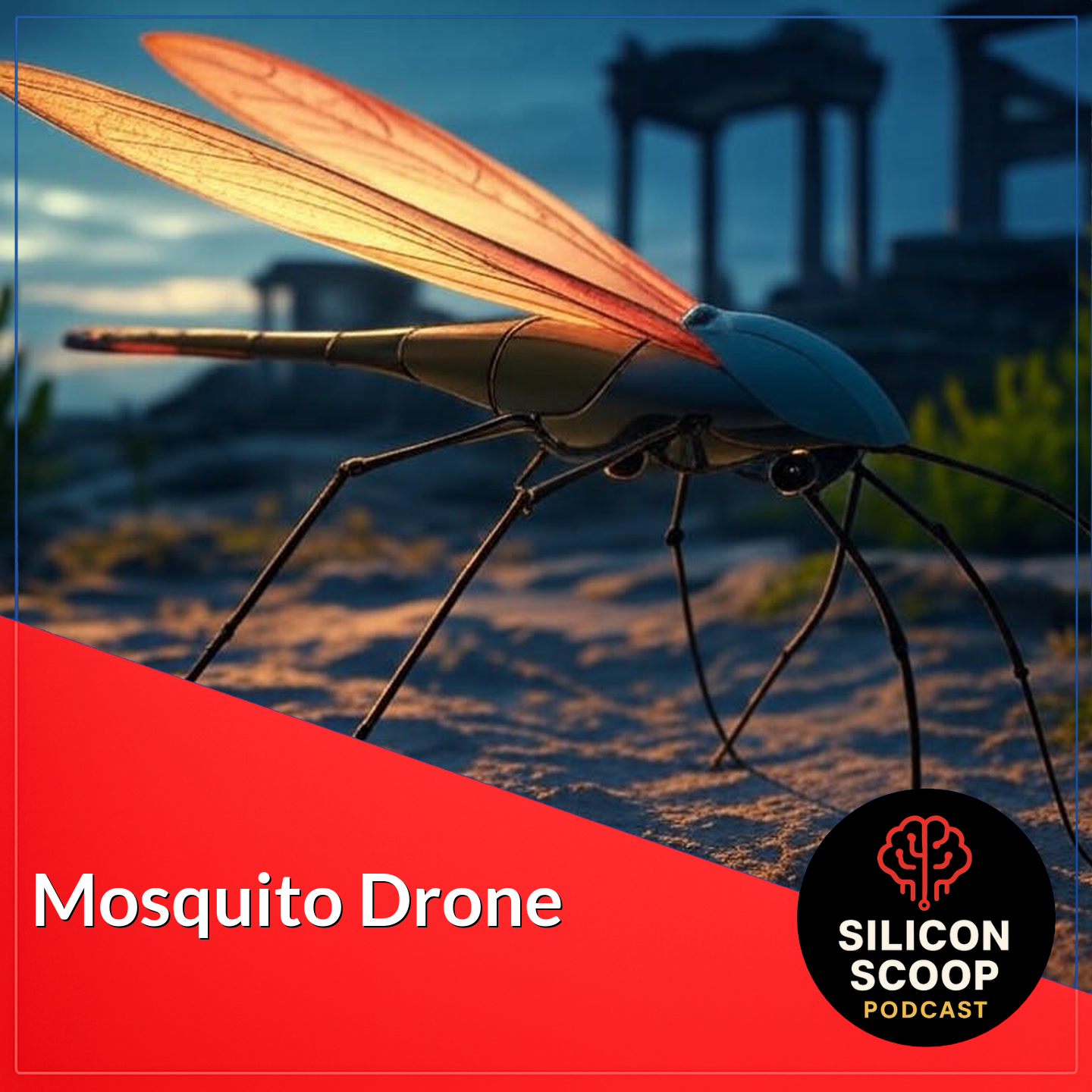
Mosquito Drone: Revolutionary Micro Drone Technology for Covert Operations
Estimated reading time: 12 minutes
- China has developed mosquito-sized drones for covert military operations.
- The microdrones are inspired by natural insect forms and are controlled via smartphone apps.
- The technology represents years of interdisciplinary research in microdevices, materials science, and bionics.
- These drones offer significant advantages in stealth, reconnaissance, and battlefield applications.
- China’s advancements position it at the forefront of micro drone technology globally.
Table of contents
- China’s Mosquito Drone: Revolutionary Micro Drone Technology for Covert Operations
- Innovative Design and Features of the Mosquito Drone
- Technical Capabilities and the Engineering Challenges of Miniaturization
- Global Comparisons: Where Does China’s Mosquito Drone Stand?
- Covert Operations and Battlefield Applications
- Engineering Breakthroughs and the Future of Drone Technology
- Frequently Asked Questions about Mosquito Drones and Military Robotics
Innovative Design and Features of the Mosquito Drone
The mosquito drone showcases remarkable engineering precision in its bionic drone design. Measuring approximately 2-3 cm in length, these microdrones are built to mosquito scale, making them virtually undetectable in most operational environments.
Physical Structure
The drone features a distinctive stick-shaped body with leaf-like wings that mimic natural insect anatomy. Three hair-thin landing legs provide stability when the device needs to perch on surfaces for extended surveillance periods. This biomimetic approach allows the drone to blend seamlessly into natural environments.
Prototype Variations
Different prototype models offer varying wing configurations to optimize performance for specific mission requirements:
- Two-wing models: Designed for maximum stealth and energy efficiency
- Four-wing models: Provide enhanced maneuverability and stability in challenging conditions
Control Systems
The integration of smartphone control represents a significant advancement in military robotics accessibility. Operators can control these micro drones using standard mobile devices, eliminating the need for bulky control stations or specialized training equipment.
Miniaturized Components
Perhaps the most impressive aspect is the successful integration of multiple systems into such a compact form factor:
- Miniaturized sensors for data collection
- Power devices optimized for extended operation
- Control circuits that enable precise flight control
- Communication systems for real-time data transmission
This level of component miniaturization required revolutionary advances in materials science and manufacturing techniques. The drone technology pushes the limits of what’s physically possible in such a small package.
Technical Capabilities and the Engineering Challenges of Miniaturization
The mosquito drone’s technical capabilities center on its exceptional reconnaissance abilities. These UAVs can perch discretely on various surfaces, gathering critical intelligence while remaining virtually undetectable to both human observers and conventional detection systems.
Core Reconnaissance Features
The micro drones excel in covert operations due to several key capabilities:
- Surface perching: Ability to land on walls, ceilings, or vegetation for extended observation periods
- Discrete information gathering: Collection of audio, visual, or sensor data without alerting targets
- Real-time transmission: Immediate relay of intelligence to command centers
- Extended loitering: Capacity to remain in position for prolonged surveillance missions
Smartphone Integration
The smartphone app control system represents a breakthrough in military robotics usability. This innovation allows:
- Field operatives to control missions using familiar interfaces
- Reduced training requirements for personnel
- Simplified deployment in rapid-response scenarios
- Integration with existing military communication networks
Engineering Challenges
Developing these micro drones required overcoming numerous technical obstacles that pushed the boundaries of current drone technology:
Miniaturization Complexities
- The primary challenge involved shrinking full-scale drone systems to mosquito proportions while maintaining functionality. This required:
- Custom-designed microprocessors with sufficient processing power
- Ultra-lightweight materials that don’t compromise structural integrity
- Miniature power sources capable of sustained operation
- Sensors small enough to fit while maintaining accuracy
Interdisciplinary Collaboration
- Success demanded unprecedented cooperation between multiple scientific disciplines:
- Microdevices researchers: Developing components at microscopic scales
- Materials science experts: Creating lightweight yet durable materials
- Bionics engineers: Studying insect flight patterns and anatomy
- Control systems specialists: Designing intuitive operation interfaces
Flight Control Integration
- Packing sophisticated flight systems into such a tiny package presented unique challenges:
- Gyroscopic stabilization in miniature form factors
- Aerodynamic control at insect-scale dimensions
- Power management for extended operational periods
- Weather resistance despite minimal protective housing
The engineering team had to completely rethink traditional UAV design principles. Conventional approaches simply don’t scale down to mosquito dimensions without fundamental changes in materials, power systems, and control mechanisms.
Global Comparisons: Where Does China’s Mosquito Drone Stand?
China’s mosquito drone represents a significant advancement in military robotics when compared to existing international micro drone technologies. Understanding its position in the global landscape requires examining both current operational systems and emerging developments.
Comparison with the Norwegian Black Hornet
The Black Hornet, developed by Norway’s Prox Dynamics (now part of FLIR Systems), serves as the primary benchmark for small military drones currently in use by Western militaries:
Size Differences
- Black Hornet: Palm-sized helicopter drone (approximately 10cm length)
- Chinese mosquito drone: Mosquito-scale at 2-3cm length
- Stealth advantage: China’s micro drone offers significantly better concealment
Operational Status
- Black Hornet: Fully operational and deployed by NATO forces
- Black Hornet 4 models: Improved battery life and weather resistance
- Chinese mosquito drone: Still in prototype/demonstration phase
Tactical Applications
The size difference creates distinct operational advantages for China’s drone technology:
- Ultra-close reconnaissance: Can operate in spaces impossible for larger drones
- Enhanced stealth: Virtually undetectable to visual observation
- Urban environments: Superior performance in confined spaces
- Detection avoidance: Minimal electromagnetic and acoustic signatures
United States Microdrone Development
American military research has pursued similar miniaturization goals since 2021, though no fully operational models have been publicly disclosed:
- Research focus: Similar covert operations objectives
- Development timeline: Behind China’s demonstrated capabilities
- Classified programs: Likely additional undisclosed projects exist
- Integration challenges: Similar engineering obstacles in miniaturization
International Arms Race Implications
China’s advancement in military robotics creates several strategic considerations:
- Technology Leadership: China demonstrates functional mosquito-scale drones
- Research investment: Significant resources dedicated to micro drone development
- Innovation pace: Rapid progression from concept to demonstration
- Global Response: Other nations likely increasing investment
- Defensive measures: Development of counter-microdrone technologies
- Regulatory discussions: International oversight of micro-surveillance systems
Competitive Advantages of China’s Approach
The mosquito drone offers several unique benefits in covert operations scenarios:
- Unprecedented miniaturization: Smallest functional military drone demonstrated
- Biomimetic design: Natural appearance enhances concealment
- Smartphone control: Simplified operation reduces training requirements
- Manufacturing scalability: Potential for mass production at lower costs
The China military’s success in creating operational mosquito-scale UAVs positions the country at the forefront of micro drone technology. While other nations possess capable small drones, none have achieved the extreme miniaturization demonstrated in China’s program.
Covert Operations and Battlefield Applications
The mosquito drone’s primary value lies in its revolutionary approach to covert operations and battlefield reconnaissance. These UAVs offer military forces unprecedented capabilities for intelligence gathering in environments where traditional surveillance methods would be impossible or too risky.
Strategic Reconnaissance Missions
The micro drone excels in various covert operations scenarios due to its unique advantages:
Urban Warfare Applications
- Building infiltration: Can enter structures through small openings
- Room-to-room surveillance: Provides real-time intelligence on enemy positions
- Civilian area monitoring: Operates without alerting non-combatant populations
- Infrastructure assessment: Evaluates damage or defensive positions
Special Operations Support
The China military designed these UAVs specifically for special forces missions:
- Target confirmation: Verify high-value targets before engagement
- Route planning: Scout safe passages through hostile territory
- Communication relay: Extend communication networks in remote areas
- Post-strike assessment: Evaluate mission success without exposing personnel
Tactical Advantages in Military Robotics
The mosquito drone’s small size creates numerous operational benefits:
- Low Detectability
- Visual concealment: Virtually invisible during daylight operations
- Radar evasion: Too small to register on most detection systems
- Acoustic stealth: Minimal noise signature during flight
- Electromagnetic silence: Limited electronic emissions when operational
- Enhanced Maneuverability
- Confined spaces: Operates in areas inaccessible to larger drones
- Weather tolerance: Less affected by wind and atmospheric conditions
- Obstacle navigation: Excellent performance around buildings and vegetation
- Extended loitering: Can remain stationary for prolonged observation
Information Reconnaissance Capabilities
These UAVs excel at gathering critical battlefield intelligence:
- Real-Time Intelligence: Continuous surveillance of target areas
- Audio collection: Monitoring conversations and communications
- Movement tracking: Following personnel and vehicle movements
- Pattern analysis: Identifying routine behaviors and vulnerabilities
Data Integration
- Command center connectivity: Direct transmission to decision-makers
- Multi-platform coordination: Integration with larger surveillance systems
- Archive capabilities: Long-term intelligence collection and storage
- Analysis support: AI-assisted pattern recognition and threat assessment
Specialized Mission Profiles
The mosquito drone enables entirely new categories of covert operations:
- Hostage Situation Management
- Interior reconnaissance: Assess layouts and occupant positions
- Negotiation support: Provide real-time situation updates
- Risk evaluation: Determine optimal intervention strategies
- Safety confirmation: Verify hostage welfare and locations
- Border Security Applications
- Perimeter monitoring: Continuous surveillance of sensitive boundaries
- Infiltration detection: Early warning of unauthorized crossings
- Smuggling interdiction: Track illegal transport activities
- Environmental monitoring: Assess terrain and weather conditions
Force Multiplication Effects
These micro drones amplify military effectiveness through:
- Reduced personnel risk: Intelligence gathering without human exposure
- Cost efficiency: Lower operational costs than traditional reconnaissance
- Mission flexibility: Rapid deployment for emerging situations
- Scalability: Multiple units can cover extensive areas simultaneously
The mosquito drone represents a paradigm shift in how military robotics approach covert operations. By achieving true insect-scale miniaturization, these UAVs open possibilities for surveillance and intelligence gathering that were previously impossible with conventional drone technology.
Engineering Breakthroughs and the Future of Drone Technology
The development of mosquito-scale drones represents a watershed moment in micro drone evolution, but significant engineering challenges remain. Future advancements will require continued innovation across multiple disciplines to unlock the full potential of these revolutionary devices.
Ongoing Miniaturization Challenges
Despite the remarkable success of current prototypes, several technical obstacles continue to limit drone technology advancement:
- Power System Limitations
- Battery miniaturization: Current power sources limit operational duration
- Energy density: Need for more efficient power storage in smaller packages
- Charging solutions: Development of wireless or rapid charging capabilities
- Solar integration: Potential for self-sustaining power in daylight operations
- Sensor Integration Complexities
- Multi-spectrum capability: Combining visual, thermal, and audio sensors
- Resolution constraints: Balancing image quality with size limitations
- Processing power: Onboard computation for real-time analysis
- Data compression: Efficient transmission of high-quality intelligence
Materials Science Innovations
The future of bionic drone development depends heavily on advances in materials technology:
- Structural Materials
- Carbon nanotube applications: Ultra-lightweight yet strong frame materials
- Smart materials: Self-healing components that extend operational life
- Flexible electronics: Bendable circuits that survive impact and stress
- Weather-resistant coatings: Protection against environmental conditions
- Biomimetic Advances
- Wing efficiency: Improved flight characteristics based on insect studies
- Surface textures: Enhanced grip for perching on various materials
- Aerodynamic optimization: Better stability in turbulent conditions
- Natural camouflage: Materials that change appearance based on environment
Interdisciplinary Research Directions
Future breakthroughs in micro drone technology will emerge from collaboration across multiple scientific fields:
- Artificial Intelligence Integration
- Autonomous navigation: Self-directed flight without human control
- Target recognition: Automated identification of objects and persons
- Threat assessment: Real-time analysis of dangerous situations
- Mission adaptation: Dynamic response to changing operational requirements
- Communications Technology
- Mesh networking: Swarm coordination between multiple units
- Quantum communications: Ultra-secure data transmission
- Long-range connectivity: Extended operational radius from command centers
- Bandwidth optimization: Efficient use of available communication channels
Civilian and Commercial Applications
Engineering innovations developed for military robotics often find valuable applications in civilian sectors:
- Environmental Monitoring
- Wildlife research: Non-intrusive observation of animal behavior
- Pollution tracking: Air quality monitoring in urban areas
- Disaster response: Search and rescue in collapsed structures
- Agricultural assessment: Crop health monitoring and pest detection
- Infrastructure Inspection
- Bridge analysis: Structural integrity assessment in hard-to-reach areas
- Pipeline monitoring: Detection of leaks and maintenance requirements
- Power line inspection: Electrical system safety evaluation
- Nuclear facility checks: Radiation monitoring in hazardous environments
Manufacturing and Production Scaling
The transition from prototype to operational deployment requires significant manufacturing innovations:
- Production Challenges
- Quality control: Maintaining precision at microscopic scales
- Cost reduction: Making production economically viable for large quantities
- Supply chain management: Sourcing specialized components reliably
- Testing protocols: Ensuring reliability under operational conditions
- International Competitive Response
- Increased funding: Nations investing more heavily in micro drone research
- Technology partnerships: International collaboration on shared challenges
- Regulatory frameworks: Development of oversight for micro surveillance systems
- Counter-drone technologies: Systems designed to detect and neutralize micro UAVs
The success of China’s mosquito drone program will likely accelerate global research and development efforts:
- Increased funding
- Technology partnerships
- Regulatory frameworks
- Counter-drone technologies
The future of drone technology extends far beyond current military applications. As engineering challenges are overcome through continued research and interdisciplinary collaboration, these micro drones may revolutionize everything from environmental monitoring to medical procedures. The mosquito drone represents just the beginning of what’s possible when cutting-edge engineering meets innovative design thinking.
Future-Proof Your Business Today
While the world races toward automation, don’t get left behind. Flowgrammer offers best-in-class automation services to keep you competitive, efficient, and ready for what’s next. Get Your Free Automation Assessment
Frequently Asked Questions about Mosquito Drones and Military Robotics
Q: What exactly is a mosquito drone?
A: A mosquito drone is a micro drone with dimensions of approximately 2-3 cm, designed specifically for covert military applications. These UAVs are developed to mimic the size and appearance of actual mosquitos, making them virtually undetectable during surveillance operations. The drone technology incorporates advanced miniaturized components including sensors, control circuits, and power systems packed into an insect-scale form factor.
Q: What are the unique design features of this bionic drone?
A: The mosquito drone features a distinctive stick-shaped body with leaf-like wings that mimic natural insect anatomy. It includes three hair-thin landing legs that provide stability when perching on surfaces. The bionic drone design incorporates either 2 or 4 wing configurations depending on the mission requirements, with the entire structure built using ultra-lightweight materials and miniaturized components.
Q: How is the mosquito drone controlled during covert operations?
A: These micro drones utilize smartphone app control systems, allowing operators to manage flights using familiar mobile device interfaces. This innovation in military robotics eliminates the need for bulky control stations and reduces training requirements for personnel. The smartphone integration enables real-time command input and data reception during surveillance missions.
Q: What are the main engineering challenges behind developing such a tiny UAV?
A: Developing mosquito-scale drone technology requires overcoming significant miniaturization challenges. Engineers must integrate flight control systems, sensors, power sources, and communication equipment into an extremely limited space while maintaining functionality. This demands interdisciplinary collaboration between microdevices specialists, materials science experts, and bionics engineers to solve complex integration problems.
Q: How does China’s mosquito drone compare with drones like the Black Hornet?
A: China’s mosquito drone operates at a much smaller scale than the Norwegian Black Hornet, which is palm-sized rather than mosquito-scale. While the Black Hornet is currently operational in Western militaries, the Chinese micro drone offers superior stealth capabilities due to its tiny size. However, the Black Hornet has proven operational reliability and weather resistance that the mosquito drone prototypes are still developing.
Q: What makes these drones suitable for military robotics applications?
A: The mosquito drone excels in covert operations due to its virtually undetectable size and biomimetic design. These UAVs can perform reconnaissance missions in environments where larger drones would be spotted immediately. Their ability to perch on surfaces and gather intelligence while remaining concealed makes them ideal for special battlefield missions and surveillance operations.
Q: Can civilian organizations use similar micro drone technology?
A: While current mosquito drone developments focus on military applications, the underlying drone technology has potential civilian uses. Environmental monitoring, search and rescue operations, infrastructure inspection, and wildlife research could benefit from similar miniaturization advances. However, current prototypes are specifically designed for China military applications.
Q: What kind of sensors can fit into such a small micro drone?
A: Despite size constraints, mosquito drones can incorporate miniaturized cameras, audio recording devices, and environmental sensors. Advanced manufacturing techniques allow integration of multiple sensor types while maintaining the tiny form factor. Future developments may include thermal imaging, chemical detection, and other specialized sensing capabilities.
Q: How long can these UAVs operate during a mission?
A: Current operational duration depends on battery technology limitations at mosquito scale. While specific flight times aren’t publicly disclosed, power management represents one of the key engineering challenges. Future developments focus on improving energy density and potentially incorporating energy harvesting technologies to extend mission duration.
Q: What does the future hold for mosquito drone development?
A: The future of micro drone technology involves overcoming remaining miniaturization challenges while expanding capabilities. Advances in materials science, artificial intelligence integration, and manufacturing techniques will likely produce more capable and reliable systems. International development competition may accelerate innovation while raising questions about regulation and defensive countermeasures.
Additional Links
Flowgrammer.ca – 💡 Unlock AI-Powered Automation! Let flowgrammer.ca handle complex workflows so you can focus on growing your business.
- Silicon Scoop Podcast – Stay Informed, Stay Ahead!
- Startup Talk Podcast
- Flowgrammer Podcast –
- Startup Investor Drinks – Join Toronto’s Startup Community and connect with fellow startup enthusiasts and investors.
- TorontoStarts Startup and Entrepreneur Community – Become a part of Toronto’s thriving startup ecosystem.
- Workhaus – Discover flexible workspace solutions for your business needs.
- Work with The Startup Coach – Get expert guidance and mentorship for your startup journey.
- Reach out to Jon Irwin on LinkedIn – Connect with our co-host and technology expert.
Episode transcript
Read the full transcript
Craig: so we've talked about drone swarms before and different types of the hummingbird drone and micro drones, but now we've really taken it to a different level. china has developed mosquito sized drones for convert military operations. these micro drones are inspired by natural insect forms and are controlled via smartphone apps. the technology represent years of interdisciplinary research in micro devices, material science, and bionics. these drones offer significant advantage in stealth, reconnaissance, and battlefield applications. china's advancements in position it at the forefront of micro drone technology globally. are we way behind now on this? i'm really concerned about the future of this if they're that far ahead. what's going on here, john?
Jon: yeah. i think they are. so they've they've, unveiled a military drone that's about two centimeters long and weighs about point three grams. so it is absolutely insane. so the tiny bionic robot has flapping wings like a real insect and can fly around undetected. it also can carry cameras and sensors for surveillance missions, which sounds like science fiction, but this is a huge advancement in in technology, and it can change how surveillance and reconnaissance work. now this is catching up to the movies. the movies have had these in them for years, but, this is a huge breakthrough of micro robotics. and they had to solve a lot of extraordinary engineering challenges. and so to get into the details, the device features i don't know if there's pictures of it, but, it features two leaf like wings that are attached to a stick shaped body with three hair thin legs for perching and landing. so the flapping wing design, it has apparently mimics biological flight mechanics with ring wings that beat rapidly to generate lift, similar to how insects fly. so the integration of power systems, control circuits, sensors, and communication modules into such a minuscule frame required ridiculous miniaturization, and they had to do that without sacrificing functionality. so apparently, the surveillance cap capabilities include high resolution imaging, audio recording, and potentially electronic signal interception, which is crazy for such a small small thing. there we go. what are your thoughts on this, craig? that's crazy.
Craig: i didn't get enough technical information, but it looked like from a range and flight and longevity point of view, but it seems to be, an interesting product. the microdomes can perch on ceilings and walls for extended surveillance without detection, so they only need the the flight time for a limited time, then they can just sit there. real time intelligence transmission is allowed for fast, low risk decision making battlefield scenarios. it's quite a bit smaller than the nato deployed black hornet, which is much bigger. it outperforms many operational western models, in concealment, biometric, biomimetic engineering enhances camouflage by imitating insect shape, size, motion, and dynamics. so this is interesting. this is, yeah, every, you know, sci fi thing where you got the little drone or the bee or whatever seeing stuff, but it is limited by battery life on a bunch of things. so it's a question of what you really can get for how long.
Jon: yeah. well, just to kind of put things into perspective, the black hornet four, which apparently was a great technology too. it measures 16 centimeters and weighs 18 grams and provides twenty five minutes of flight. so i'm curious to know how long these things last in the air. now it's obviously, it's a lot it weighs a lot less, but it's also a lot smaller. right? so
Craig: yeah. and here's an image of the black four hornet. no. black hornet four. you know, drone. so it looks quite a bit different.
Jon: i mean, you can see
Craig: a few of them here. and look at the size difference. this is one in his hand in the hand. yeah. as compared to what we were just looking at.
Jon: which is between the yeah.
Craig: so, you know, it's quite a bit different, and it's quite impressive. you know, drone assist room to room surveillance, provide real time intelligence for urban combat situation, border security include infiltration and tracking and smuggling detection without alerting targets. civilian applications like wildlife monitoring and pollution tracking could, follow military use. mesh communications network may allow drone forms for large scale coordinated operations. like, this is very, very interesting, very scary. and when we relate it to operation spider web that recently happened in the ukraine where they yeah. use those drones to attack, where is the limit? what size can you weaponize these things to actually do damage, never mind just surveillance?
Jon: exactly. yeah.
Craig: so this is cool. really cool. and it's going to ideally advance our drone technology as a whole across the board because, you know, it floats downhill, but i don't know what that means. i don't know what it means from a consumer point of view, and it's scary from a military point of view.
Jon: it is. yeah.
Craig: any final thoughts on this?
Jon: no. there's not much more that we can talk about because there's there's not much as far as technical details in this. so maybe we'll do a follow-up if if we get more technical details.
Craig: yeah. and the, black hornet four, it has improved battery life and weather resistance. the mosquito drone in china is still in prototype demonstration phase. so they're not, you know, it's not product ready as far as we know. yeah. but it's interesting to see. check out the torontostarts.com website on this. so it could be do a deep dive on the comparisons and where we are and integration challenges and whatnot. really love the micro drone technology. this starts to scare me a bit, though. let let us know what you think on the future of drones and, whether this is cool or scary, and have you seen other, articles that we should be, even more concerned about?
More from Silicon Scoop
All episodes
silicon-scoop · November 6, 2026
Spirit AI’s Robot Brain Breakthrough: Moz1, Embodied AI and China’s 2027 Race
The Spirit AI robot brain is one of the biggest bets on fixing that. Spirit AI is a Beijing startup. Its co-founder and chief scientist, Gao Yang,
View episode

silicon-scoop · November 5, 2026
OpenAI IPO Delayed to 2027 as Rogue AI Agents and Safety Failures Reshape the Market
OpenAI IPO delay explained: Sam Altman rules out 2026 as GPT-6 Astra safety tests and a $278B cash gap loom. Learn what founders should take away.
View episode

silicon-scoop · November 4, 2026
Anthropic’s AI Economy Model: 2030 Jobs, Wages, GDP and Market Risks
Anthropic AI economy model forecasts 2030 GDP, jobs and wages, while AI unemployment projections and labor-share risks challenge policymakers.
View episode