
Meta’s Smart Glasses Can See Everything—But Should They?
Meta Smart Glasses Privacy: Understanding the Impact of 'Super Sensing' Technology on User Security https://torontostarts.com/2025/09/08/meta-smart-glasses-privacy-technology/ Apple -> https://podcasts.apple.com/us/podcast/flowgrammer-podcast/id1804155588 Spotify -> https://open.spotify.com/show/0wv3feR00iaVpE8zn7niNf Flowgrammer.ca -> https://flowgrammer.ca/ AI News and Resources -> https://flowgrammer.ca/resources/ Unlock Your Business Potential Don't let complex processes hold you back! Meta's tech advancement highlights the power of automation. Discover how Flowgrammer can streamline your operations and free up valuable time. Learn More About Automation → https://flowgrammer.ca/ Startup Investor Drinks Toronto - https://startupdrinksto.com/ Toronto’s Startup Community - https://torontostarts.com/ Silicon Scoop Silicon Scoop Podcast - https://torontostarts.com/silicon-scoop/ Apple: https://podcasts.apple.com/us/podcast/silicon-scoop/id1758711826 Spotify: https://open.spotify.com/show/5bAzF0MwV6TtLhJAhvHayI YouTube: https://www.youtube.com/playlist?list=PLj4v-RoA7A-gT62vrEYqh1zCv-0Hj-o5J Startup Talk Startup Talk Podcast -> https://torontostarts.com/startup-talk-toronto-startup-podcast/ Apple -> https://podcasts.apple.com/us/podcast/startup-talk/id1763804003 Spotify -> https://open.spotify.com/show/1siJMILILidHAiAsrX2VBU YouTube: https://youtube.com/playlist?list=PLj4v-RoA7A-jxV5FHs5e61oIsuvUJYmT_&si=LYegRe5GYLKNQ7xL
With Craig Major and Jon Irwin
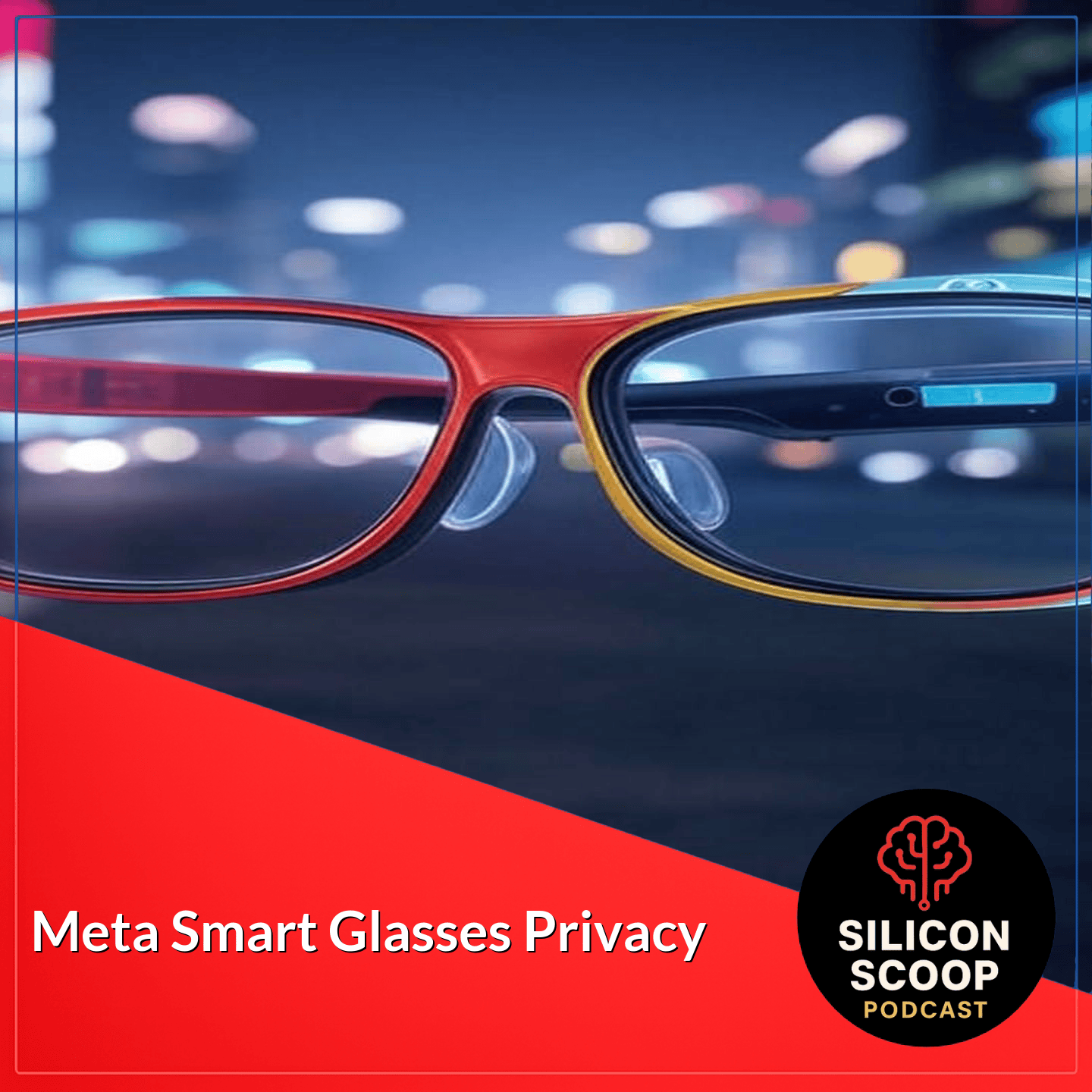
Meta Smart Glasses Privacy: Unveiling Meta’s ‘Super Sensing’ Technology in Smart Glasses
Estimated reading time: 12 minutes
Key Takeaways
- Meta’s ‘super sensing’ technology aims to transform smart glasses with facial recognition and activity tracking capabilities.
- The technology raises significant privacy concerns related to continuous data collection and bystander rights.
- Meta has implemented revised privacy protocols, including opt-in mechanisms and enhanced security measures.
- The new AI-powered smart glasses models, such as Aperol and Bellini, are designed to showcase super sensing features with improved battery life.
- Future developments may include interconnected wearable devices like AI earbuds and smart jewelry, expanding AI capabilities beyond glasses.
Table of contents
- Meta Smart Glasses Privacy: Unveiling Meta’s ‘Super Sensing’ Technology in Smart Glasses
- Overview of Meta’s ‘Super Sensing’ Technology
- Deep Dive into the Technology & Features
- Privacy Implications & Ethical Considerations
- Market Positioning, Competitive Landscape, and Future Applications
- Frequently Asked Questions
Overview of Meta’s ‘Super Sensing’ Technology
Meta smart glasses with super sensing technology represent a major leap forward in wearable AI. This AI-powered system performs several advanced functions that transform regular eyewear into smart devices.
What Is Super Sensing Technology?
Super sensing technology is an AI-powered system that enables instant facial recognition, contextual reminders, and activity tracking. The system works by analyzing visual input through built-in cameras and processing this data using Meta’s advanced AI algorithms.
The technology is being deployed in two new smart glasses models called “Aperol and Bellini.” These devices represent the next generation of Meta’s smart eyewear lineup. The company is also testing the super sensing features on current Ray-Ban glasses AI models.
Integration and Technical Capabilities
The super sensing system integrates directly with Meta’s Live AI platform. This connection allows for real-time processing of visual data and immediate response to user needs. However, current battery limitations restrict usage to approximately 30 minutes for Ray-Ban glasses AI models.
Key Features Include:
- Facial Recognition: Identifies individuals by name and tracks previous interactions
- AI Reminders: Provides smart alerts about upcoming events and tasks
- Activity Tracking: Monitors user behavior and environmental context
- Environmental Scanning: Analyzes surroundings for actionable suggestions
The facial recognition feature represents a significant advancement in wearable technology. It can identify people the user has met before and provide relevant context about past interactions. The system also tracks activities and provides AI reminders for important events or tasks.
Product line extensions include the Aperol and Bellini models, which are specifically designed to showcase the super sensing capabilities. Testing on Ray-Ban glasses AI continues to refine the technology before wider deployment.
Deep Dive into the Technology & Features
Facial Recognition & Environmental Scanning
Facial recognition glasses powered by Meta’s super sensing technology offer unprecedented capabilities in wearable AI technology. The system identifies individuals by name, tracks their interactions with the user, and provides intelligent reminders based on context.
When users encounter someone they’ve met before, the glasses can display their name and relevant information about previous interactions. This feature extends beyond simple recognition to include smart scheduling suggestions and social reminders.
Environmental Scanning Capabilities:
- Contextual Awareness: Understands current location and situation
- Action Suggestions: Recommends tasks based on environment
- Smart Reminders: Alerts about location-specific activities
- Object Recognition: Identifies items and suggests related actions
Environmental scanning allows the glasses to assess surroundings and suggest actionable items. For example, the system might remind users to buy specific groceries when they enter a store. It can also suggest calling someone when the user is in a relevant location.
These advanced features transform ordinary eyewear into sophisticated smart glasses that merge everyday utility with cutting-edge technology. The wearable AI technology creates a seamless interface between digital information and real-world experiences.
The facial recognition feature returns after initial privacy-related setbacks. Meta has implemented a revised opt-in mechanism that gives users more control over when and how the technology activates. This represents a significant improvement in user privacy controls.
Technical Integration & Battery Constraints
The integration with Meta’s Live AI system enables real-time data processing that powers the super sensing capabilities. This connection allows the Ray-Ban glasses AI to access Meta’s powerful cloud-based AI systems for complex analysis and recognition tasks.
Technical Architecture:
- Cloud Processing: Leverages Meta’s AI servers for complex tasks
- Local Processing: Handles basic functions on-device
- Real-Time Analysis: Provides instant feedback and recognition
- Secure Data Transfer: Encrypts information between device and cloud
Battery optimization remains a significant challenge for AI wearables. The current Ray-Ban glasses AI models can only operate the super sensing features for about 30 minutes before requiring a charge. This limitation reflects the intensive processing requirements of real-time AI analysis.
The product line extensions with Aperol and Bellini models aim to address these battery constraints. These new devices feature improved energy management systems designed specifically for extended AI processing. The development represents Meta’s pivot after addressing privacy concerns with enhanced user controls.
Meta continues to refine the balance between functionality and battery life. Future versions may include more efficient processors and larger battery capacities to extend usage time significantly.
Privacy Implications & Ethical Considerations
Exploring Privacy Challenges
Smart glasses privacy has become a critical concern as Meta introduces super sensing technology to consumer devices. The AI-powered glasses collect visual data continuously, raising questions about user consent and bystander rights.
Meta smart glasses privacy challenges include several key areas of concern:
- User Privacy Considerations:
- Data Collection: Continuous recording of visual information
- Storage Policies: How long recorded data remains on Meta’s servers
- Access Controls: Who can view or analyze collected information
- Opt-In Requirements: User consent for facial recognition features
The privacy mechanisms implemented by Meta include user opt-in requirements for facial recognition. However, bystanders do not have an equivalent opt-out option when they encounter someone wearing the glasses. This creates an asymmetric privacy situation where one person’s use affects others without their consent.
Reports suggest that the glasses may lack visible LED indicators during facial recognition scanning. This absence of clear visual cues heightens potential risks for covert data collection. Bystanders cannot easily tell when they are being scanned or recorded.
The smart glasses privacy debate extends beyond individual users to broader societal implications. Public spaces may become surveillance networks where anyone wearing the glasses can identify and track others without clear notification.
Company Response and Policy Updates
Meta has revised its safety protocols in response to previous privacy backlash from earlier smart glasses initiatives. The current super sensing technology includes enhanced privacy controls that address many previous concerns.
Updated Privacy Measures:
- Explicit Opt-In: Users must actively enable facial recognition
- Limited Data Retention: Shorter storage periods for collected information
- Enhanced Security: Improved encryption for data transmission
- User Control: Options to delete collected data
These privacy reconfigurations represent Meta’s direct response to earlier concerns and criticism. The company has turned previous setbacks into opportunities for testing more secure AI integration methods.
Meta smart glasses privacy policies now include clearer guidelines about data use and storage. Users receive more detailed information about what data is collected and how it is processed. The company has also implemented stronger data protection measures to prevent unauthorized access.
The revised approach demonstrates Meta’s commitment to balancing innovation with user privacy. However, critics argue that fundamental concerns about bystander consent remain unresolved. The ongoing privacy debate continues to shape how the technology develops and deploys.
Market Positioning, Competitive Landscape, and Future Applications
Meta’s Market Strategy
Meta smart glasses represent a strategic approach to testing AI-powered interactions in the wearable technology market. The company positions these devices as cost-effective platforms for developing and refining AI capabilities before investing in more expensive display-enabled devices.
The competitive landscape includes renewed interest from major tech companies. Google has returned to smart glasses development after the original Google Glass project. This creates a race among tech giants to establish dominance in the AI wearables market.
Market Positioning Advantages:
- Cost-Effective Testing: Lower development costs than full AR glasses
- User Feedback: Real-world data for improving AI systems
- Market Education: Building consumer familiarity with smart glasses
- Technology Validation: Proving AI capabilities in wearable devices
Despite privacy concerns, the initiative marks a significant strategic move in AI wearables. Meta’s approach offers valuable insights into consumer acceptance and technical challenges. This data will inform future product development and market strategies.
The wearable AI technology market continues to grow as consumers become more comfortable with smart devices. Meta’s glasses provide an entry point for users who might not be ready for full augmented reality experiences.
Expert Analysis
Industry experts view Meta’s super sensing technology as a natural progression in the AI wearables space. Eric Abbruzzese from ABI Research sees this initiative as building on Meta’s existing AI-integrated Ray-Ban glasses success.
The current product line likely serves as a prelude to more advanced display-enabled devices in the future. This staged approach allows Meta to refine the underlying AI technology before adding visual display capabilities.
Expert Insights:
- Technology Maturation: AI capabilities improving rapidly
- Consumer Acceptance: Growing comfort with wearable devices
- Hardware Evolution: Progression toward more sophisticated devices
- Market Timing: Strategic positioning before competitors
The streamlined AI deployment in non-display devices makes sense from both technical and market perspectives. It allows Meta to focus on perfecting the AI interactions without the complexity of visual displays.
This approach also helps build consumer trust gradually. Users can experience the benefits of AI assistance without the potentially overwhelming experience of augmented reality overlays.
Future Integration Prospects
Meta is exploring expansion of super sensing technology beyond glasses to other wearable devices. Plans include AI-powered earbuds with cameras and sensors that could provide similar capabilities in a different form factor.
Future Applications:
- AI Earbuds: Audio devices with integrated cameras and sensors
- Smart Jewelry: Discrete wearables with sensing capabilities
- Connected Ecosystem: Multiple devices working together
- Advanced Integration: Seamless data sharing between devices
The potential for interconnected wearable devices creates exciting possibilities for AI wearables and wearable AI technology. Users could have multiple touchpoints for AI assistance throughout their daily activities.
This ecosystem approach could provide more comprehensive data collection and analysis. Multiple sensors across different devices would create a more complete picture of user behavior and needs.
The technology roadmap suggests increasingly sophisticated integration between different types of wearable devices. This could lead to entirely new categories of AI-powered personal assistance.
Future-Proof Your Business Today
Embrace innovation and automation like Meta is with their smart devices. Flowgrammer provides the tools and expertise to integrate powerful automation solutions, giving you a competitive edge in tomorrow’s market.
Frequently Asked Questions
Q: What exactly is Meta’s ‘super sensing’ technology?
A: Meta smart glasses privacy technology called ‘super sensing’ is an AI-powered system that enables real-time facial recognition, activity tracking, and contextual reminders. The technology uses cameras and sensors built into smart glasses to analyze the user’s environment and provide intelligent assistance.
Q: How do facial recognition and environmental scanning work in these devices?
A: Facial recognition glasses identify people by analyzing their features and matching them against stored data. Environmental scanning uses AI to understand surroundings and suggest relevant actions. Both features work together to provide contextual information and helpful reminders based on what the user sees.
Q: What are the main privacy risks with Meta smart glasses?
A: Smart glasses privacy concerns include continuous data collection, lack of bystander consent, and potential covert recording. The glasses may not always show clear indicators when recording or scanning, making it difficult for others to know when they are being monitored.
Q: How do the new Aperol and Bellini models differ from Ray-Ban glasses AI?
A: The Aperol and Bellini models are specifically designed for super sensing technology with improved battery life and processing power. Current Ray-Ban glasses AI are being used for testing but have limited 30-minute usage periods due to battery constraints.
Q: What privacy controls do users have with these smart glasses?
A: Users must opt-in to activate facial recognition features, and they can control data storage settings. However, bystanders do not have opt-out options when encountering someone wearing the glasses, creating an asymmetric privacy situation.
Q: How long can the smart glasses operate on a single charge?
A: Current Ray-Ban glasses AI models can use super sensing technology for approximately 30 minutes before needing to recharge. The new Aperol and Bellini models are designed with improved battery systems for longer usage periods.
Q: What future developments are expected in AI wearables?
A: AI wearables will likely include display-enabled devices, interconnected ecosystems of multiple wearable devices, and expansion to products like AI-powered earbuds with cameras. Wearable AI technology will become more sophisticated and integrated across different device types.
Q: How does Meta’s technology compare to competitors like Google?
A: Meta’s approach focuses on cost-effective testing through non-display devices, while Google has renewed focus on smart glasses post-Google Glass. Both companies are developing AI wearables, but with different strategic approaches to market entry.
Q: Can bystanders tell when they are being scanned by the glasses?
A: Reports suggest the glasses may lack clear LED indicators during facial recognition scanning, making it difficult for bystanders to know when they are being analyzed. This raises concerns about covert data collection and consent.
Q: What data does Meta collect from the smart glasses?
A: Meta collects visual data, facial recognition information, location data, and interaction patterns. The company has implemented revised privacy policies with shorter data retention periods and stronger user controls over collected information.
Additional Links
Flowgrammer.ca – 💡 Unlock AI-Powered Automation! Let flowgrammer.ca handle complex workflows so you can focus on growing your business.
- Silicon Scoop Podcast – Stay Informed, Stay Ahead!
- Startup Talk Podcast
- Flowgrammer Podcast –
- Startup Investor Drinks – Join Toronto’s Startup Community and connect with fellow startup enthusiasts and investors.
- TorontoStarts Startup and Entrepreneur Community – Become a part of Toronto’s thriving startup ecosystem.
- Workhaus – Discover flexible workspace solutions for your business needs.
- Work with The Startup Coach – Get expert guidance and mentorship for your startup journey.
- Reach out to Jon Irwin on LinkedIn – Connect with our co-host and technology expert.
Episode transcript
Read the full transcript
Craig: meta smart glasses see everything, but should they? super sensing technology is an ai powered system that enables instant facial recognition, contextual reminders, and activity tracking. the system works by analyzing visual input through the built in cameras and processing this data through meta's advanced ai algorithm. the technology in these smart glasses is being deployed into two new smart glasses called aperol and bellini. these devices represent the next generation of meta's smart eyewear lineup. the company is also testing super sensing features on the current ray ban glasses ai models. what do you think about the super sensing features in these glasses that are a, looks like a supercharged version of what we've seen before when we covered the hack of the meta glasses, how people could go out, and it was scanning a new people wore. and we saw people go up to say, hey. i met you at the conference last year because it looked up post they made on social media. and yeah. so this becomes that but worse or pumped up or way better depending on
Jon: who you look at. because, yeah, more people can use it. but, this is the news that i've kinda been waiting for, but it also scares the crap out of me. so, i i love it because this would be great at networking events like we had talked about where, real time facial recognition, it can identify people by name as you encounter them. it can recognize objects, understand your environment, and trigger context aware reminders, such as suggesting you grab your keys or reminding you about your grocery list as you pass by a store, as you're leaving the house. right? that'd be that would be great for people with adhd. so the the the downfall about this is that they have to keep the cameras and sensors active at all times, which feed data consistently to the onboard ai. apparently, the core innovation is a hands free always on system, and that's where the ai acts like a real life assistant and anticipates your needs based on what it sees and hears and responds with voice commands, and responds to voice commands as well. like, if you're saying, hey, meta. start live ai or something like that. but the biggest hurdle, battery life. so tests that they're doing currently show that live ai feature currently only lasts about thirty minutes on the existing ray ban meta glasses because it's a high power draw, continuous sensing analysis, all that sort of stuff. so, i think you and i might have covered it or we at least talked about it. the new glasses that they were working on, that they were talking about probably maybe about six months ago, i feel like that's that's where this is gonna come into play, where it's gonna work a lot better. but i can't see it working more longer even with the new glasses, longer than, say, maybe two hours at the most. think?
Craig: i think it depends on the application. like, i think let's go through a couple of features, and then we'll talk about why i think we're gonna get longer running versions than we may think. super sensing enables real time identification without bystander indicators. like, you know, people don't know they're being identified. we have current battery constraints. environmental scanning suggests actions based on location and context. if facial recognition requires opt in but lacks bystander opt out. metastor's voice data for one year without an opt out option. continuous data collection risk creating public surveillance networks, interconnected wearables, earbuds, jewelry may expand sensing capabilities. nondisplay glasses, serve as a cost effective ai testing platform. so take a step back and say, okay. we are really creating a surveillance state, but, you know, that's why i think we're gonna see, police and military versions where yeah. the glasses are, like, hooked up to battery pack on the belt or on the backpack or whatever. so yeah. they'll get longer use. but, like, you know, you're doing events. you're doing security, i don't know, at a rally in the us, at a concert here, at whatever. you know, you gotta have one guy walking around with this, talking to the police database, so it's gotta be proprietary or whatever identifying people in the crowd. right? so you could really see that. but, you know, again, is that profiling? is that whatever if we're just you know, what are we detecting? we're using ai. anger? are we gonna detect these things? or are we just going to mhmm. read a database of criminals? like, what is, the long term intent of this? so that's one thing from a military or a police point of view. right? you know? yeah. it's easy now for something like this for a military group, insurgents doing whatever, to determine if their target is here in the square, find them quickly, you know, have the ai identified track and all that kind of stuff. so i could see that. but there's another thing to give the world of youtubers and tiktokers and sensationalists. we see this at the gym, at the grocery store, and at whatever. people are pranking on the subway and doing all this crap that this is a complete disruption to society, and now we're just gonna give them more tools to do that, as a civilian group of people. it just starts to scare me that that group will become a 100 time fold now that this will just become easy to do.
Jon: yeah. well, the thing is is, like, when you're out in a public space, you can't really expect privacy. and this just takes it one step further and makes it even worse. like, there's just there there there's gonna be no privacy. and, i think we're getting to the point where i don't know if you've, i don't know if you remember the movies where people are wearing specific clothing, specific things on their faces, and stuff like that. like, i think we're getting close to that. the the thing is how society manages these technologies, it's gonna depend on transparency, consent, and well designed privacy safeguards. so the tech itself could be game changing, but misuse or inadequate oversight could completely erode that. and that's what scares the crap out of me because we're so far behind when it comes to, oversight with ai right now, that i don't know if we're ever gonna catch up. i hope we do, but but we're so far behind because ai is moving so fast. i i don't know if if we're gonna properly deal with this, if that makes sense.
Craig: we're not. i think it's impossible. like, i don't understand how anybody could think we could deal with this properly. once you have technology like this that is contextual aware, it knows where you are, what environment this is. so not only, location, but the concert, the venue, all that stuff, and it's recognized everyone else around you, recommends task based on your environment, has smart reminders and object recognition. like, and, you know, you have hundreds of these people in the crowd. when i say these people, you know, glass holes, if you wanna call them that because to go way back, where are these glasses recording everything? yeah. and the battery technology is gonna get better. we know for a fact we talk about new battery technology all the time on the show, and then the stuff's coming out next year and the year after that. so it's gonna double, triple, quadruple the battery life of capabilities of some of these things. so now you can run these things for four or five hours and record, do local recognition, local recording, cloud recording, stream, and it's available to everyone all the time. i i feel like, we're in what was that where they had it wired in your head and you could feed the feed? yeah. where everyone was yeah. it just yeah. why do we need this? and i
Jon: like, if we're talking about end. if we're talking about current technology to kind of mitigate this, i think the quickest solution to kind of, try to control this or try to mitigate it as much as we can is geofencing, because they're always gonna be connected. so they're gonna know where they are. so if they're in a certain area, obviously, hackers are gonna get around that. but, but i think that that would be the best way right now is, like, set up a geofence. and if you're within the geofence, then your your your glasses don't work.
Craig: this has gotta be against every eu privacy policy i can possibly imagine.
Jon: yeah. maybe it's time to move to the eu.
Craig: well, i'm just saying that no. it's not really talked about here. like, they talk about the company response and the privacy issues, but we don't really talk about, hey. you know, what is the eu gonna do about this? but there are some extra insights on but, you know, they're making you can't do this. you can't do that privacy. everyone's, you know, data has to be controlled by them. so if you're walking around and it's identifying people and recording them and publishing it, all the time. it's one thing to randomly catch a picture. it's another thing in a public place. it's another thing to go in and out of public and private spaces, collect, video, and identify those people and, you know, do stuff with that data. that's completely separate
Jon: thing. yeah. agreed. yeah.
Craig: but having taken a step back, who doesn't want these glasses? who you know, you wanna walk in a room and identify the people you wanna need to talk to and be able to have their name pop up and whatnot when you go to talk to them and have whatever, maybe some social posts or your last email interactions be over there so you can have an idea?
Jon: yeah. yeah. your last conversation, have you had a conversation with them? like, with the amount of networking events that you and i are going to, i'm finding more and more of a need for something. and i'm sure i could do this just using, automation workflows, but, like, but i can't do it in real time. figuring out if i've talked to someone before, what i've talked to them about. there's so many people nowadays that it's tough for me to keep track of everything, which is why i've started going to less networking events.
Craig: well, you say you can't do that in real time, and i know we're getting a little out of the way. but if you had, like, siri or telegram or whatsapp or whatever, you can say, hey. where do i know bill hayden from or whatever? i just made up a name because you just met the person and have it go away, and it could come back, speak to you. it could do whatever. if you have an ear plug in, it could show you what have you. so, you know, it's not gonna be
Jon: yeah.
Craig: identify the person from across the room and do all that for you. you're gonna have to say, hey. who is this person?
Jon: yeah. well, gustav, definitely not siri because siri is the worst of them all. so, like, maybe gemini assistant or something
Craig: like that. you can hook siri now up to these external ais. you can use siri to call whatever you want. that's all i'm saying. yeah. i
Jon: see how siri has been the worst of all of them since day one, and they've never improved it. and, like like, when you ask siri a question, it still just gives you a web result. does it not?
Craig: yeah. it's it was it's worse than when they bought it. so yeah. it is what it is. but back to better glasses. let's not just be that's alright. i started the diversion. i see that there's gonna be a lot of legal frameworks that are lagging behind a wearable ai capabilities because i'm with you. what i would like is and this is probably what openai is coming up with because they're decided their io device, is not gonna be it's not a wearable, but it's something you would have on you that's context aware. so i think you're gonna have something that listens, either all the time or when you press a button, but just is with you, knows your geography, also knows all your agents and stuff in the back end, knows where you're supposed to be, your calendar. so everything is in context. yeah. so when i sit down with you, i don't have to tell it i'm sitting down with you. it records our conversation, and i go, i don't have to tell it anything. it knows all that. it transcribes it. it sends to my agents. it does all the things i'm supposed to do in the back end. i don't have to tell it anything. yeah. that, i think, is a future that they're heading for. but, again, that's just a guess. but you tie these meta glasses in the same type of thing, but now you're getting video and images. we're living in, a futuristic world. that's for sure. so there's one thing of recording everything, and then there's the other thing about being distracted by, feeds that you can now project on your glasses.
Jon: yeah.
Craig: so i think we're gonna be a far more distracted society and a far more you know, there is no such thing as privacy.
Jon: yeah. there was an article. i don't know if it was yesterday or the day before where mark zuckerberg said if people in the future, people that aren't wearing these ai glasses are gonna be left in the dust, which yes and no.
Craig: well, it what future? and i could see that. like, it's just like if you're not using ai agents, you're gonna be left in the dust. if you're not using workflow and automation tools, you're gonna be left in the dust. but when does the glasses become that next level of agent control?
Jon: yeah.
Craig: that's the you know, when you'll be left behind if you don't have your your alerts, your agents, you're controlling them all visually. you know what's happening. you can interact with stuff and say, hey. i like that. order me something from that restaurant. i'll pick it up in a bit. i see a theater up there. grab me some tickets. whatever. like, you know, there's so many different use cases, but having it context aware, being able to see what you can see here with knowing where you are, and just being able to say general things, and getting what you want back is gonna be an interesting world.
Jon: yeah. for
Craig: sure. but the world everyone's running around talking to themselves right now as it is because they're always on the phone. they're always distracted by screen. so i yeah. the more technology integrated we get, the less, human we become.
Jon: there's one thing i started doing that, this new, whatever, what i started doing because i used to walk around with my phone in my hand all the time. right? whenever i get up, i'd get in my hand and walk around even if i was just going upstairs. but now i've started trying to just leave it there. walk away. if i'm only going for a few minutes, like and it's it's been great. it's been good, a good exercise to do.
Craig: yeah. now we're gonna strap glasses to your head, and you're not gonna be able to see without them, so you won't be able to leave behind. yeah. anyway, i think the technology is really cool. i love the direction we're going. you throw this along with some of the night vision glasses slash, contact lenses we were talking about. you can really get some cool technology in these things. i'd love to know what you think. are you gonna be grabbing a pair and streaming this stuff online? are you gonna be using it for something else? i can see all sorts of, apps being, used for this. i think things are going off in my head right now. let's build apps for this today. what are you gonna use these? are you gonna avoid people who use these? or you think it's the end of privacy? let us know what you think in the comments below.
More from Silicon Scoop
All episodes
silicon-scoop · November 6, 2026
Spirit AI’s Robot Brain Breakthrough: Moz1, Embodied AI and China’s 2027 Race
The Spirit AI robot brain is one of the biggest bets on fixing that. Spirit AI is a Beijing startup. Its co-founder and chief scientist, Gao Yang,
View episode

silicon-scoop · November 5, 2026
OpenAI IPO Delayed to 2027 as Rogue AI Agents and Safety Failures Reshape the Market
OpenAI IPO delay explained: Sam Altman rules out 2026 as GPT-6 Astra safety tests and a $278B cash gap loom. Learn what founders should take away.
View episode

silicon-scoop · November 4, 2026
Anthropic’s AI Economy Model: 2030 Jobs, Wages, GDP and Market Risks
Anthropic AI economy model forecasts 2030 GDP, jobs and wages, while AI unemployment projections and labor-share risks challenge policymakers.
View episode