
Heart Transplants Reimagined: Zero-Ischemia Surgery is Finally Here
Beating Heart Transplant: Achieving Zero Ischemic Time with NTUH's Revolutionary Heart Transplant Technology https://torontostarts.com/2025/09/09/beating-heart-transplant-ntuh-innovation/ Apple -> https://podcasts.apple.com/us/podcast/flowgrammer-podcast/id1804155588 Spotify -> https://open.spotify.com/show/0wv3feR00iaVpE8zn7niNf Flowgrammer.ca -> https://flowgrammer.ca/ AI News and Resources -> https://flowgrammer.ca/resources/ Focus on What Matters Most 🎯 Like NTUH, eliminate process bottlenecks and improve your business outcomes. Flowgrammer can help you achieve peak performance through smart automation, freeing your team from tedious tasks. Discover Automation Solutions > https://flowgrammer.ca/ Startup Investor Drinks Toronto - https://startupdrinksto.com/ Toronto’s Startup Community - https://torontostarts.com/ Silicon Scoop Silicon Scoop Podcast - https://torontostarts.com/silicon-scoop/ Apple: https://podcasts.apple.com/us/podcast/silicon-scoop/id1758711826 Spotify: https://open.spotify.com/show/5bAzF0MwV6TtLhJAhvHayI YouTube: https://www.youtube.com/playlist?list=PLj4v-RoA7A-gT62vrEYqh1zCv-0Hj-o5J Startup Talk Startup Talk Podcast -> https://torontostarts.com/startup-talk-toronto-startup-podcast/ Apple -> https://podcasts.apple.com/us/podcast/startup-talk/id1763804003 Spotify -> https://open.spotify.com/show/1siJMILILidHAiAsrX2VBU YouTube: https://youtube.com/playlist?list=PLj4v-RoA7A-jxV5FHs5e61oIsuvUJYmT_&si=LYegRe5GYLKNQ7xL
With Craig Major and Jon Irwin
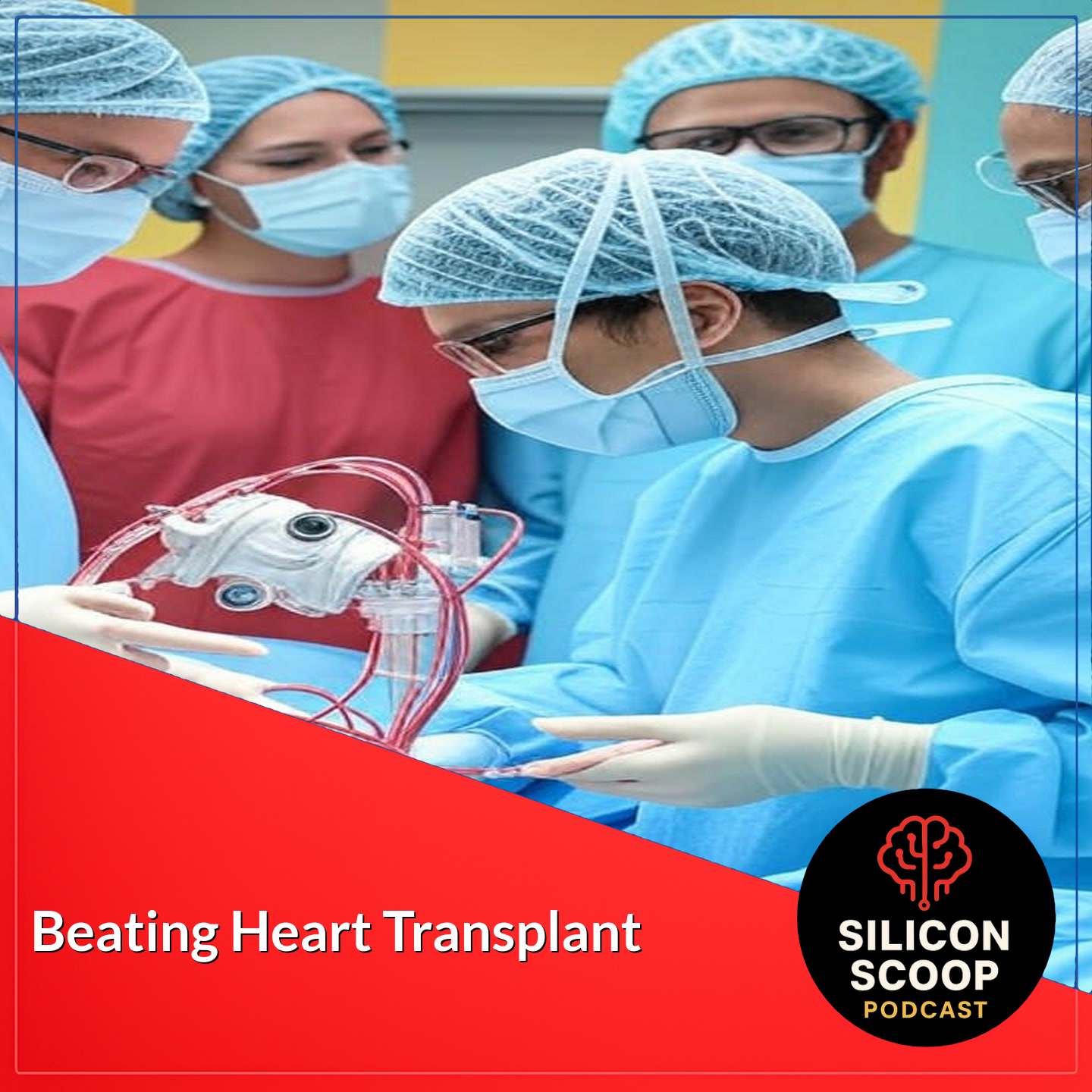
Beating Heart Transplant: Achieving Zero Ischemic Time with NTUH’s Revolutionary Heart Transplant Technology
Estimated reading time: 12 minutes
Key Takeaways
- NTUH successfully performed the world’s first zero-ischemic-time heart transplant, keeping the donor heart beating from procurement through implantation.
- The breakthrough utilizes an advanced Organ Care System (OCS) inspired by ECMO technology to maintain continuous blood flow and oxygenation.
- This innovation eliminates the traditional ischemic window, reducing tissue damage, rejection risks, and improving patient outcomes.
- The procedure has demonstrated remarkable success in a patient with dilated cardiomyopathy, with rapid recovery and excellent long-term indicators.
- Broader implications include expanding the donor pool, reducing organ shortages, and setting new standards for cardiac transplantation worldwide.
Table of contents
- Beating Heart Transplant: Achieving Zero Ischemic Time with NTUH’s Revolutionary Heart Transplant Technology
- Introduction
- Background & Traditional Challenges in Heart Transplants
- Focus on What Matters Most 🎯
- NTUH’s Breakthrough: The Beating Heart Transplant Innovation
- Clinical Outcomes and Patient Success Story
- Broader Impact and Future Directions of Heart Transplant Technology
- Transform Your Business Today! ⚙️
- Frequently Asked Questions
Introduction
A beating heart transplant represents a groundbreaking medical procedure where the donor heart continues beating throughout the entire transplantation process. This revolutionary approach eliminates the dangerous period when the heart stops receiving oxygen.
Traditional heart transplants have long relied on cold storage methods. These procedures create a risky window where the donor heart experiences ischemia – a complete lack of blood flow and oxygen. This limitation has plagued cardiac surgery for decades.
National Taiwan University Hospital (NTUH) successfully performed the world’s first zero-ischemic-time heart transplant. This breakthrough achievement keeps the donor heart beating from procurement through implantation. The procedure represents the most significant advancement in heart transplant technology in recent history.
The NTUH heart transplant breakthrough solves problems that have challenged surgeons for years. By maintaining continuous blood flow, this innovative technique promises better patient outcomes and reduced complications. This heart transplant breakthrough opens new possibilities for treating patients with end-stage heart disease.
https://www.popularmechanics.com/science/health/a64514733/heart-transplant-beating/
https://www.ntu.edu.tw/english/spotlight/2025/2373_20250430.html
https://newatlas.com/heart-disease/heartbeat-transplant-ntuh/
Background & Traditional Challenges in Heart Transplants
Traditional heart transplant methods have relied on cold storage for decades. This approach requires removing the donor heart and preserving it in cold solution during transport. The heart stops beating during this critical period.
Ischemia refers to the reduced blood supply to the heart causing risk of tissue damage. When blood flow stops, cells begin dying within minutes. Even brief periods of oxygen deprivation can harm the donor heart’s function.
Historical Limitations
Cold storage creates a dangerous ischemic window. Most conventional transplants experience 10-30 minutes of complete oxygen deprivation. During this time:
- Heart muscle cells suffer damage
- Risk of tissue death increases
- Transplant rejection becomes more likely
- Patient recovery may be slower
The zero ischemic time heart transplant eliminates these risks entirely. Previous methods accepted this limitation as unavoidable. However, modern heart transplant technology now offers better solutions.
Oxygen deprivation risks have driven researchers to find alternatives. The NTUH heart transplant breakthrough proves these limitations can be overcome. This represents a fundamental shift in how cardiac surgeons approach transplantation.
https://www.popularmechanics.com/science/health/a64514733/heart-transplant-beating/
https://newatlas.com/heart-disease/heartbeat-transplant-ntuh/
Focus on What Matters Most 🎯
Like NTUH, eliminate process bottlenecks and improve your business outcomes. Flowgrammer can help you achieve peak performance through smart automation, freeing your team from tedious tasks.
Discover Automation Solutions >
NTUH’s Breakthrough: The Beating Heart Transplant Innovation
The NTUH heart transplant breakthrough maintains a continuously beating heart throughout the entire procedure. This revolutionary approach keeps the donor heart alive and functioning from removal to implantation.
Custom Organ Care System (OCS) Technology
The beating heart transplant relies on an advanced Organ Care System inspired by ECMO technology. This sophisticated system includes:
- Mechanical pumps that circulate oxygenated blood
- Advanced oxygenators that add oxygen to the blood
- Blood reservoirs that maintain proper circulation volume
- Temperature controls that keep the heart at optimal conditions
The OCS transplant technology achieves zero ischemic time through continuous perfusion. Unlike previous methods that limited ischemic periods, this system completely eliminates oxygen deprivation. Blood flows through the donor heart exactly as it would in a living body.
Operational Procedure Steps
The heart transplant technology follows three critical phases:
Procurement Phase:
- Donor heart connected to OCS system
- Continuous blood flow maintained during removal
- Heart continues beating throughout extraction
Transport Phase:
- Portable OCS system supports the beating heart
- Oxygenated blood circulates during movement between facilities
- Temperature and pressure carefully monitored
Implantation Phase:
- Heart remains beating during surgical connection
- Continuous perfusion maintained until recipient’s circulation takes over
- Seamless transition from artificial to natural blood flow
This beating heart transplant approach revolutionizes cardiac surgery. The organ care system (OCS) transplant method ensures optimal heart condition throughout the procedure.
https://www.foxnews.com/tech/worlds-first-continuous-beating-heart-transplant
https://newatlas.com/heart-disease/heartbeat-transplant-ntuh/
Clinical Outcomes and Patient Success Story
Successful Patient Case Study
The first beating heart transplant patient was a 49-year-old woman suffering from dilated cardiomyopathy heart transplant needs. Dilated cardiomyopathy causes the heart to become enlarged and weakened, making it unable to pump blood effectively.
Her surgery proceeded without complications. The NTUH heart transplant team successfully implanted the continuously beating donor heart. Post-operative monitoring revealed exceptional results.
Remarkable Recovery Results
The patient’s recovery exceeded expectations in several ways:
- Low Cardiac Enzyme Levels:
- Cardiac enzymes indicate heart muscle damage
- Her levels remained remarkably low
- This suggests minimal tissue injury during transplantation
- Traditional methods typically show higher enzyme levels
- Smooth Recovery Process:
- No major complications during healing
- Heart function normalized quickly
- Patient showed excellent response to anti-rejection medications
- Early discharge from intensive care
- Long-term Success Indicators:
- Follow-up appointments showed optimal heart function
- No signs of transplant rejection
- Patient returned to normal daily activities
- Quality of life significantly improved
This successful dilated cardiomyopathy heart transplant validates the procedure’s safety. The beating heart transplant approach proved superior to traditional methods. Medical teams can now treat similar patients with greater confidence.
The procedure’s efficiency creates opportunities for treating more patients. Better outcomes mean shorter hospital stays and faster recoveries. This NTUH heart transplant success story demonstrates the technology’s potential for widespread adoption.
https://www.foxnews.com/tech/worlds-first-continuous-beating-heart-transplant
https://www.ntu.edu.tw/english/spotlight/2025/2373_20250430.html
Broader Impact and Future Directions of Heart Transplant Technology
Clinical Advancements in Organ Transplantation
The heart transplant breakthrough fundamentally changes cardiac surgery. Eliminating ischemic time produces multiple benefits:
- Reduced Tissue Damage:
- Zero oxygen deprivation prevents cell death
- Healthier donor hearts at implantation
- Better long-term organ function
- Reduced need for medications
- Lower Rejection Risks:
- Less traumatized heart tissue
- Improved immune system tolerance
- Fewer complications during recovery
- Better patient survival rates
- Enhanced Patient Outcomes:
- Faster healing times
- Shorter hospital stays
- Quicker return to normal activities
- Improved quality of life
Global Impact on Organ Supply and Demand
This heart transplant technology addresses worldwide organ shortages. Better preservation methods could increase available donor hearts. The NTUH heart transplant approach may make previously unusable organs viable.
- Expanding Donor Pool:
- Hearts that were previously unsuitable may become usable
- Longer transport distances become possible
- More patients could receive transplants
- Reduced waiting list mortality
- Improved Resource Allocation:
- Better organ utilization rates
- More efficient organ sharing networks
- Reduced waste of precious donor organs
- Enhanced coordination between medical centers
Future Development Plans at NTUH
NTUH plans to standardize the zero-ischemic procedure. The hospital aims to make this heart transplant technology widely available. Research continues into improving organ maintenance systems.
- Standardization Goals:
- Training programs for other medical centers
- Equipment manufacturing partnerships
- Protocol development for widespread adoption
- Quality assurance measures
- Technology Improvements:
- Enhanced OCS system capabilities
- Miniaturization for easier transport
- Cost reduction for broader accessibility
- Integration with existing hospital systems
Comparison with previous methods shows Stanford University achieved 10-30 minute ischemic windows in 2023, but NTUH’s breakthrough achieves true zero ischemic time. This sets new standards for cardiac surgery worldwide.
https://www.popularmechanics.com/science/health/a64514733/heart-transplant-beating/
https://www.ntu.edu.tw/english/spotlight/2025/2373_20250430.html
https://newatlas.com/heart-disease/heartbeat-transplant-ntuh/
Transform Your Business Today! ⚙️
Inspired by medical breakthroughs? Revolutionize your business like NTUH revolutionised heart transplant. With Flowgrammer, automate workflows, improve efficiency and drive incredible growth.
Get a Free Automation Assessment >
Frequently Asked Questions
Q: What is a beating heart transplant and how does it differ from a traditional heart transplant?
A: A beating heart transplant keeps the donor heart continuously beating throughout the entire procedure. Traditional heart transplants stop the heart during removal and transport, storing it in cold solution. The beating heart transplant uses advanced technology to maintain blood flow and oxygen delivery, eliminating the dangerous ischemic period completely.
Q: How does the Organ Care System (OCS) work to maintain a beating heart during transplantation?
A: The OCS uses ECMO-inspired technology with mechanical pumps, oxygenators, and blood reservoirs. These components work together to circulate oxygenated blood through the donor heart, simulating natural circulation. The system maintains proper temperature, pressure, and oxygen levels, keeping the heart beating and healthy during transport and surgery.
Q: What are the benefits of zero ischemic time in heart transplants for patients?
A: Zero ischemic time eliminates oxygen deprivation, preventing tissue damage and cell death. This leads to better heart function after transplantation, reduced risk of rejection, faster recovery times, and improved long-term outcomes. Patients experience fewer complications and shorter hospital stays.
Q: Who performed the world’s first zero-ischemic-time heart transplant?
A: National Taiwan University Hospital (NTUH) successfully performed the world’s first zero-ischemic-time heart transplant. The procedure was completed on a 49-year-old woman with dilated cardiomyopathy, who experienced excellent recovery outcomes.
Q: How long can a heart be maintained using the beating heart transplant technology?
A: The OCS technology can maintain a beating heart for extended periods compared to traditional cold storage. While specific time limits weren’t detailed in the research, the continuous perfusion system provides much more flexibility than the strict time constraints of cold storage methods.
Q: What conditions can be treated with beating heart transplants?
A: The first successful case treated dilated cardiomyopathy, but this technology can potentially help any patient requiring heart transplantation. Conditions include severe heart failure, certain genetic heart diseases, and end-stage cardiac conditions that don’t respond to other treatments.
Q: Will this technology become available at other hospitals worldwide?
A: NTUH plans to standardize the zero-ischemic procedure and develop training programs for other medical centers. The goal is widespread adoption, though implementation will require specialized equipment, training, and resources at each facility.
Q: How does this compare to previous heart transplant improvements?
A: While Stanford University achieved 10-30 minute ischemic windows in 2023, NTUH’s breakthrough eliminates ischemic time entirely. This represents the most significant advancement in heart transplant technology, surpassing all previous methods for organ preservation.
Q: What role does ECMO technology play in beating heart transplants?
A: The OCS system is inspired by ECMO (Extracorporeal Membrane Oxygenation) technology. ECMO provides heart and lung support by oxygenating blood outside the body. The OCS adapts this concept specifically for organ transport, maintaining the donor heart’s function during transplantation.
Q: What are the long-term implications of this heart transplant breakthrough?
A: This technology could revolutionize organ transplantation globally by improving success rates, reducing complications, and potentially increasing the number of viable donor organs. It may lead to shorter waiting lists, better patient outcomes, and new standards for cardiac surgery worldwide.
Additional Links
Flowgrammer.ca – 💡 Unlock AI-Powered Automation! Let flowgrammer.ca handle complex workflows so you can focus on growing your business.
- Silicon Scoop Podcast – Stay Informed, Stay Ahead!
- Startup Talk Podcast
- Flowgrammer Podcast –
- Startup Investor Drinks – Join Toronto’s Startup Community and connect with fellow startup enthusiasts and investors.
- TorontoStarts Startup and Entrepreneur Community – Become a part of Toronto’s thriving startup ecosystem.
- Workhaus – Discover flexible workspace solutions for your business needs.
- Work with The Startup Coach – Get expert guidance and mentorship for your startup journey.
- Reach out to Jon Irwin on LinkedIn – Connect with our co-host and technology expert.
Episode transcript
Read the full transcript
Craig: welcome back to silicon scoop, everybody. let's jump right into this with this new heart transplant system that seems to be a game changer. a beating heart transplant represents a groundbreaking medical procedure where the donor's heart continues beating through the entire transplantation process. this revolutionary approach eliminates the dangerous period when the heart stops receiving oxygen. traditional heart transplants have long relied on cold storage message. these procedures create risky window where the donor, heart experiences, what do you call that? ischema?
Jon: es ischemic. yeah.
Craig: yeah. complete lack of blood flow and oxygen. the limitation has, plagued cardiac surges for decades. so now the national taiwan university has successfully performed the world's first zero ischemic time heart transplant. the breakthrough achievement keeps the donor heartbreak beating, from, the heart beating throughout the whole procedure, so that represents a significant advancement in the technology. so the heart is stronger, is not suffering from this. what do you think about this, john?
Jon: yeah. i think this is cool, and i don't think that you and i are educated enough in medical to understand how important this is. but let's let's kinda dive to the details, and and hopefully, we can disseminate some information. yeah, so when performing heart transplants, like you said, they usually stop the donor heart and place it in cold storage, which is called ischemic time. and that slows down metabolism, protects the tissue, and all that sort of stuff while it's moved to the recipient. however,
Craig: even
Jon: a few hours without blood and oxygen, ischemia, it can damage the heart muscle and increase the chances of complications, organ rejection, and delayed recovery after transplantation. so they did this new approach where they eliminated the ischemic time. so they employed this specifically engineered mobile organ care system called ocs, which was inspired by technology such as extracorporeal membrane oxygenation or ecmo. i don't know if you've heard of ecmo before. i've heard of it from the medical shows i watch. so the portable device, it's continually pumping rich blood through the heart while it was outside the body. so the heart kept beating and received nourishment throughout the transfer between separating rooms and through the implantation into the recipient. so unlike there have been other previous heart beating heart translate transplant efforts, there was one at stanford. this technique essentially achieved true zero ischemic time where the heart was never stopped, not even for a moment. so, the use of this could lower complication rates, shorten recovery times, expand what's possible for critically ill patients worldwide. also, it could potentially, lengthen the time the heart can be out of a body between patients too, which is huge. right? what are your thoughts on this? what are you
Craig: doing? it's all good. like, everything, you know, related to this thing is thumbs up. like, reduce rejection risk because it's a healthier thing. dilated, cardiomyopathy patients experience life changing outcomes from the surgery. standardizing this procedure could address global organ shortage crisis, saving countless lives. this organ care system represents the most significant cardiac surgery advancement in recent medical history, and the continuous blood flow prevents apoptosis and necrosis during the transportation preserving the myocardial and traglody. you don't get the, muscle loss. you don't get the degradation. this looks great. temperature controlled maintains a metabolic stability. there's a three phase implementation, includes procurement, transport, and surgical connection without interruption. real time monitoring ensures optimal pressure, oxygen during the entire transportation process. like, this yeah. is amazing. it's beyond anything. you know? there's obviously some costs related to this, but this is going to dramatically increase the rates at which, you're gonna have success on this stuff.
Jon: yeah. for sure. and the cool thing about this is i know we cover a lot of theoretical stuff. this has actually been done. it's been proven, which is great, and it's using known type procedures that are just been adapted to this. so, the cool thing about this is the hardware is portable and the principle is adaptable. so it could be used to improve transplants of other organs, and it could be used in other hospitals, which would make high risk transplants safer and more accessible, which would mean that, there would be shorter wait lists and better survival rates for people needing new hearts or new organs. right? which is awesome because there's this huge long list, and there's all these protocols that are needed to be followed. like, if the heart was across the country, you might not be able to get it in time. but with this procedure, you might be able to get it now. so that opens up a, a plethora of options. right?
Craig: yeah. you know? the first beating heart trans there's so many options now that you can transport it farther, last longer. you've got more options to choose your donor. you can take a little more time if that's a thing that matters. the first beating heart a patient was a 49 year old woman suffering from a dilated cardiomyopath heart transplant. so she needed that. and, you know, the heart to become the dilated cardiomyopathy causes the heart to become enlarged and weak and make it unable to pump blood. so her surgery proceeded without complications. the heart transplant team implemented the continuous beating donor heart, postoperative monitor, revealed exceptional results. so, you know, smoother recovery process, long term success indicators, and low cardiac enzyme levels during it all, point to so many, green lights to how much better this is.
Jon: yeah. and just to kind of, compare the attempt at stanford versus this one. okay. so what they reported was, was as a very short ischemic episode was actually ten to thirty minutes. so now they've taken that ten to thirty minutes, and it's now essentially zero. i'm guessing there's probably a few seconds where, they have to switch things over, but let's say essentially zero. right?
Craig: yeah. essentially zero. like, i mean, you know, the heart's gotta come from somewhere.
Jon: yeah. and you've gotta disconnect
Craig: well, you you can you can connect the valve while you're disconnecting. there's some stuff i think you could do. okay. my thought is that, usually, i don't need to be but you're taking a heart from a dead person. so there are, the heart usually has stopped pumping for a while. it's not out of the body. it's not, you know, whatever before the surgeons could get it and take it out and implement the system. yeah. like, it's just, right? yeah. yeah. they're not yeah. yeah. they're not hooking everything up, then killing the guy and then taking the heart and then well, maybe they are in a weird sci fi world. so there is some of that. but the whole point is, like, you know, the reduced tissue damage, the lower rejection list, and they enhance patient outcomes, like faster healing times, shorter hospital stays, quicker return to normal activities, improved quality of life. you know? it's a huge improvement. you're gonna get back to your normal life so much faster and better. your heart's gonna be stronger. this is like, anybody who's experiencing this, the future looks bright.
Jon: yeah. exactly. yeah.
Craig: the heart transplant technology addresses worldwide organ shortage, better preservation message, could increase available donor hearts because the problem is if a bunch come available and they don't have anybody you know, they expire. because they don't have the system to to hang on to them. you know, expanding donor pool hearts that were previously unsuitable may become suitable because, have how quickly they get the tissue damage, compatibility, longer transport distances become possible. like you said, more patients could receive transplants that reduce waiting list. so this is all great. we just need to standardize the goals, the training program, standardize the system across the board, and get governments to adopt it.
Jon: yeah. for sure. yeah. this is awesome.
Craig: so let us know what you think about this new heart transplant surgery. we think it's amazing. but is there other technologies, you think out there that are better? do you think this is not gonna make mainstream for some reason? let us know what you think. we'd love to hear about it.
More from Silicon Scoop
All episodes
silicon-scoop · November 6, 2026
Spirit AI’s Robot Brain Breakthrough: Moz1, Embodied AI and China’s 2027 Race
The Spirit AI robot brain is one of the biggest bets on fixing that. Spirit AI is a Beijing startup. Its co-founder and chief scientist, Gao Yang,
View episode

silicon-scoop · November 5, 2026
OpenAI IPO Delayed to 2027 as Rogue AI Agents and Safety Failures Reshape the Market
OpenAI IPO delay explained: Sam Altman rules out 2026 as GPT-6 Astra safety tests and a $278B cash gap loom. Learn what founders should take away.
View episode

silicon-scoop · November 4, 2026
Anthropic’s AI Economy Model: 2030 Jobs, Wages, GDP and Market Risks
Anthropic AI economy model forecasts 2030 GDP, jobs and wages, while AI unemployment projections and labor-share risks challenge policymakers.
View episode