
Brain-Controlled iPhone: How Apple’s BCI HID Protocol is Revolutionizing Accessibility for All
Brain-Controlled iPhone: How Apple's BCI HID Protocol is Revolutionizing Accessibility for All https://torontostarts.com/2025/09/25/brain-controlled-iphone-accessibility/ Apple -> https://podcasts.apple.com/us/podcast/flowgrammer-podcast/id1804155588 Spotify -> https://open.spotify.com/show/0wv3feR00iaVpE8zn7niNf Flowgrammer.ca -> https://flowgrammer.ca/ AI News and Resources -> https://flowgrammer.ca/resources/ Future-Proof Your Business 🧠 Just like Apple is pioneering new interfaces, you can future-proof your business. Flowgrammer helps you integrate AI and no-code solutions to handle more, faster, with less effort. Gain a competitive edge through automation! Explore Automation Solutions > https://flowgrammer.ca/ Startup Investor Drinks Toronto - https://startupdrinksto.com/ Toronto’s Startup Community - https://torontostarts.com/ Silicon Scoop Silicon Scoop Podcast - https://torontostarts.com/silicon-scoop/ Apple: https://podcasts.apple.com/us/podcast/silicon-scoop/id1758711826 Spotify: https://open.spotify.com/show/5bAzF0MwV6TtLhJAhvHayI YouTube: https://www.youtube.com/playlist?list=PLj4v-RoA7A-gT62vrEYqh1zCv-0Hj-o5J Startup Talk Startup Talk Podcast -> https://torontostarts.com/startup-talk-toronto-startup-podcast/ Apple -> https://podcasts.apple.com/us/podcast/startup-talk/id1763804003 Spotify -> https://open.spotify.com/show/1siJMILILidHAiAsrX2VBU YouTube: https://youtube.com/playlist?list=PLj4v-RoA7A-jxV5FHs5e61oIsuvUJYmT_&si=LYegRe5GYLKNQ7xL
With Craig Major and Jon Irwin
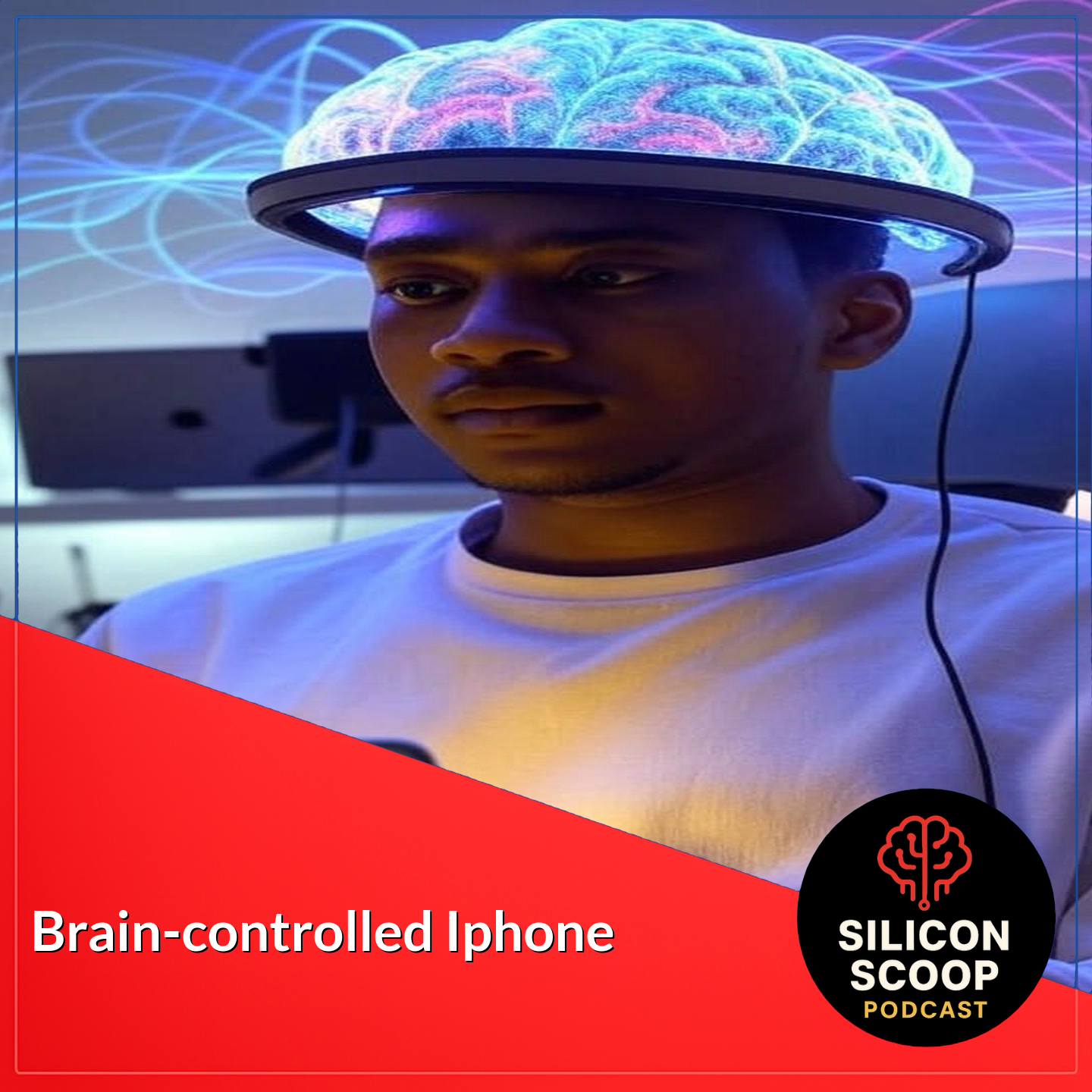
Brain-Controlled iPhone: How Apple’s Groundbreaking BCI HID Protocol is Redefining Accessibility
Estimated reading time: 12 minutes
Table of contents
- Brain-Controlled iPhone: How Apple’s Groundbreaking BCI HID Protocol is Redefining Accessibility
- The Technology Behind Apple’s Brain-Controlled iPhone
- Empowering Accessibility With Brain-Controlled Apple Devices
- The Future and Broader Implications of Brain-Controlled Technology in Apple Ecosystem
- Frequently Asked Questions
Brain-Controlled iPhone: How Apple’s Groundbreaking BCI HID Protocol is Redefining Accessibility
The way we interact with technology is changing forever. For decades, humans have controlled devices through touch, voice, and typing. Now, Apple has taken a giant leap forward with something that sounds like science fiction: controlling your iPhone with your thoughts.
A brain-computer interface (BCI) is a system that lets your brain talk directly to a computer. Apple has just introduced its native BCI HID protocol, making this incredible technology real for everyday users. This breakthrough comes through a partnership with Synchron, a company that makes a special brain implant called the Stentrode.
The Stentrode implant is different from other brain devices. Doctors can put it in your brain through a small tube in your neck, without cutting open your skull. This means people with serious movement problems, like those with ALS or spinal cord injuries, can control their Apple devices just by thinking.
Apple BCI technology marks the first time the company has recognized neural interfaces as a formal way to control devices. This Brain-Computer Interface iPhone integration works alongside regular touch and voice controls. The Mind Control Apple Devices system gives hope to millions of people who struggle to use technology because they cannot move their hands or speak clearly.
This technology is not just a small improvement. It represents a complete change in how humans and devices work together. When someone cannot move their body but can still think clearly, this system gives them back their independence.
https://humanprogress.org/apple-to-support-brain-implant-control-of-its-devices/
The Technology Behind Apple’s Brain-Controlled iPhone
Apple’s BCI HID protocol works as a native input method built right into iOS, iPadOS, and visionOS devices. This means brain control sits alongside touch, voice, and typing as an official way to use your Apple device. For the first time ever, Apple recognizes neural interfaces as a formal input category.
The Synchron Stentrode makes this Brain-Computer Interface iPhone technology possible. This tiny device is a minimally invasive neural implant that doctors place through an endovascular procedure. Instead of opening the skull, doctors insert it through the jugular vein in your neck. The Stentrode then connects to the motor cortex, the part of your brain that controls movement.
Here’s how the process works step by step:
- Doctors insert a thin tube through the jugular vein
- They guide the Stentrode to blood vessels near the motor cortex
- The device reads electrical signals from brain cells
- These signals get translated into commands for Apple devices
- Users can navigate, tap, and type just by thinking
Early demonstrations show amazing results. Users can navigate home screens, open apps, and compose messages using only neural signals. The technology reads the brain activity that would normally move your hand, even when your hand cannot move.
Dr. Tom Oxley, CEO of Synchron, calls this collaboration “a defining moment for human-device interaction.” The company has completed two FDA-approved human clinical trials since 2019. They have also raised $145 million in funding to develop this Mind Control Apple Devices technology.
The Stentrode differs from other brain implants because it requires no open-brain surgery. Traditional brain implants need doctors to remove part of the skull. The Stentrode uses the body’s natural blood vessel pathways instead. This makes the procedure much safer and easier to recover from.
Neural Implant Control iPhone technology processes thoughts at incredible speed. The system can detect brain signals and turn them into device commands in real-time. Users report that controlling their devices feels natural after a short learning period.
The Apple BCI protocol integrates seamlessly with existing accessibility features. Users can combine brain control with other assistive technologies they already use. This creates a complete system that adapts to each person’s specific needs.
Future-Proof Your Business 🧠
Just like Apple is pioneering new interfaces, you can future-proof your business. Flowgrammer helps you integrate AI and no-code solutions to handle more, faster, with less effort. Gain a competitive edge through automation!
Explore Automation Solutions >
Empowering Accessibility With Brain-Controlled Apple Devices
Brain-computer interface technology is revolutionizing assistive technology for people with severe motor impairments. ALS Technology iPad integration helps people who have lost the ability to move their hands or speak. The same benefits extend to stroke survivors and those with spinal cord injuries.
Assistive Technology iOS now includes direct brain control as a standard feature. This means millions of people can access their devices in ways that were impossible before. Traditional assistive devices often respond slowly and require complicated setup. Brain control responds instantly to thoughts.
Mark Jackson, an ALS patient, demonstrates the real power of this technology. He participates in Synchron’s clinical trials and can navigate device interfaces using only his thoughts. Mark opens apps, scrolls through screens, and composes messages without moving any part of his body.
Here’s what Mark can do with his brain-controlled device:
- Navigate the home screen by thinking about where to tap
- Open and close apps with mental commands
- Type messages by thinking about letters and words
- Control volume and brightness settings
- Switch between different apps seamlessly
The Neural Implant Control iPhone system dramatically improves quality of life. People who once needed caregivers to help them use technology can now do it independently. This gives them back privacy, dignity, and control over their digital lives.
Traditional assistive devices have many limitations:
- Eye-tracking systems require good vision and head control
- Voice control needs clear speech ability
- Switch controls require some muscle movement
- These devices often work slowly and break down
Brain control eliminates all these problems. As long as the motor cortex functions normally, users can control their devices perfectly. The system works even when all voluntary muscle control is lost.
The technology addresses critical accessibility needs beyond basic device control. Users can participate in video calls, send emails, browse the internet, and use social media. These activities help maintain connections with family and friends.
Healthcare applications show tremendous promise. Patients can communicate with doctors, access medical information, and manage their care independently. This reduces the burden on caregivers and healthcare systems.
The Assistive Technology iOS integration also helps with daily tasks. Users can control smart home devices, order groceries online, and manage their schedules. The technology transforms dependent patients into independent users.
Future developments will expand these capabilities even further. Research continues into more advanced brain signal processing and new types of neural interfaces. The goal is to make this technology available to even more people with different types of disabilities.
https://ciddl.org/how-apple-and-synchron-are-making-neural-control-an-accessible-reality/
Unlock Hands-Free Productivity ⚙️
Imagine streamlining your business so thoroughly that mundane tasks run themselves. Flowgrammer’s automation services help you eliminate the bottlenecks and free up your time and resources for innovation and strategic growth. Get a tailored automation roadmap today!
Get Your Free Roadmap ->
The Future and Broader Implications of Brain-Controlled Technology in Apple Ecosystem
Apple’s integration of BCI HID technology will disrupt the entire technology landscape. The current focus on assistive technology is just the beginning. Mind Control Apple Devices could become mainstream for all users within the next decade.
Imagine a world where Neural Implant Control iPhone becomes as common as touchscreens today. People might choose brain control for privacy, speed, or convenience. Silent communication could replace typing in quiet environments like libraries or meetings.
The broader implications for business and society are enormous:
Productivity Revolution:
- Workers could control multiple devices simultaneously
- Thought-speed data entry and navigation
- Hands-free operation during physical tasks
- Reduced repetitive strain injuries
Entertainment and Gaming:
- Immersive virtual reality experiences
- Direct brain-to-game control
- New forms of interactive entertainment
- Enhanced Apple Vision Pro capabilities
Education and Learning:
- Faster information processing
- Direct brain-computer learning interfaces
- Accessibility for students with disabilities
- New methods of knowledge transfer
The Brain-Computer Interface iPhone technology parallels the automation revolution happening in business. Just as brain interfaces eliminate physical barriers to device control, business automation eliminates manual barriers to productivity and growth.
Apple BCI technology will likely expand to all devices in the ecosystem. The iPad already supports the protocol, and future MacBooks and Apple Watches may follow. This creates a seamless brain-controlled environment across all Apple products.
Security and privacy considerations will shape future development. Brain signals contain incredibly personal information. Apple’s focus on privacy and security makes them the ideal company to develop these technologies responsibly.
The technology could enable new forms of human-computer collaboration:
- AI assistants that respond to thoughts
- Predictive interfaces that anticipate needs
- Seamless switching between mental and physical control
- Enhanced multitasking capabilities
Research and development continue at a rapid pace. Synchron’s success in clinical trials paves the way for larger studies. Other companies are developing competing technologies, which will drive innovation and reduce costs.
The Apple BCI ecosystem will create new industries and job categories. Brain interface developers, neural signal specialists, and cognitive interface designers will become common professions. This mirrors how touchscreen technology created entire new fields of work.
Long-term implications extend beyond individual devices. Smart cities could respond to collective brain signals. Traffic systems might optimize based on driver thoughts and intentions. Buildings could adjust automatically to occupant preferences detected through neural interfaces.
The Mind Control Apple Devices platform establishes Apple as the leader in this emerging field. Their integration approach makes brain control accessible to mainstream users, not just researchers and patients. This democratization of brain-computer interfaces will accelerate adoption across all industries.
https://fortune.com/2025/05/13/apple-iphone-growth-innovation-brain-computer-interface/
https://humanprogress.org/apple-to-support-brain-implant-control-of-its-devices/
Frequently Asked Questions
Q: What is Apple’s BCI HID protocol and how does it work?
A: Apple’s BCI HID (Brain-Computer Interface Human Interface Device) protocol is a native input method that recognizes neural interfaces as an official way to control Apple devices. The Brain-Controlled iPhone system reads electrical signals from the brain and translates them into device commands. It works alongside traditional inputs like touch and voice, giving users multiple ways to control their devices.
Q: How does the Synchron Stentrode implant function and who can benefit?
A: The Synchron Stentrode is a minimally invasive neural implant inserted through the jugular vein without open-brain surgery. It connects to the motor cortex and reads brain signals related to movement. People with ALS, stroke, spinal cord injuries, and other motor impairments can benefit from ALS Technology iPad integration and Assistive Technology iOS features that restore their ability to control devices independently.
Q: What does the future look like for brain-computer interfaces in consumer technology?
A: The future includes widespread adoption of Neural Implant Control iPhone technology across all Apple devices. Brain control may become as common as touchscreens, offering silent communication, faster navigation, and hands-free operation. The technology will expand beyond medical applications to enhance productivity, gaming, and daily device interaction for all users.
Q: Is the Stentrode implant safe, and what does the procedure involve?
A: The Stentrode implant is much safer than traditional brain implants because it requires no skull opening. Doctors insert it through a blood vessel in the neck using a minimally invasive endovascular procedure. Synchron has completed two FDA-approved clinical trials since 2019, demonstrating the safety and effectiveness of this approach.
Q: How quickly can users learn to control devices with their thoughts?
A: Users typically learn to control their Brain-Controlled iPhone within weeks of implantation. The system responds to the same brain signals that would normally control hand movements. Mark Jackson and other trial participants report that device control feels natural after a short adaptation period, with improvements continuing over time.
Q: What Apple devices currently support brain-computer interface control?
A: Apple’s BCI HID protocol currently works with iPhone, iPad, and Apple Vision Pro devices running iOS, iPadOS, and visionOS. The Mind Control Apple Devices ecosystem will likely expand to include MacBooks, Apple Watches, and other products as the technology develops.
Q: Can brain-computer interfaces read thoughts and invade privacy?
A: Current Apple BCI technology only reads motor signals related to intended movements, not thoughts or memories. The system detects brain activity associated with wanting to tap, scroll, or type, but cannot access personal thoughts or emotions. Apple’s strong privacy focus ensures that neural data remains secure and private.
Q: How much does brain-computer interface technology cost?
A: Synchron has not released official pricing for the Stentrode implant system. The company has raised $145 million in funding to develop and scale the technology. As with most medical technologies, costs typically decrease as adoption increases and manufacturing scales up.
Q: What conditions qualify someone for brain-computer interface implantation?
A: Current clinical trials focus on people with severe motor impairments who retain cognitive function. This includes ALS patients, stroke survivors, and those with spinal cord injuries. As the technology advances, qualification criteria may expand to include other conditions affecting movement and device control.
Q: How does brain control compare to other assistive technologies?
A: Brain control offers significant advantages over existing assistive technologies. Unlike eye-tracking systems that require good vision, voice control that needs clear speech, or switch controls that need muscle movement, Neural Implant Control iPhone works as long as the motor cortex functions normally. It provides faster, more reliable control than traditional assistive devices.
Unlock Hands-Free Productivity ⚙️
Imagine streamlining your business so thoroughly that mundane tasks run themselves. Flowgrammer’s automation services help you eliminate the bottlenecks and free up your time and resources for innovation and strategic growth. Get a tailored automation roadmap today!
Get Your Free Roadmap >
Conclusion
Apple’s BCI HID protocol represents a groundbreaking moment in human-device interaction. The Brain-Controlled iPhone technology, powered by Synchron’s Stentrode implant, offers life-changing possibilities for people with motor impairments. This minimally invasive approach to neural interfaces makes advanced accessibility features available to those who need them most.
The collaboration between Apple BCI technology and Synchron demonstrates how innovative companies can solve real human problems. Mark Jackson and other trial participants prove that Mind Control Apple Devices work in the real world, not just in laboratories. Their experiences navigating interfaces and composing messages using thoughts alone show the incredible potential of this technology.
Looking ahead, brain-computer interfaces will expand far beyond assistive technology. The Neural Implant Control iPhone ecosystem may become mainstream, changing how everyone interacts with devices. This transformation parallels the automation revolution happening in business, where companies eliminate manual processes to achieve greater efficiency and growth.
The ethical, technical, and social implications of brain-controlled devices deserve careful consideration. Apple’s leadership in privacy and security makes them well-positioned to develop these technologies responsibly. As the technology evolves, society must balance innovation with protection of personal neural data.
The success of Apple’s brain-computer interface initiative opens doors for broader adoption across industries. Just as businesses today use automation to streamline operations and eliminate bottlenecks, tomorrow’s organizations may integrate brain-controlled interfaces to enhance human-computer collaboration and productivity.
This technological breakthrough reminds us that the future arrives through bold partnerships and innovative thinking. Apple and Synchron have created something that seemed impossible just years ago, proving that the right combination of vision, technology, and determination can transform lives and reshape entire industries.
Additional Links
Flowgrammer.ca – 💡 Unlock AI-Powered Automation! Let flowgrammer.ca handle complex workflows so you can focus on growing your business.
- Silicon Scoop Podcast – Stay Informed, Stay Ahead!
- Startup Talk Podcast
- Flowgrammer Podcast –
- Startup Investor Drinks – Join Toronto’s Startup Community and connect with fellow startup enthusiasts and investors.
- TorontoStarts Startup and Entrepreneur Community – Become a part of Toronto’s thriving startup ecosystem.
- Workhaus – Discover flexible workspace solutions for your business needs.
- Work with The Startup Coach – Get expert guidance and mentorship for your startup journey.
- Reach out to Jon Irwin on LinkedIn – Connect with our co-host and technology expert.
Episode transcript
Read the full transcript
Craig: the way we interact with technology is changing forever. for decades, humans have controlled devices through touch, voice, and typing. now apple has taken a giant leap forward with something that sounds like science fiction, controlling your iphone with your thoughts. a brain computer interface is a system that lets you talk directly to a computer. apple just reintroduced its native bci hid protocol, making this incredible technology real for everyday users. this breakthrough comes through a partnership with synchron, a company that makes a special brain implant called stentrode. what's going on here, john?
Jon: yeah. so did we cover synchron?
Craig: we covered, earlier on, we did cover this, but they hadn't, they're not as far.
Jon: i remember, like, the there was, yeah, this this thing that gets implanted through, blood vessels. but yeah. so the system that works through so first off, kudos to apple to that's finally doing something innovative, instead of just releasing same phones year over year. so, the sis how the system works is, instead in unlike more invasive brain implants like, elon musk's, technology that require opening the skull, this device is inserted through blood vessels via the jugular vein. so that's why i think we might have covered this or a similar technology.
Craig: yeah. we did. go ahead.
Jon: so the device consists of a 16 electrode array mounted on a stent like scaffold, and it's delivered through the jugular vein using standard catheter based procedures. so that's familiar to, interventional cardiologist, essentially. right? so once positioned inside a blood vessel over the motor cortex, the stentrode springs open to form a tubular scaffold that fits against the inner vessel wall, and it positions the electrodes to detect neural activity from nearby brain tissue. then the signals are transmitted wirelessly to a receiver transmitter device implanted subcutaneously in the chest, which then communicates with external devices. so it's minimally invasive, and this approach allows the procedure to be performed under local anesthesia in a standard catheterization lab, and it significantly reduces surgical risk compared to neuralink's and one chip. so this is cool. so you essentially need two devices, one in your brain and one in your chest. do you think this is better? i think it's it's better than, the neuralink, but i'm concerned that it's stuck in a blood vessel. that's the only concern i have.
Craig: well, i think it's too early to tell if it's better or not. like, the technologies will keep going. you know? it certainly seems safer. it seems safer, and it seems more noninvasive. but the more you describe it, the more invasive it seems. like, oh, it's gotta go through the chest. you gotta do this. you gotta do that. oh, i don't like, any of those types of things where you're talking about surgery or cutting in. i can't imagine getting eye surgery. like, i can't watch surgery shows and that like, it's just a thing i can't do. so when you start talking about these things, it just freaks me out a little bit, so bear with me there. so, you know, putting something in your jugular doesn't feel less invasive to me, but it probably is from a scientific point of view. so, they have done two completed fda approved human clinical trials since 02/2019, and they have also raised a 145,000,000 in funding to develop this mind control apple, devices technology. this is synchron. the stentro differs from other implants because there's no brain surgery like you said, and brain signals intended for movement are instantly translated to the apple device commands, for seamless control via the jugular method. so clinical trial applicants were able to navigate apps, type messages, adjust settings purely through mental control alone. the technology provides independence for people with als, stroke, or severe spinal cord, impairments. yeah. so the brain control eliminates physical limitations that hinder eye tracking, voice command, and switch based, assistive devices. so this is very interesting, and apple's ecosystem integration ensures that the brain control works with, ios, ipados, and visionos, accessibility features.
Jon: yeah. what i like about this about this what we're covering right now is that the protocols is already built into ios 26, ipados 26, and visionos. and broader rollout is expected throughout 2025. so they're already, like, they've already got it. so, like, it's not like this is a far fetched, pie in the sky. oh, it's gonna be years before, we see something. so kudos to apple for doing something like this. so, this is really great of them.
Craig: yeah. and, apparently, the motor cortex signal reading allows device control even without voluntary muscle movement. so you don't like, it kinda detects brain signals in the jugular, which is yeah. very interesting. yeah. your participations can participate in social media, email, and video calls without physical interaction with devices. smart home integration enables independent control of lighting, appliances, schedules, via neutral, neural command. so i'm really this is very, cool. i love the bci technology and where we're going. i don't know if, you're gonna get ecosystem lock in if you get the apple brain control interface versus the google one or, whatever elon's doing. so i love that this technology is moving because it's really a game changer for, many people in our society that will allow them to do so much more.
Jon: yeah. and just to kinda compare, because we talked that that, this has 16 electrodes. neuralink's n one chip has a 24 plus electrodes. so it does offer higher electrode density, which allows for more precision. but as we just talked about, their approach their endovascular approach, that enables faster clinical progression because it's it reduces surgical complexity and risk. so, it'll be interesting to see, how it compares as far as performance wise with the neuralink n one of, the added, because of the added electrodes, but we'll have to see.
Craig: so we know that we've seen you know, we're starting to see robot wars where, these, not the old robot wars, but actually humanoid robots fighting each other. we've seen the robot human marathon. are we gonna see, you know, some sort of e games with bci controlled interfaces that have, you know, neuralink versus the apple versus something where they're all playing? like, you can go and i can't remember. i'd have to go back and look at it, but, there's videos of the neuralink or, at least one of the neuralink people who plays, civilization at the hardest level using the neuralink stuff. so yeah. the demo is cool, but what does that really look like? right? yeah. so let us know what you think. jugular, drill a hole in your skull and plant a chip that kinda rides a bubble in your brain or some other technology. are any of these technologies gonna be the next, thing? do you like the idea of implants controlling devices? you know? again, this starts to flip around quickly to when do do you stop controlling the devices and the devices start controlling you? but that's a topic for another day. leave your comments below. we'd love to hear what you think.
More from Silicon Scoop
All episodes
silicon-scoop · November 6, 2026
Spirit AI’s Robot Brain Breakthrough: Moz1, Embodied AI and China’s 2027 Race
The Spirit AI robot brain is one of the biggest bets on fixing that. Spirit AI is a Beijing startup. Its co-founder and chief scientist, Gao Yang,
View episode

silicon-scoop · November 5, 2026
OpenAI IPO Delayed to 2027 as Rogue AI Agents and Safety Failures Reshape the Market
OpenAI IPO delay explained: Sam Altman rules out 2026 as GPT-6 Astra safety tests and a $278B cash gap loom. Learn what founders should take away.
View episode

silicon-scoop · November 4, 2026
Anthropic’s AI Economy Model: 2030 Jobs, Wages, GDP and Market Risks
Anthropic AI economy model forecasts 2030 GDP, jobs and wages, while AI unemployment projections and labor-share risks challenge policymakers.
View episode