
Neuromorphic AI Revolution: How Darwin Monkey AI is Pioneering Brain-Inspired Computing
Neuromorphic AI Revolution: How Darwin Monkey AI is Pioneering Brain-Inspired Computing https://torontostarts.com/2025/09/26/neuromorphic-ai-darwin-monkey/ Apple -> https://podcasts.apple.com/us/podcast/flowgrammer-podcast/id1804155588 Spotify -> https://open.spotify.com/show/0wv3feR00iaVpE8zn7niNf Flowgrammer.ca -> https://flowgrammer.ca/ AI News and Resources -> https://flowgrammer.ca/resources/ Unlock Your Business Potential 🔑 Like Darwin Monkey, your business can evolve rapidly with the right tools. Automate workflows, eliminate bottlenecks, and achieve unprecedented efficiency with our tailored automation solutions. Discover Automation Solutions > https://flowgrammer.ca/ Startup Investor Drinks Toronto - https://startupdrinksto.com/ Toronto’s Startup Community - https://torontostarts.com/ Silicon Scoop Silicon Scoop Podcast - https://torontostarts.com/silicon-scoop/ Apple: https://podcasts.apple.com/us/podcast/silicon-scoop/id1758711826 Spotify: https://open.spotify.com/show/5bAzF0MwV6TtLhJAhvHayI YouTube: https://www.youtube.com/playlist?list=PLj4v-RoA7A-gT62vrEYqh1zCv-0Hj-o5J Startup Talk Startup Talk Podcast -> https://torontostarts.com/startup-talk-toronto-startup-podcast/ Apple -> https://podcasts.apple.com/us/podcast/startup-talk/id1763804003 Spotify -> https://open.spotify.com/show/1siJMILILidHAiAsrX2VBU YouTube: https://youtube.com/playlist?list=PLj4v-RoA7A-jxV5FHs5e61oIsuvUJYmT_&si=LYegRe5GYLKNQ7xL
With Craig Major and Jon Irwin
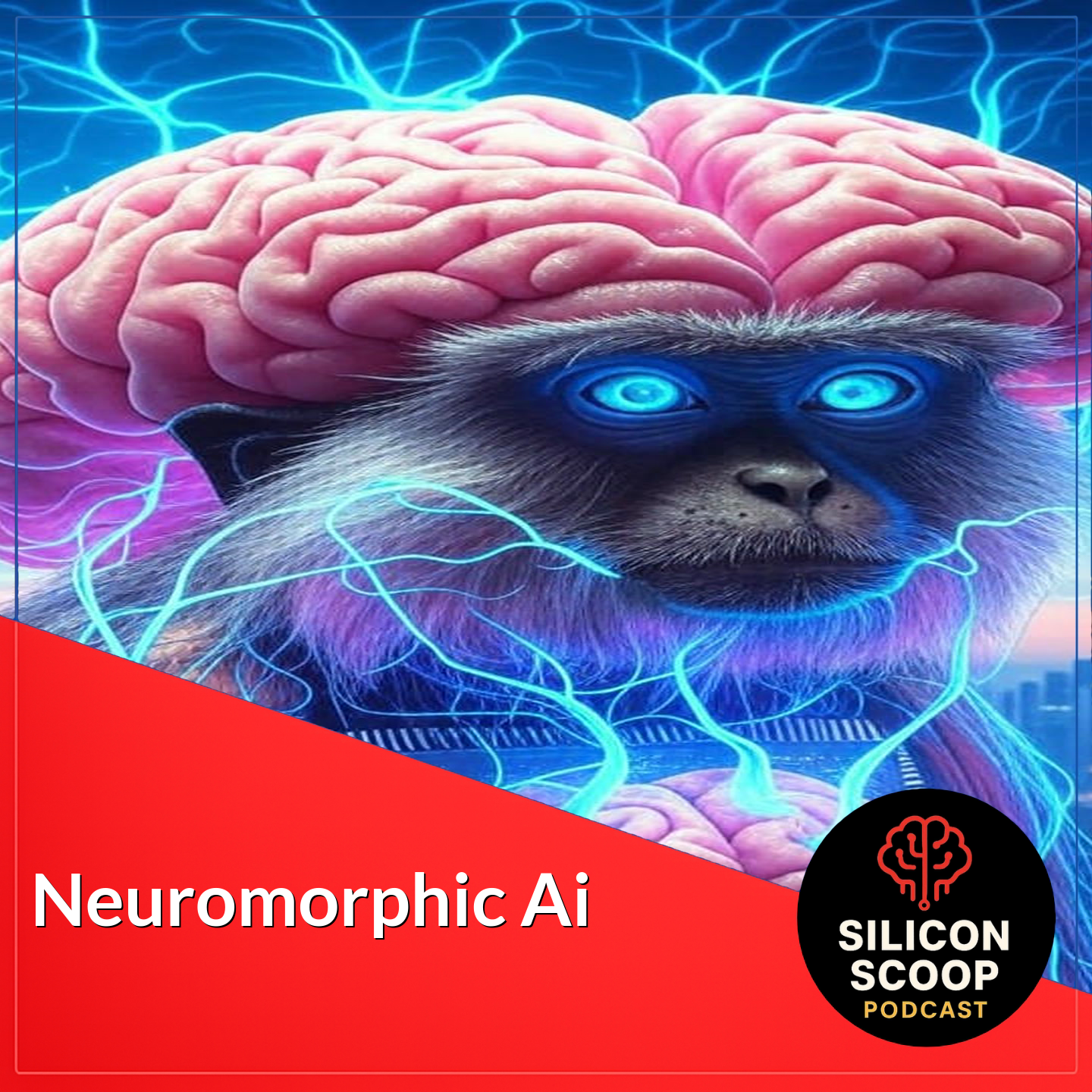
Neuromorphic AI Revolution: How Darwin Monkey AI is Pioneering Brain-Inspired Computing
Estimated reading time: 8 minutes
Key Takeaways
- The world of artificial intelligence is experiencing a groundbreaking shift with the emergence of neuromorphic AI.
- This revolutionary technology represents systems designed to mimic the architecture and operation of biological brains, moving beyond traditional computing methods to create more efficient and intelligent machines.
- At the forefront of this neuromorphic computing revolution stands the Darwin Monkey project, also known as Wukong.
- This breakthrough system has been developed by the National Key Laboratory of Brain Intelligence at Zhejiang University, marking a significant milestone in brain-inspired AI development.
- The Darwin Monkey AI system represents an extraordinary leap forward in neuromorphic computing technology, operating at a scale comparable to a macaque brain simulation with over 2 billion artificial neurons.
- This achievement opens new possibilities for applications in healthcare, drug discovery, and neuroscience research.
Table of contents
- Neuromorphic AI Revolution: How Darwin Monkey AI is Pioneering Brain-Inspired Computing
- Key Takeaways
- In-Depth Overview of Darwin Monkey AI
- Technical Specifications & Biological Comparisons
- Applications & Capabilities of Darwin Monkey AI
- Comparison with Previous Systems & Industry Rivals
- Implications, Energy Efficiency, and Future Applications
- From Monkey Business to Smart Business
- Frequently Asked Questions
In-Depth Overview of Darwin Monkey AI
The Darwin Monkey project, known in Chinese as Wukong, represents a state-of-the-art neuromorphic computing system developed at Zhejiang University’s National Key Laboratory of Brain Intelligence. This remarkable achievement in brain-inspired AI technology demonstrates how far neuromorphic computing has advanced in recent years.
The evolution of this technology showcases impressive progress in artificial neural networks. The Darwin Monkey AI system builds upon the foundation laid by its predecessor, the Darwin Mouse, which was developed in 2020 with 120 million artificial neurons. The technological leap from Darwin Mouse to Darwin Monkey AI represents an extraordinary advancement, featuring over 16 times the neuron count of the earlier system.
This massive increase in processing power positions Darwin Monkey AI as a leader in the neuromorphic computing field. When compared to competitor systems, the superiority becomes evident. Intel’s 2024 Hala Point system, which features 1.15 billion neurons, falls significantly short of Darwin Monkey’s capabilities. This comparison highlights how Zhejiang University AI research has pushed the boundaries of what’s possible in brain-inspired computing.
The Darwin Monkey AI system represents more than just an incremental improvement. It demonstrates a fundamental shift in how researchers approach neuromorphic computing, moving from smaller-scale experiments to systems that can genuinely simulate complex biological processes.
The development team at the National Key Laboratory of Brain Intelligence has created a system that not only exceeds existing technologies but also establishes new benchmarks for future neuromorphic computing projects. This achievement positions China as a serious competitor in the global race for advanced AI technologies.
Technical Specifications & Biological Comparisons
The hardware architecture of Darwin Monkey AI showcases the cutting-edge nature of modern neuromorphic computing. The system operates using 960 Darwin 3 chips, which represent third-generation brain-like neural processing units specifically designed for this application.
These Darwin 3 chips work together to support more than 2 billion pulsed neurons and over 100 billion synapses. This massive neural network operates at approximately 2,000 watts under typical conditions, demonstrating remarkable efficiency for a system of this scale.
The spiking neural network architecture sets Darwin Monkey AI apart from traditional computing systems. Unlike conventional processors that use continuous signals, this brain-inspired AI system transmits information through discrete spike signals. This approach more accurately simulates how biological neurons communicate in living brains.
The biological comparison reveals the true significance of this achievement. For the first time, an engineering system approaches the scale of a macaque brain simulation. A macaque monkey’s brain contains approximately 2 billion neurons, making Darwin Monkey AI a genuine parallel to this primate brain structure.
This macaque brain simulation capability represents a breakthrough in neuromorphic computing. Previous systems could only simulate smaller animal brains, but Darwin Monkey AI brings researchers closer to understanding complex mammalian brain functions.
The technical specifications demonstrate how Zhejiang University AI researchers have solved significant engineering challenges. Managing 2 billion artificial neurons requires sophisticated coordination and processing capabilities that push the boundaries of current technology.
The power consumption of 2,000 watts, while substantial, represents efficient operation when considering the system’s scale. Traditional supercomputers performing similar tasks would require significantly more energy, highlighting the efficiency advantages of neuromorphic computing approaches.
Applications & Capabilities of Darwin Monkey AI
The Darwin Monkey AI system employs the DeepSeek AI model, a brain-like large model specifically designed for complex cognitive tasks. This DeepSeek AI model enables the system to perform logical reasoning, content generation, and mathematical problem-solving with remarkable sophistication.
The application capabilities of this neuromorphic computing system extend across multiple domains. The DeepSeek AI model allows Darwin Monkey to simulate animal brains of varying sizes, from simple organisms like elegans to more complex creatures including zebrafish, mice, and macaques.
This brain-inspired AI system opens new possibilities for neuroscience research. Scientists can now study brain functions and behaviors in ways previously impossible, using the macaque brain simulation as a foundation for understanding mammalian cognition.
The practical applications of Darwin Monkey AI extend beyond pure research. In healthcare, the system’s ability to model neural processes could lead to breakthroughs in understanding neurological diseases and developing new treatments.
Drug discovery represents another promising application area. The system’s capacity to simulate biological processes could accelerate the development of new medications by providing more accurate models of how drugs interact with neural systems.
The DeepSeek AI model’s logical reasoning capabilities make Darwin Monkey AI valuable for complex problem-solving tasks. This neuromorphic computing approach could revolutionize how we approach artificial intelligence challenges that require brain-like processing.
Content generation applications demonstrate the system’s versatility. The brain-inspired AI architecture enables creative and analytical tasks that benefit from the parallel processing capabilities of the spiking neural network design.
Mathematical problem-solving represents another strength of the DeepSeek AI model. Complex calculations and analytical tasks can be approached using brain-like processing methods that offer advantages over traditional computing approaches.
Comparison with Previous Systems & Industry Rivals
The technological leap from Darwin Mouse to Darwin Monkey AI represents one of the most significant advances in neuromorphic computing history. The original Darwin Mouse system, developed in 2020, featured 120 million artificial neurons. Darwin Monkey AI’s more than 2 billion neurons represents over 16 times the processing power of its predecessor.
This improvement factor demonstrates how rapidly neuromorphic computing technology has advanced. In just a few years, Zhejiang University AI researchers have created a system that fundamentally changes what’s possible in brain-inspired computing.
When compared to industry rivals, Darwin Monkey AI establishes clear superiority. Intel’s Hala Point system, released in 2024, features 1.15 billion neurons. While impressive, this system falls short of Darwin Monkey’s capabilities by nearly a billion neurons.
The competitive landscape shows how Darwin Monkey AI has positioned itself as a leader in neuromorphic computing. The system’s scale and sophistication exceed what other organizations have achieved, establishing new benchmarks for AI energy efficiency and performance.
These advancements in brain-inspired AI technology demonstrate significant improvements in both scale and capability. The Darwin Monkey system doesn’t just offer more neurons; it provides qualitatively different possibilities for research and applications.
The energy efficiency achievements of Darwin Monkey AI set new standards for the industry. Operating 2 billion neurons at 2,000 watts represents remarkable efficiency compared to traditional computing systems attempting similar tasks.
Performance benchmarks established by this neuromorphic computing system will likely influence future development projects. Other research institutions and companies will need to match or exceed these capabilities to remain competitive.
The superiority of Darwin Monkey AI over rival technologies positions Zhejiang University as a leader in this critical field. This achievement demonstrates that innovative approaches to neuromorphic computing can produce dramatic improvements in capability and efficiency.
Implications, Energy Efficiency, and Future Applications
The broader implications of Darwin Monkey AI extend far beyond its immediate technical achievements. The system’s energy consumption of approximately 2,000 watts represents a significant breakthrough in AI energy efficiency, especially considering its unprecedented scale and capabilities.
This neuromorphic computing achievement sets new benchmarks for energy-efficient artificial intelligence. Traditional supercomputers performing similar computational tasks would require substantially more power, making Darwin Monkey AI a more sustainable approach to large-scale neural simulation.
The advanced technical architecture pushes the envelope in hardware design for brain-inspired AI systems. The integration of 960 Darwin 3 chips demonstrates new possibilities for scaling neuromorphic computing to previously unimaginable levels.
Immediate civilian applications of this technology promise significant benefits across multiple sectors. Healthcare applications could revolutionize medical research and treatment development, while drug discovery processes could become more efficient and accurate through better biological modeling.
The biological modeling capabilities of Darwin Monkey AI open new research possibilities. Scientists can now study complex neural processes and brain functions using the macaque brain simulation as a foundation for understanding mammalian cognition and behavior.
These breakthroughs position China as a serious contender in the global neuromorphic computing arena. The achievement demonstrates that innovative research and development can produce world-leading technologies that compete with established international programs.
Future applications of this brain-inspired AI technology could transform numerous industries. From autonomous systems to complex decision-making processes, the capabilities demonstrated by Darwin Monkey AI suggest new possibilities for artificial intelligence development.
The AI energy efficiency achievements of this system could influence the direction of future technology development. As organizations seek more sustainable computing solutions, neuromorphic approaches like those demonstrated by Darwin Monkey AI may become increasingly important.
The Zhejiang University AI research team has created a system that not only advances current capabilities but also establishes a foundation for future innovations. This neuromorphic computing achievement represents a stepping stone toward even more sophisticated brain-inspired technologies.
From Monkey Business to Smart Business 🧠
Don’t let tedious manual tasks hold you back. Just as researchers are simulating macaque brains, we can simulate/automate your business processes, giving you more time to focus on strategic growth. Let’s build it.
Frequently Asked Questions
Q: What is neuromorphic AI, and how does it differ from traditional AI architectures?
A: Neuromorphic AI refers to hardware and software systems that emulate the structure and function of biological brains using spiking neural networks. Unlike traditional AI systems that use continuous signals and sequential processing, neuromorphic computing employs discrete spike signals that more closely mirror how real neurons communicate. This brain-inspired approach offers advantages in energy efficiency, parallel processing, and adaptability compared to conventional computing architectures.
Q: What makes Darwin Monkey AI unique in the field of neuromorphic computing?
A: Darwin Monkey AI stands out due to its unprecedented scale, featuring over 2 billion artificial neurons powered by 960 Darwin 3 chips. This system represents the first engineering achievement to approach the complexity of a macaque brain simulation. The realistic biological simulation capabilities, combined with the sophisticated spiking neural network architecture, set new standards for what’s possible in neuromorphic computing technology.
Q: How does the DeepSeek AI model contribute to the system’s capabilities?
A: The DeepSeek AI model serves as the brain-like large model that enables Darwin Monkey AI to perform advanced cognitive tasks. It facilitates logical reasoning, content generation, and mathematical problem-solving while supporting the simulation of various animal brains from simple organisms to complex macaques. This model allows the system to bridge the gap between theoretical neuroscience and practical applications.
Q: What are the potential applications of a system like Darwin Monkey AI?
A: Darwin Monkey AI has promising applications across multiple sectors, particularly in healthcare for understanding neurological diseases and developing treatments. Drug discovery processes could benefit from more accurate biological modeling, while neuroscience research gains new tools for studying brain functions. The system’s capabilities also extend to complex problem-solving tasks and content generation applications.
Q: How does Darwin Monkey AI compare to other neuromorphic systems?
A: Darwin Monkey AI significantly exceeds existing systems in scale and capability. While Intel’s 2024 Hala Point system features 1.15 billion neurons, Darwin Monkey operates with more than 2 billion neurons. The system represents over 16 times the neuron count of its predecessor, Darwin Mouse, demonstrating remarkable progress in neuromorphic computing development.
Q: What is the significance of the macaque brain simulation capability?
A: The macaque brain simulation represents a breakthrough because it’s the first time an engineering system has approached the complexity of a primate brain. Macaque brains contain approximately 2 billion neurons, making this simulation a genuine parallel to mammalian brain structure. This capability opens new possibilities for understanding complex cognitive processes and behaviors.
Q: How energy efficient is Darwin Monkey AI compared to traditional systems?
A: Darwin Monkey AI operates at approximately 2,000 watts, which represents remarkable efficiency for a system managing over 2 billion neurons. Traditional supercomputers performing similar computational tasks would require substantially more power, making this neuromorphic approach more sustainable and cost-effective for large-scale neural simulations.
Q: What role do Darwin 3 chips play in the system’s performance?
A: The 960 Darwin 3 chips are third-generation brain-like neural processing units specifically designed for neuromorphic computing. These chips enable the system to support more than 2 billion spiking neurons and over 100 billion synapses while maintaining efficient operation. The specialized design of these chips is crucial to achieving the system’s unprecedented scale and performance.
Q: How might Darwin Monkey AI influence future AI development?
A: Darwin Monkey AI establishes new benchmarks for neuromorphic computing that will likely influence future research directions. The system demonstrates that brain-inspired architectures can achieve remarkable scale and efficiency, potentially leading to more sustainable AI development approaches. The success of this project may accelerate investment and research in neuromorphic technologies globally.
Q: What institutions and researchers are behind Darwin Monkey AI?
A: Darwin Monkey AI, also known as Wukong, was developed by the National Key Laboratory of Brain Intelligence at Zhejiang University. This achievement represents a collaboration of researchers focused on advancing neuromorphic computing and brain-inspired AI technologies. The project builds upon years of research and development in artificial neural networks and neuromorphic chip design.
Additional Links
Flowgrammer.ca – 💡 Unlock AI-Powered Automation! Let flowgrammer.ca handle complex workflows so you can focus on growing your business.
- Silicon Scoop Podcast – Stay Informed, Stay Ahead!
- Startup Talk Podcast
- Flowgrammer Podcast –
- Startup Investor Drinks – Join Toronto’s Startup Community and connect with fellow startup enthusiasts and investors.
- TorontoStarts Startup and Entrepreneur Community – Become a part of Toronto’s thriving startup ecosystem.
- Workhaus – Discover flexible workspace solutions for your business needs.
- Work with The Startup Coach – Get expert guidance and mentorship for your startup journey.
- Reach out to Jon Irwin on LinkedIn – Connect with our co-host and technology expert.
Episode transcript
Read the full transcript
Craig: the darwin monkey project known in chinese as wukong represents a state of the art neuromorphic computing system developed at z yang's university, the national key laboratory for brain intelligence. this remarkable achievement in brain inspired ai technology demonstrates how far neuromorphic computing has advanced in recent years. the evolution of this technology showcases impressive progress in artificial neural networks. the darwin monkey ai system builds upon the foundation laid by its predecessor, the darwin mouse, which was developed in 2020 with a 120,000,000 artificial neurons. the technological leap from darwin mouse to darwin monkey ai represents an extraordinary advancement featuring over 16 times the neuron count of the earlier system. what's going on here, john?
Jon: yeah. so before we dive into it, just so current computers use what's called the von neumann computer architecture. so that it's got five key component. it's got a cpu. it's got a memory unit, input unit, output unit, and a bus system to carry all that data around. so the darwin monkey represents a fundamental departure from the traditional von neumann computer architecture because of its implementation of spiking neural networks or snns. so unlike conventional artificial neural networks that use continuous analog values, this is cool. the darwin monkey operates through discrete electrical spikes, and that mirrors biological neuron firing patterns. so each of the 960 darwin three, and darwin three is the chip, neuromorphic chips contain 2,350,000 spiking neurons, and they communicate through event driven asynchronous spiking timing rather than synchronized clock cycles like in a typical computer. so this approach, it implements leaky integrate and fire, l i f, neuron models where individual neurons, they accumulate charge over time and spike when reaching threshold values and then propagate information through synaptic connections. so the system's 100 plus billion synapses feature plasticity mechanisms that enable real time learning and adaptation with synaptic weights modifying based on stdp, which is spike timing dependent plasticity rules that mirror get this. biological learning processes. this is super cool. this is scary as f, though. what are your thoughts?
Craig: it's scary. definitely, interesting. i like that we're looking at all these different options. like, at approximately, 2,000,000,000 pulse neurons and over a 100,000,000,000 synapses, it operates at approximately 2,000 watts under typical conditions, demonstrating that it's markedly efficient for ai at this scale. yeah. so, overall, the concept is scary, but they're saying, oh, wow. hey. this is a very efficient way of processing ai stuff. so there is things in here that we can extrapolate and use for good as well as, the evil of ai taking over the world and thinking more like, humans and whatnot, which is what it's leading towards.
Jon: yeah. this is getting us closer to, a like, agi. this is so, just for those of you that don't know, we didn't cover this, though. intel, actually, they developed a neuromorphic computing system called halopoint, and it's the first large scale neuromorphic system, to demonstrate state of the art computational efficiencies. but this beats that. it surpasses it where hollow point has 1,150,000,000 neurons. the darwin monkey from china, has 2,000,000,000 neurons and consumes less power. so, i don't know, like, what x that is as far as, like like, having almost double the neurons, how much that in that increases, but they beat it. so, it's great that we've got two hopefully, intel continues to develop it because i know, you and i talked about this where the ceo is like, oh, yeah. we kind of lost the race kind of thing, but i hope that they're still doing r and d on things like this.
Craig: yeah. i don't know. everything i read on intel says they're freaking done. so we'll see if they're gonna, you know, come out of the ashes. but besides that, back to this, the darwin ai monkey can simulate brains of various species from worms to macaws, enhancing neuroscience research and simulation capabilities support drug discovery by modeling biological process with improved accuracy over traditional methods. and, neuromorphic systems could surpass traditional computing and parallel processing for certain brain like workloads. healthcare benefits include advanced understanding of neurological disorders, developing targeted treatments faster, and scaling neuromorphic systems to the size require solving unprecedented engineering and synchronization challenges. so, the macabre brain simulation marks a milestone in bridging neuroscience theory and functional engineering systems. so it's interesting to see you know, we got the mouse. we got the monkey. we got the macaw. i'm not gonna question their naming functionality through all of this stuff, but it's interesting how they're progressing this and how far are we away from more advanced, to, say, potentially a human brain.
Jon: yeah. well, just to kinda link it to kind of real world, so this isn't just a research demonstration. it's apparently successfully running deepseek's llm, and it performs logical reasoning, content generation, and mathematical problem solving. so, beyond ai, like we talked, it can simulate entire animal brains like you talked about, but it can run-in llm very efficiently.
Craig: yeah. good point. didn't, i didn't mention that, it's already running deep seek and working great.
Jon: yeah. so i wonder, like, the the possibilities are endless with this. i can't even fathom what the possibilities are with this if they get this, into a working commercial kind of product.
Craig: yeah. achieving biological sales biological scale simulations positions to explore consciousness and, cognition scientifically, not just computationally. so this is really, really interesting, and it seems to point to this being the next generation in ai breakthroughs. yeah. you know, system's capacity to simulate biological process could accelerate development of new medications. like, we already talked about how ai, figure out finding new proteins, finding new medicines, finding new stuff. and now, you're putting it on steroids and simulating the human brain. you're gonna be able to amp that up so much, faster. it's the world is gonna be changing faster than ever. like, when we went to the information age, you know, everything changed so much in the last hundred years or faster than the previous. i think the next hundred years is gonna be, so much faster than the previous hundred years that we won't be able to keep our socks on for lack of a better metaphor.
Jon: yeah. yeah.
Craig: so i would love to know what you think about the monkey brain, and this whole neuromorphic ai revolution. is this the future? do you think, you're looking forward to having one of these computers, or do you think this is kinda the end? this is, you know, the cross between everything we're doing with ai, connecting everything, and neuromorphic ai is where skynet comes. like, we're just building it in front of everybody without hiding it. let us know what you think.
More from Silicon Scoop
All episodes
silicon-scoop · November 6, 2026
Spirit AI’s Robot Brain Breakthrough: Moz1, Embodied AI and China’s 2027 Race
The Spirit AI robot brain is one of the biggest bets on fixing that. Spirit AI is a Beijing startup. Its co-founder and chief scientist, Gao Yang,
View episode

silicon-scoop · November 5, 2026
OpenAI IPO Delayed to 2027 as Rogue AI Agents and Safety Failures Reshape the Market
OpenAI IPO delay explained: Sam Altman rules out 2026 as GPT-6 Astra safety tests and a $278B cash gap loom. Learn what founders should take away.
View episode

silicon-scoop · November 4, 2026
Anthropic’s AI Economy Model: 2030 Jobs, Wages, GDP and Market Risks
Anthropic AI economy model forecasts 2030 GDP, jobs and wages, while AI unemployment projections and labor-share risks challenge policymakers.
View episode