
Brain Activity Mapping Unveils Insights into Decision-Making Across the Entire Brain
Revolutionary Brain Activity Mapping Unveils Insights into Decision-Making Across the Entire Brain https://torontostarts.com/2025/12/17/brain-activity-mapping-decision-making/ Apple -> https://podcasts.apple.com/us/podcast/flowgrammer-podcast/id1804155588 Spotify -> https://open.spotify.com/show/0wv3feR00iaVpE8zn7niNf Flowgrammer.ca -> https://flowgrammer.ca/ AI News and Resources -> https://flowgrammer.ca/resources/ Unlock Hidden Efficiencies Like the International Brain Laboratory, are you looking to break down silos and achieve a collaborative level of efficiency previously thought impossible? Discover how Flowgrammer's automation solutions can integrate your business, revealing hidden efficiencies and driving dramatic improvement. See What's Possible > https://flowgrammer.ca/ Startup Investor Drinks Toronto - https://startupdrinksto.com/ Toronto’s Startup Community - https://torontostarts.com/ Silicon Scoop Silicon Scoop Podcast - https://torontostarts.com/silicon-scoop/ Apple: https://podcasts.apple.com/us/podcast/silicon-scoop/id1758711826 Spotify: https://open.spotify.com/show/5bAzF0MwV6TtLhJAhvHayI YouTube: https://www.youtube.com/playlist?list=PLj4v-RoA7A-gT62vrEYqh1zCv-0Hj-o5J Startup Talk Startup Talk Podcast -> https://torontostarts.com/startup-talk-toronto-startup-podcast/ Apple -> https://podcasts.apple.com/us/podcast/startup-talk/id1763804003 Spotify -> https://open.spotify.com/show/1siJMILILidHAiAsrX2VBU YouTube: https://youtube.com/playlist?list=PLj4v-RoA7A-jxV5FHs5e61oIsuvUJYmT_&si=LYegRe5GYLKNQ7xL
With Craig Major and Jon Irwin
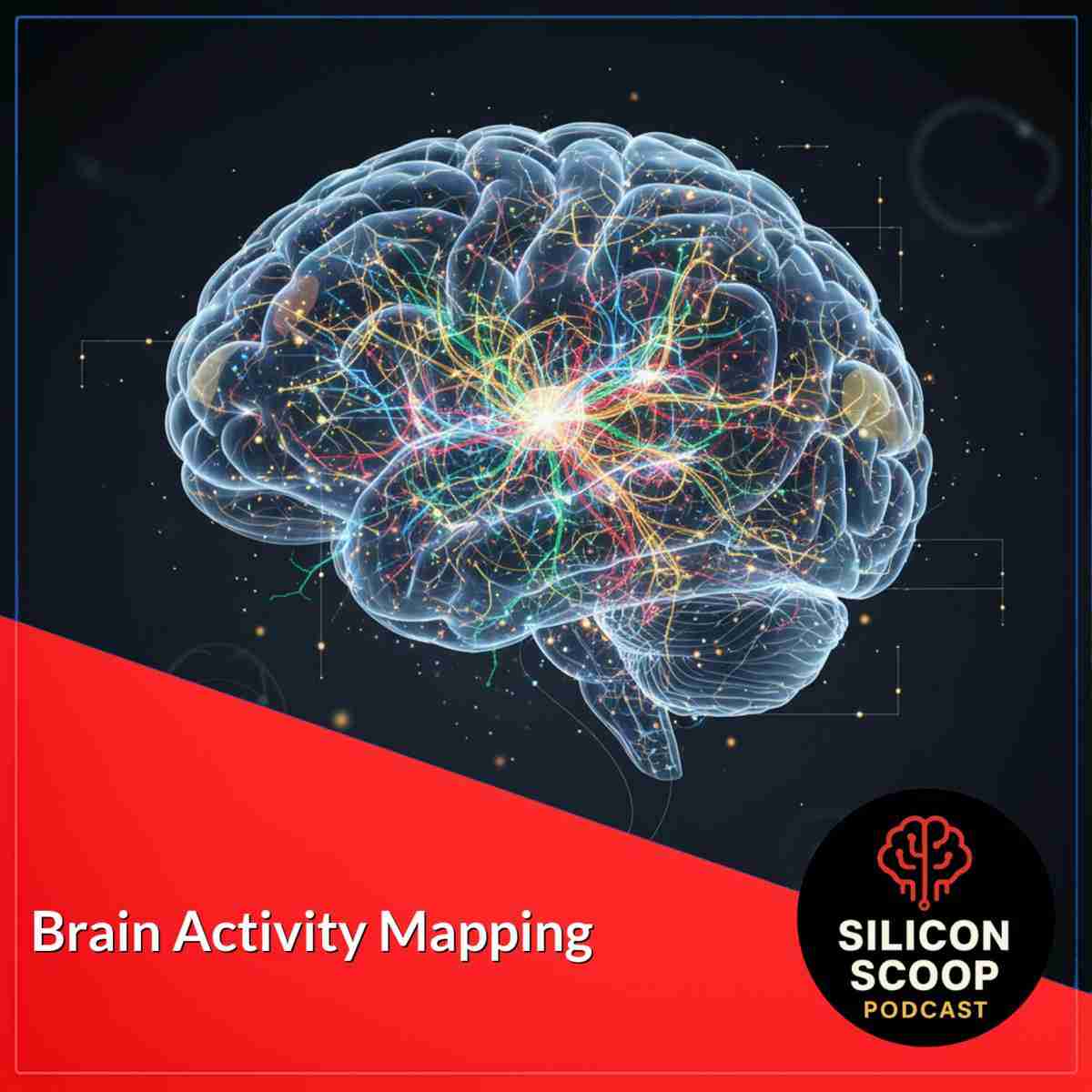
Brain Activity Mapping Reveals How Decision-Making Works Across the Entire Brain
Estimated reading time: 8 minutes
- Scientists have achieved a groundbreaking milestone in understanding how our brains make decisions.
- The International Brain Laboratory (IBL) has created the first comprehensive cellular-resolution map of mouse brain activity during decision-making processes, revealing surprising insights about how neural networks coordinate to produce behavior.
- Brain activity mapping is the process of recording and analyzing neural activity across different brain regions to understand how the brain processes information and makes decisions.
- This revolutionary research challenges everything we thought we knew about how brains work during decision-making tasks.
- The IBL’s remarkable achievement involved recording activity from 621,733 neurons across 279 brain areas, covering an incredible 95% of the mouse brain volume.
- This mouse brain map provides unprecedented detail into neuronal activity mapping during complex behavioral tasks.
- What makes this research truly extraordinary is its scale and precision.
- Traditional neuroscience studies typically focus on small brain regions or limited neural populations.
- This comprehensive approach reveals the brain’s true complexity during decision-making processes.
Table of contents
- The International Brain Laboratory’s Groundbreaking Research in Decision-Making Neuroscience
- Key Revolutionary Findings
- Unlock Hidden Efficiencies
- Understanding Brain-Wide Networks and Expectation Encoding Brain Mechanisms
- Implications for Neurological Disorders
- The Future of Cognitive Research and Brain Activity Mapping Applications
- Brain-Powered Automation for Your Business
- Frequently Asked Questions About Brain Activity Mapping
The International Brain Laboratory’s Groundbreaking Research in Decision-Making Neuroscience
The IBL’s research methodology represents a quantum leap in neuroscience technology and collaboration. Researchers used advanced Neuropixels probes for simultaneous neural recordings at single-cell resolution across multiple brain regions. This cutting-edge technology allowed scientists to monitor individual neurons while mice performed decision-making tasks.
The experimental design was elegantly simple yet scientifically rigorous. Mice performed a standardized decision-making task where they had to turn a wheel toward a visual stimulus (left or right) to receive a reward of lemonade. This straightforward task allowed researchers to isolate and study the neural mechanisms underlying basic decision-making processes.
Key Revolutionary Findings
- Decision-Making is Brain-Wide, Not Hierarchical
Contrary to traditional models suggesting hierarchical information processing, decision-making activity is distributed across nearly the entire brain. This finding fundamentally challenges how neuroscientists understand brain organization and function. - Reward Activity Illuminates the Entire Brain
Reward-related neural activity “lit up the brain like a Christmas tree,” according to researchers. This widespread activation suggests that reward processing involves complex networks spanning multiple brain regions, not just reward-specific areas. - Most Brain Activity is Ongoing, Not Task-Related
Perhaps most surprisingly, task-related neural activity accounts for only 5% of brain activity variability. The remaining 95% consists of ongoing cerebral activity that continues regardless of specific tasks or stimuli.
The research involved 139 mice across 12 laboratories, with scientists recording neural activity using 699 Neuropixels probes. This massive collaborative effort applied standardized tools and data processing pipelines across all participating labs to ensure reproducibility and reliability.
These findings revolutionize our understanding of how brain communication networks coordinate during decision-making processes. The research demonstrates that neural representations of decisions, expectations, and rewards are distributed across most of the brain, not confined to specific “decision-making” regions.
Unlock Hidden Efficiencies
Like the International Brain Laboratory, are you looking to break down silos and achieve a collaborative level of efficiency previously thought impossible? Discover how Flowgrammer’s automation solutions can integrate your business, revealing hidden efficiencies and driving dramatic improvement.
Understanding Brain-Wide Networks and Expectation Encoding Brain Mechanisms
The IBL’s research reveals fascinating insights into how the brain uses internal ‘priors’ – essentially best guesses from recent experiences – that are distributed across brain-wide networks to guide decision-making. This expectation encoding brain system represents a fundamental aspect of how mammals process information and make choices.
These internal priors function like a continuous background process, constantly updating based on recent experiences and environmental changes. The brain doesn’t start fresh with each decision but relies on accumulated knowledge and expectations to guide choices efficiently.
Distributed Processing Across All Brain Regions
The research demonstrates that expectation and decision signals are processed throughout the brain, including in visual and sensory processing regions, not just in traditional cognitive areas. This finding challenges the compartmentalized view of brain function that has dominated neuroscience for decades.
Visual processing areas, traditionally thought to handle only sensory input, actively participate in decision-making processes. Sensory regions integrate expectation signals with incoming information, suggesting that perception and decision-making are more intertwined than previously understood.
Motor regions also show decision-related activity before any movement occurs, indicating that action planning begins during the decision process itself. This integration suggests that thinking and acting are more connected than traditional models propose.
Implications for Neurological Disorders
This research has profound implications for understanding neurological disorders, particularly conditions like schizophrenia and autism that affect decision-making and social behavior. The distributed nature of decision-making networks suggests that these conditions may involve widespread network disruptions rather than localized brain damage.
Schizophrenia often involves altered decision-making and perception, which could result from disrupted communication between brain-wide networks. Understanding how expectation encoding works in healthy brains provides a foundation for identifying what goes wrong in these conditions.
Autism spectrum disorders also involve differences in decision-making and sensory processing. The research suggests that these differences might stem from altered coordination between distributed brain networks rather than dysfunction in specific brain regions.
The cognitive research future looks promising for developing more targeted treatments. By understanding how brain-wide networks coordinate during decision-making, researchers can develop interventions that address network-level disruptions rather than targeting individual brain regions.
The Future of Cognitive Research and Brain Activity Mapping Applications
The IBL’s breakthrough opens unprecedented opportunities for advancing cognitive research future directions. This comprehensive brain activity mapping approach provides a template for understanding complex behaviors across different species and conditions.
Potential Medical Applications
The detailed mouse brain map serves as a foundation for developing new treatments for neurological disorders. Understanding how healthy brains coordinate decision-making processes provides crucial baselines for identifying dysfunction in various conditions.
Researchers can now investigate how different disorders affect brain-wide networks rather than focusing on isolated regions. This systems-level approach may lead to more effective treatments that address the root causes of neurological conditions.
The research methodology also enables scientists to test how different interventions affect brain-wide coordination. This capability could accelerate the development of targeted therapies for conditions affecting decision-making and behavior.
Revolutionary Collaboration Model
The IBL’s collaborative research model represents a new paradigm for neuroscience research. The organization, founded in 2017, brings together 12 neuroscience laboratories across Europe and the United States using standardized experimental protocols and open sharing of data, software, and tools.
This approach was inspired by large-scale scientific projects like CERN and the Human Genome Project. The collaborative model ensures reproducibility while enabling research at scales impossible for individual laboratories.
The standardization of experimental protocols across multiple labs eliminates many variables that typically make neuroscience results difficult to replicate. This approach sets a new standard for rigorous, large-scale neuroscience research.
Open Science and Data Sharing
The IBL’s commitment to open sharing of data, software, and tools accelerates scientific progress. Other researchers can access the massive dataset to test new hypotheses and develop novel analytical approaches.
This open science model multiplies the research impact by enabling hundreds of scientists worldwide to contribute to understanding brain function. The shared resources eliminate barriers that typically limit access to large-scale neuroscience data.
The collaborative approach also enables researchers to tackle questions requiring expertise from multiple disciplines. Brain activity mapping research benefits from contributions in neuroscience, computer science, mathematics, and engineering.
The research receives substantial support from major scientific foundations, including Wellcome and the Simons Foundation. This funding model demonstrates the scientific community’s commitment to large-scale collaborative research.
The substantial investment reflects the potential impact of comprehensive brain mapping research. Understanding brain function at this level could revolutionize treatments for neurological disorders and advance artificial intelligence development.
The multi-institutional funding approach ensures research continuity and enables long-term studies that individual grants cannot support. This stability is crucial for maintaining the standardized protocols and collaborative relationships that make such research possible.
Brain-Powered Automation for Your Business
The mouse brain processes vast amounts of data for every decision. Similarly, your business is brimming with untapped data waiting to be harnessed. Flowgrammer provides the AI and no-code automation tools you need to process your data and make smarter, faster business decisions.
Frequently Asked Questions About Brain Activity Mapping
Q: What is brain activity mapping?
A: Brain activity mapping is the process of recording and analyzing neural activity across different brain regions to understand how the brain processes information and makes decisions. This technique uses advanced technology to monitor individual neurons or groups of neurons while subjects perform specific tasks or behaviors.
Q: What were the key findings of the IBL’s mouse brain map research?
A: The research revealed that decision-making activity is distributed across nearly the entire brain rather than following a hierarchical processing model. Reward-related neural activity spreads throughout the brain, and task-related activity accounts for only 5% of brain activity variability, while ongoing cerebral activity makes up 95%.
Q: How does neuronal activity mapping work during decision-making?
A: Neuronal activity mapping uses specialized probes called Neuropixels to record from hundreds of individual neurons simultaneously. During decision-making tasks, researchers monitor how different brain regions activate and communicate with each other to produce behavioral responses.
Q: What is decision-making neuroscience?
A: Decision-making neuroscience is the field that studies how the brain processes information to make choices. This research examines the neural mechanisms underlying how we evaluate options, form preferences, and execute decisions across different situations and contexts.
Q: How do brain communication networks coordinate during decisions?
A: Brain communication networks coordinate through distributed processing across multiple regions. Rather than following a linear hierarchy, different brain areas simultaneously process information and share signals to guide decision-making processes through complex network interactions.
Q: What role does expectation encoding play in brain function?
A: Expectation encoding brain mechanisms use internal ‘priors’ or best guesses from recent experiences to guide decision-making. These expectations are distributed across brain-wide networks and help the brain efficiently process new information by comparing it to previous experiences.
Q: How might this research impact understanding of schizophrenia and autism?
A: The research suggests that schizophrenia autism brain differences may involve disrupted communication between brain-wide networks rather than localized dysfunction. Understanding normal brain-wide coordination provides insights into how these conditions affect decision-making and behavior.
Q: What does the cognitive research future look like based on these findings?
A: The cognitive research future will likely focus on understanding brain-wide network interactions rather than individual brain regions. This systems-level approach may lead to more effective treatments for neurological disorders and better artificial intelligence systems.
Q: How did the International Brain Laboratory achieve such comprehensive results?
A: The IBL used standardized experimental protocols across 12 laboratories, advanced Neuropixels technology, and open sharing of data and tools. This collaborative approach enabled recording from over 600,000 neurons across 279 brain areas in 139 mice.
Q: What are the practical applications of brain activity mapping research?
A: Brain activity mapping research could lead to new treatments for neurological disorders, improved understanding of mental health conditions, better brain-computer interfaces, and advances in artificial intelligence that mimic natural decision-making processes.
Additional Links
Flowgrammer.ca – 💡 Unlock AI-Powered Automation! Let flowgrammer.ca handle complex workflows so you can focus on growing your business.
- Silicon Scoop Podcast – Stay Informed, Stay Ahead!
- Startup Talk Podcast
- Flowgrammer Podcast –
- Startup Investor Drinks – Join Toronto’s Startup Community and connect with fellow startup enthusiasts and investors.
- TorontoStarts Startup and Entrepreneur Community – Become a part of Toronto’s thriving startup ecosystem.
- Workhaus – Discover flexible workspace solutions for your business needs.
- Work with The Startup Coach – Get expert guidance and mentorship for your startup journey.
- Reach out to Jon Irwin on LinkedIn – Connect with our co-host and technology expert.
Episode transcript
Read the full transcript
Craig: today, we're diving into something that could fundamentally change how we treat neurological disorders. this is an exciting one. it looks like scientists have created the first comprehensive map of the entire mouse brain during a decision making process or the decision making process, challenging everything we thought we knew about how our brains operate. a massive international team has mapped over 600,000 neurons across the entire mouse brain to see decision making in real time. the breakthrough finding is that decision making is not localized in one area, but is distributed across nearly the whole brain with most activity being ongoing background noise, not task specific. what's going on here, john, and why do you think this is important?
Jon: yeah. so this is crazy because neuroscientists for decades believed that decision making worked like an assembly line. so information flows from your eyes to your visual cortex, then to a decision center, and finally to motor areas that make you act. but when the international brain laboratory mapped over 65 650,000 brain cells in mice making simple choices, they found something shocking. like you said, the entire brain lights up. it lights up like a christmas tree, and and it happens during decision making. so there's activity simultaneously appearing across almost all brain regions. so it's not a neat assembly line. it's more like a massive coordinated orchestra where every section plays together to create the symphony of a single decision, and i love that. so the study used advanced neuropixel probes, which are silicon electrodes that can simultaneously record up to 1,000 individual neurons, and they deployed across 12 laboratories in a standardized experimental setup. so what the researchers did was they recorded from 621,733 individual brain cells across a 139 mice covering 279 brain areas, which represents 95% of mouse brain volume. so the paradigm was elegantly simple yet scientifically rigorous. mice sat before screens where black and white striped markers flashed left to right, and they had to turn a wheel in the correct direction to receive a sugar reward. so, critically, some trials used extremely faint stimuli, forcing mice to rely on learned expectations about where the stimulus was likely to appear. but this just blows away everything that we've thought about. i think this is cool. what do you think?
Craig: i think it's really cool. and to put it in another perspective, scientists have essentially created a google maps for the brain decision making process, but at the level of individual living cells. and they watch the whole brain, not just a small neighborhood as the mouse made decisions to do this. so think traditional neuroscience is trying to understand how a city works by watching only the mayor's office. this new research is like watching every car, every pedestrian, every utility worker, every light switch across the entire city at the exact same time. so what this, solves the problem of limited narrow view. traditional studies only look at small isolated brain regions given an incomplete picture of complex functions. and, what this new capability unlocks is the ability to see how the brain wide network, coordinates and how much it's, know, like you said, light up like a christmas tree across all these things. and, perhaps most surprisingly is that task related neural activity accounts for only 5% of brain activity activity variability. the remaining 95 consists of ongoing cerebral activity that continues regardless of specific stimulotypes.
Jon: yeah. what i like about this is the applications for this. right? so the methodology itself, what they use, can be applied to study conditions like schizophrenia or autism, which involve what they believe is a disrupted prediction process. and so by understanding how expectations are coded throughout the brain, this distributed nature way of making decisions may explain why brain damage often has complex unpredictable behaviors effects on behavior, if that makes sense.
Craig: absolutely. because we thought, if it impacted this side of the brain, it only did these certain things or this area of the brain. but now we understand that much more of the brain are involved in all these things depending on the expected type of stimuli and that kind of stuff. different, parts of the brain light up to help with that. and, as a result, it affects people in different ways when you're damaging an area that was previously thought uninvolved in the decision making process as a result.
Jon: yeah. and what i like about this study is it's not just isolated to one lab. this covered 12 laboratories, a 139 mice, and 279 brain areas. right? so it's not this is not just, oh, yeah. this is one study and this will get disproven. no. this was a coordinated study, and it actually, parallel there was a parallel study in 2024 that found similar distributed decision making patterns in money. so, this isn't the first time, and this isn't just a one off case. right? so there is a lot of, clout and a lot of, a lot of potential here.
Craig: yeah. this could lead to more targeted and effective treatments for neurological disorders like schizophrenia, autism by focusing on network level disruptions instead of a single damaged region. better ai and automation, the findings on how the brain uses best guesses, expectation, and coding to make the fast decisions could be copied and be more efficient to be human like artificial intelligence for business automation potentially. and deeper self understanding, it confirms that your brain constantly running a sophisticated background process of ongoing activity, meaning your perceptions and decisions are always guided by the accumulated knowledge and perception, not just the present moment.
Jon: yeah. yeah. and, like, i wanna touch on the scale of this too. so this is the largest standardized neuroscience dataset ever assembled. it requires six years of coordination across 22 laboratories involving 80 neuroscientists. and what's cool about this is it drew inspiration from the large scale collaborations in physics like cern and the human genome project. so they're essentially pioneering this new model of big science in neuroscience, which i love.
Craig: yeah. this is great. but like everything else, we're probably not gonna see any actual applications from this for five to ten years. yeah. but if in, you know, drug development or whatever they end up doing from a targeting point of view because it could be other things. now we have a neuralink and other ways to get at the brain. so this research, breakthrough that provides fundamental map and methodology. it's not a product or anything, but it's a precursor for future medical technology that we're likely to see, like i said, in five to ten years. it's probably gonna be premium expensive at first, any sort of related to do this as stuff rolls out. and it's very complex. like, the concerns are the sheer scale. 95% of the brain is incredibly complex and challenging for research to fully analyze and translate into simple treatments. like, we've done this in a mouse. right? yeah. ethical and, concerns. mimicking the brain's decision making for ai could lead to ethical dilemmas. we already have ai issues. one ai won't let you do one thing, and the other ai will just let you do a thousand different things. like, it's weird. but, translating mice to humans. findings in mice don't always translate directly to humans requiring further research. and, most brain activity is ongoing, not task related, which still needs to be fully understood because, you know, it's the unknown mystery 95%.
Jon: exactly. yeah. it this is like, i'm not surprised though that we're advancing like this, because just, what, twenty years ago, maybe longer, but we thought that we only use 10% of our brain. so this is that natural progression and, advancement in science and our knowledge. right?
Craig: yeah. and it is a little shocking that, you know, you and i have to block everything out of the focus. and that focus when you're doing something is only using up to 5% of your brain because you still got all that 95% in the background. so yeah. like, when you think about focus, like, what you're just trying to get to that 5%.
Jon: yeah. exactly.
Craig: so, this is a groundbreaking study that not only changes neuroscience, but promises a future of highly targeted therapies and advanced ai. and that's all i have the time we have today to talk about this for now, but we'll be watching these developments from international brain laboratory closely. let's love to know what you would think this distributed decision making means for human consciousness. give us your feedback.
More from Silicon Scoop
All episodes
silicon-scoop · November 6, 2026
Spirit AI’s Robot Brain Breakthrough: Moz1, Embodied AI and China’s 2027 Race
The Spirit AI robot brain is one of the biggest bets on fixing that. Spirit AI is a Beijing startup. Its co-founder and chief scientist, Gao Yang,
View episode

silicon-scoop · November 5, 2026
OpenAI IPO Delayed to 2027 as Rogue AI Agents and Safety Failures Reshape the Market
OpenAI IPO delay explained: Sam Altman rules out 2026 as GPT-6 Astra safety tests and a $278B cash gap loom. Learn what founders should take away.
View episode

silicon-scoop · November 4, 2026
Anthropic’s AI Economy Model: 2030 Jobs, Wages, GDP and Market Risks
Anthropic AI economy model forecasts 2030 GDP, jobs and wages, while AI unemployment projections and labor-share risks challenge policymakers.
View episode