
Ionocaloric Cooling: A Sustainable Refrigeration Technology
Ionocaloric Cooling: A Sustainable Revolution in Refrigeration Technology https://torontostarts.com/2025/12/18/ionocaloric-cooling-revolutionary-technology/ Apple -> https://podcasts.apple.com/us/podcast/flowgrammer-podcast/id1804155588 Spotify -> https://open.spotify.com/show/0wv3feR00iaVpE8zn7niNf Flowgrammer.ca -> https://flowgrammer.ca/ AI News and Resources -> https://flowgrammer.ca/resources/ Future-Proof Your Business Today 💡 Imagine a world where your business runs like a well-oiled machine, freeing you from tedious tasks. The future is automated, and it's here now! Discover how Flowgrammer can supercharge your efficiency and growth. Unlock Automation > https://flowgrammer.ca/ Startup Investor Drinks Toronto - https://startupdrinksto.com/ Toronto’s Startup Community - https://torontostarts.com/ Silicon Scoop Silicon Scoop Podcast - https://torontostarts.com/silicon-scoop/ Apple: https://podcasts.apple.com/us/podcast/silicon-scoop/id1758711826 Spotify: https://open.spotify.com/show/5bAzF0MwV6TtLhJAhvHayI YouTube: https://www.youtube.com/playlist?list=PLj4v-RoA7A-gT62vrEYqh1zCv-0Hj-o5J Startup Talk Startup Talk Podcast -> https://torontostarts.com/startup-talk-toronto-startup-podcast/ Apple -> https://podcasts.apple.com/us/podcast/startup-talk/id1763804003 Spotify -> https://open.spotify.com/show/1siJMILILidHAiAsrX2VBU YouTube: https://youtube.com/playlist?list=PLj4v-RoA7A-jxV5FHs5e61oIsuvUJYmT_&si=LYegRe5GYLKNQ7xL
With Craig Major and Jon Irwin
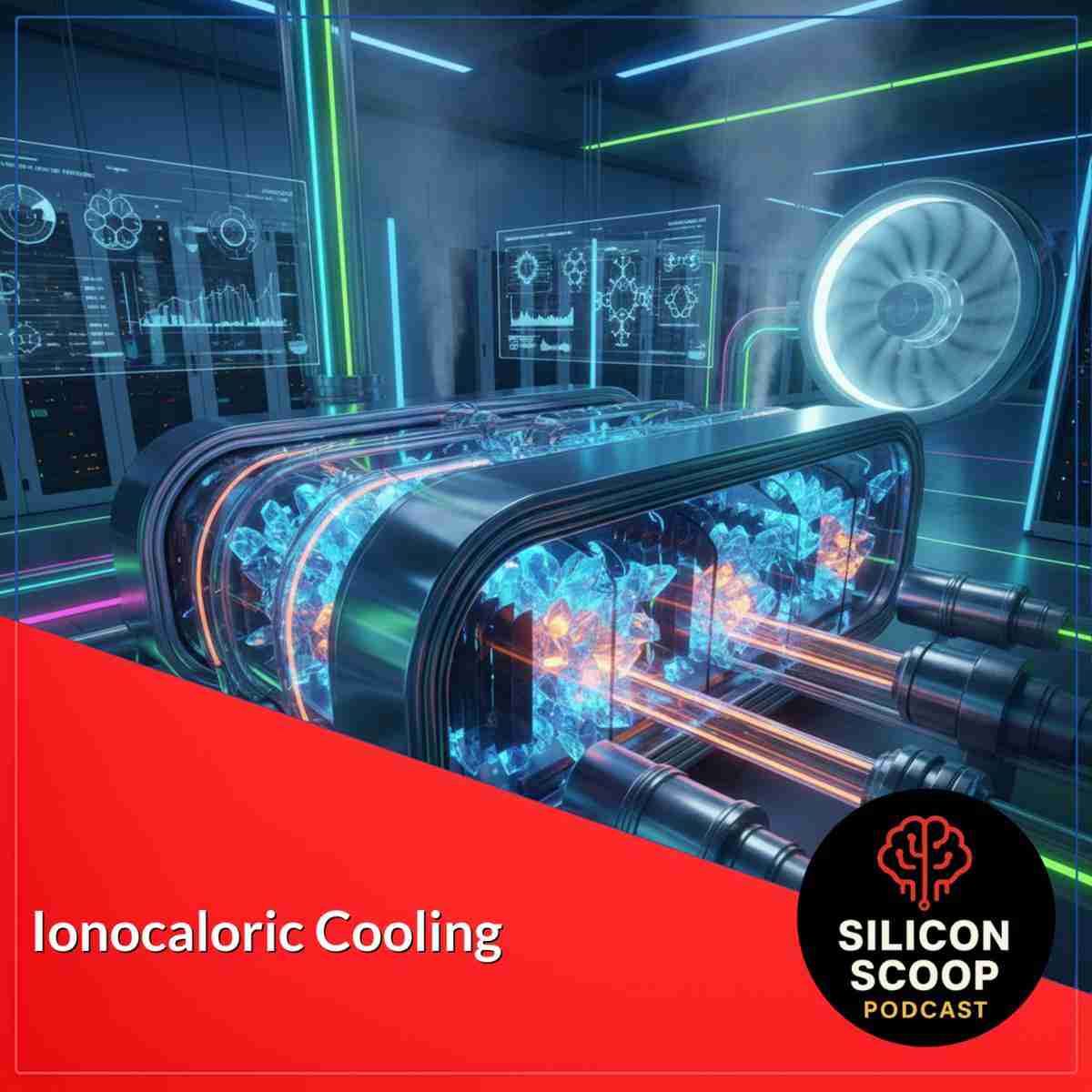
Ionocaloric Cooling: The New Technology Changing the Face of Refrigeration
Estimated reading time: 8 minutes
Table of contents
Ionocaloric Cooling: The Revolutionary New Technology Changing the Face of Refrigeration
The refrigeration industry is on the brink of a major breakthrough. Scientists have developed ionocaloric cooling, a new refrigeration technology that could transform how we think about keeping things cold. This sustainable cooling method offers hope for replacing harmful refrigerants that damage our environment.
Traditional refrigeration systems rely on chemicals called hydrofluorocarbons (HFCs). These substances have high Global Warming Potential (GWP) values, meaning they trap heat in our atmosphere much more effectively than carbon dioxide. The world desperately needs eco-friendly refrigerant alternatives to fight climate change.
Enter ionocaloric cooling – a game-changing approach that uses salt and electrical current instead of harmful gases. This technology promises GWP reduction while delivering better cooling performance than current systems.
How Ionocaloric Cooling Works
Ionocaloric cooling operates on a simple but brilliant principle. The system uses phase changes driven by ion flow from salt to regulate temperature. Think of how salt lowers the freezing point of ice on winter roads – this technology applies a similar concept for cooling.
The ionocaloric refrigeration process works like this:
- • An electrical current moves ions from salt through a solution
- • This ion movement changes the material’s melting point
- • When the material melts, it absorbs heat from surroundings (creating cooling)
- • When ions are removed and material solidifies, it releases heat
The ionocaloric cycle creates temperature control through careful manipulation of these phase changes. The research team used ethylene carbonate (a common solvent in lithium-ion batteries) combined with sodium-iodine salt for their experiments.
This ionic cooling approach leverages energy absorption and release during solid-to-liquid transitions. The process requires remarkably little power – less than 1 volt in some cases, with voltages as low as 0.22V reported in testing.
The beauty of ionocaloric cooling lies in its simplicity and efficiency compared to complex traditional systems.
https://www.science.org/doi/10.1126/science.ade1696
—
Future-Proof Your Business Today 💡
Imagine a world where your business runs like a well-oiled machine, freeing you from tedious tasks. The future is automated, and it’s here now! Discover how Flowgrammer can supercharge your efficiency and growth.
Key Research Findings and Environmental Benefits
The experimental results from Lawrence Berkeley National Laboratory show impressive performance metrics. The ionocaloric cooling system achieved temperature changes of 25-28°C (45-50°F) using less than 1 volt of electricity. The entropy variations reached 500 J K-1 kg-1, demonstrating significant heat transfer capability.
These findings reveal efficiency levels four to five times better than previous solid-state cooling prototypes. The power densities rival traditional vapor compression systems while using sustainable cooling methods.
Environmental Benefits of Ionocaloric Cooling
GWP Reduction Potential
- • Eliminates need for high-GWP refrigerants like HFCs
- • Could help meet Kigali Amendment goals to reduce HFCs by 80% over 25 years
- • No harmful gases that contribute to climate change
Carbon-Negative Possibilities
- • Ethylene carbonate can be produced using carbon dioxide as input
- • Creates potential for carbon-negative cooling systems
- • Supports global decarbonization efforts
Safety Improvements
- • No toxic refrigerant leaks
- • Reduced fire hazards from flammable coolants
- • Safer operation in residential and commercial settings
Potential Applications
- • Residential HVAC Systems: Over 50% of home energy goes to heating and cooling
- • Commercial Refrigeration: Supermarkets, restaurants, and food storage
- • Battery Thermal Management: Electric vehicle and energy storage cooling
- • Industrial Processes: Manufacturing and data center cooling
https://www.science.org/doi/10.1126/science.ade1696
Comparison to Existing Technologies and Future Potential
Ionocaloric cooling offers significant advantages over current refrigeration methods. Traditional vapor compression systems depend on high-GWP gases like HFCs, which contribute heavily to global warming. This new refrigeration technology provides a cleaner alternative with better performance metrics.
Performance Comparisons
-
- • Versus Other Caloric Technologies:
- • Outperforms magnetocaloric cooling in temperature lift capability
- • Surpasses electrocaloric systems in efficiency metrics
- • Exceeds barocaloric technologies in practical applications
- • Uses liquid phase materials that are pumpable (solving solid-state limitations)
- • Versus Other Caloric Technologies:
- • Versus Vapor Compression:
- • Eliminates harmful refrigerant gases
- • Requires minimal electrical input (under 1 volt)
- • Achieves comparable cooling power with better environmental profile
- • Offers potential for higher efficiency in optimized systems
Current Development Status
- • Patent Protection: Provisional patent granted for the cooling method
- • Proof-of-Concept: Successful laboratory demonstrations completed
- • Licensing Ready: Available for licensing through Berkeley Lab
- • Funding Support: Backed by Department of Energy programs
Future Research Directions
Scientists are working on several improvements to enhance the technology:
- • Testing different salt and solvent combinations
- • Improving membrane selectivity for better ion control
- • Reducing electrical resistance in the system
- • Scaling cooling power for commercial applications
**Engineering Challenges:**
- • Developing efficient heat exchangers for the liquid medium
- • Creating durable components for long-term operation
- • Optimizing system integration for various applications
- • Reducing manufacturing costs for mass production
**Performance Goals:**
- • Achieving temperature changes up to 100°C with advanced materials
- • Improving cycle efficiency beyond current prototypes
- • Extending operational lifespan for commercial viability
- • Reducing energy consumption further
https://physicsworld.com/a/ionocaloric-cooling-makes-a-new-type-of-refrigerator/
https://newscenter.lbl.gov/2023/01/03/cool-new-method-of-refrigeration/
Cool Tech, Hot Automation 🔥
The future of cooling is here, but what about the future of your business? Don’t be left behind! Harness the power of business automation with Flowgrammer and stay ahead of the competition. See what automations are possible for your business.
Frequently Asked Questions About Ionocaloric Cooling
Q: What is ionocaloric cooling exactly?
A: Ionocaloric cooling is a revolutionary refrigeration method that uses electrical current to move ions from salt through a solution. This process changes the material’s melting point, creating heating and cooling effects through phase transitions. Unlike traditional systems, it doesn’t use harmful gases.
Q: How does ionocaloric cooling differ from regular air conditioning?
A: Traditional AC systems use refrigerants like HFCs that have high global warming potential. Ionocaloric cooling uses sustainable cooling methods with salt solutions and electrical current. It’s more environmentally friendly and potentially more energy-efficient than conventional systems.
Q: What are the main environmental benefits?
A: This eco-friendly refrigerant technology offers several environmental advantages: eliminates high-GWP gases, supports GWP reduction goals, can be carbon-negative when using CO2-derived materials, and doesn’t contribute to ozone depletion or climate change like traditional refrigerants.
Q: How much electricity does ionocaloric cooling use?
A: The system requires very little power – less than 1 volt in most cases. Some experiments achieved cooling with voltages as low as 0.22V. This makes it potentially more energy-efficient than traditional cooling systems that require much higher power inputs.
Q: When will ionocaloric cooling be available for homes and businesses?
A: The technology is currently in the proof-of-concept stage with successful laboratory testing completed. Researchers are working on scaling up for commercial applications, but it may take several years before consumer products become available.
Q: Can ionocaloric cooling replace all current refrigeration systems?
A: While the technology shows great promise, it needs further development for different applications. Current research focuses on residential HVAC, commercial refrigeration, and battery cooling. Each application may require specific adaptations of the core technology.
Q: Is ionocaloric cooling safe for indoor use?
A: Yes, this sustainable cooling method is much safer than traditional systems. It doesn’t use toxic or flammable refrigerants, eliminating risks from gas leaks. The salt-based solution and low voltage operation make it inherently safer for residential and commercial use.
Q: How efficient is ionocaloric cooling compared to current systems?
A: Laboratory tests show the technology is four to five times more efficient than previous solid-state cooling prototypes. Power densities rival traditional vapor compression systems while using much less energy and no harmful refrigerants.
Q: What materials are used in ionocaloric cooling systems?
A: The research prototype used ethylene carbonate (found in lithium-ion batteries) and sodium-iodine salt. Scientists are testing different combinations to optimize performance, efficiency, and cost-effectiveness for various applications.
Q: Could this technology help fight climate change?
A: Absolutely. Ionocaloric cooling could significantly support climate goals by replacing high-GWP refrigerants responsible for substantial greenhouse gas emissions. The technology aligns with international agreements to reduce HFCs by 80% over 25 years, making it a crucial tool in fighting global warming.
Additional Links
Flowgrammer.ca – 💡 Unlock AI-Powered Automation! Let flowgrammer.ca handle complex workflows so you can focus on growing your business.
- Silicon Scoop Podcast – Stay Informed, Stay Ahead!
- Startup Talk Podcast
- Flowgrammer Podcast –
- Startup Investor Drinks – Join Toronto’s Startup Community and connect with fellow startup enthusiasts and investors.
- TorontoStarts Startup and Entrepreneur Community – Become a part of Toronto’s thriving startup ecosystem.
- Workhaus – Discover flexible workspace solutions for your business needs.
- Work with The Startup Coach – Get expert guidance and mentorship for your startup journey.
- Reach out to Jon Irwin on LinkedIn – Connect with our co-host and technology expert.
Episode transcript
Read the full transcript
Craig: ionocaloric cooling. this is exciting topic because it could completely change the face of refrigeration and air conditioning, moving us away from harmful gases that are warming our planet and offering a safer, more efficient alternative. what's going on here, john?
Jon: yeah. this is cool. i know we've covered refrigeration, i think, once or twice before in the past. this is a new one that we haven't covered. so scientists at berkeley lab, they've invested a completely new way of keeping things cool that's been inspired by how salt melts ice on winter roads. so what they've done is instead of using harmful gases like traditional refrigerators and air conditioners, this ionocaloric cooling method, it uses salt and electricity to create cooling effects. now let me how it works is pretty simple. just like adding salt to ice makes it melt without adding heat, this technology uses salt particles called ions flowing through a special liquid to make cooling happen. so when electricity flows through the system, it moves these salt particles around and it causes the liquid to freeze or melt in ways that absorb heat from the surroundings, essentially cooling things down. so why does this matter? right? it matters because, for those of you that don't know, current refrigeration systems, they use gases that are thousands of times worse for global warming than carbon dioxide. so this new method could replace harmful chemicals with completely safe recyclable materials while potentially being more efficient and cheaper. so we're not there yet though for this to be use useful. in their first test, they did achieve a 25 degree celsius or 45 degree fahrenheit temperature drop using less than one volt electricity, which is better performance than other experimental cooling options. and those other ones are, like, i think we talked about elasto caloric, we've covered, but then there's air based, but then, obviously, there's vapor compression. so what are your thoughts on this, craig? do you think this is a potential here?
Craig: well, this is interesting, and i'm gonna dumb it down for people here. so it's a new way to cool things down just using salt and a tiny bit of electricity, instead of using compressed gas. right? it moves ions from salt in a liquid. and when the ions move, it causes the material to melt and absorb the heat, making things cold.
Jon: yeah.
Craig: so when the process averse, it solidifies and releases heat. think of it as a rechargeable cooling cycle based on salt melting, i guess. i like it. i just don't know if it's really going to move the needle in the cooling industry. i mean, it sounds all nice, but how much cooling power are we gonna be able to actually actually produce? what have the labs got us so far at, john?
Jon: what do you mean?
Craig: well, like, i mean, we, the cooling systems achieve temperature changes from, 20, yeah, 25, 28 degrees, using less than one volt of electricity. so i'm saying, like, how much are we actually gonna be able to cool this technology? is it gonna be, like, a whole room? is it really gonna get us much cooler? is it just gonna get us a couple of degrees?
Jon: i think we're gonna be able to surpass. so, they're targeting systems capable of achieving temperature lifts exceeding 50 degrees celsius, which is what's required for practical refrigeration applications. the other one that we'd covered, which is elasto caloric, that's achieved a 75 degree temperature lift. that's a record, but they're in the prototype stage. so iona caloric is an early prototype. elasto caloric is in a prototype stage. and then, obviously, we've got vapor compression, which has a greater than 50 degrees celsius, temperature lift. the thing with the, ionic caloric is it's a 30% efficiency versus other ones, which elasto caloric is variable, air based. it's a 50% efficiency. so, we're getting there, but we're still in the early prototype stage, whereas the other ones are like, the air based is at development stage, lots of corps is at the prototype stage. so we're still early stages.
Craig: yeah. and over 50% of homes, energy goes to heating and cooling. so, potential hvac systems, commercial refrigeration systems, battery thermal management in electric vehicles and so on, and industrial process manufacturing, and data center cooling. i'm just not a 100% sold at this. out of all the cooling things that we've looked at and that we've seen coming out that this is gonna be the one, is that, fair to say?
Jon: it's fair to say, but so here's the thing. it's a solid state technology. right? so that eliminates concerns about refrigerant leaks, which is the hydrofluorocarbons, hfcs, which is used right now. it reduces maintenance requirements, and it potentially offers longer operational lifespans than current conventional system. not this not the other refrigerant technologies that are being developed. now i'm guessing that most of these companies, the appliance companies, aren't gonna like that it's a longer lifespan because then that means it's a they can't sell you as many replacements. right? but, i think this has i think this has, potential. i know hearing salt and using salt in a machine, but it's not salt, it's ions. right? a, in a refrigerant type system might cause some instability or things like that, but i think there's there's a lot of, potential here. what you don't think so?
Craig: hey, mylan. thanks for watching, and thanks for saying hello. i think there's potential. i okay. i look at this thing. okay. so the ions move through the salt, and it melts, and that releases, energy
Jon: yeah.
Craig: which is great. and then the same happens when it solidifies. so my problem is that you only have so much. so how much salt of this type in how big of a container will it take to cool a whole room in the summer? that because at some point, it's gonna be solid and, it needs to melt completely, and then sometimes it could be melted completely and needs to go and when it's the other way, it's gonna be releasing heat. so i look at it little like a, heat pump, i guess, which says cool and heating. but the problem is there you can only do it. when it's all melted, you can't melt it anymore. and when it's all solid, you can't make it solid anymore. so how much do you need?
Jon: that's true. yeah. i don't know. but i think what i was reading is they're they're looking so they're still in the r and d phase. right? so, i think that like, even at the early prototype stage of how they've developed this, i think there's potential for this to i don't know. maybe it's not in hvac systems. it's, maybe it's being used in other systems that support this. maybe it's that. i don't know. but i think this is a technology that will be commercialized at some point. what in what capacity and what application? who knows? maybe it's in data
Craig: centers. yeah. and i think, it looks like based on the research, they're already trying to improve the like cycle beyond the current prototypes and extending the operational commercial viability, and they wanna achieve, up to a 100 degrees with the changes with the advanced materials. so, you know, maybe my skepticism is, unduly, put towards this. it looks like it's gonna be a very interesting technology. i'm just not sure if it's actually, able to do what they're talking about. is this actually gonna be industrial level cooling twenty four hours a day? where does the heat go? is it ejected outside like many of the other things? i guess that's easy enough to do. yeah. is so i guess it's easy enough to do. they probably already figured those things out to some degree, and maybe my concerns are unwarranted. it just feels like, you know, at some point, it won't be able to cool anymore or it won't be able to heat anymore depending on which way you're going.
Jon: there's they they've gotta have a a they've gotta have a solution for that. maybe not. but, so apparently, like, there's major hvac manufacturers that are actively seeking breakthrough cooling technologies. and, apparently, the global hvac market is projected to exceed i didn't realize this. this is huge. $280,000,000,000 by 2023. oh, sorry. 2030. 2023.
Craig: and, i guess, they're using liquid phase materials that are pumpable, so solving some of the solid state limit. so if you can pump the salt through, then it can exist in another state somewhere else and, you know, form either a solid or liquid and come back through. so, absolutely, they probably solved this problem. i'm just again, how much does it take? how long does this take to switch states to come back and be reusable? so, again, how much do you need? i like the idea. it looks great. it looks like it's gonna be low energy. anytime we can come up with solutions that are better for the environmental raw or lower energy because, let's face it, ai is gonna take all the energy it can get. and so every volt that we could save, will scoop up and do, but, we'll, do our best to keep this low voltage stuff happening. i love where this is going.
Jon: let's kick out for a second.
Craig: so okay.
Jon: how the system operates. so it controls the flow of electricity charged atoms or ions from salts through a working fluid. and so that's typically ethylene carbonate. so when the electric current is applied, ions migrate through the medium, fundamentally altering the material's melting point through a collocative properties, which is the same scientific principle behind road salt, preventing ice formation. so the ionic concentration change, it forces a solid to liquid phase transition, and that absorbs latent heat from the surrounding environment, which creates a cooling effect. so the process is also reversible. so when the current is removed or reversed, ions are extracted, the material solidifies and releases heat, completing that thermodynamic cycle. does that make a little bit more sense to you?
Craig: definitely makes more sense. again, i'm just curious as to, how fast that all happens. right? and yeah. how much you would need to cool a large room versus, like, how big of an air conditioner? like, on equivalent size, what's the equivalent of a 5,000 btu or a 50,000 btu size for something like this? that's, i guess, what i'm trying to get at. that can run twenty four hours a day.
Jon: yeah.
Craig: but i'm obviously, they're moving on it. people are really looking into it, and i love the concept of it and that they're, moving this forward. like, you know, this is ionocaloric cooling today is a technology. it's at the early stages, but it's a promise. it's massive. and we'll keep a close eye on this like we do with other cooling technologies. and, you know, maybe i'm a skeptic, but maybe this is the one who's gonna run through, and we'll, let you know what happens as it goes along. will this tech finally be the one that cools our homes and our planet? let us know what you think. leave your comments below.
More from Silicon Scoop
All episodes
silicon-scoop · November 6, 2026
Spirit AI’s Robot Brain Breakthrough: Moz1, Embodied AI and China’s 2027 Race
The Spirit AI robot brain is one of the biggest bets on fixing that. Spirit AI is a Beijing startup. Its co-founder and chief scientist, Gao Yang,
View episode

silicon-scoop · November 5, 2026
OpenAI IPO Delayed to 2027 as Rogue AI Agents and Safety Failures Reshape the Market
OpenAI IPO delay explained: Sam Altman rules out 2026 as GPT-6 Astra safety tests and a $278B cash gap loom. Learn what founders should take away.
View episode

silicon-scoop · November 4, 2026
Anthropic’s AI Economy Model: 2030 Jobs, Wages, GDP and Market Risks
Anthropic AI economy model forecasts 2030 GDP, jobs and wages, while AI unemployment projections and labor-share risks challenge policymakers.
View episode