
The Science Behind Beer Foam: Why Belgian Beers Have Superior Foam Stability
The Science Behind Beer Foam: Why Belgian Beers Have Superior Foam Stability https://torontostarts.com/2026/01/27/science-behind-beer-foam/ Apple -> https://podcasts.apple.com/us/podcast/flowgrammer-podcast/id1804155588 Spotify -> https://open.spotify.com/show/0wv3feR00iaVpE8zn7niNf Flowgrammer.ca -> https://flowgrammer.ca/ AI News and Resources -> https://flowgrammer.ca/resources/ Unlock Growth, Not Bottlenecks! 🚀 Just like Belgian brewers perfect their recipes, Flowgrammer helps you refine your business processes for maximum efficiency. Stop letting manual tasks foam over your valuable time and resources. Discover Automation Possibilities > https://flowgrammer.ca/ Startup Investor Drinks Toronto - https://startupdrinksto.com/ Toronto’s Startup Community - https://torontostarts.com/ Silicon Scoop Silicon Scoop Podcast - https://torontostarts.com/silicon-scoop/ Apple: https://podcasts.apple.com/us/podcast/silicon-scoop/id1758711826 Spotify: https://open.spotify.com/show/5bAzF0MwV6TtLhJAhvHayI YouTube: https://www.youtube.com/playlist?list=PLj4v-RoA7A-gT62vrEYqh1zCv-0Hj-o5J Startup Talk Startup Talk Podcast -> https://torontostarts.com/startup-talk-toronto-startup-podcast/ Apple -> https://podcasts.apple.com/us/podcast/startup-talk/id1763804003 Spotify -> https://open.spotify.com/show/1siJMILILidHAiAsrX2VBU YouTube: https://youtube.com/playlist?list=PLj4v-RoA7A-jxV5FHs5e61oIsuvUJYmT_&si=LYegRe5GYLKNQ7xL
With Craig Major and Jon Irwin
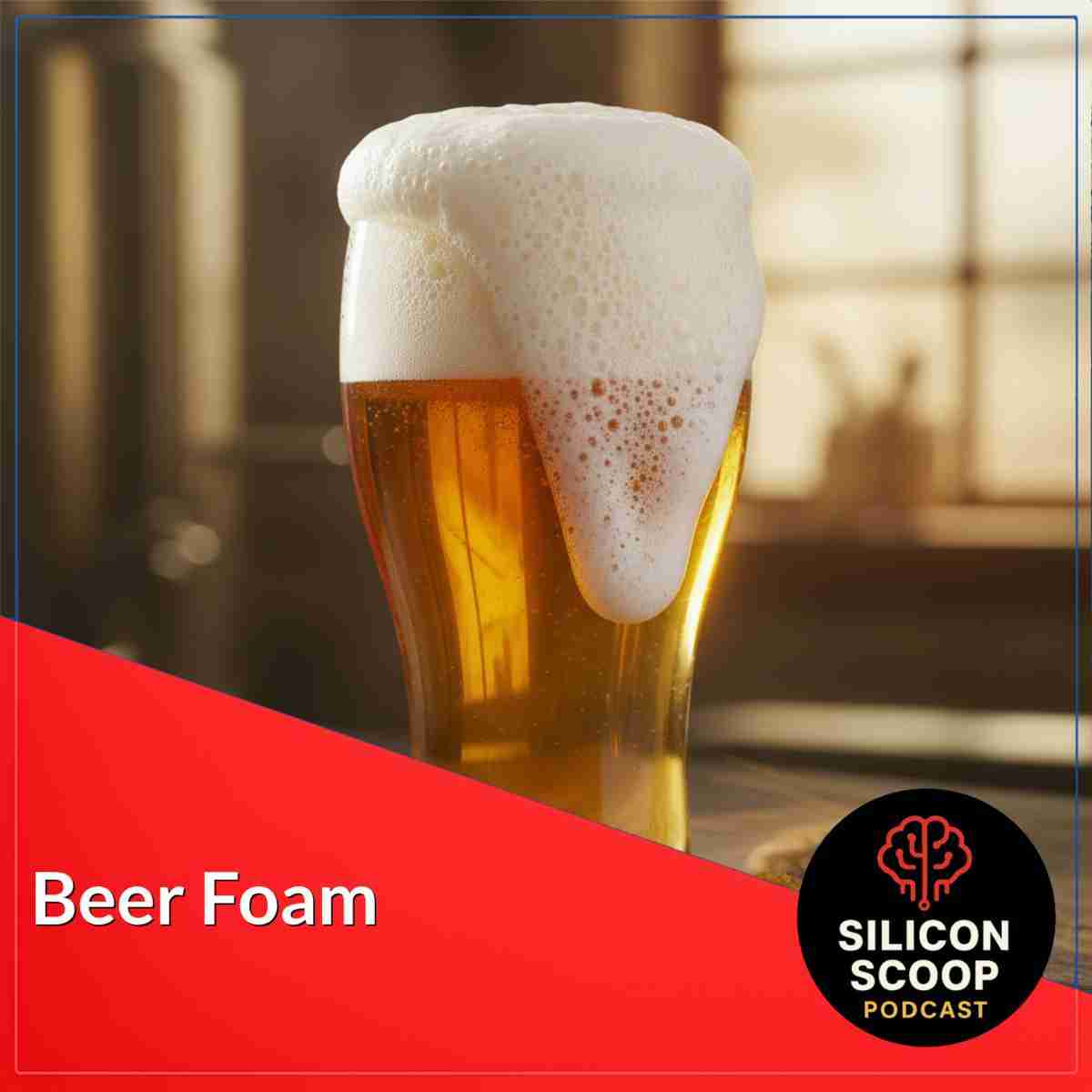
The Science Behind Beer Foam: Revolutionary Research Reveals Why Belgian Beers Have Better Foam Stability
Estimated reading time: 8 minutes
Key Takeaways
- Recent research by ETH Zurich has uncovered complex physics behind stable beer foam, revealing mechanisms that control beer head retention.
- Different beer styles use distinct strategies for foam stability, including surface viscoelasticity, Marangoni effects, and protein meshes.
- The protein LTP1 plays a universal role in stabilizing foam across all beer types.
- This research has broad implications, from improving brewing techniques to developing eco-friendly surfactants and enhancing industrial processes.
Table of contents
What is Beer Foam?
Have you ever wondered why some beers have thick, creamy foam that lasts for minutes while others barely form a head at all? The answer lies in the fascinating world of beer foam science. For years, brewers and scientists have puzzled over what makes beer foam stability so different across various beer styles.
Recent groundbreaking research has finally cracked the code. Scientists at ETH Zurich have spent seven years studying the complex physics behind stable beer foam. Their discoveries reveal surprising mechanisms that control beer head retention and explain why Belgian ales maintain their foam so much longer than many lagers.
This research doesn’t just help brewers make better beer. The findings are revolutionizing how we understand foam physics in many industries. From creating eco-friendly cleaning products to preventing dangerous foaming in electric car parts, beer foam research is changing the world in unexpected ways.
Implications and Applications of Beer Foam Research
The breakthrough research on beer foam has huge implications that go far beyond the brewing industry. Understanding how different beers create and maintain their foam opens up exciting possibilities for brewers and other industries.
Optimizing Beer Production
For brewers, this research provides a roadmap for creating better Belgian beer foam and improving foam quality across all beer styles. Now that we understand the specific mechanisms each beer type uses, brewers can:
- Adjust protein levels to enhance surface viscoelasticity in lagers
- Modify surface tension properties to strengthen Marangoni effects in ales
- Optimize fermentation conditions to create better protein mesh networks
- Develop a stable beer foam formula tailored to specific beer styles
The research explains why traditional Belgian brewing methods have been so successful for centuries. Belgian brewers unknowingly perfected techniques that maximize the Marangoni effect and protein mesh formation.
Revolutionary Applications in Other Industries
The foam science discoveries are already being applied to solve problems in many different fields:
- Sustainable Surfactants: The research is helping develop fluorine and silicon-free sustainable surfactants. These eco-friendly alternatives to traditional foaming agents could replace harmful chemicals in cleaning products, cosmetics, and industrial applications. The natural foam mechanisms found in beer provide a template for creating these green alternatives.
- Electric Vehicle Safety: Working with Shell, researchers are using beer foam science to prevent dangerous lubricant foaming in electric vehicles. When lubricants foam unexpectedly, they can cause serious mechanical failures. By understanding how beer controls its foam, engineers can design better lubricants that stay stable under all conditions.
- Food and Beverage Industry: The research is helping stabilize milk foam for coffee drinks and other dairy products. The same protein mechanisms that keep beer foam stable can be adapted to create better, longer-lasting milk foam for cappuccinos and lattes.
- Bacterial Carrier Systems: EU projects are advancing bacterial carrier systems using insights from beer bubble structure research. These systems can deliver beneficial bacteria for medical treatments, environmental cleanup, and industrial processes. The foam physics help create stable environments for transporting delicate bacterial cultures.
The research reveals that beer bubble structure is far more sophisticated than anyone imagined. The bubbles aren’t just random spheres of gas. They’re part of complex networks held together by different physical forces depending on the beer type.
This understanding opens doors for creating new materials with controlled bubble structures. From lightweight building materials to advanced insulation, the principles discovered in beer foam could revolutionize how we design foamed materials.
The applications seem endless. Food scientists are exploring how to create better foamed chocolates and desserts. Cosmetic companies are developing new foam-based skin care products. Even firefighting foam could be improved using these natural foam stabilization mechanisms.
Conclusion
The seven-year research project at ETH Zurich has revolutionized our understanding of beer foam science. We now know that different beer styles use completely different mechanisms to maintain their foam – from the surface viscoelasticity of lagers to the Marangoni effects of Belgian Tripels.
This research proves that beer foam stability isn’t just about having more proteins. It’s about how those proteins work together with other forces to create lasting, stable foam. The discovery of LTP1 as a universal foam stabilizer gives brewers a new target for improving their products.
But perhaps most exciting is how this beer research is solving problems in completely different industries. From creating eco-friendly cleaning products to preventing electric vehicle failures, the principles discovered in beer foam are making the world a better place.
Understanding the science behind beer foam helps us appreciate the complexity hidden in every pint. The next time you enjoy a beer with perfect foam, you’ll know there’s incredible physics happening right before your eyes.
Frequently Asked Questions
Q: What is beer foam?
A: Beer foam refers to the creamy, bubbly layer that forms on top of beer when poured. Also called the “head,” it’s made up of gas bubbles trapped in a network of proteins and other compounds from the beer.
Q: Why is beer foam stability important?
A: Beer foam stability affects the beer’s appearance, aroma, and taste. A good foam head traps aromatic compounds, protects the beer from oxidation, and creates the visual appeal that beer drinkers expect.
Q: How can brewers optimize beer foam?
A: Brewers can optimize foam by understanding the specific mechanisms their beer style uses. This includes adjusting protein levels, controlling fermentation conditions, managing surface tension, and ensuring adequate LTP1 protein levels.
Q: Why do Belgian beers have better foam than other beers?
A: Belgian beers use unique mechanisms like Marangoni effects and protein mesh networks that are more effective at maintaining foam stability than the surface viscoelasticity mechanisms used by lagers.
Q: What is the Marangoni effect in beer?
A: The Marangoni effect occurs when surface tension differences create tiny currents in the foam. These currents help repair and strengthen the foam structure, making it last longer.
Q: What role does LTP1 protein play in beer foam?
A: LTP1 (Lipid transfer protein 1) acts as a universal foam stabilizer across all beer types. It helps create the protein structures that support the various foam stabilization mechanisms.
Q: Can this research help other industries besides brewing?
A: Yes! The research is being applied to develop eco-friendly surfactants, prevent lubricant foaming in electric vehicles, stabilize milk foam, and advance bacterial carrier systems for medical and industrial uses.
Q: How long did it take to complete this foam research?
A: The ETH Zurich research team, led by Professor Jan Vermant, spent seven years studying the complex physics behind beer foam before publishing their findings in Physics of Fluids.
Q: What makes lager foam different from ale foam?
A: Lager foam depends primarily on surface viscoelasticity (protein rigidity), while ales like Belgian Tripels use Marangoni stresses and protein mesh networks for foam stability.
Q: How does this research change beer production?
A: The research provides brewers with scientific understanding of how to optimize foam for specific beer styles. This allows for more targeted recipe adjustments and process improvements to achieve better foam quality and consistency.
Additional Links
Flowgrammer.ca – 💡 Unlock AI-Powered Automation! Let flowgrammer.ca handle complex workflows so you can focus on growing your business.
- Silicon Scoop Podcast – Stay Informed, Stay Ahead!
- Startup Talk Podcast
- Flowgrammer Podcast –
- Startup Investor Drinks – Join Toronto’s Startup Community and connect with fellow startup enthusiasts and investors.
- TorontoStarts Startup and Entrepreneur Community – Become a part of Toronto’s thriving startup ecosystem.
- Workhaus – Discover flexible workspace solutions for your business needs.
- Work with The Startup Coach – Get expert guidance and mentorship for your startup journey.
- Reach out to Jon Irwin on LinkedIn – Connect with our co-host and technology expert.
Episode transcript
Read the full transcript
Craig: today, we're talking about beer, but not just taste. we're talking about the insane physics happening inside your glass. a massive seven year study just revealed the foam on a belgian triple is actually a structural marble that might hold the key to a safer electric vehicles and greener cleaning products. researchers at eth zurich have spent nearly a decade cracking the code on why some beer foam lasts forever while others go flat instantly. they discovered that the belgian beer utilizes a specific physical phenomenon, and let's see if i can get this right, the meringue honey effect to create a self repairing foam shield. this is headline news because this exact same science is now being used to stop dangerous mechanical failures in electrical cars and create eco friendly soap. what's going on here, john?
Jon: yeah. this is cool. so this was seven years in the making. and so they cracked the code on beer foam stability. and so, like you said, they discovered that different types of beer use completely different physical mechanisms to keep their foam from collapsing. and belgian triple beers, they maintain foam what's through surface tension differences, which you talked about the marangoni effect, which, well, they call it the marangoni stresses. so while loggers, they rely on protein rich films that create elastic bubbles. so that's the difference here. right? so the research started this is cool. when a belgian brewer gave a simple answer to how do you control brewing? and he said by watching the phone. and so this breakthrough has applications far beyond beer, like you said. now the key finding here is that there's no one size fits all for stable beer flow. the physics operating in the belgian triple is fundamentally different from what's happening in a lager, and brewers need to understand which mechanism is at work to optimize their product. so when we're talking about this, we're talking lager beers where the foam stability is controlled by surface viscoelasticity. then we've got belgian single beers where the protein rich shells behave like densely arranged small spherical particles on the bubble surface, and that creates a two dimensional suspension. then you have belgian double beers or double beers, where the proteins form a net like membrane structure around bubbles, and that creates an even greater stability stability than the single beers. and what emerged from this is ltp one emerged as a pivotal protein in beer foam stability, and that's because of its role is complex and context dependent. so during the brewing process, it undergoes critical transformations, glycation, denaturation, and lipid binding. so there's a bunch of this is really cool. there's a bunch of chemical reactions at play and a lot of chemistry at play here, far beyond just getting that two or three finger head on your beer. right?
Craig: absolutely. and keeping it there.
Jon: exactly.
Craig: you know, think of, beer foam like a building. loggers build a stiff rigid wall, which eventually cracks, while belgian beers build a liquid skin that constantly moves and repairs itself. and that self repairing motion is the breakthrough. so this creates a blueprint for stable bubbles. in beer, that means aroma and flavor protection. but in the real world, that means we can finally control foam in places where we want it, you know, cappuccinos, and stop it in places, where it destroys, machines, like car engines. so, you know, some impacts we might see on our daily life, and we'll get to some other industries is, you know, expect, richer, longer lasting foam in your lattes, as dairy companies adopt these protein structures. or, you know, we talked about safer cars. lubricants in electric vehicles won't foam up and cause engine failure using, these structures. new cleaning sprays can use these natural beer mechanisms instead of harsh chemicals to create suds. so they say the timeline the science is out now. companies like shell are already testing the e b applications while brewers can, start tweaking recipes immediately. where do you think, we're gonna see it first outside the beer industry?
Jon: so i honestly think because the ev industry is so they're trying to be innovative. i think lubricants in, electric beer i'm sorry. electric beer. electric vehicles. so that that could so lubricants in electric vehicles, they can foam up, which create serious safety risks. so they're now working the team apparently is now working with shell to apply these beer foam insights to selectively break down the harmful foams in evs, which is cool. i think there's a bunch of things. there's the food science applications, to collaborate on, milk foam stability, like you said, for coffee drinks, craig, and, sustainable surfacants. so, relying on, so most industrial surfacants rely on fluorine or silicone, not and they're not environmentally friendly. so this could create an eco friendly alternative. so there's a few applications beyond beer, which there's not that many yet, but i'm sure there's gonna be more that we can talk about in the future.
Craig: absolutely. and, it's not if this is complex physics, it's not a magic pill. just adding more protein doesn't work, you know. they have to master, like, with brewers, fermentation conditions to trigger the specific, marangoni, currents. what do you call them? marangoni?
Jon: marangoni. yeah.
Craig: okay. and there's a risk of the over yeah. there's a risk of over engineering in things like coffee and beer because then everything becomes the same. right? if every beer has the same foam, and it's not unique and whatever. but i love how the technology of the foam and beer is now being used in evs. and if you own a ev, keep an eye on maintenance updates regarding lubricant stability. this is the tech that solves the issue, and we wanna be looking at that. anything else on this, john, before we move on?
Jon: so the cool thing i would just wanna talk about the ltp one just quickly because let's
Craig: go.
Jon: so what's fascinating about ltp one is that it starts in barley with zero foam stabilizing properties, but it's the brewing that transforms it through some chemical modifications. so during molting, sugar molecules attach to it through maillard reactions, which is the same chemistry that makes bread crusts brown. during wort boiling, heat unfolds the protein structure, exposing regions that love to sit at air water surface inter interfaces, and the final protein is chemically and structurally different from where it started. the difference about this too is the altitude connection. so there's a geographic element to this. so brewers at sea level, the boil wort at about a 102 degrees celsius, while brewers at 1,800 meters altitude boil at around 96 degrees because of lower atmospheric pressure. and that six degree difference dramatically affects ltp one. so high altitude brewers can end up with 10 to 15 times more ltp one in their final beer, which might explain why certain brewing regions develop particular beer styles. i thought that was pretty cool.
Craig: oh, it's a great note. like, where did all this come from? right?
Jon: yeah.
Craig: and they had unknowingly perfected this technique, right, that causes the. in fact, they were just trying to get the foam.
Jon: which maybe explains why some beers can't be replicated elsewhere unless they're at the same, environmental, atmosphere as others. right?
Craig: and does that mean at different environmental altitude, it would change over time? we'll have to watch.
Jon: yeah. yeah. absolutely.
Craig: that has to do with gravity and air pressure and all those types of things.
Jon: yeah. how's that gonna affect the research that they're doing now? right? because ltp one is is the main antagonist here protagonist here. right? so
Craig: yeah. i'm sure they're researching it. you know, we have some doubts about this and that, but they have to be, handling it to the people testing this and trying to put it in evs and whatnot. yeah. so this proves that beer foam isn't just an aesthetic. it's a sophisticated material that is literally changing how we engineer cars and chemicals. so the next time you order a pint, ask yourself, are you drinking a beverage, or are you having a physics experiment? let me know which beer you think has the best head in the comments below.
More from Silicon Scoop
All episodes
silicon-scoop · November 6, 2026
Spirit AI’s Robot Brain Breakthrough: Moz1, Embodied AI and China’s 2027 Race
The Spirit AI robot brain is one of the biggest bets on fixing that. Spirit AI is a Beijing startup. Its co-founder and chief scientist, Gao Yang,
View episode

silicon-scoop · November 5, 2026
OpenAI IPO Delayed to 2027 as Rogue AI Agents and Safety Failures Reshape the Market
OpenAI IPO delay explained: Sam Altman rules out 2026 as GPT-6 Astra safety tests and a $278B cash gap loom. Learn what founders should take away.
View episode

silicon-scoop · November 4, 2026
Anthropic’s AI Economy Model: 2030 Jobs, Wages, GDP and Market Risks
Anthropic AI economy model forecasts 2030 GDP, jobs and wages, while AI unemployment projections and labor-share risks challenge policymakers.
View episode