
AI Copyright Landmark: German Court Rules Against OpenAI in GEMA Case
AI Copyright Landmark: German Court Rules Against OpenAI in GEMA Case https://torontostarts.com/2026/01/28/ai-copyright-german-court-ruling/ Apple -> https://podcasts.apple.com/us/podcast/flowgrammer-podcast/id1804155588 Spotify -> https://open.spotify.com/show/0wv3feR00iaVpE8zn7niNf Flowgrammer.ca -> https://flowgrammer.ca/ AI News and Resources -> https://flowgrammer.ca/resources/ Future-Proof Your Business Today! Don't let complex legal battles hold you back from innovating! Implement a robust automation strategy to stay ahead, reduce risks, and maintain peak efficiency. Let our expert automation solutions help boost efficiency and save time. Discover Automation Solutions > https://flowgrammer.ca/ Startup Investor Drinks Toronto - https://startupdrinksto.com/ Toronto’s Startup Community - https://torontostarts.com/ Silicon Scoop Silicon Scoop Podcast - https://torontostarts.com/silicon-scoop/ Apple: https://podcasts.apple.com/us/podcast/silicon-scoop/id1758711826 Spotify: https://open.spotify.com/show/5bAzF0MwV6TtLhJAhvHayI YouTube: https://www.youtube.com/playlist?list=PLj4v-RoA7A-gT62vrEYqh1zCv-0Hj-o5J Startup Talk Startup Talk Podcast -> https://torontostarts.com/startup-talk-toronto-startup-podcast/ Apple -> https://podcasts.apple.com/us/podcast/startup-talk/id1763804003 Spotify -> https://open.spotify.com/show/1siJMILILidHAiAsrX2VBU YouTube: https://youtube.com/playlist?list=PLj4v-RoA7A-jxV5FHs5e61oIsuvUJYmT_&si=LYegRe5GYLKNQ7xL
With Craig Major and Jon Irwin
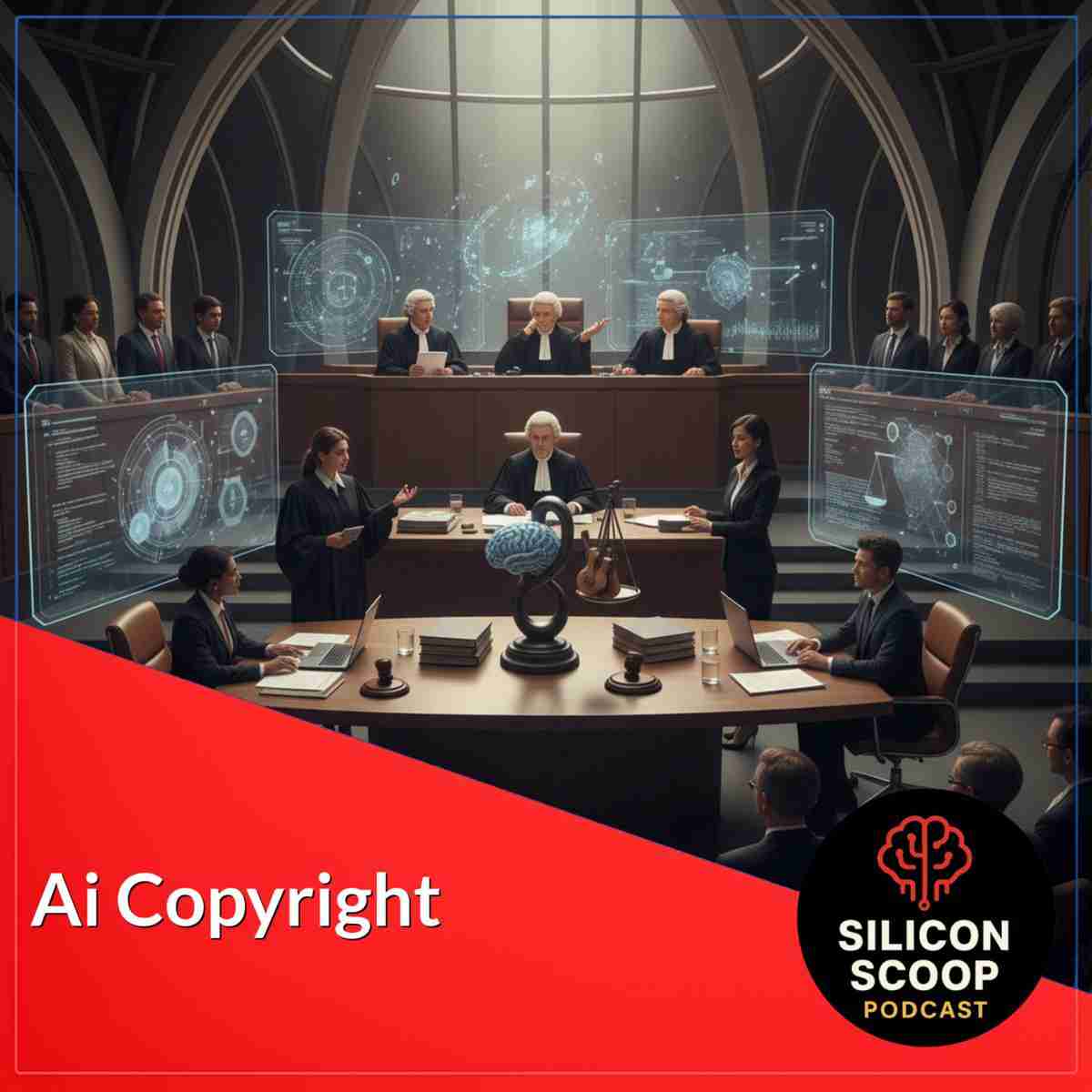
AI Copyright Landmark: German Court Rules Against OpenAI in GEMA Case
Estimated reading time: 12 minutes
Key Takeaways
- The GEMA v OpenAI case marks a significant legal milestone in AI copyright law, especially regarding training data and output reproduction.
- The court’s rulings establish that memorizing and reproducing copyrighted lyrics during training and output can constitute infringement under German law.
- This decision impacts how AI companies handle copyrighted material, emphasizing the importance of licensing and technical safeguards.
- The ruling contrasts with other jurisdictions, such as the UK, highlighting differing legal interpretations of AI training data copyright issues.
- Legal responsibility is placed on AI providers like OpenAI, not end-users, requiring proactive measures to prevent infringement.
Table of contents
Background of the GEMA v OpenAI Case
The GEMA lawsuit OpenAI case (42 O 14139/24) brought before the Regional Court of Munich I represents a watershed moment in AI training data copyright law. GEMA, Germany’s powerful copyright collective representing composers, lyricists, and publishers, filed suit against OpenAI for unauthorized use of lyrics from nine well-known German songs.
The case centered on works by prominent artists including Inga Humpe and Herbert Grönemeyer. GEMA alleged that OpenAI’s GPT models, including GPT-4 and GPT-4o, had illegally reproduced these protected song lyrics both during the training process and in ChatGPT’s outputs to users.
This legal action highlighted fundamental questions about generative AI licensing and whether AI companies can freely use copyrighted material found on the internet to train their models. The case challenged OpenAI’s practice of ingesting vast amounts of text data without explicit permission from rights holders.
GEMA’s legal strategy focused on two distinct forms of infringement. First, they argued that storing and memorizing copyrighted lyrics during training constituted reproduction under German copyright law. Second, they claimed that ChatGPT’s ability to output these lyrics when prompted violated public communication rights.
The timing of this lawsuit proved significant. As AI systems became more sophisticated and capable of reproducing training data with increasing accuracy, rights holders grew concerned about unauthorized use of their intellectual property. This case became a test of whether traditional copyright protections could effectively regulate AI training practices.
Future-Proof Your Business Today!
Don’t let complex legal battles hold you back from innovating! Implement a robust automation strategy to stay ahead, reduce risks, and maintain peak efficiency. Let our expert automation solutions help boost efficiency and save time.
Discover Automation Solutions >
Key Legal Findings and Implications
The court’s ruling in this GPT-4 copyright infringement case established several critical legal precedents that will reshape how AI companies approach training data and model development.
Infringement During Training
The Munich court found that ChatGPT’s memorization of song lyrics constitutes reproduction under §16 of the German Copyright Act (UrhG). This finding directly challenges the AI industry’s assumption that training on publicly available data is legally permissible without explicit licensing.
The court determined that when AI models store verbatim reproductions of protected works, this constitutes copyright infringement regardless of the technical mechanisms involved. This ruling rejected OpenAI’s argument that its models only create “statistical correlations” rather than actual copies.
Output-Based Infringement
Beyond training issues, the court found that ChatGPT’s ability to reproduce lyrics when prompted violates §19a UrhG regarding public communication rights. This creates liability not just for the training process but for the ongoing operation of AI systems that can generate protected content.
The ruling established that AI music copyright protection extends to both the input and output stages of AI processing. When users prompt ChatGPT for specific song lyrics and the system complies, this constitutes unauthorized public communication of copyrighted works.
Responsibility Allocation
A crucial aspect of the ruling concerned who bears legal responsibility for copyright infringement. The court firmly placed liability on OpenAI rather than end-users, citing the company’s control over dataset selection, model architecture, and technical mechanisms.
This responsibility allocation has significant implications for AI providers. They cannot simply claim that users are responsible for prompting infringing outputs. Instead, AI companies must implement technical safeguards to prevent copyright violations.
Text and Data Mining Exception Limitations
The court rejected OpenAI’s reliance on the text and data mining exception (§44b UrhG). The judges found this exception inapplicable when protected works are substantially reproduced in model outputs, particularly after rights holders have exercised opt-out rights.
This limitation narrows the scope of legal protections AI companies can claim when using copyrighted training data. The ruling suggests that broad exceptions for research and development do not automatically apply to commercial AI systems that memorize and reproduce protected works.
Relief Granted
The court ordered comprehensive relief including injunctive measures requiring OpenAI to cease storing and reproducing infringing content. OpenAI must also provide detailed information about how the protected lyrics were used in training data.
Additionally, the court acknowledged GEMA’s right to monetary damages or license fees, though the specific amounts will be determined in subsequent proceedings. This creates both immediate compliance obligations and ongoing financial liability for OpenAI.
Comparison with Other Cases and Industry Impact
The GEMA v OpenAI ruling creates fascinating contrasts with similar cases in other jurisdictions, particularly highlighting differences in how courts interpret AI training data copyright issues across legal systems.
Divergence from UK Precedent
The Munich court’s decision stands in stark contrast to the UK case of Getty Images v Stability AI. While the German court found that AI models “containing” copies of training material constitutes infringement, the UK court dismissed similar claims because it did not consider Stable Diffusion to be an “infringing copy.”
This divergence highlights fundamental differences in how courts interpret whether AI models store reproductions of copyrighted works. The German approach takes a more literal view of memorization and reproduction, while the UK court focused on the technical nature of how AI models store information.
Implications for Generative AI Licensing
These contrasting interpretations create a complex landscape for generative AI licensing strategies. Companies operating internationally must navigate varying legal standards across jurisdictions, potentially requiring different technical approaches for different markets.
The German ruling suggests that European courts may take a stricter approach to AI training data copyright than their counterparts in other regions. This could force AI companies to implement more comprehensive licensing frameworks when operating in European markets.
Technical Implementation Challenges
The ruling necessitates significant technical measures including deduplication systems, anti-memorization techniques, and robust output filters. These requirements may create competitive advantages for AI providers who proactively implement comprehensive licensing and technical safeguards.
Companies that fail to address these requirements face increasing legal exposure as rights holders become more aggressive in pursuing similar enforcement actions across Europe. The costs of retrofitting existing models may prove substantial compared to building compliant systems from the ground up.
Strategic Market Positioning
The decision creates dual enforcement leverage for rights holders through claims based on both training-stage memorization and infringing outputs. This expanded legal framework gives copyright holders more tools to pursue compensation and compliance from AI companies.
For AI providers, this ruling signals the need for proactive licensing strategies rather than reactive legal defenses. Companies that establish compliant frameworks early may gain significant competitive advantages as the regulatory landscape continues to evolve.
Navigate Evolving Regulations with Automation
Get Your Free Automation Audit!
Frequently Asked Questions
Q1: What are the potential next steps in the GEMA v OpenAI case?
A: OpenAI has publicly stated it disagrees with the Munich court’s decision and is considering filing an appeal. Both parties had initially requested a referral to the Court of Justice of the European Union, but the Munich court declined. This possibility may resurface during appeal proceedings, potentially creating binding precedent across all EU member states.
Q2: How might this ruling affect the broader AI industry?
A: The ruling significantly increases licensing pressure on AI providers and necessitates substantial technical measures including deduplication, anti-memorization techniques, and robust output filters. This could create competitive advantages for AI companies that proactively establish compliant licensing frameworks and implement necessary technical safeguards.
Q3: Does this ruling only apply to music and song lyrics?
A: While the case specifically involved song lyrics, the legal principles established could apply to any copyrighted text content including literature, poetry, news articles, and other written works. The court’s focus on memorization and reproduction suggests these principles extend beyond just musical content.
Q4: What does this mean for AI companies operating internationally?
A: The ruling highlights the need for AI companies to navigate varying legal standards across different jurisdictions. The contrast with cases like Getty Images v Stability AI in the UK shows that companies may need different technical approaches and licensing strategies for different markets.
Q5: How does this case affect end users of AI systems?
A: The court specifically placed legal responsibility on OpenAI rather than end-users who prompt the system for copyrighted content. However, users should still exercise caution when requesting potentially copyrighted material, as individual use cases might still face separate legal scrutiny.
Q6: What technical changes must OpenAI implement to comply with this ruling?
A: OpenAI must implement systems to prevent storing and reproducing infringing content, provide detailed information about how protected works were used in training, and establish mechanisms to prevent future copyright violations. This likely requires significant model retraining and output filtering systems.
Q7: Can AI companies rely on fair use or similar exceptions after this ruling?
A: The court’s rejection of the text and data mining exception suggests that broad research and development exceptions may not protect commercial AI systems that memorize and reproduce protected works. Companies cannot assume that publicly available content is free to use for training purposes.
Q8: How does this ruling align with broader European AI regulation?
A: The decision aligns with Europe’s emphasis on licensing over fair use doctrines common in the United States. This approach supports the EU’s broader regulatory framework that prioritizes rights holder protections and explicit consent for use of copyrighted materials.
Q9: What should content creators and rights holders learn from this case?
A: Rights holders can pursue enforcement through both training-stage memorization claims and output-based infringement. This provides multiple avenues for seeking compensation and compliance. Content creators should consider registering copyrights and monitoring AI systems for unauthorized use of their works.
Q10: Will this decision influence similar cases in other countries?
A: While the Munich court’s decision is not binding outside Germany, it provides persuasive precedent for courts in other jurisdictions. The detailed legal reasoning may influence how other courts approach similar questions about AI training, memorization, and copyright infringement, particularly within the European Union.
*This landmark ruling represents just the beginning of how courts worldwide will grapple with AI copyright issues. As artificial intelligence continues to evolve, so too must our legal frameworks for protecting creative works while enabling technological innovation. The GEMA v OpenAI case provides crucial guidance for navigating this complex intersection of technology and intellectual property law.*
Additional Links
Flowgrammer.ca – 💡 Unlock AI-Powered Automation! Let flowgrammer.ca handle complex workflows so you can focus on growing your business.
- Silicon Scoop Podcast – Stay Informed, Stay Ahead!
- Startup Talk Podcast
- Flowgrammer Podcast –
- Startup Investor Drinks – Join Toronto’s Startup Community and connect with fellow startup enthusiasts and investors.
- TorontoStarts Startup and Entrepreneur Community – Become a part of Toronto’s thriving startup ecosystem.
- Workhaus – Discover flexible workspace solutions for your business needs.
- Work with The Startup Coach – Get expert guidance and mentorship for your startup journey.
- Reach out to Jon Irwin on LinkedIn – Connect with our co-host and technology expert.
Episode transcript
Read the full transcript
Craig: big news out of europe that could change how chattp works for everyone. if you think ai companies can just scrape whatever they want from the internet to build their bots, a german court just slammed down a massive gavel that says absolutely not, and the ripple effects are coming for us all. immunicord has ruled that openai infringed on copyright laws by training chachi to be on song lyrics lyrics without a license. this is headline news because it's legally redefines training data. it no longer just learning. it's now considered reproducing and memorizing. this destroys the fair use defense many ai companies rely on in the us and could force them to pay billions in licensing fees, potentially changing the economics of ai forever. what do you think about this, john?
Jon: i'm kind of disappointed in openai's defense. so it rested on a few key arguments, and they are all rejected by the court, by the way. so first, openai suggested that the user who enters the prompt should be legally liable for any infringing output. okay. so an argument that the court dismissed, they also argued that any reproduction was accidental or a technical error, which, again, is laughable. and the court countered this by stating that both the initial copying of data for training and its later reproduction require a license. i agree. and then crucially, the court set a very low threshold for what counts as infringement, ruling that even a 15 word passage could violate copyright law. so this undercuts the common defense from ai companies that their models are creating something entirely new and not just copies of the source material. and so what are your thoughts on those arguments? like, that's sorry.
Craig: i sorry. scoffit. yeah. let me just expand on this compared to, say, what some of the other courts have decided, and, you know, we can talk about this. i think this is interesting, but i don't think it's going anywhere, and i'll explain why in a bit. alright. so, the court firmly rejected the black box defense. memorizing and reproducing copyright lyrics during training and output can, can constitute infringement regardless of the technical mechanism involved. so, that's what the german court decided. in the uk, in the getty images versus stabilityai case, uk court ruled the opposite saying that ai models don't contain copies of images, but just mathematical weights. the german court disagrees creating a massive legal conflict. versus the us on books and news and the author's guild versus openai and and, new york times versus openai, judges are currently looking at whether ai summaries are close enough to the original to count as theft. this german ruling gives a huge ammunition, to the new york, times and authors. and there's more on this. let me just check. there's a recent ruling with anthropic, okay, of perplexity. so, the german ruling focused on training. this thing was ingesting the data in the first place. now the us contrast between dow jones, new york post versus perplexity, a lawsuit, it's not about training. it's about retrieval augmented generation. so, again, that's the news story. right? the news publisher argued that perplexity isn't just learning from the news. it's replacing the news by summary articles. so you don't, need to click. so they don't have fair use everywhere. we have different rules, and the courts recently decided $1,500,000,000, case against anthropic for books, or was it openai? i thought it was anthropic. i thought it was anthropic. but i'll look that up as we go.
Jon: something that
Craig: for and i saw some posts around our authors saying that you can get up to $1,500 per book back on this, class action lawsuit. so there's a lot of different perspectives on there, and i'm not sure where you fall on all of that.
Jon: so for me, it's it comes down to they've used they've used this data to train their models. that's that and without paying for it. so that's where i come in. that's where i stand is they should have paid even though it's available on the internet, they still should have negotiated some sort of agreement before using, anything that, that has been created by artists or anything that's been created by someone, to train their models. that's my opinion, though.
Craig: yeah. and it is an opinion. so i'll put it in a different light, and it might not be the same. but imagine a student, you know, in this case, the eye, who claims they studied for a test, but when asked a question, they just recite the textbook word for word. so if you have a photographic memory and just go like this through the textbook and you have it all and you just recite whatever, the answer from the textbook, the court says that's not learning. that's just making an illegal photocopy of the book inside your brain. now i don't know if it gonna apply to humans, or just to ai. like
Jon: well, that human isn't isn't, making any money off of that test that he studied for. whereas openai is making money off of other people's content that they've trained their models on.
Craig: and potentially taking money away from the people who wrote the original content. that's kinda you know, you're hurt. if they can prove that there's actual financial harm, that's where things come into play.
Jon: right? difficult. yeah.
Craig: yeah. so that's it. because, you know, things like, when google turned it off in the eu or whatever the country it was, they found it was point 1% of traffic dropped. so it was insignificant, and so that was kind of their argument when they were doing that. so we might see, moving forward, some things like geofenced ai. you might start seeing this content is unavailable in your region, errors on chat ttp similar to netflix netflix or what have you, where, you know, go to point an article or whatnot. they may not be able to summarize it for you or help you. if these companies have to pay, we're probably gonna see price hikes. you know? if they have to pay for every song book they train, the price of chatduty plus and other tools is likely gonna go up to cover the bill. to avoid lawsuits, ai companies might purge their databases, meaning the ai knows less about pop culture lyrics and modern literature, so we might get dumber bots.
Jon: knows? who knows? but, again, it's a catch 22 kinda thing and chicken and egg kinda thing because how do you get these outputs without training? but, again, they could have paid for it at the start. right? but, anyways
Craig: yeah. and the courts, ordered an immediate injunction, meaning openai has to stop using this data now in germany, though, you know, they will appeal. the catch is that we're creating the splinter net of ai because different countries are ruling differently. yeah. we might end up with fragmented internet, where us users get a smart ai, get a safe but limited ai. and if we, you know, wanna use the really good ai, we gotta go to deep seeking china or something where they're not limited by these rules. so critical worry that, this kills little guys. microsoft and google can afford to pay, gemma, and the new york times billions in licensing fees while, small ai startups cannot, meaning big tech might become the only option for powerful ai. and that leads me to ask the question about downstream models. so when i say downstream models, many people use, the lamma models as an example and build on top of them. you know, nvidia does it. many companies do because they're open source models. now if any of those models are built on an open source model that was trained on any of this material, are they now liable for this?
Jon: good point. yeah. i don't know.
Craig: so i'm just trying to figure out how far down it affects and what the ripples are. but, you know, as i read this and go through it, before i'm thinking it was one thing, but now, you know, is this just becoming another moat? you know, if you wanna be a tobacco company, you gotta pay millions of dollars. so only the existing tac tobacco company or companies with, you know, huge pockets can get in the industry. so that's what happened with vaping where they came along and the tobacco companies, lobbied to get regulations around it, and you had to, get all your stuff certified. and the certification process cost a million bucks or whatever, so all the small companies shut down. you can say that's a good thing or bad thing, but it is definitely in favor of big business. so when you start looking at this, oh, if you wanna do any of this stuff, you're gonna have to pay more and pay all these people. and now all of a sudden, there's a moat, to join that only these multibillion dollar companies can yeah. you know. so is that strategic? is it not strategic? i think in the end, because ai is strategically important to every government's future and every country's future that we're gonna see some country's government stepping in on some of this. i'm not exactly sure what that means because at this stage, governments don't wanna be last in the ai race. they don't wanna be the one country that's putting all the rules on their ai, and everyone else is jumping leaps and miles ahead of them because they don't have those rules. so it's a complex solution, and i am not, go on either side of it. will i'm just saying that well, i'm trying to make awareness, making sure that we're watching these things, talking about all the sides, all the legal seats so people can see it and understand it and understand what it might mean for the future of what happens. and, you know, i could be way off about government stepping in, but you see what the us is doing with openai and a few other ai. they're spending billions of dollars on those ai data centers you know? i really think there's gonna if nothing else, there might be, rules for the but not for me situation when it comes to this kind of stuff. so we'll have to wait and see. yeah. so the verdict move fast and break things era of ai is hitting a concrete wall. companies can no longer treat the internet like an all you can eat buffet. so does this mean artists finally get their paycheck, or are we about to see ai subscriptions double in price? and even if these fines and stuff come through, will the money actually get back to the artist? let me know your take in the comments, and, we'll keep tracking, where the money goes.
More from Silicon Scoop
All episodes
silicon-scoop · November 6, 2026
Spirit AI’s Robot Brain Breakthrough: Moz1, Embodied AI and China’s 2027 Race
The Spirit AI robot brain is one of the biggest bets on fixing that. Spirit AI is a Beijing startup. Its co-founder and chief scientist, Gao Yang,
View episode

silicon-scoop · November 5, 2026
OpenAI IPO Delayed to 2027 as Rogue AI Agents and Safety Failures Reshape the Market
OpenAI IPO delay explained: Sam Altman rules out 2026 as GPT-6 Astra safety tests and a $278B cash gap loom. Learn what founders should take away.
View episode
silicon-scoop · November 4, 2026
Anthropic’s AI Economy Model: 2030 Jobs, Wages, GDP and Market Risks
Anthropic AI economy model forecasts 2030 GDP, jobs and wages, while AI unemployment projections and labor-share risks challenge policymakers.
View episode