
How the Delaware Supreme Court’s Reversal is Reshaping the Elon Musk Pay Package
How the Delaware Supreme Court's Reversal is Reshaping the Elon Musk Pay Package https://torontostarts.com/silicon-scoop/ Apple -> https://podcasts.apple.com/us/podcast/flowgrammer-podcast/id1804155588 Spotify -> https://open.spotify.com/show/0wv3feR00iaVpE8zn7niNf Flowgrammer.ca -> https://flowgrammer.ca/ AI News and Resources -> https://flowgrammer.ca/resources/ Future-Proof Your Business 🤖 Don't let complex legal battles and governance issues distract you from growing your business! Flowgrammer’s automation solutions will streamline operations, mitigate risks, and free up your time to focus on innovation and strategic growth. Schedule a Demo Today! https://flowgrammer.ca/ Startup Investor Drinks Toronto - https://startupdrinksto.com/ Toronto’s Startup Community - https://torontostarts.com/ Silicon Scoop Silicon Scoop Podcast - https://torontostarts.com/silicon-scoop/ Apple: https://podcasts.apple.com/us/podcast/silicon-scoop/id1758711826 Spotify: https://open.spotify.com/show/5bAzF0MwV6TtLhJAhvHayI YouTube: https://www.youtube.com/playlist?list=PLj4v-RoA7A-gT62vrEYqh1zCv-0Hj-o5J Startup Talk Startup Talk Podcast -> https://torontostarts.com/startup-talk-toronto-startup-podcast/ Apple -> https://podcasts.apple.com/us/podcast/startup-talk/id1763804003 Spotify -> https://open.spotify.com/show/1siJMILILidHAiAsrX2VBU YouTube: https://youtube.com/playlist?list=PLj4v-RoA7A-jxV5FHs5e61oIsuvUJYmT_&si=LYegRe5GYLKNQ7xL
With Craig Major and Jon Irwin
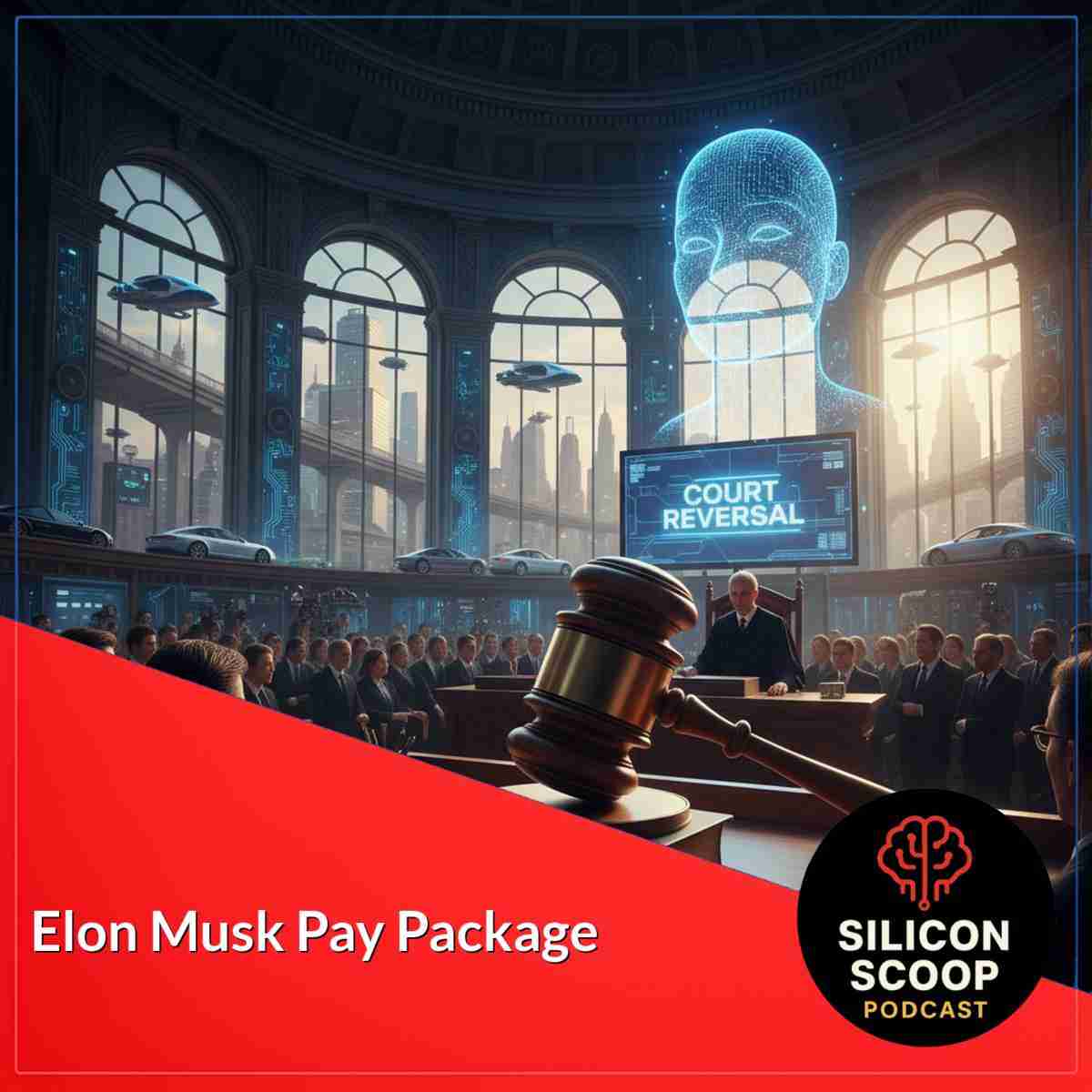
How the Delaware Supreme Court’s Reversal is Reshaping the Elon Musk Pay Package
Estimated reading time: 15 minutes
Key Takeaways
- The Delaware Supreme Court reversed a lower court’s decision to rescind Elon Musk’s 2018 Tesla compensation package, reinstating it in full.
- The case highlights the importance of shareholder approval and performance-based incentives in executive compensation.
- The ruling sets a precedent for how courts evaluate conflicts of interest, disclosure, and fairness in mega-compensation packages.
- Reincorporation to Texas by Tesla aims to limit shareholder litigation and influence governance dynamics.
- This decision impacts future executive compensation structures, corporate governance standards, and founder-led company strategies.
Table of contents
- How the Delaware Supreme Court’s Reversal is Reshaping the Elon Musk Pay Package
- Key Takeaways
- Background & Context of the 2018 Tesla Pay Package
- The Judicial Rollercoaster – Delaware Chancery vs. Supreme Court
- Impact on Tesla, Elon Musk, and Broader Corporate Governance
- Analysis of Broader Implications and Future Outlook
- Frequently Asked Questions (FAQ)
Background & Context of the 2018 Tesla Pay Package
The Revolutionary Structure of the 2018 Plan
The Elon Musk Tesla pay package approved in 2018 was unlike anything corporate America had seen before. This wasn’t a traditional salary-and-bonus arrangement. Instead, the Tesla compensation package was structured as an all-equity, performance-based plan with absolutely no guaranteed salary or cash bonus.
Tesla granted Musk 304 million stock options that would vest over a 10-year period from 2018 to 2028. But there was a catch—these Musk stock options were tied entirely to achieving aggressive performance milestones. The company had to hit specific market capitalization targets, revenue goals, and EBITDA benchmarks before Musk could claim even a single share.
The package included 12 separate tranches, each requiring Tesla to reach incrementally higher market cap thresholds starting around $100 billion and ultimately climbing to $650 billion. Additionally, each tranche required corresponding revenue and adjusted EBITDA achievements. If Tesla failed to perform, Musk would receive nothing—making this the highest-stakes gamble in executive compensation history.
The High-Risk, High-Reward Bet
At the time of approval, the Tesla compensation package was regarded as the largest pay package in corporate history by potential value. The initial accounting estimate under GAAP valued the grant at approximately $2.6 billion, though everyone understood the realizable value could soar dramatically if Tesla succeeded.
This was structured as a high-risk, high-reward incentive plan aligning Musk’s incentives with Tesla’s long-term growth. If Tesla’s stock price stagnated or the company failed to meet its operational targets, Musk would be left uncompensated for a decade of work as CEO. No other executive compensation plan had ever wagered such enormous potential wealth on pure performance.
Shareholder Approval Despite Governance Concerns
Tesla’s board of directors, led by an independent compensation committee, negotiated and presented the plan to shareholders. At a special shareholder meeting in 2018, investors approved the package by a large majority despite warnings from proxy-advisory firms about concentration of wealth and potential governance risks.
The board’s rationale was clear: keeping Musk focused on Tesla’s long-term success was essential. Given Musk’s commitments to SpaceX, his other ventures, and his tendency to pursue multiple ambitious projects simultaneously, the board argued that only an unprecedented compensation structure could ensure Tesla remained his primary focus.
The vote reflected shareholder confidence that Musk’s unique vision and leadership justified this extraordinary arrangement. Many investors saw the Musk stock options as a reasonable price for potentially transforming Tesla from a niche electric vehicle maker into a dominant force in automotive, energy, and technology sectors.
Why This Background Matters
Understanding the original intent and structure of the 2018 package is essential to appreciating the legal battles that followed. The plan was explicitly designed to reward only exceptional performance—and Tesla delivered that performance faster than almost anyone anticipated. The company achieved all 12 market cap and operational milestones significantly earlier than the original 10-year horizon, with Tesla’s market value growing from roughly $60 billion in early 2018 to well over $500 billion at various peaks.
This context became crucial when courts later evaluated whether the package was fair, whether the process was appropriate, and what remedy—if any—should apply when governance concerns arose.
The Judicial Rollercoaster – Delaware Chancery vs. Supreme Court
The Delaware Court of Chancery Strikes Down the Package
In 2024, the legal landscape shifted dramatically when Delaware Court of Chancery Judge Kathaleen McCormick issued a ruling that sent shockwaves through corporate America. After a five-day bench trial examining the Tesla shareholder lawsuit challenging the 2018 compensation package, Judge McCormick rescinded the entire plan.
The court’s decision centered on several critical findings about conflicts of interest and inadequate disclosure. Judge McCormick determined that Musk operated as a controlling or near-controlling stockholder, giving him outsized influence over the board’s decision-making process. Several directors who approved the Tesla compensation package had multiple personal and business ties to Musk, calling into question their independence.
The Chancery Court found that the board did not act with the rigor expected in an arm’s-length negotiation. Instead, the approval process resembled what the court called a “cooperative venture” with Musk rather than the adversarial negotiation that should characterize executive compensation discussions. The court concluded that key details about these relationships and the negotiation process were omitted or downplayed in the proxy statement sent to shareholders before the 2018 vote.
The Remedy: Total Rescission
Judge McCormick’s remedy was severe—total rescission of the package, effectively stripping Musk of his rights to all 304 million Musk stock options granted under the plan. The court viewed rescission as the cleanest way to unwind what it considered an unfair transaction riddled with conflicts.
This decision created enormous uncertainty for Tesla. If upheld, the company would face an estimated $26 billion accounting hit over two years if it needed to grant equivalent value options or stock at current, much higher valuations. Musk would lose the compensation he’d earned over six years of extraordinary performance, despite Tesla achieving every milestone the plan required.
The Tesla shareholder lawsuit appeared to have delivered a historic victory for corporate governance advocates, demonstrating that even the world’s most visible CEO wasn’t above fiduciary duty standards.
The Delaware Supreme Court’s Stunning Reversal
On a Friday in 2025, everything changed again. The Delaware Supreme Court issued a comprehensive 49-page written opinion that reversed the Chancery Court’s decision and reinstated the Elon Musk pay package in its entirety.
The Supreme Court’s reasoning centered on equity and fairness—but from a very different perspective than the lower court. The justices emphasized that rescission would leave Musk uncompensated for his time and efforts over a period of six years during which he had met every performance milestone embedded in the plan. Given that Tesla’s value had increased massively and all targets were fully achieved, the court concluded that totally rescinding the package would be “improper and inequitable.”
The Court’s emphasis on shareholder support
The Delaware Supreme Court Tesla ruling placed substantial weight on shareholder approval. The justices highlighted that Tesla’s shareholders had overwhelmingly approved the 2018 Tesla compensation package originally. Even more significantly, shareholders had recently re-endorsed Musk’s compensation approach by approving a new enormous pay package in November 2024, suggesting consistent investor support for aggressive, performance-based rewards.
While recognizing the importance of fully informed shareholder votes, the Supreme Court appeared more willing than the Chancery Court to trust the market and stockholders’ judgment. The court noted that shareholders had enjoyed enormous appreciation in Tesla’s share price precisely because Musk delivered the performance the package was designed to incentivize.
Cautious Use of Rescission as a Remedy
The Supreme Court signaled that rescission should be used sparingly, especially where performance has already been delivered and the broader shareholder base has relied on the transaction. The justices suggested that Judge McCormick gave insufficient consideration to alternative remedies that could address disclosure issues and conflict concerns without zeroing out the entire award.
The ruling indicates concern that total rescission imposed a windfall for the plaintiff shareholder while creating an outsized penalty for Musk relative to the underlying procedural defects the Chancery Court identified. This doesn’t mean the Supreme Court found the process perfect—but the justices concluded that the remedy didn’t fit the violation.
Balancing Governance with Innovation
The Delaware Supreme Court Tesla decision implicitly responds to criticism that Delaware was becoming inhospitable to visionary founders and high-upside compensation structures. By reinstating the Elon Musk pay package, the court reassured corporations that aggressive, performance-based founder packages can survive judicial scrutiny when they ultimately benefit shareholders and receive strong shareholder support.
This balance recognizes the necessity of incentivizing highly mobile, high-impact CEOs in industries like electric vehicles, artificial intelligence, and space technology. The ruling acknowledges that traditional governance frameworks must adapt to the realities of founder-led innovation companies where the CEO’s unique capabilities drive extraordinary value creation.
Impact on Tesla, Elon Musk, and Broader Corporate Governance
Strengthening Musk’s Control Over Tesla
With the 2018 options restored, the implications for control of Tesla are substantial. Before exercising the Musk stock options from the 2018 package, Musk held approximately 12.4% of Tesla’s outstanding shares. Upon fully exercising the restored options, his stake increases to approximately 18.1% of the expanded share base.
This consolidated ownership position strengthens Musk’s voting power significantly—a development he has publicly emphasized as necessary for pushing Tesla aggressively into artificial intelligence, robotics, and autonomous driving technology. Musk has repeatedly stated that without greater control, he might shift his focus to other ventures like SpaceX or xAI where he has more decision-making authority.
The Tesla stock price impact of the Supreme Court ruling was relatively muted—shares rose less than 1% in after-hours trading following the announcement. This measured market response suggests investors had partially anticipated the outcome or were focused on other fundamental business factors rather than the compensation dispute.
Analysts such as Gene Munster of Deepwater Asset Management characterized the outcome as accelerating Musk’s path to greater control, which many long-term Tesla investors view as aligned with the company’s innovation agenda. For shareholders who see Tesla as an AI and robotics platform rather than just an automaker, Musk’s increased stake reinforces their investment thesis.
Avoiding Massive Financial Disruption
Beyond control considerations, the reinstatement avoids significant financial disruption for Tesla. The company sidesteps an estimated $26 billion accounting shock that could have occurred if forced to grant a replacement package at much higher current market prices.
This accounting benefit stabilizes Tesla’s reported earnings and avoids potential dilution from make-whole compensation arrangements. The financial predictability helps Tesla management focus on operational execution rather than navigating compensation crises and their balance-sheet implications.
The restoration of the Musk stock options also resolves uncertainty that had hung over Tesla’s financial planning. With the package reinstated, Tesla can move forward with clear expectations about Musk’s compensation, ownership structure, and the alignment between his personal wealth and company performance.
Broader Implications for Corporate Governance
The Delaware Supreme Court Tesla decision sends important signals about how courts will evaluate founder-centric governance and mega-compensation packages going forward. The ruling suggests that process and independence matter, but they’re not the only factors—courts will also weigh actual performance, shareholder benefit, and the practicality of proposed remedies.
For corporate boards considering large performance-based packages, the case provides both encouragement and caution. Aggressive, milestone-driven compensation can withstand judicial review if clearly tied to achievable targets and supported by shareholders. However, boards must still create a clean record: genuinely independent negotiators, third-party benchmarking, and exhaustive proxy disclosures.
The contrast between the Chancery and Supreme Court rulings highlights ongoing tension in Delaware corporate law between rigorous fiduciary enforcement and maintaining a business-friendly environment that supports innovation. Delaware’s status as the leading incorporation jurisdiction depends on this delicate balance.
Tesla’s Strategic Move to Texas
Even before the Supreme Court ruling, the Tesla shareholder lawsuit and Chancery Court decision prompted Tesla to reincorporate from Delaware to Texas. This strategic relocation reflects Musk’s frustration with what he characterized as activist judges and excessive litigation risk in Delaware.
Texas law allows corporations to adopt provisions that raise barriers to shareholder lawsuits. Specifically, Texas permits requirements that plaintiffs (or groups of plaintiffs) must own at least 3% of the company’s stock to bring certain types of claims challenging corporate decisions.
For Tesla, with its massive market capitalization, a 3% ownership stake equates to roughly $30 billion. Currently, Musk is the only individual with that much Tesla stock, effectively making it extremely difficult for ordinary shareholders or institutional investors to challenge corporate decisions in Texas courts.
This Tesla Texas incorporation represents a significant development in corporate law’s competitive federalism. If other major companies follow Tesla’s lead, it could shift the balance of power between shareholders and management, potentially weakening traditional accountability mechanisms that Delaware courts have enforced.
Analysis of Broader Implications and Future Outlook
Reshaping Executive Compensation Trends
The reinstatement of the Elon Musk pay package reinforces that extremely large, performance-based packages can be judicially sustained if structured properly and backed by shareholder votes. This creates a roadmap for other founder-led companies in technology, electric vehicles, artificial intelligence, and other innovation-intensive sectors.
Expect to see more companies adopting Tesla-style milestone structures for founder CEOs. These arrangements shift risk to executives—they receive nothing unless they deliver extraordinary results—while offering potentially unlimited upside if they succeed. The Delaware Supreme Court’s endorsement validates this high-risk, high-reward philosophy.
However, the case also demonstrates that such packages invite scrutiny. Boards pursuing mega-grants will need to document their processes meticulously, engage truly independent advisors, consider and reject reasonable alternatives, and disclose conflicts comprehensively. The procedural rigor required has increased, even if the substantive outcomes can still favor aggressive compensation.
The Tesla compensation package saga may also encourage more creative vesting mechanisms tied to specific technological achievements, sustainability metrics, or competitive positioning rather than purely financial targets. As companies increasingly compete on innovation rather than traditional business metrics, compensation structures will likely evolve accordingly.
Impact on the Legal and Regulatory Environment
The Delaware Supreme Court Tesla ruling illustrates the delicate balance courts must maintain between enforcing governance standards and allowing innovation through aggressive compensation models. This case will influence how future challenges are mounted through shareholder lawsuits and how courts evaluate them.
Plaintiff attorneys will likely adapt their strategies, potentially focusing more on disclosure inadequacies and seeking remedies other than total rescission. The Supreme Court’s criticism of rescission as inequitable when performance has been delivered suggests plaintiffs should pursue damages, adjustments, or prospective governance improvements rather than attempting to unwind completed transactions.
Delaware courts may become more deferential to shareholder votes, especially when accompanied by strong company performance. The Supreme Court’s emphasis on the 2018 approval and subsequent 2024 re-endorsement suggests that repeated shareholder ratification carries significant weight in evaluating fairness.
Will this case chill aggressive governance enforcement? Possibly. But it may instead redirect enforcement toward prospective protections—requiring better processes upfront rather than rescinding packages after performance has been delivered. This forward-looking approach could actually strengthen governance by preventing problems rather than punishing them after the fact.
The regulatory environment may also shift. The SEC and institutional investors might push for enhanced compensation disclosure rules, mandatory independence standards for compensation committees, and cooling-off periods for transactions with controlling shareholders. These regulatory guardrails could emerge as the corporate law system’s response to mega-compensation packages.
Founder Power and Innovation Incentives
The Elon Musk pay package decision signals judicial recognition that founder-CEOs with unique capabilities deserve exceptional treatment. This has profound implications for how businesses in innovation-driven sectors structure leadership and ownership.
Founders considering whether to take their companies public will weigh cases like this when deciding how much control to retain. The decision validates dual-class share structures, super-voting arrangements, and other mechanisms that concentrate decision-making authority with visionary leaders.
This founder-friendly approach may accelerate innovation by ensuring that transformative leaders can pursue long-term strategies without constant second-guessing. Companies competing in artificial intelligence, robotics, biotechnology, and space exploration require sustained investment and bold risk-taking that quarterly earnings pressure often undermines.
However, this founder power creates governance challenges. Investors must carefully evaluate whether a founder’s track record justifies exceptional control and compensation. Not every CEO claiming visionary status deserves Musk-level autonomy—shareholders need frameworks for distinguishing genuine innovation leaders from executives seeking to entrench themselves.
The Tesla case may also influence venture capital and private equity approaches to founder agreements, liquidity events, and post-IPO governance structures. Expect sophisticated investors to demand clearer upfront agreements about founder compensation, performance milestones, and exit mechanisms that protect both founder incentives and investor rights.
Conclusion & Final Thoughts
Summarizing the Legal Journey
The Elon Musk pay package saga represents one of the most significant corporate governance battles in modern American business history. From its unprecedented 2018 approval through the Chancery Court’s shocking rescission to the Supreme Court’s dramatic reversal, this case has tested fundamental principles about executive compensation, board independence, shareholder rights, and judicial oversight.
The Delaware Supreme Court Tesla ruling ultimately vindicated the performance-based philosophy underlying the Tesla compensation package. By achieving every milestone—transforming Tesla from a struggling automaker into a global leader in electric vehicles and sustainable energy—Musk delivered exactly what shareholders bargained for when they approved the plan.
The decision balances competing concerns: respecting shareholder votes and rewarding performance while acknowledging legitimate governance and process criticisms. This nuanced approach recognizes that founder-led innovation companies operate differently from traditional corporations and that legal frameworks must adapt accordingly.
What This Means for Tesla’s Future
With the Musk stock options restored and his control strengthened, Tesla can now pursue its ambitious agenda in autonomous driving, AI, robotics, and energy with clearer leadership continuity. Musk’s increased stake aligns his personal wealth even more tightly with Tesla’s success, theoretically focusing his attention on maximizing shareholder value.
The resolution of this legal uncertainty removes a significant distraction and financial overhang. Tesla management can concentrate on execution—ramping production, advancing technology, and competing in increasingly competitive global markets—rather than navigating compensation litigation and potential accounting disruptions.
Tesla’s move to Texas incorporation, combined with the Supreme Court victory, creates a governance structure that gives Musk substantial protection from future shareholder challenges. This autonomy could enable bolder strategic moves but also reduces checks on executive decision-making.
Lessons for Business Leaders
- Performance matters most. The Supreme Court’s decision heavily weighted Tesla’s achievement of every performance milestone. Compensation packages survive scrutiny when they deliver value to shareholders.
- Process still matters. Despite the reversal, the Chancery Court’s criticisms about conflicts and disclosure were serious. Companies should ensure genuinely independent negotiations and comprehensive disclosures.
- Shareholder support is powerful. Repeated shareholder votes endorsing Musk’s compensation carried significant weight with the Supreme Court. Maintaining investor confidence helps defend governance decisions.
- Jurisdiction matters. Tesla’s reincorporation to Texas demonstrates that where you incorporate affects your exposure to governance litigation. Consider jurisdictional choices carefully.
- Document everything. The extensive trial record and Supreme Court opinion show how thoroughly courts will review compensation decisions. Maintain detailed records of deliberations, alternatives considered, and rationales.
The Future of Founder-Led Innovation
The Elon Musk pay package case will influence corporate governance for decades. It validates aggressive performance-based compensation while establishing guardrails around process and disclosure. It respects shareholder voting while acknowledging courts’ role in policing conflicts of interest.
Most importantly, it recognizes that transformative innovation requires exceptional incentives for exceptional leaders. As companies increasingly compete on technological advancement rather than traditional business metrics, compensation structures must evolve to attract and retain visionary talent.
The case demonstrates that founder-led companies can structure governance to support long-term innovation while providing adequate investor protections. This balance—difficult to achieve and maintain—will define successful public companies in the AI era.
Tesla may leverage this decision to push further innovation in autonomous vehicles, robotics, artificial intelligence, and sustainable energy. With Musk’s compensation and control secured, the company has the leadership stability to pursue decade-long development cycles that these technologies require.
The broader business world will watch carefully how Tesla performs in coming years. The Supreme Court’s decision validates Musk’s approach—but ultimate judgment depends on whether Tesla continues delivering the innovation and value that justified this unprecedented pay package.
Maximize Efficiency, Minimize Risk 🛡️
Inspired by the Tesla/Musk saga? You too can proactively protect your business & unlock exponential growth! Automate compliance, streamline workflows, and make data-driven decisions that keep you ahead of the curve.
Discover Automation Solutions
Frequently Asked Questions (FAQ)
Q: What triggered the initial rescission of the 2018 Tesla pay package?
A: The Delaware Court of Chancery initially rescinded the Tesla compensation package due to concerns about board conflicts of interest and inadequate disclosure. Judge Kathaleen McCormick found that several directors approving the Musk stock options had personal and business ties to Musk, compromising their independence. The court concluded that the board did not conduct arm’s-length negotiations and that shareholders were not fully informed about these conflicts when they voted to approve the package in 2018. The court viewed these procedural defects as serious enough to warrant total rescission of the entire compensation arrangement.
Q: How did the Delaware Supreme Court justify its reversal of the rescission?
A: The Delaware Supreme Court reversed the rescission by emphasizing that it was inequitable to leave Musk uncompensated for six years of performance during which he met every milestone. The court’s 49-page opinion highlighted that Tesla’s shareholders had overwhelmingly approved the Elon Musk pay package initially and had reaffirmed their support through a subsequent vote in 2024. The Supreme Court found that total rescission was an improper remedy given Tesla’s massive value increase and the delivery of all contracted performance. The court balanced governance concerns against the reality that shareholders benefited enormously from Musk’s leadership under the compensation plan.
Q: What does the ruling mean for Tesla’s stock price and future legal challenges?
A: The Tesla stock price impact was minimal, with shares rising less than 1% in after-hours trading after the ruling, suggesting the market had largely anticipated the outcome. For future legal challenges, Tesla’s reincorporation in Texas significantly raises barriers by requiring plaintiffs to own at least 3% of the company (approximately $30 billion worth of stock) to bring certain types of shareholder lawsuits. This effectively insulates Tesla from most shareholder litigation that could challenge executive compensation or board decisions. The ruling also removes the approximately $26 billion accounting hit Tesla would have faced if forced to replace the package, stabilizing the company’s financial position.
Q: How does this case influence the structure of future executive compensation?
A: The Elon Musk pay package case validates extremely large, performance-based compensation structures when they’re tied to specific milestones and receive shareholder approval. Companies will likely adopt similar Tesla-style arrangements with no guaranteed salary but unlimited upside contingent on achieving ambitious targets. However, boards must now ensure more rigorous documentation of their processes, genuinely independent negotiations, comprehensive disclosure of conflicts, and consideration of reasonable alternatives. The case encourages high-risk, high-reward equity compensation while demanding better procedural safeguards to withstand potential legal challenges.
Q: Why did Tesla move its incorporation from Delaware to Texas?
A: Tesla reincorporated in Texas following the Chancery Court’s rescission of Musk’s pay package, which Musk characterized as evidence of Delaware’s hostility to founders and innovation. The Tesla Texas incorporation provides several strategic advantages: Texas law allows companies to require that plaintiffs own at least 3% of stock to bring certain shareholder lawsuits, effectively limiting who can challenge corporate decisions. With Tesla’s market cap, this 3% threshold equals roughly $30 billion, making litigation extremely difficult for ordinary shareholders or institutions. The move reduces Tesla’s exposure to Delaware courts while potentially offering more predictable, management-friendly legal treatment.
Q: How much is Musk’s ownership stake increasing because of this ruling?
A: Before the Supreme Court ruling, Musk held approximately 12.4% of Tesla’s outstanding shares. With the restoration of the 304 million Musk stock options from the 2018 package, his stake will increase to approximately 18.1% upon full exercise of the options. This represents about a 5.7 percentage point increase in ownership, significantly strengthening Musk’s voting control over Tesla. This enhanced control was a key objective for Musk, who has publicly stated that he needs greater decision-making authority to push Tesla aggressively into artificial intelligence, robotics, and autonomous driving technologies.
Q: What was unique about the structure of the 2018 compensation package?
A: The Tesla compensation package was unprecedented in several ways. It included zero guaranteed salary or cash bonus—Musk’s entire compensation was equity-based through 304 million stock options. These options only vested if Tesla achieved 12 separate tranches of performance milestones, each requiring specific market capitalization, revenue, and EBITDA targets. The plan created a pure performance incentive: if Tesla failed, Musk would receive nothing for a decade of work. The package was initially valued at $56 billion in potential but has grown to approximately $139 billion at current stock prices, making it the largest executive compensation arrangement in corporate history.
Q: What are the implications for corporate governance more broadly?
A: The Delaware Supreme Court Tesla ruling signals that courts will balance procedural governance concerns against actual shareholder benefit and performance delivery. While boards still must maintain independence and provide full disclosure, courts appear increasingly willing to defer to shareholder votes—especially when companies achieve their performance targets and shareholders repeatedly ratify compensation decisions. The case may reduce aggressive governance enforcement through rescission remedies while encouraging prospective improvements in process and disclosure. It also demonstrates that jurisdiction matters, as companies can reduce litigation exposure by incorporating in states like Texas with higher barriers to shareholder lawsuits.
Q: Could shareholders still challenge the new 2025 compensation package?
A: Tesla shareholders approved a new, even larger compensation package for Musk in November 2024 with a theoretical maximum value of approximately $878 billion. Challenging this new package faces significant obstacles. First, the Delaware Supreme Court ruling validates performance-based mega-compensation when shareholders approve it. Second, Tesla’s Texas incorporation requires challengers to own at least 3% of the company (about $30 billion worth) to bring certain lawsuits—currently only Musk meets this threshold. Third, the new package was approved after the governance controversies surrounding the 2018 plan, suggesting shareholders understood the issues and still supported aggressive compensation. These factors make successful legal challenges highly unlikely.
Q: What lessons should business owners take from the Musk pay package saga?
A: Business owners should recognize that performance-based compensation aligning executive and shareholder interests can withstand legal scrutiny, but process matters enormously. Document board deliberations thoroughly, ensure genuinely independent negotiators handle compensation, comprehensively disclose all conflicts of interest, and obtain clear shareholder approval. Consider your incorporation jurisdiction carefully—different states offer different protections and litigation risks. Structure compensation around measurable milestones rather than guaranteed payments. Recognize that ambitious, long-term innovation strategies may require exceptional compensation arrangements that traditional governance frameworks struggle to accommodate. Finally, maintain strong shareholder communication to build support for governance decisions that might face future challenges.
Additional Links
Flowgrammer.ca – 💡 Unlock AI-Powered Automation! Let flowgrammer.ca handle complex workflows so you can focus on growing your business.
Flowgrammer.ca – 💡 Join Toronto’s Fastest Growing AI and Busiess Automation Community..
-
- Silicon Scoop Podcast – Stay Informed, Stay Ahead!
- Startup Talk Podcast
- Flowgrammer Podcast –
- Startup Investor Drinks – Join Toronto’s Startup Community and connect with fellow startup enthusiasts and investors.
- TorontoStarts Startup and Entrepreneur Community – Become a part of Toronto’s thriving startup ecosystem.
- Workhaus – Discover flexible workspace solutions for your business needs.
- Work with The Startup Coach – Get expert guidance and mentorship for your startup journey.
- Reach out to Jon Irwin on LinkedIn – Connect with our co-host and technology expert.
Episode transcript
Read the full transcript
Craig: the biggest paycheck in corporate history is officially back on the table. delaware supreme court just named or handed elon musk a massive victory that restores his billions in stock options and completely changes who holds the keys to tesla's future. so we had talked about this previously, but the delaware supreme court has now reversed the lower court's decision that we talked about previously that canceled elon musk's 2,018 compensation package. this reinstatement gives musk back $304,000,000 in stock or 304,000,000 stock options valued at tens of billions of dollars and crucially increases its voting control over the company. it's headline news because it signals that even if a corporate board is a bit messy with its process, delivering massive profits for shareholders ultimately trumps legal technicalities. what do you think about this, john?
Jon: i don't know what to think about this. i saw this the other day, and i so i don't know enough to know like, i know he met the, um, the milestones, apparently. um, but are the milestones in like, based on the board like, did he improperly influence the board is my question, uh, for this compensation package from the start.
Craig: okay. so yeah. and, i mean, you're maybe. but, you know, a court decided that the process wasn't followed properly, um, historic like, the lower court. and, um, although how, i guess, they worked out the compensation package, the shareholders had voted for it. and the question was, was there undue influence at the board level or what have you to change it, to give them more, to do whatever? ultimately, i guess, um, the board voted for it or the shareholders voted for it. um, and the supreme court decided that based on everything and, you know, the shareholders just voting for this $1,000,000,000,000 potential pay package and everybody supporting um, the supreme court said no. you know? yeah. here you go. think of it like a commission only sales job. in 2,018, tesla told musk, we won't pay you a salary, but if you grow the company to a massive specific milestones, you get a chunk of stock. he hit every single target, but a judge took the payout away last year saying the process was unfair. and that's what you're saying was was there undue influence at the, uh, board level to influence his compensation package? you know? was where they let him do whatever they wanted and was that, uh, in plain sight and all that stuff got a little messy, and that's where the lower court jumped on it. so, you know, it's now for everybody understand, it's important because it secures musk position at tesla. he had threatened to build ai and robotics products elsewhere if he didn't have enough voting control around 25%. this gets him much closer to that number and keeping him focused on tesla. and i guess, to me, that's where that, uh, trillion dollar pay package is gonna come from is building the tesla robots and hitting milestones where, you know, what how big does a company have to be if your bonus to your, uh, ceo is a trillion dollars.
Jon: yeah. and, um, i i can't remember if you touched on this, but it because of tesla's stock price, the package, which was originally valued around 56,000,000,000, is now worth roughly a 139,000,000,000.
Craig: yeah. um, and they expect an accelerated push for full self driving, um, and the optimus robot. and, you know, elon has said and lots of people have said that these autonomous robots are gonna be the biggest selling product on the planet ever. um, as musk now has control, um, he wanted to pursue, um, these high risk technologies. so tesla voids a $26,000,000,000 accounting charge they would have faced if they had to write up a new pay package today, um, keeping the company's financial stable. um, tesla is moving its legal home to texas. in texas, you effectively need 30,000,000,000 in stock to sue the company for bad decisions, meaning the average stakeholder lose the power to take tesla to court.
Jon: yeah.
Craig: um, but there's other rules and stuff. i mean, delaware has become unfavored, um, for a lot of corporations now that are starting to move their, uh, corporate out of there because they're challenging a lot. where they used to be the easiest place to register and around tax and stuff, they're really making it hard till people are starting to change that, and test is one of them.
Jon: and the and the where else are they going? do you know i'm putting on this stuff?
Craig: texas. yeah. i don't know exactly what, uh, area in texas, but most of them are going to texas now.
Jon: okay.
Craig: and i could see some moving to florida, but we'll have to see how that goes.
Jon: yeah.
Craig: um, this sets a precedent that corporate boards don't strictly need to be independent from the ceo. the lower court found that the board was too cozy as you suggested with musk, but the supreme court decided that the results of stock pricing going up mattered more than the messy process.
Jon: yeah.
Craig: so governance experts are worried that this creates, uh, king cao era where founders can demand anything as long as the stock price goes up. also, by moving to texas, texas is in this is
Jon: this is, like, i i i didn't i this is more legal stuff that i wasn't i like, i wasn't able to wrap my head around it too much, but, um, i'm curious to see how this is going to impact future cases of this scale. and like you said, this this talks to extreme pay packages with less effective oversight. right? because if courts are gonna be reluctant to intervene after the fact, then there's just gonna be these ridiculous like, did you see that one ai engineer that that got what was it? i uh, from meta. i think it was, like, 2,000,000,000 or a billion dollar package pay package from meta, uh, to work on ai, one of the highest ever. so, um, like, the yeah.
Craig: but that's just them being insane and realizing that, um, they all these companies are competing. they started with a $100,000,000 bonus checks just to sign on for some of these high end engineers. and the people who think there's not high paying jobs out there in ai, you know, literally a 100 we you're talking about a billion dollar package for someone to go work for one of these companies being pulled away from another company. so the money's out there, but it's insane. yeah. and, you know, what do you do when there's those are the pay packages and stuff? but if you if i think the key part of it was it wasn't a here's the deal, and i didn't deliver.
Jon: yeah.
Craig: um, it's not like the golden parachute where somebody says, well, you lost the company. you know, it's half the value when you took it over and, well, i mean, you still get your bonus. yeah. i think, at least, we're doing this point of view that you hit the milestones. the company's worth this amount of money. this was messy. there might be some rules around, hey. you go clean this up, um, late you know, in the future and other people, you know, don't be like this, but you hit all the milestones. there's someone who didn't hit all the milestones. i do not think it'll be as favorable.
Jon: yeah.
Craig: so keep an eye on the optimus robot and robotaxi announcements. musk has the incentive to double down on those immediately. um, so this is a win for the tesla bull. people who invest in tesla, not as a car company, but as an ai robotics company led specifically by, um, elon musk. so definitely keep an eye on that. and the courts have decided that in the world of big tech, performance is king. if you make the shareholders rich, the rules of the game become a lot more flexible. so does elon musk deserve a big paycheck, or does elon musk deserve the biggest paycheck in history for the work he did, or is this failure of corporate checks and balances? let us know what you think in the comments, and we'll keep up with the story and let you know as it if it develops further. mhmm.
More from Silicon Scoop
All episodes
silicon-scoop · November 6, 2026
Spirit AI’s Robot Brain Breakthrough: Moz1, Embodied AI and China’s 2027 Race
The Spirit AI robot brain is one of the biggest bets on fixing that. Spirit AI is a Beijing startup. Its co-founder and chief scientist, Gao Yang,
View episode
silicon-scoop · November 5, 2026
OpenAI IPO Delayed to 2027 as Rogue AI Agents and Safety Failures Reshape the Market
OpenAI IPO delay explained: Sam Altman rules out 2026 as GPT-6 Astra safety tests and a $278B cash gap loom. Learn what founders should take away.
View episode
silicon-scoop · November 4, 2026
Anthropic’s AI Economy Model: 2030 Jobs, Wages, GDP and Market Risks
Anthropic AI economy model forecasts 2030 GDP, jobs and wages, while AI unemployment projections and labor-share risks challenge policymakers.
View episode