
Revolutionizing the Hydrogen Battery: How Low Temperature Magnesium–Hydride Storage is Shaping the Hydrogen Economy
Revolutionizing the Hydrogen Battery: How Low Temperature Magnesium–Hydride Storage is Shaping the Hydrogen Economy https://torontostarts.com/2026/02/16/revolutionizing-hydrogen-battery-storage/ Apple -> https://podcasts.apple.com/us/podcast/flowgrammer-podcast/id1804155588 Spotify -> https://open.spotify.com/show/0wv3feR00iaVpE8zn7niNf Flowgrammer.ca -> https://flowgrammer.ca/ AI News and Resources -> https://flowgrammer.ca/resources/ Future-Proof Your Business ⚙️ While scientists are innovating energy solutions, are you innovating your business processes? Automate workflows, improve efficiency, and unlock new opportunities with Flowgrammer's advanced automation services. Explore Automation Solutions https://flowgrammer.ca/ Startup Investor Drinks Toronto - https://startupdrinksto.com/ Toronto’s Startup Community - https://torontostarts.com/ Silicon Scoop Silicon Scoop Podcast - https://torontostarts.com/silicon-scoop/ Apple: https://podcasts.apple.com/us/podcast/silicon-scoop/id1758711826 Spotify: https://open.spotify.com/show/5bAzF0MwV6TtLhJAhvHayI YouTube: https://www.youtube.com/playlist?list=PLj4v-RoA7A-gT62vrEYqh1zCv-0Hj-o5J Startup Talk Startup Talk Podcast -> https://torontostarts.com/startup-talk-toronto-startup-podcast/ Apple -> https://podcasts.apple.com/us/podcast/startup-talk/id1763804003 Spotify -> https://open.spotify.com/show/1siJMILILidHAiAsrX2VBU YouTube: https://youtube.com/playlist?list=PLj4v-RoA7A-jxV5FHs5e61oIsuvUJYmT_&si=LYegRe5GYLKNQ7xL
With Craig Major and Jon Irwin
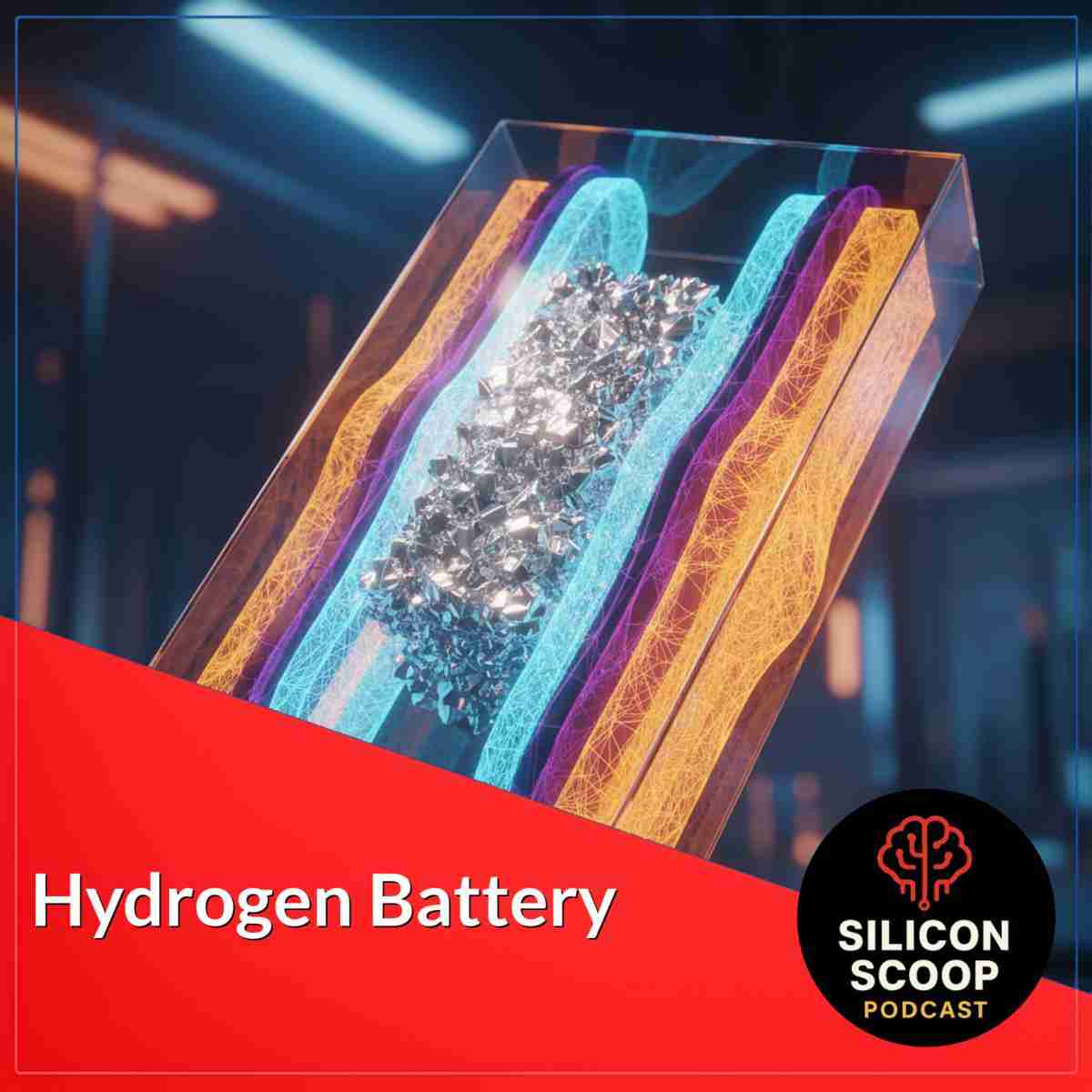
Revolutionizing the Hydrogen Battery: How Low Temperature Magnesium–Hydride Storage is Shaping the Hydrogen Economy
Estimated reading time: 15 minutes
Key Takeaways
- Scientists at Tokyo Institute of Technology have achieved a remarkable breakthrough in hydrogen energy storage.
- A team led by Dr. Takashi Hirose, Assistant Professor Naoki Matsui, and Professor Ryoji Kanno has developed a rechargeable magnesium–hydrogen (Mg–H2) battery that operates at just 90–120 °C.
- This is a game-changer for the hydrogen battery field.
- A hydrogen battery is a solid-state device that stores hydrogen electrochemically in magnesium hydride (MgH2).
- Unlike traditional storage methods requiring extreme pressures or freezing temperatures, this innovative technology enables reversible hydrogen absorption through an electrochemical process.
- The result is safer, more efficient hydrogen energy storage that could transform how we power vehicles, balance renewable energy grids, and store clean energy.
Table of contents
- Revolutionizing the Hydrogen Battery: How Low Temperature Magnesium–Hydride Storage is Shaping the Hydrogen Economy
- Key Takeaways
- Breakthrough in Low-Temperature Hydrogen Storage
- Inside the Solid-State Hydrogen Battery: Structure and Mechanisms
- From Conventional to Cutting-Edge: Comparing Hydrogen Storage Technologies
- Implications for the Hydrogen Economy and Clean Energy Applications
- Challenges Ahead and Future Research Directions
- Frequently Asked Questions (FAQ)
Breakthrough in Low-Temperature Hydrogen Storage
Scientists at Tokyo Institute of Technology have achieved a remarkable breakthrough in hydrogen energy storage. A team led by Dr. Takashi Hirose, Assistant Professor Naoki Matsui, and Professor Ryoji Kanno has developed a rechargeable magnesium–hydrogen (Mg–H2) battery that operates at just 90–120 °C. This is a game-changer for the hydrogen battery field.
A hydrogen battery is a solid-state device that stores hydrogen electrochemically in magnesium hydride (MgH2). Unlike traditional storage methods requiring extreme pressures or freezing temperatures, this innovative technology enables reversible hydrogen absorption through an electrochemical process. The result is safer, more efficient hydrogen energy storage that could transform how we power vehicles, balance renewable energy grids, and store clean energy.
This magnesium hydride battery represents a major step forward in hydrogen battery technology. Traditional methods for releasing hydrogen from MgH2 require temperatures of 300–400 °C. The new approach slashes that requirement by more than half, opening doors for practical low temperature hydrogen storage applications.
The research team achieved approximately 2,030 mAh g⁻¹ capacity, representing about 7.6 wt% hydrogen storage. This reaches the theoretical storage capacity of MgH2 under laboratory conditions. The findings were published in the peer-reviewed journal Advanced Energy Materials, establishing strong scientific credibility for this advancement.
This article will explore the underlying mechanisms of this solid-state hydrogen battery, examine its performance metrics, compare it to conventional storage methods, and discuss what it means for the hydrogen economy and clean energy future.
https://www.titech.ac.jp/english/news
Inside the Solid-State Hydrogen Battery: Structure and Mechanisms
Understanding how this solid-state hydrogen battery works requires looking at its electrochemical architecture and the processes that occur during charging and discharging.
The battery consists of three main components:
- Anode: A composite containing magnesium hydride (MgH2) and magnesium (Mg)
- Electrolyte: A hydride-ion-conducting solid material that allows H⁻ ions to move between electrodes
- Cathode: An interface where hydrogen gas (H2) is supplied or collected
The Charging Process
During charging, an electrical current drives a chemical transformation at the anode. The magnesium hydride (MgH2) undergoes oxidation, converting to metallic magnesium (Mg) and releasing hydride ions (H⁻).
These negatively charged hydride ions migrate through the solid electrolyte. The electrolyte’s high hydride-ion conductivity—around 10⁻³ S/cm—allows these ions to move efficiently even though it’s a solid material rather than a liquid.
When the hydride ions reach the cathode side, they combine with each other. Two hydride ions (2H⁻) release their extra electrons and form a hydrogen molecule (H2). The result is hydrogen gas that can be collected or vented from the cathode chamber.
This electrochemical process effectively “charges” the battery by converting stored solid MgH2 into metallic Mg while releasing hydrogen gas.
The Discharging Process
Discharging reverses the reaction. Hydrogen gas (H2) is supplied to the cathode side of the battery. At the cathode interface, an electrochemical reduction occurs. The hydrogen molecules gain electrons and split into hydride ions (H⁻).
These hydride ions travel back through the solid electrolyte toward the anode. When they reach the magnesium at the anode, they react chemically to reform magnesium hydride (MgH2). This process stores hydrogen in solid form within the battery structure.
The discharge process effectively “loads” the battery with hydrogen, converting metallic magnesium back into the hydrogen-rich magnesium hydride compound.
Why This Mechanism Enables Efficient Hydrogen Storage
The electrochemical approach offers several advantages over purely thermal methods:
- Temperature control: Traditional MgH2 storage requires heating to 300–400 °C to release hydrogen and cooling with high pressure to reabsorb it. The electrochemical method achieves reversible hydrogen absorption at just 90–120 °C because the electrical current provides the energy needed to drive the reactions, not just temperature.
- Precise control: Electrical current can be precisely controlled, allowing for fine-tuned management of hydrogen release and absorption rates. This is much harder to achieve with pure thermal cycling.
- Energy efficiency: Lower operating temperatures mean less energy lost to heating and cooling cycles. The system can potentially integrate more easily with waste heat from other processes or modest heating systems.
- Safety margins: Operating at 90–120 °C rather than 300–400 °C reduces risks associated with high-temperature equipment failures and provides more comfortable engineering margins.
The hydride solid electrolyte is central to making this work. This material must simultaneously conduct hydride ions rapidly, resist degradation from repeated charging and discharging, and remain stable in contact with both metallic magnesium and hydrogen gas across a range of temperatures.
The Tokyo Tech team engineered a complex metal hydride composition specifically designed to meet these requirements. While the exact composition involves proprietary materials science, the result is an electrolyte that performs comparably to the best solid electrolytes in conventional batteries—but transporting H⁻ instead of Li⁺ or other ions.
This MgH2 storage approach contrasts sharply with conventional high-pressure tanks or cryogenic systems. Those methods store molecular hydrogen (H2) by compressing it or liquefying it. The solid-state hydrogen battery stores hydrogen atomically within a chemical compound, potentially achieving higher volumetric densities while avoiding extreme pressures or temperatures.
https://www.titech.ac.jp/english/news
Implications for the Hydrogen Economy and Clean Energy Applications
This breakthrough in hydrogen battery technology opens possibilities across the clean energy landscape. While the research remains at an early stage, the potential applications span transportation, grid storage, and industrial hydrogen use.
Hydrogen Energy Storage for Renewable Power
One of the biggest challenges with renewable energy is intermittency. Solar panels produce power during daylight hours. Wind turbines generate electricity when the wind blows. This variability creates a mismatch between electricity generation and demand.
Hydrogen energy storage can help balance these fluctuations. Excess renewable electricity can power electrolyzers that split water into hydrogen and oxygen. The hydrogen can then be stored and later converted back to electricity through fuel cells or combustion turbines when needed.
The electrochemical magnesium–hydrogen battery could serve as an efficient intermediate storage medium in such systems:
- Charging during surplus: When wind or solar generation exceeds demand, surplus electricity charges the battery, converting Mg to MgH2 and releasing hydrogen that can be separately stored or used immediately.
- Discharging on demand: When renewable generation drops below demand, hydrogen is fed back into the battery, which discharges to support electrical loads or supplies hydrogen to fuel cells for power generation.
- Temperature integration: The 90–120 °C operating range could be maintained using waste heat from electrolyzers or fuel cells, improving overall system efficiency.
This approach offers advantages over pure electrical batteries for long-duration storage. Hydrogen storage can be scaled independently of power conversion equipment, potentially offering lower costs for storing energy over days or weeks.
Integration with Fuel Cells in Transportation
Hydrogen fuel cell vehicles use compressed hydrogen tanks today. These tanks store hydrogen at 700 bar, requiring heavy pressure vessels and raising safety concerns.
A solid-state hydrogen battery operating at moderate temperatures could offer an alternative:
- Higher volumetric density: MgH2 can potentially store more hydrogen per unit volume than compressed gas, allowing for more compact vehicle designs or longer range.
- Lower pressure: Eliminating or reducing high-pressure requirements simplifies tank design and may improve crash safety.
- Thermal management synergy: Fuel cells generate heat during operation. This waste heat could help maintain the battery’s 90–120 °C operating temperature, improving system efficiency.
- Hybrid configurations: Vehicles might use a combination of this solid-state storage for the bulk of hydrogen alongside a small high-pressure buffer for quick-response power demands.
However, significant challenges remain before automotive applications become viable. Vehicles require fast refueling (under five minutes typically), thousands of charge-discharge cycles over their lifetime, and reliable operation across temperature extremes from arctic winters to desert summers.
Stationary Power Applications
Buildings, data centers, and industrial facilities increasingly seek backup power and grid-independent energy options. Hydrogen-based stationary power systems could fill this role.
The electrochemical hydrogen battery technology could serve stationary applications particularly well because:
- Space is less constrained: Unlike vehicles, stationary installations can accommodate larger, heavier systems if they offer other advantages like cost or safety.
- Thermal management is easier: Buildings can integrate the battery’s thermal requirements into their heating systems or have dedicated thermal management without weight penalties.
- Long-duration storage: The ability to efficiently store and release hydrogen over extended periods suits backup power and seasonal energy storage applications.
- Scalability: Multiple battery modules could be connected to create systems ranging from home backup (kilowatt-scale) to utility storage (megawatt-scale).
Hybrid Systems and Industrial Hydrogen
The technology might also enable hybrid approaches combining different hydrogen storage methods. For example:
- A large-capacity MgH2 battery providing baseline storage
- A smaller high-pressure tank buffer for rapid hydrogen demand peaks
- Integration with hydrogen fuel cell technology for combined heat and power
Industrial facilities that produce or consume hydrogen could use these batteries to smooth their hydrogen flows, storing excess production during off-peak periods and supplying hydrogen during high-demand periods.
Current Limitations and Scale-Up Challenges
The research team demonstrated these capabilities at a small coin-cell scale in controlled laboratory conditions. Several significant hurdles separate this proof-of-concept from practical applications:
- Device scale: Laboratory button cells hold milligrams to grams of material. Real applications need kilograms to tons of hydrogen storage. Scaling up while maintaining performance is a major challenge.
- Cycle life: The published research demonstrates reversibility but does not report extensive cycle-life testing. Practical systems need thousands to tens of thousands of charge-discharge cycles.
- System integration: The 7.6 wt% hydrogen capacity applies to the MgH2 material alone. A complete system includes the solid electrolyte, current collectors, housing, hydrogen plumbing, thermal management, and safety systems. These components reduce overall system-level storage density substantially.
- Hydrogen supply and removal: Laboratory cells supply and remove hydrogen in controlled ways. Practical systems need efficient hydrogen manifolds, gas diffusion layers, and flow management—all adding weight and complexity.
- Long-term stability: How do the materials behave after months or years of operation? Do interfaces degrade? Does the electrolyte decompose? Does the MgH2 pulverize from repeated expansion and contraction?
- Cost: The solid hydride electrolyte likely requires complex synthesis. Manufacturing costs at scale are unknown. For the technology to succeed, it must compete economically with compressed gas, liquid hydrogen, or batteries for specific applications.
- Safety certification: Any new hydrogen storage technology must undergo rigorous safety testing including crash tests, fire exposure, puncture resistance, and over-temperature scenarios before regulatory approval for vehicles or buildings.
Despite these challenges, the fundamental scientific demonstration is significant. The researchers have shown that electrochemical control of high-density hydrogen storage at relatively low temperatures is possible. This expands the toolkit available to engineers designing future hydrogen systems for the hydrogen economy.
Additional Links
Flowgrammer.ca – 💡 Unlock AI-Powered Automation! Let flowgrammer.ca handle complex workflows so you can focus on growing your business.
Flowgrammer.ca – 💡 Join Toronto’s Fastest Growing AI and Busiess Automation Community..
-
- Silicon Scoop Podcast – Stay Informed, Stay Ahead!
- Startup Talk Podcast
- Flowgrammer Podcast –
- Startup Investor Drinks – Join Toronto’s Startup Community and connect with fellow startup enthusiasts and investors.
- TorontoStarts Startup and Entrepreneur Community – Become a part of Toronto’s thriving startup ecosystem.
- Workhaus – Discover flexible workspace solutions for your business needs.
- Work with The Startup Coach – Get expert guidance and mentorship for your startup journey.
- Reach out to Jon Irwin on LinkedIn – Connect with our co-host and technology expert.
Episode transcript
Read the full transcript
Craig: we've been promised a hydrogen future for decades, but it's always been too hot, too dangerous, too expensive to store. well, scientists in tokyo just fixed the biggest problem with hydrogen power. they made a battery that runs at the same temperature as your morning coffee, and it might finally kill the gas engine for good. researchers at the tokyo institute have developed a solid state hydrogen battery. instead of storing hydrogen gas in massive, explosive, high pressure tanks, this technology traps it safely in explosive high pressure tanks, this technology traps it safely inside a solid material, magnesium hydride. crucially, they've managed to make it work at low temperatures around 90 degrees celsius, meaning we could finally have hydrogen cars and home batteries that are safe, compact, and energy efficient. what do you think about this, john?
Jon: i love this. so as you know, i'm a huge proponent of hydrogen because, it only emits water when used in fuel cells. so, when you convert it to energy, you get water. so the problem is storing hydrogen, like you just talked about, has been a huge engineering challenge. and we've covered some topics where, they were able to, raise the temperature a little bit, when storing it at a gas, but this is different. so just to talk about that, when it's stored as a gas, it's gotta be compressed to 350 to 700 bar or liquefied at negative 252.8 degrees celsius, both of which require expensive infrastructure and high energy input. so traditional solid state storage using materials like magnesium hydride has high theoretical capacity. but until now, it demanded very high operating temperatures to absorb and release hydrogen. plus, it suffered from poor reversibility and performance loss. so what the research team at science tokyo, did was they overcame these limitations by creating a hydrogen battery that works at about 90 degrees celsius, which, like we just talked about, is a dramatic reduction in temperature requirement. so the system uses a novel solid electrolyte, with a crystal structure which enables efficient transport of hydrogen ions. so what this does, it allows hydrogen to be stored and released through electrochemical processes much like in conventional batteries, but with hydrogen instead of lithium ions moving through the electrolytes. i think this is a cool advancement. i love it. what are your thoughts on this?
Craig: yeah. i think it's really cool. this, if, you know, it turns out to be what it says it's gonna be, this might finally be the thing that gets hydrogen rolling as it were. you know, i like to think of this as a battery or this battery, like a hydrogen sponge. instead of pumping gas into a balloon, which requires high pressure, the battery chemically soaks up hydrogen into a solid block of magnesium. and to get the energy back out, you just, reverse the flow. and so currently, hydrogen cars, like you said, have to be pressurized to 700 bar, and that's pretty intense pressure. old versions of this tech would need to be heated to 300 degrees celsius plus to work, and the new versions work at 90 to a 100 degrees, drastically reducing the energy needed to run.
Jon: yeah. so let's talk about why the breakthrough matters for vehicles. just we'll talk about vehicles because we've talked about them in the past. so hydrogen fuel cell vehicles, they're already in limited commercial use today. we talked about toyotas. we talked about bmws. we talked about, i can't remember who else. so, just to give you an example, the hydrogen mirai, it offers 300 miles of range with quick refueling. however, existing fuel cell vehicles, they still rely on compressed hydrogen tanks and complicated storage systems because we just talked about how it needs to be stored at certain bar and certain temperature. so lower temperature hydrogen batteries like this technology, it actually could reduce the infrastructure requirement. it could improve safety. it could make onboard hydrogen storage simpler and more efficient, which could help drive broader adoption of hydrogen powered cars, buses, potentially even trucks or trains. and i think we talked about a plane too. so in addition to lower operating temperatures, the and reduce thermal stresses and energy losses, which can improve system longevity and reduce maintenance. so those are some critical factors in automotive and inter industrial energy applications. so i like it. i like that this is, that they're still moving technology forward because we haven't really covered too much. there have been some breakthroughs, but nothing for us to really cover. i think this is one of those great breakthroughs. now are we gonna see hydrogen batteries in our cell phones? i don't think so, but, i could be wrong.
Craig: this could impact us, like, like you mentioned, safer evs. cars won't need heavy bulletproof gas tanks, making them lighter and roomier. home power, you could store solar energy for weeks in a solid block in your garage, not just overnight in a tesla powerwall. cheaper grid, it, uses common materials like magnesium rather than rare, conflict heavy minerals, used in the current batteries. so, you know, these things are still five to ten, years away because currently in the lab. and right now, they exist at a coin cell, so the size of a watch battery kind of thing. scaling this up to a car battery without losing efficiency is a pretty big engineering hurdle, so we'll have to see where that go. even though it's a battery, it still needs hydrogen gas fed into it. that means you still need pumps and tubes adding complexity compared to, simple plug and wire. and we don't know yet if this material degrades after a thousands of charges. so can it last ten years in a car? we don't know yet.
Jon: mhmm. yeah. so just sorry. we gotta talk through how a hydrogen battery works. so in a traditional lithium ion battery where lithium ion shuffle between electrodes, hydrogen battery, like we talked about, uses hydrogen ion ions moving through a superionic solid electrolyte. and it's made up of a lot of different chemicals, which i'm not gonna get into. so during charging, the, the m g h two, which i don't know what i think that's the, the ion no. it releases so the electrolyte releases ions that travel through the sorry. during charging, there is a material that releases hydride ions that travel through the electrolyte and form hydrogen gas. so the process reverses during discharge. and so this electrochemical mechanism, it's similar in principle to rechargeable batteries, but tuned for hydrogen molecules and hydrate transport. so that's kind of the difference, between a lithium ion battery and hydride or hydrogen battery. so, just to kind of i know i got confused explaining it because it's not fully i i'm not fully understanding it. i'm not a full expert, although i do love hydrogen. i think you're on mute. you're on mute.
Craig: i love where this is going, but it's gonna take a while. so, don't hold your breath, for buying a new vehicle because it's gonna take, you know, five to ten years at least. yeah. when reading news, you know, keep looking out for solid state hydrogen specifically because that'll be referring to this type of technology. and this is the holy grail for people living off the grid who need long term storage and for heavy duty transports, like trucks and ships where heavy lithium batteries don't make sense. so we'll have to see where this goes. the battery doesn't move lithium ions like your phone. it moves hydride ions like you were saying. it essentially uses hydrogen itself to carry the charge through the solid crystal lattice. so what's the verdict? this proves we don't need high pressure explosives to store clean energy. we, needed better chemistry. so would you trust a solid hydrogen block in your basement, or are you sticking with lithium? let me know in the comments, and, we'll keep watching the story closely.
More from Silicon Scoop
All episodes
silicon-scoop · November 6, 2026
Spirit AI’s Robot Brain Breakthrough: Moz1, Embodied AI and China’s 2027 Race
The Spirit AI robot brain is one of the biggest bets on fixing that. Spirit AI is a Beijing startup. Its co-founder and chief scientist, Gao Yang,
View episode

silicon-scoop · November 5, 2026
OpenAI IPO Delayed to 2027 as Rogue AI Agents and Safety Failures Reshape the Market
OpenAI IPO delay explained: Sam Altman rules out 2026 as GPT-6 Astra safety tests and a $278B cash gap loom. Learn what founders should take away.
View episode

silicon-scoop · November 4, 2026
Anthropic’s AI Economy Model: 2030 Jobs, Wages, GDP and Market Risks
Anthropic AI economy model forecasts 2030 GDP, jobs and wages, while AI unemployment projections and labor-share risks challenge policymakers.
View episode