
Understanding AI Antitrust: Legal Analysis of the Stargate AI Infrastructure Project
Understanding AI Antitrust: Legal Analysis of the Stargate AI Infrastructure Project https://torontostarts.com/2026/02/19/ai-antitrust-stargate-project-analysis/ Apple -> https://podcasts.apple.com/us/podcast/flowgrammer-podcast/id1804155588 Spotify -> https://open.spotify.com/show/0wv3feR00iaVpE8zn7niNf Flowgrammer.ca -> https://flowgrammer.ca/ AI News and Resources -> https://flowgrammer.ca/resources/ Future-Proof Your Business Today! Don't let complex infrastructure challenges hold you back! Embrace business automation to streamline operations, reduce costs, and gain a competitive edge. Discover the power to adapt and thrive, no matter what the future holds. Explore Automation Solutions https://flowgrammer.ca/ Startup Investor Drinks Toronto - https://startupdrinksto.com/ Toronto’s Startup Community - https://torontostarts.com/ Silicon Scoop Silicon Scoop Podcast - https://torontostarts.com/silicon-scoop/ Apple: https://podcasts.apple.com/us/podcast/silicon-scoop/id1758711826 Spotify: https://open.spotify.com/show/5bAzF0MwV6TtLhJAhvHayI YouTube: https://www.youtube.com/playlist?list=PLj4v-RoA7A-gT62vrEYqh1zCv-0Hj-o5J Startup Talk Startup Talk Podcast -> https://torontostarts.com/startup-talk-toronto-startup-podcast/ Apple -> https://podcasts.apple.com/us/podcast/startup-talk/id1763804003 Spotify -> https://open.spotify.com/show/1siJMILILidHAiAsrX2VBU YouTube: https://youtube.com/playlist?list=PLj4v-RoA7A-jxV5FHs5e61oIsuvUJYmT_&si=LYegRe5GYLKNQ7xL
With Craig Major and Jon Irwin
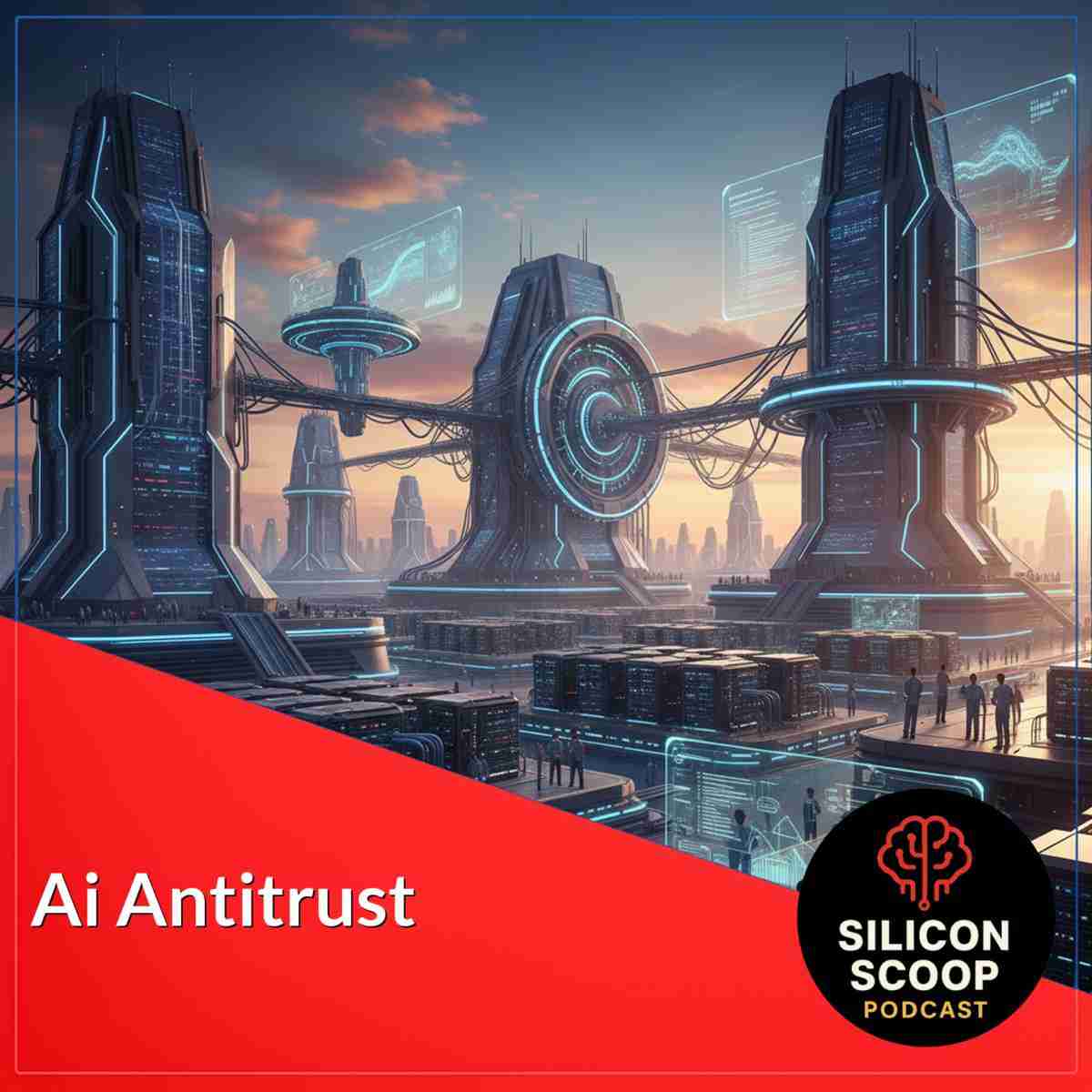
Understanding AI Antitrust: Legal Analysis of the Stargate AI Infrastructure Project
Estimated reading time: 20 minutes
Key Takeaways
- Antitrust law exists to keep markets fair and competitive. When we talk about AI antitrust, we mean applying these rules to artificial intelligence companies and their business deals. This becomes especially important when the biggest technology firms join forces on massive projects that could change who controls the future of AI.
- The AI antitrust debate has exploded with news of the Stargate Project. This enormous venture brings together OpenAI, Nvidia, and Oracle to build AI infrastructure worth around $500 billion. That’s bigger than many countries’ entire economies. The plan raises serious questions about whether a handful of companies will gain too much power over the technology that increasingly runs our world.
- This blog post examines the Stargate Project legal issues from every angle. We’ll explore what this massive AI infrastructure project actually involves, which laws might apply, and why antitrust scholars are sounding alarm bells. You’ll learn about the OpenAI Nvidia Oracle antitrust concerns, the legal frameworks that govern such partnerships, and what it all means for competition, innovation, and the future of artificial intelligence.
Table of contents
- Understanding AI Antitrust: Legal Analysis of the Stargate AI Infrastructure Project
- Key Takeaways
- In-Depth Overview of the Stargate AI Infrastructure Project
- Legal Framework and Historical Context of Sherman Act AI and Clayton Act AI
- Competitive Dynamics and OpenAI Nvidia Oracle Antitrust Market Structure
- Regulatory and Policy Reactions to AI Infrastructure Antitrust
- Economic Impact and AI Monopoly Concerns: Broader Implications
- Conclusion: Navigating AI Antitrust in the Stargate Era
- Unlock Limitless Business Potential
- Frequently Asked Questions About AI Antitrust and the Stargate Project
In-Depth Overview of the Stargate AI Infrastructure Project
The Stargate AI Infrastructure Project represents a “moonshot” scale investment in artificial intelligence capabilities. At approximately $500 billion, this multi-phase initiative dwarfs previous technology infrastructure projects and rivals historic industrial investments like interstate highway systems or national electrical grids.
Key Participants and Their Roles
The consortium brings together three technology giants, each controlling critical pieces of the AI stack:
- OpenAI serves as the leading frontier AI model developer, creating some of the world’s most advanced language models and AI systems
- Nvidia dominates the AI GPU market, supplying the specialized processors that power machine learning training and inference
- Oracle contributes major cloud infrastructure capabilities and database technologies essential for massive data operations
Additional partners and investors may include other U.S.-based hyperscale cloud providers and financial backers. The exact composition remains somewhat fluid and partly confidential as negotiations continue.
Unprecedented Investment Scale
The roughly $500 billion capital commitment represents a multi-year, multi-phase buildout. This magnitude exceeds many historic industrial megaprojects. To put this in perspective, it’s comparable to building entire new industries from scratch.
The AI Infrastructure Antitrust concerns stem partly from this sheer scale. Investment at this level creates barriers that competitors simply cannot match.
Stated Purposes and Goals
Project backers frame Stargate with several ambitious objectives:
- Build extremely large-scale AI data center and compute infrastructure within the United States
- Support cutting-edge AI model training and inference at exascale levels or beyond
- Accelerate breakthroughs in health-tech, drug discovery, and medical research to develop “wonder drugs” and novel therapeutics
- Maintain or expand U.S. leadership in AI and critical digital infrastructure
- Address national competitiveness and security concerns, particularly regarding competition from China in AI capabilities
Geographic Footprint and Infrastructure Components
The project plans facilities across multiple states:
Primary initial site: Near Abilene, Texas, presented as a flagship hyperscale AI data center hub
Additional facilities include:
- Other Texas locations for power-intensive AI data center clusters
- New Mexico sites, appealing for land availability, energy resources, and transmission potential
- Michigan locations for geographic diversification, labor pool access, and varied energy sources
The infrastructure components span:
- AI-focused hyperscale data centers
- Massive GPU and accelerator farms, primarily using Nvidia hardware
- High-throughput networking and storage infrastructure
- Associated power generation and grid-upgrade investments, potentially including renewable energy and advanced power management systems
Strategic Framing
Proponents position Stargate as essential for American technological leadership. They claim it will reduce long-term AI compute costs, increase capacity for transformative applications in medicine and science, and serve as a strategic response to global competition.
The Stargate Project legal issues emerge from the tension between these stated benefits and the potential for market control. When the dominant AI model creator, the dominant chip supplier, and a major cloud provider coordinate on infrastructure of this scale, questions about fair competition naturally arise.
This massive coordinated investment among already-powerful technology firms sets the stage for the antitrust analysis that follows. (Source: https://flowgrammer.ca/)
Legal Framework and Historical Context of Sherman Act AI and Clayton Act AI
Understanding the legal landscape requires examining the bedrock of American competition law. These statutes, some more than a century old, still govern how companies can cooperate and compete.
The Sherman Act: 135 Years of Antitrust Enforcement
Enacted in 1890, the Sherman Act AI applications draw on 135 years of legal precedent. This foundational law contains two critical sections relevant to the Stargate Project:
- Section 1 – Restraints of Trade:
- Prohibits contracts, combinations, or conspiracies that restrain trade
- Targets cartels, price-fixing agreements, market allocation schemes, and certain joint ventures that unreasonably restrict competition
- Applied when competitors coordinate in ways that harm the competitive process
- Section 2 – Monopolization:
- Prohibits monopolization, attempts to monopolize, and conspiracies to monopolize
- Requires proof of both monopoly power and exclusionary conduct
- Not merely about size, but about how that power is acquired or maintained
Madhavi Singh from Yale Law School has analyzed how these provisions might apply to AI infrastructure ventures. Her research highlights several red flags: When competing cloud providers, model developers, or chip suppliers use shared infrastructure as a coordination platform, they risk violating Section 1. If they use joint control over critical inputs to maintain or extend monopoly power, Section 2 concerns arise.
The Clayton Act: Preventing Concentrated Power
The Clayton Act AI implications center on Section 7, passed in 1914 to address gaps in the Sherman Act:
- Section 7 – Anticompetitive Mergers and Joint Ventures:
- Bars acquisitions and certain joint ventures where the effect “may be substantially to lessen competition, or to tend to create a monopoly”
- Focuses on probable future harm, not just current market conditions
- Applies to stock purchases, asset acquisitions, and structural combinations that materially alter market structure
Even if framed as efficiency-enhancing collaboration, large joint ventures among dominant firms can trigger Clayton Act scrutiny. The law treats them as de facto mergers if they substantially change competitive dynamics.
Historical Precedents in Infrastructure Control
The 135-year legacy of antitrust law includes numerous cases involving infrastructure monopolies:
- Railroads: In the late 1800s and early 1900s, antitrust authorities broke up railroad cartels that controlled transportation chokepoints
- Pipelines: Oil and gas pipeline consortia faced legal challenges when they disadvantaged non-member competitors
- Telecommunications: Phone networks required regulatory oversight to ensure fair access for competing services
Singh’s analysis draws parallels between these historical infrastructure bottlenecks and modern AI compute resources. Just as railroads once controlled the movement of physical goods, AI infrastructure may control access to the computational power needed for innovation in countless industries.
Legal Theories of Harm
Antitrust scholars have identified several potential violations:
- Coordination theories:
- Using Stargate as a forum to coordinate capacity planning across competing cloud providers
- Aligning pricing strategies for AI compute services
- Jointly determining technological roadmaps that favor consortium members
- Exclusionary theories:
- Denying rivals access to essential infrastructure
- Offering discriminatory pricing that disadvantages non-members
- Bundling access with other services to extend market power across multiple layers
- Joint control concerns:
- Equity cross-holdings that align incentives among horizontal competitors
- Governance structures giving consortium members joint control over strategically crucial assets
- Long-term exclusive arrangements that foreclose alternative infrastructure development
The research emphasizes that because of existing market power and dominance among participants, courts should view efficiency claims skeptically. The AI monopoly concerns stem from the risk that even legitimate efficiencies could be overwhelmed by structural harms to competition. (Source: https://flowgrammer.ca/)
Competitive Dynamics and OpenAI Nvidia Oracle Antitrust Market Structure
The broader competitive landscape reveals why the Stargate consortium raises such serious concerns. Understanding market concentration across multiple layers of the AI stack helps explain the potential for anticompetitive effects.
Cloud Services Concentration
The U.S. and global cloud infrastructure markets show extreme concentration:
- Dominant players:
- Amazon Web Services (AWS) commands the largest market share
- Microsoft Azure holds the second position
- Google Cloud ranks third
- Oracle, IBM, and others occupy smaller but still significant niches
This concentration creates immediate concerns. Most leading AI model developers already depend on this small set of cloud providers for computational resources. The Stargate Project could further consolidate this power.
GPU and AI Chip Dominance
Nvidia’s position in high-performance AI accelerators approaches monopoly levels:
- Holds dominant share of GPUs used for training large language models
- Controls the CUDA software ecosystem that developers rely on
- Benefits from massive ecosystem lock-in through libraries, frameworks, and pre-optimized models
Competing offerings exist from AMD, Intel, and emerging specialized chip startups. However, they face enormous barriers due to Nvidia’s established software stack and supply chain advantages. Regulators globally already scrutinize Nvidia’s role in AI chips, including its relationships with cloud providers and major AI labs.
When Nvidia joins a consortium controlling AI infrastructure access, the OpenAI Nvidia Oracle antitrust questions multiply. The chip monopolist gains additional leverage through infrastructure control.
Vertical and Horizontal Integration Risks
The Stargate structure raises both vertical and horizontal concerns:
- Vertical integration worries:
- Control spanning from chips (Nvidia) → compute infrastructure (Oracle and partners) → AI models (OpenAI)
- Ability to favor internal services at each layer
- Incentives to disadvantage competitors who need access to any layer
- Horizontal coordination concerns:
- Joint planning and investment by competing cloud providers
- Potential for coordinated capacity decisions affecting market-wide supply
- Shared governance influencing pricing and access terms across the industry
### Chokepoint Infrastructure and Barriers to Entry
The AI monopoly concerns intensify when examining market entry barriers:
- Capital intensity:
- The $500 billion scale makes alternative buildouts economically impractical for most competitors
- Even well-funded rivals struggle to match investment at this magnitude
- Regional providers and smaller cloud companies effectively face foreclosure
- Network effects and economies of scale:
- Larger data centers achieve lower per-unit costs
- First-mover advantages in securing power contracts and geographic sites
- Accumulated operational experience creating quality advantages
- Potential for price discrimination:
- Founding consortium members might obtain significantly lower marginal costs
- This cost advantage translates to enduring competitive advantages in downstream markets
- Non-members pay higher prices for the same computational resources
Cross-Market Spillover Effects
Control of AI infrastructure creates ripple effects across industries:
- Downstream market impacts:
- Health-tech and pharmaceutical R&D depend on high-end AI compute
- Fintech companies need computational power for fraud detection and risk modeling
- Logistics firms use AI for route optimization and demand forecasting
- Consortium control over infrastructure means control over who can compete in these sectors
- Data accumulation advantages:
- Centralized infrastructure generates massive telemetry and workload data
- This data further strengthens consortium members’ AI models
- Creates additional barriers for rivals who lack similar training data
- De facto standard-setting power:
- If Stargate becomes the standard platform for frontier AI training, its technical choices function as industry standards
- The consortium gains outsized influence over which tools, frameworks, and protocols succeed
- Competitors must conform to consortium-defined specifications or face compatibility issues
The Stargate Project legal issues stem from this convergence of market power across multiple dimensions. When horizontal competitors control vertical layers and dominate related markets, the potential for harm multiplies.
The competitive analysis reveals not isolated concerns but a systematic risk that a small group of firms could control the essential infrastructure for the next generation of technological innovation. (Source: https://flowgrammer.ca/)
Regulatory and Policy Reactions to AI Infrastructure Antitrust
Antitrust authorities recognize the competitive implications of massive AI infrastructure ventures. Multiple regulatory frameworks and enforcement theories could apply to the Stargate Project.
Heightened Agency Scrutiny
Both major U.S. antitrust agencies have signaled increased attention to AI and digital markets:
- Department of Justice (DOJ) focus:
- Criminal prosecution authority for hard-core cartels
- Civil enforcement of both Sherman Act and Clayton Act
- Growing expertise in technology markets and digital infrastructure
- Federal Trade Commission (FTC) priorities:
- Authority over unfair methods of competition
- Merger review jurisdiction
- Focus on algorithmic pricing, data advantage, and platform market power
These agencies have explicitly stated that AI markets require careful oversight. The scale and structure of Stargate places it squarely within their enforcement crosshairs.
Merger Review Processes
Any formal joint venture structure or significant equity arrangements could trigger mandatory review:
- Hart–Scott–Rodino Act requirements:
- Transactions above statutory thresholds require pre-merger notification
- Agencies receive detailed information about the deal structure, participants, and markets
- Review period allows assessment of competitive effects before deals close
For the Stargate consortium, this process would examine:
- Ownership percentages and governance rights
- Exclusive arrangements or preferential access terms
- Impact on markets for AI compute, cloud services, and AI chips
Potential Enforcement Theories Under Sherman Act AI
Several legal theories could support antitrust challenges:
- Section 1 challenges – Coordinated conduct:
- Stargate as a vehicle for capacity coordination among competing cloud providers
- Joint decisions about pricing, output levels, or market allocation
- Information sharing that facilitates collusion on terms or technologies
- Section 2 challenges – Monopolization:
- Using joint control of essential infrastructure to maintain or extend monopoly power
- Exclusionary practices that foreclose competing AI model developers
- Discriminatory access terms that disadvantage non-consortium members
The research indicates agencies view with skepticism claims that coordination is merely “efficient cooperation.” Given existing concentration, coordinated control over next-generation infrastructure presents clear monopolization risks.
Clayton Act AI Enforcement Options
Section 7 challenges focus on structural market changes:
- Likely to substantially lessen competition:
- Eliminating actual or potential competition among consortium members
- Increasing concentration in already highly concentrated markets
- Creating structural barriers to entry for excluded rivals
- Tendency to create monopoly:
- Entrenching control over essential AI infrastructure
- Making alternative infrastructure economically unviable
- Establishing a single chokepoint for frontier AI development
Agencies might argue that even without explicit exclusionary conduct, the sheer market power concentration violates the Clayton Act’s structural protections.
Anticipated Regulatory Remedies
If agencies conclude Stargate threatens competition, several remedies might be pursued:
- Structural remedies:
- Blocking the joint venture entirely
- Requiring divestiture of overlapping assets or interests
- Mandating structural separation between chips, cloud, and AI model businesses
- Behavioral remedies:
- Prohibiting exclusive capacity contracts or preferential access arrangements
- Requiring open, non-discriminatory access on fair, reasonable, and non-discriminatory (FRAND) terms
- Mandating information barriers between consortium members to prevent coordination
- Requiring independent governance for infrastructure operations
- Ongoing monitoring:
- Consent decrees with compliance obligations
- Regular reporting to agencies about access terms and pricing
- Third-party audits of infrastructure allocation decisions
Global Regulatory Coordination
The international dimension adds complexity:
- European Union competition authorities:
- Jurisdiction over global companies serving European markets
- Similar concerns about digital market concentration
- Potential for parallel investigations and remedies
- Other jurisdictions:
- UK Competition and Markets Authority focus on digital markets
- Asian regulators examining AI infrastructure and chip markets
- Potential for conflicting remedies across jurisdictions
The AI infrastructure antitrust analysis must account for this multi-jurisdictional reality. A project approved in the U.S. might still face restrictions elsewhere, and vice versa. (Source: https://flowgrammer.ca/)
Economic Impact and AI Monopoly Concerns: Broader Implications
Beyond legal technicalities, the Stargate Project raises fundamental questions about innovation, competition, and economic power in the AI era.
Claimed Economic Benefits
Project backers argue several efficiency and innovation benefits:
- Scale efficiencies:
- Concentrated investment reduces per-unit costs of AI compute
- Eliminates duplication and inefficient fragmentation
- Potentially passes savings to downstream users and application developers
- Innovation acceleration:
- Larger, more capable compute clusters enable research impossible with smaller infrastructure
- Breakthroughs in computational biology, drug discovery, climate modeling, and materials science
- Faster progress toward beneficial AI applications in healthcare and scientific research
- National competitiveness:
- Aligns with industrial policy goals for domestic semiconductor and AI infrastructure
- Reduces dependence on foreign data centers or chip fabrication
- Positions U.S. firms as leaders in critical future technologies
These arguments echo classic defenses of concentrated infrastructure investment: that competition would waste resources and delay deployment of transformative capabilities.
Competitive Risks Highlighted by Critics
Antitrust scholars point to substantial risks offsetting claimed benefits:
- Price and cost effects:
- Even if consortium costs fall, lack of competitive alternatives allows extracting surplus through high prices
- Non-member competitors pay more, disadvantaging them in downstream markets
- Consumers and businesses don’t necessarily benefit from cost reductions if market power captures the gains
- Innovation suppression:
- Controlling the “ceiling” of available computation allows steering research toward consortium interests
- Independent researchers, startups, and open-source projects may face access barriers
- Concentration of resources may actually slow innovation by eliminating diverse approaches
- Lock-in and dependency:
- Industries adopting AI solutions optimized for Stargate infrastructure become deeply dependent
- High switching costs reduce customer bargaining power
- Technical standards and formats controlled by consortium members create additional lock-in
The AI monopoly concerns center on this fundamental tension. Even genuine efficiencies may be overwhelmed by concentrated market power that extracts value rather than creating it.
Cross-Market Spillover Analysis
The Stargate Project’s impacts extend far beyond AI and cloud markets:
- Downstream industry effects:
- Healthcare and pharmaceutical companies depend on AI for drug discovery
- Financial services need AI compute for risk modeling and algorithmic trading
- Manufacturing and logistics rely on AI for optimization and automation
- OpenAI Nvidia Oracle antitrust control over infrastructure translates to influence over all these sectors
- Data accumulation advantages:
- Centralized facilities accumulate massive proprietary datasets about AI workloads and performance
- This telemetry data improves consortium members’ models and services
- Creates additional competitive moats beyond infrastructure control itself
- Standard-setting and ecosystem control:
- Technical choices about hardware, networking, and software stacks become de facto industry standards
- Third-party developers must optimize for Stargate specifications
- Consortium members gain first-mover advantages with each new capability or feature
### Distributional and Equity Concerns
Economic impacts distribute unevenly:
- Concentration of gains:
- Profits and strategic positioning accrue primarily to consortium members and their investors
- Public bears risks (regulatory costs, competitive harm) while private parties capture benefits
- Regional concentration of facilities creates geographic winners and losers
- Regional development tradeoffs:
- Host communities around Abilene, New Mexico sites, and Michigan gain jobs and tax revenue
- However, national-level competition may suffer if alternative providers cannot compete
- Local benefits may not offset broader economic harms from reduced competition
- Public versus private control debate:
- Critics question whether infrastructure with such systemic importance should be privately controlled
- Analogies to public utilities, highways, and electrical grids suggest need for public ownership or strong regulation
- Current structure maximizes private returns with minimal public accountability
Broader Context in AI Regulation and Governance
The Stargate Project legal issues intersect with wider debates about AI governance:
- AI safety and oversight:
- Some argue that centralizing frontier AI compute in highly regulated facilities improves safety oversight
- Monitoring training runs and implementing compute governance becomes easier
- However, concentration also increases systemic risk by giving few entities unilateral control over deployment decisions
- Precedents from network industries:
- Historical infrastructure bottlenecks in railroads, telephony, electricity, and internet backbones required regulation
- Common carrier obligations, open access requirements, and rate regulation prevented discriminatory practices
- AI infrastructure antitrust concerns suggest similar sector-specific regulation may be needed
- Ongoing policy debates:
- Should AI infrastructure be treated like critical infrastructure in other sectors?
- Do interoperability requirements and access guarantees need statutory backing?
- Can traditional antitrust law alone address these concerns, or are new regulatory frameworks required?
The economic analysis reveals that the choice is not between efficiency and competition. Rather, it’s between different models of how to organize essential infrastructure. The consortium model maximizes near-term deployment speed and scale economies but creates long-term risks of entrenched market power, reduced innovation diversity, and dependency on a small group of private firms.
These tradeoffs demand careful scrutiny through both antitrust enforcement and thoughtful regulatory policy. (Source: https://flowgrammer.ca/)
Conclusion: Navigating AI Antitrust in the Stargate Era
The Stargate AI Infrastructure Project represents an unprecedented convergence of scale, strategic importance, and competitive concern. At $500 billion, this consortium among OpenAI, Nvidia, Oracle, and potential partners dwarfs previous technology infrastructure investments and concentrates control over essential AI capabilities in remarkably few hands.
The legal analysis reveals significant antitrust risks. Under the Sherman Act, the project creates opportunities for coordination among horizontal competitors and exclusionary conduct by dominant firms. Under the Clayton Act, the structural combination of market power across chips, cloud services, and AI models threatens to substantially lessen competition and entrench monopoly positions.
Historical precedent from railroads, pipelines, and telecommunications shows that infrastructure bottlenecks demand vigilant antitrust oversight. The 135-year legacy of U.S. competition law provides clear frameworks for analyzing these risks, even in novel technological contexts.
Yet the economic picture is complex. Genuine efficiencies and innovation benefits may flow from concentrated infrastructure investment. The challenge for policymakers is distinguishing between coordination that creates value and coordination that merely extracts it through market power.
Several principles should guide this analysis:
- Transparency is essential. Consortium governance, access terms, and pricing policies must be publicly disclosed and subject to regulatory review.
- Non-discrimination matters. Open access on fair, reasonable, and non-discriminatory terms can mitigate foreclosure risks while preserving scale efficiencies.
- Competition must remain possible. Regulatory approval should not foreclose alternative infrastructure development or lock in permanent advantages for consortium members.
- Ongoing oversight is necessary. Given the scale and strategic importance, one-time review is insufficient. Continuous monitoring ensures compliance and allows adjustment as markets evolve.
The AI antitrust questions raised by Stargate will define technology competition for decades. Getting this right requires drawing on legal expertise, economic analysis, and technological understanding. It demands balancing innovation incentives with competitive safeguards, and short-term deployment goals with long-term market health.
As this project progresses from planning to implementation, antitrust authorities, policymakers, and the public must remain engaged. The decisions made now about AI infrastructure governance will shape not just technology markets but the broader economy and society that increasingly depend on artificial intelligence.
Unlock Limitless Business Potential
Worried about keeping pace with rapid technological advancements? Flowgrammer’s business automation experts empower you to optimize workflows, improve efficiency, and accelerate innovation. Transform your business and unlock its true potential.
Frequently Asked Questions About AI Antitrust and the Stargate Project
Q: What is the Sherman Act and how does it apply to AI infrastructure projects?
A: The Sherman Act AI framework dates back to 1890 and contains two key sections. Section 1 prohibits contracts, combinations, or conspiracies that restrain trade, targeting cartels and anticompetitive joint ventures. Section 2 prohibits monopolization and attempts to monopolize, requiring proof of market power and exclusionary conduct.
For AI infrastructure projects like Stargate, Section 1 concerns arise if consortium members use shared infrastructure to coordinate pricing, capacity, or market strategies among competitors. Section 2 applies if dominant firms leverage infrastructure control to maintain or extend monopoly power in related markets like cloud services or AI chips.
Q: How does the Clayton Act differ from the Sherman Act in regulating AI ventures?
A: The Clayton Act AI provisions focus on structural market changes rather than conduct. Section 7 bars acquisitions and joint ventures whose effect “may be substantially to lessen competition, or to tend to create a monopoly.” Unlike the Sherman Act, it addresses probable future harm before it fully materializes.
For Stargate, the Clayton Act allows regulators to challenge the joint venture structure itself if it concentrates control over essential AI infrastructure in ways that disadvantage competitors, even without proving specific anticompetitive conduct. The law treats large joint ventures among dominant firms as similar to mergers that fundamentally alter market structure.
Q: What are the main AI monopoly concerns raised by the Stargate Project?
A: AI monopoly concerns stem from multiple factors. First, the sheer scale ($500 billion) makes alternative infrastructure economically impractical for competitors. Second, the consortium controls critical inputs across the AI stack—chips from Nvidia, cloud infrastructure from Oracle, and AI models from OpenAI.
Third, this vertical integration combined with horizontal coordination among cloud competitors creates chokepoint control. Companies needing high-end AI compute may have no viable alternatives. Fourth, the project may entrench existing market power by setting technical standards, accumulating proprietary data, and creating ecosystem lock-in that disadvantages non-members.
Additional Links
Flowgrammer.ca – 💡 Unlock AI-Powered Automation! Let flowgrammer.ca handle complex workflows so you can focus on growing your business.
Flowgrammer.ca – 💡 Join Toronto’s Fastest Growing AI and Busiess Automation Community..
-
- Silicon Scoop Podcast – Stay Informed, Stay Ahead!
- Startup Talk Podcast
- Flowgrammer Podcast –
- Startup Investor Drinks – Join Toronto’s Startup Community and connect with fellow startup enthusiasts and investors.
- TorontoStarts Startup and Entrepreneur Community – Become a part of Toronto’s thriving startup ecosystem.
- Workhaus – Discover flexible workspace solutions for your business needs.
- Work with The Startup Coach – Get expert guidance and mentorship for your startup journey.
- Reach out to Jon Irwin on LinkedIn – Connect with our co-host and technology expert.
Episode transcript
Read the full transcript
Craig: imagine a single construction project costing $500,000,000,000. that's bigger than the entire economy of some countries. the creators of chatg2b, nvidia, and oracle are teaming up to build it right in the us. but the government thinks this dream team might actually be an illegal monopoly in the making. it's called project stargate, a massive collaboration between the heavy hitters of tech, openai, nvidia, and oracle. they plan to build a network of supercomputers across the us to power the next generation of artificial intelligence. while they claim it will cure diseases and secure us leadership, critics warn it creates a choke point where three companies control the most important resources of the future, ai computing power. what do you think about this, john?
Jon: yeah. i'm disappointed in the article itself because i thought that they were actually building a real stargate before i read it. so i was all excited that, hey. we ai's got something going on, and, they figured it out, and, we're getting, we're getting a portal to, to other dimensions or whatever.
Craig: so we've talked about project stargate before where they're planning on building a bunch of these, data centers across the us money from the government, on all this. so critics are now coming along saying, hey. wait a minute. and why only these three companies? why are they getting the money, you know, etcetera, etcetera. and it's all, you know, it is what it is. right? do you want to be leadership? you know, the us government says we need to be a leader in ai, and we wanna make these investments in whatever bidding process or whatever they pick these companies. great. now they're gonna say, why'd you pick these companies? why isn't everybody else involved? why? why? why? and they'll ideally figure out a better solution that includes more like anthropic and a few other people that get to be a part of this and potentially build a better, ai future for north america. but as it stands right now, this seems like a big boys club. what do you think?
Jon: yeah. so this is yeah. let's let's talk about that antitrust a little bit. so the guy from yale law, he was arguing that it could violate the sherman act and the clayton act, which are core us antitrust statutes. i think we covered the sherman act before. so these laws essentially prevent collaborations that restrain competition. it reduce price pressure or create monopolistic control, for those of you that don't know. so the concern isn't just about existing power, but future competitive harm. so when rivals share strategic decisions or infrastructure, they may have reduced incentive to innovate, undercut prices, or compete for customer independently. so, so the examples underscored include questions about whether oracle will continue aggressive pricing against microsoft cloud services when both benefit from stargate success or whether nvidia and microsoft will continue competing on their own ar hardware roadmaps when bound in a shared infrastructure venture. so it like, again, with the current administration, who knows what is gonna happen of this? in my opinion, i think it'll get the go ahead. if it was another administration, i don't know. what do you think?
Craig: well, i think, if they are smart, they would figure this out and take this to the supreme court now. if there are issues, like, get it dealt with this administration, next administration, if we're talking about this level of investment, and this is why it's hard to do this kind of infrastructure in the us, and canada and why, you know, nuclear is usually a problem because it takes years and years of investment. and if the political winds blow a different direction, the next admin can come in at any time and cancel these projects, and people are out billions of dollars. so yeah. the thought is, hey. get this figured out now because if this truly is for a us or north american or whatever ai at foothold advantage, then don't have a setback by the next administration because you decided to favor three companies that you decided to do these things. so i i don't know if we're on the same page. ahead, but i want it to go ahead in a legally approved and fair framework that gets approved by the supreme court so it doesn't get canceled later. and, hopefully, that includes more people, and, like, more companies and more what involved for whatever level at whatever level, but i don't know if that's what's gonna happen.
Jon: well yeah. but here's the thing. like and yeah. yeah. i i kind of agree with you. ahead, but i wanted to go ahead with a fair, legal analysis and check off, not a one-sided legal, if i can put it politically correct.
Craig: that's why i said go take it to the supreme court. like, that's why, i mean, you know
Jon: the supreme court is heavily favored to one side.
Craig: yeah. you say favored to one side, but they're favored towards the law. you know? let's sit back and say, here's the thing. the point is they're setting precedent for everything in the future. they're not just making one decision. that's why, you know yeah. i'm not gonna say it's this or that. you know, like trump, hate trump, whatever. the point being is put the legal framework in place that makes it fair, that'll pass the legality tech, and the supreme court goes ahead so it's legal for the future. what that means, have 10 ai companies, have more database companies, have this and that. but the other problem is if it's all the secure data, how do you secure all the people involved? how do you secure all the information involved and secrets don't get leaked? so some stuff needs to be done. but i'm a little bit of afraid of you know, the government gets involved in its analysis by paralysis. we spend all the money in, meetings and doing whatever, and nothing gets done. so i want the middle ground where we move forward with a solid legal framework that works because that's not a monopoly that, is however it works. say, hey. you're gonna build don't build one. you're building five of these. so don't build a $500,000,000,000 one. build three, $200,000,000,000 ones or whatever. and one's gonna be won by anthropic and somebody else. and one's i don't know. i have to, like, look at the data. but the point being is we have time now to sit back and say, this is great. we love the basic concept of the idea, but we don't know if i sit back and say in my capacity. i don't know if these guys are gonna be the leaders in two, three, five, ten years. why would we put all our money in one basket?
Jon: yeah. exactly.
Craig: so anti competitor, whatever, or just say, you know, if it was canada, and i say this is our ai future, yeah, sure. openai is a leader and what have you, but they've also proven that other companies can surpass them pretty quickly without so why would we not have google, openai, anthropic, you know, whoever, five or six saying, let's work together. yeah. let's figure out what that means. again, i don't know what that means. that might be separate data centers for each of these that we can pump into and use them specialty. and i'm also the right tool for the right job. you know? each of these, llms excel at different things. so when you start putting these together, i'm a, you know, a little concerned about the monopoly. i'm also a little concerned about, you know, the government just slowing things down. but yeah. i do want the stuff to proceed in a, a non monopolistic style so that we can actually proceed and that other companies and other things can start to do the same thing and compete because you put a legal framework in place. like i said, you know, if anthropic doesn't be part of this, they're raising for 300,000,000. they could work with someone else and say, hey. we're gonna do this and we're gonna compete, but we're building our own. great. we've already got the groundwork to show you how to do it. competition welcome. let's go. so i don't know how this is gonna turn out, and i'm not an expert on the ins and outs of legal stuff here, but i like the idea of where project stargate is going. and the medical breakthroughs and the other things we could get out of it, are just such a big advantage that i don't want to slow it down too much. so i'm with you that we have to make sure that there's some restraints with trade and monopolization, but now's the time. right? like, now is the time to address these issues and say, okay. this? how do we make more people involved? how do we take this stuff away and make it less barrier to entry for other people, and say, okay. we'll give you we're dividing up. we're building this data infrastructure, but everybody gets nvidia chips. while amazon says, we got our own chips, and google's got their own chips. why aren't you buying our chips? at some point, you have to kinda say enough's enough, but i don't know where that is.
Jon: exactly. yeah. like, this, like, this seems to me like it should be more like an rfp kind of thing, instead of just these companies coming together, if that makes sense. like, for each, stream of work or expertise, there should be an rfp for companies to to get involved. that's my opinion.
Craig: yeah. and, again, of course, depends on how much money of this is covering from the government versus private sector. yeah. you know, if most of it's coming from the private sector, i think we have less, say. yeah. yes. but we'll have to see. we'd love to hear what your thoughts are because you know, it's getting 500,000,000,000 is comparable to the national electric kid. right? and so they're building it in abilene, texas, new mexico, and michigan. there are three locations, apparently. okay. and they're using nvidia gpus, oracle cloud, and openai model. so investment at this level, creates barriers that competitors simply cannot match. investment at this level creates yeah. same thing again. the legal framework being used, to judge a futuristic ai projects comes from the sherman act of 1890, a law written a hundred thirty five years ago to break up rail, road tycoons, and oil barons. so we'll have to see. i do hope this goes up, and things get worked out so that it become building these big ai data centers becomes a regular thing rather than legal superheaps that people, have to jump through, but it needs to be accessible to the companies that are at the right level to do this kind of thing. so stargate could be the engine that drives humanity to a new golden age of science, but the price might be handing the keys of the future to just three ceos. do you trust a $500,000,000,000 monopoly to play fair, or should the government step in before the ground is broken? drop comments below because this affects every piece of tech you'll use for the next ten years. we'd love to hear what you think.
More from Silicon Scoop
All episodes
silicon-scoop · October 16, 2026
Meta’s $18 Billion Teen Safety Settlement: Soft Guardrails, Hard Leverage Over TikTok and YouTube
Deep dive on Meta teen safety settlement, social media addiction lawsuit, new Facebook Instagram time limits and pressure on TikTok YouTube age verification.
View episode

silicon-scoop · October 15, 2026
How Claude Mythos Is Reshaping Cryptanalysis: HAWK, AES and the Rise of AI-Driven Crypto Research
Claude Mythos cryptanalysis weakens HAWK post-quantum signature, speeds AES Möbius Bridge attack, and powers CryptanalysisBench benchmark in AI-driven crypto research.
View episode

silicon-scoop · October 14, 2026
Nvidia’s $12.9 Billion Hugging Face Bet: How Controlling the Open-Source Model Hub Reshapes AI Chips, Cloud, And Competition
Nvidia Hugging Face acquisition could reshape open source AI models, AI chip dominance, and the global developer model hub, raising antitrust and neutrality questions.
View episode