
Plant-Based Batteries are Transforming Power Storage for a Sustainable Future
Plant-based batteries, like Flint's cellulose technology, are transforming energy storage with sustainable, eco-friendly power solutions. https://torontostarts.com/2026/03/03/plant-based-batteries-sustainable-future/ Silicon Scoop Podcast - https://torontostarts.com/silicon-scoop/ Apple: https://podcasts.apple.com/us/podcast/silicon-scoop/id1758711826 Spotify: https://open.spotify.com/show/5bAzF0MwV6TtLhJAhvHayI YouTube: https://www.youtube.com/playlist?list=PLj4v-RoA7A-gT62vrEYqh1zCv-0Hj-o5J Startup Investor Drinks Toronto - https://startupdrinksto.com/ Toronto’s Startup Community - https://torontostarts.com/ Flowgrammer Cafe Monthly Drop in Builder Space - https://flowgrammers.ca/cafe Toronto’s AI and Automation Builders Community - https://flowgrammers.ca/ Flowgrammer.ca -> https://flowgrammer.ca/ AI News and Resources -> https://flowgrammer.ca/resources/
With Craig Major and Jon Irwin
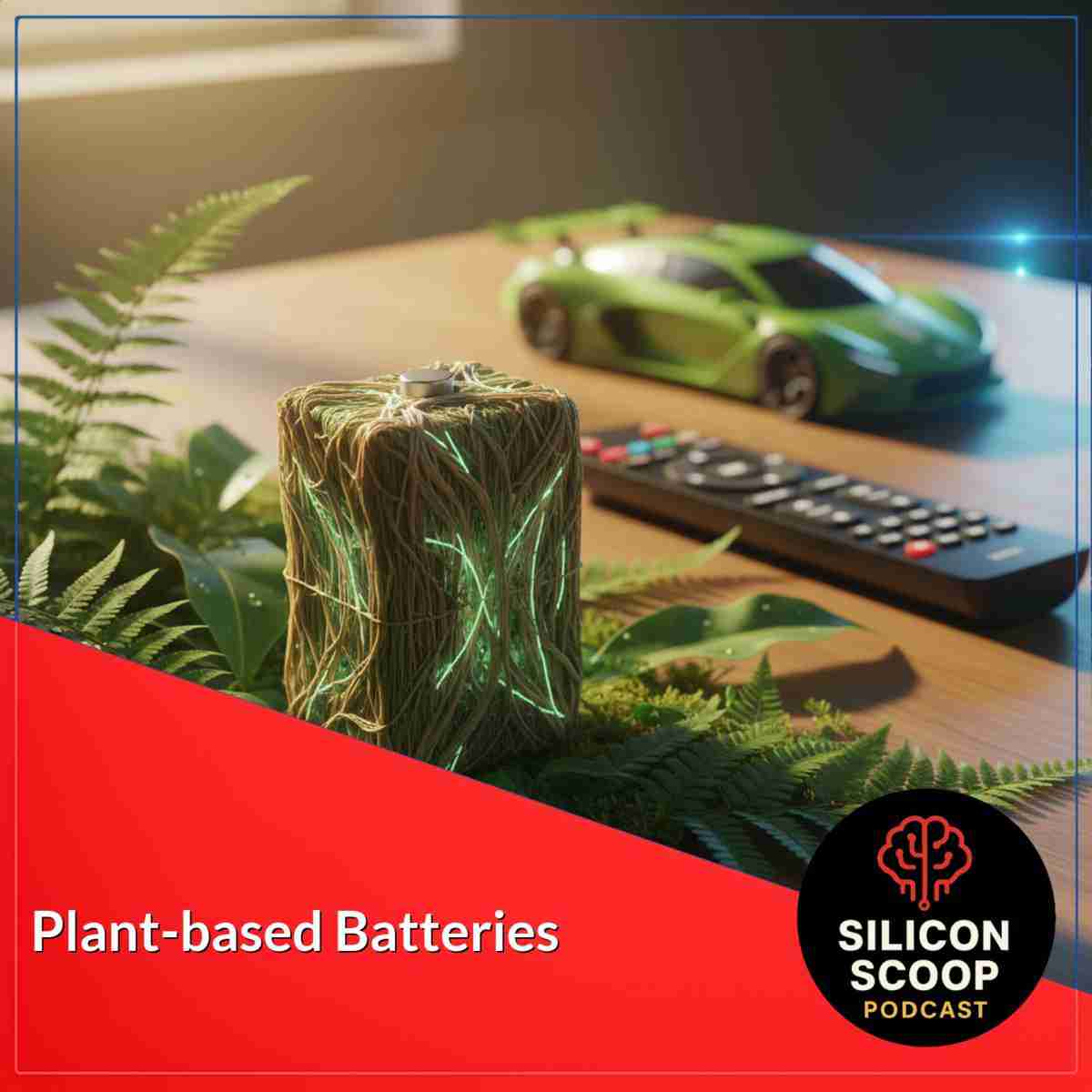
Revolutionizing Energy: How Plant-Based Batteries are Paving the Way for a Sustainable Future
Estimated reading time: 20 minutes
Key Takeaways
- Plant-based batteries are emerging as a sustainable alternative for powering everyday devices using biodegradable cellulose, water-based electrolytes, and food-safe minerals.
- These batteries are compatible with conventional formats like AA and AAA, allowing easy replacement without device modifications.
- Flint is leading innovation by sourcing cellulose from invasive plant species, turning ecological problems into raw materials for battery production.
- Plant-based batteries offer safety advantages such as non-flammable electrolytes and reduced toxicity, making them suitable for children’s toys and household electronics.
- Performance demonstrations show these batteries can power devices like toy trains, clocks, remotes, and other low-drain electronics reliably.
- Environmental benefits include reduced reliance on mined materials, lower carbon footprint, biodegradability, and potential use of invasive species as feedstock.
- Market and policy trends favor green innovations, with increasing regulations on hazardous materials and growing consumer demand for sustainable products.
- Challenges remain in improving energy density, shelf life, cost competitiveness, and developing recycling and end-of-life management systems.
- The future of plant-based batteries includes potential rechargeable variants, new form factors, and broader application in IoT and medical devices.
- Commercialization efforts focus on scaling production, forming industry partnerships, and expanding into niches like toys, remotes, clocks, and medical devices.
Table of contents
- Revolutionizing Energy: How Plant-Based Batteries are Paving the Way for a Sustainable Future
- Key Takeaways
- Section 1: Overview of Plant-Based Battery Technology
- Section 2: Deep Dive into Flint’s Sustainable Battery Innovation
- Section 3: Performance and Technical Characteristics
- Section 4: Environmental and Policy Implications
- Section 5: Market Reception and Commercialization Roadmap
- Section 6: Future Prospects, Limitations, and the Road Ahead
- Frequently Asked Questions
Section 1: Overview of Plant-Based Battery Technology
What Makes a Cellulose Battery Different?
At the heart of every plant based battery is cellulose—a natural, biodegradable material found in plant cell walls. Unlike conventional batteries that use plastic casings and metal components that can take centuries to break down, cellulose batteries use this renewable resource as the structural backbone of the entire battery.
But cellulose does more than just provide structure. In a cellulose battery, this plant-based material plays multiple functional roles:
Key Components of Plant-Based Batteries:
- Cellulose Structure: Replaces conventional plastics and heavy metals used in traditional battery casings and internal structures
- Water-Based Electrolyte: The medium that allows electrical charge to flow uses water instead of flammable organic solvents
- Food-Safe Minerals: Zinc and manganese replace hazardous substances like lithium and cobalt
- Natural Separator: The porous nature of cellulose allows it to act as a separator between electrodes while allowing ions to flow
How Water-Based Chemistry Changes Everything
Traditional batteries often use organic solvents that can catch fire or explode under certain conditions. We’ve all heard stories about lithium batteries catching fire in phones or laptops. Plant-based batteries eliminate this risk by using water-based chemistry.
This water-based electrolyte approach offers several advantages:
- Dramatically reduced fire and explosion risk
- No toxic fumes during use or disposal
- Safer handling during manufacturing and shipping
- Lower environmental impact if batteries leak
The Power of Food-Safe Minerals
Instead of relying on lithium, cobalt, or other materials that require environmentally destructive mining operations, eco friendly battery designs use zinc and manganese. These are the same minerals found in many dietary supplements and are considered food-safe.
This choice of materials means:
- Reduced toxicity if batteries are accidentally ingested (especially important for households with children)
- Less environmental contamination at disposal
- More ethical supply chains without the social issues associated with cobalt mining
- Lower health risks for manufacturing workers
Advantages Over Traditional Batteries
When you compare a renewable battery to conventional options, several benefits become clear:
Environmental Profile:
- High renewable content from plant sources
- Biodegradable components reduce long-term waste
- Lower carbon footprint in production
- Potential use of invasive plant species turns ecological problems into solutions
Safety Profile:
- Non-flammable electrolyte
- No toxic heavy metals
- Safer disposal options
- Reduced transportation hazards
Compatibility:
- Available in standard formats (AA, AAA)
- Works in existing devices without modification
- Drop-in replacement for alkaline batteries
- No learning curve for consumers
The technology behind plant-based batteries represents a fundamental rethinking of how we create portable power. By leveraging cellulose and other natural materials, manufacturers can create batteries that work reliably in simple electronic devices while dramatically reducing environmental impact.
Source: https://flowgrammer.ca/
Section 2: Deep Dive into Flint’s Sustainable Battery Innovation
Meet Flint: Pioneering the Paper Battery Revolution
Flint is the innovative startup bringing plant-based batteries from laboratory concept to commercial reality. At major industry events like CES, Flint has showcased its Flint Paper Battery technology, demonstrating that sustainable power solutions can compete with conventional options.
The company’s core mission is straightforward but ambitious: replace metal- and petrochemical-heavy battery structures with plant-based cellulose and benign minerals. This creates a largely biodegradable or low-toxicity primary battery that fits existing form factors.
Flint’s Unique Approach: Turning Invasive Plants into Power
One of the most innovative aspects of Flint’s strategy is its plan to source cellulose from invasive plant species. This creates a win-win scenario for both battery production and environmental management.
Here’s why this matters:
The Invasive Species Problem:
- Governments spend millions removing invasive plants
- These plants are typically burned or landfilled
- They cause ecological damage to native ecosystems
- Removal is an ongoing, expensive process
Flint’s Solution:
- Turn invasive plants into battery feedstock
- Create economic value from environmental management
- Reduce waste from eradication efforts
- Support local ecosystems while building batteries
This approach transforms what the founder describes as a costly environmental burden into productive raw material. Instead of governments spending large sums to remove and burn invasive species, these plants can become the cellulose source for an invasive species battery.
The Technology in Detail: How Flint’s Cellulose Battery Works
Flint’s renewable battery technology is built on four main components, all derived from or integrated with plant-based materials:
Base Material & Components:
- Cellulose Foundation
- Primary material: Plant-derived cellulose (paper)
- Sources: Locally available biomass, including invasive species
- Function: Provides structural support and functional basis for all battery components
- Benefits: Renewable, biodegradable, abundant
- 2. Anode Construction
- Structure: Cellulose-based framework
- Active material: Zinc or similar metals suited to water-based chemistry
- Function: Releases electrons during discharge
- Safety: Uses food-safe materials instead of lithium
- 3. Cathode Design
- Structure: Cellulose-based framework
- Active material: Manganese compounds and other food-safe minerals
- Function: Accepts electrons during discharge
- Environmental benefit: Avoids cobalt and other problematic metals
- 4. Electrolyte & Separator
- Electrolyte: Water-based solution
- Separator: Porous cellulose structure
- Function: Allows ion flow while keeping electrodes apart
- Safety advantage: Non-flammable, non-toxic
Key Chemistry Characteristics of the Flint Paper Battery
The chemistry behind Flint’s plant based battery represents a significant departure from conventional battery design:
- Water-Based Electrolyte: Eliminates volatile organic solvents
- Reduces fire risk: No flammable organic solvents
- Food-Safe Mineral Composition: Zinc and manganese instead of lithium or cobalt
- Minimal heavy metals of environmental concern: Lower toxicity throughout product lifecycle
- All-Cellulose Construction: Four main components all incorporate plant-based cellulose
- Maximizes renewable content
- Supports biodegradability goals
- Reduces dependence on mined materials
Manufacturing & Supply Chain: Made in Singapore
Flint is ramping up production in Singapore, a strategic choice that offers several advantages:
- Production Location Benefits:
- Advanced manufacturing infrastructure
- Skilled technical workforce
- Strong intellectual property protections
- Central location for Asian markets
- Feedstock Strategy:
- Cellulose sourced from locally abundant plants
- Flexibility to use multiple plant types
- No direct competition with food crops
- Can adapt to regional biomass availability
- Supply Chain Integration:
- Designed to work with existing battery production infrastructure
- Standard form factors (AA, AAA) simplify distribution
- Compatible with current retail and wholesale channels
- Reduces barriers to market entry
Proof of Concept: Demonstrations That Drive Home the Point
At CES, Flint didn’t just talk about their technology—they showed it in action. The company set up displays featuring toy trains powered entirely by their plant-based batteries. These demonstrations proved several critical points:
- Flint Paper Batteries work in real consumer devices
- Performance is adequate for typical low-drain applications
- The batteries are true drop-in replacements for alkaline cells
- The technology has moved beyond laboratory prototypes
Why This Matters:
- Many sustainable innovations fail because they require consumers or manufacturers to change behavior or redesign products. Flint explicitly states it does not aim to disrupt form factors or device designs. Instead, the company wants its batteries to fit into the existing battery ecosystem, changing materials rather than user behavior.
- This approach dramatically lowers adoption friction. Device makers don’t need to redesign products. Retailers don’t need to create new display categories. Consumers don’t need to learn anything new. The eco friendly battery simply replaces the conventional one.
The Vision: Integration, Not Disruption
Flint’s philosophy centers on compatibility and integration:
- Maintain conventional battery formats
- Work within existing manufacturing systems
- Fit current distribution networks
- Require no consumer education beyond “this is greener”
This strategy makes the renewable battery revolution accessible and practical. By focusing on how batteries are made rather than how they’re used, Flint creates a path for rapid adoption once production scales and pricing becomes competitive.
The company’s use of cellulose from invasive species, combined with food-safe minerals like zinc and manganese, creates what the founder describes as a fully water-based chemistry that’s safer and more sustainable than conventional options.
Source: https://flowgrammer.ca/
Section 3: Performance and Technical Characteristics
Form Factors: Familiar Sizes for Easy Adoption
Plant-based batteries from companies like Flint are being developed in the most common consumer battery formats:
- Available Form Factors:
- AA batteries: The most common cylindrical cell, used in countless devices
- AAA batteries: Smaller cylindrical cells for compact devices
- Other small-cell formats: Including potential coin cells and specialty shapes
This focus on standard sizes is intentional. By producing a cellulose battery in AA and AAA formats, manufacturers ensure their eco friendly battery can immediately replace conventional alkaline batteries in millions of existing devices.
Demonstrated Use Cases: From Toy Trains to Everyday Devices
The best proof of any new technology is seeing it work in real-world conditions. Flint’s demonstrations at CES provided exactly this kind of evidence:
- Toy Train Demonstrations:
- Powered trains running on tracks at the Flint booth
- Continuous operation throughout multi-day trade shows
- Visible proof that plant based battery technology delivers reliable power
- Showed compatibility with devices designed for alkaline batteries
Implications for Other Devices:
- If a renewable battery can power a toy train, it can likely power:
- Television and appliance remote controls
- Wall clocks
- Computer mice and keyboards
- Flashlights for occasional use
- Smoke detectors
- Small toys and games
- Portable radios
Safety Performance: Water-Based Chemistry Reduces Risks
One of the strongest selling points of the cellulose battery is its superior safety profile:
- Fire and Explosion Risk:
- Water-based electrolyte is inherently non-flammable
- No volatile organic solvents that can ignite
- Dramatically reduced risk of thermal runaway
- Safer in hot environments like cars or storage areas
- Toxicity Considerations:
- Food-safe minerals (zinc, manganese) replace hazardous materials
- Lower risk if accidentally punctured or damaged
- Safer if children access batteries
- Reduced health risks for manufacturing workers
- Transportation and Storage:
- Lower classification for hazardous materials shipping
- Simpler storage requirements
- Reduced insurance costs
- Fewer regulatory hurdles
Environmental Performance: Measuring the Green Advantage
The environmental benefits of plant-based batteries extend throughout their lifecycle:
- Production Phase:
- High renewable content from cellulose sources
- Can use invasive species, solving two problems at once
- Lower carbon footprint than mining lithium or cobalt
- More ethical supply chains
- Use Phase:
- No toxic emissions during normal operation
- Safer in household environments
- Lower risk of environmental contamination from leaks
- End-of-Life Phase:
- Reduced heavy metal content
- Biodegradable cellulose components
- Less problematic disposal than conventional batteries
- Potential for simpler recycling processes
Limitations and Technical Considerations
While eco friendly battery technology shows great promise, it’s important to understand current limitations:
- Energy Density Questions:
- Likely lower energy density than high-end lithium-ion rechargeable batteries
- More comparable to standard alkaline batteries
- May not be ideal for high-drain devices like digital cameras
- Best suited for low-to-moderate power applications
- Performance Metrics Still Emerging:
- Detailed watt-hour capacity per cell not yet widely disclosed
- Discharge curves and voltage stability under various loads still being documented
- Shelf life compared to major alkaline brands requires more long-term data
- Operating temperature range needs broader testing
- Application Sweet Spot:
- The current generation of plant based battery technology appears optimized for:
- Devices with moderate, intermittent power draws
- Applications where safety and environmental benefits outweigh maximum energy density
- Consumer products where battery replacement is infrequent
- Use cases where the user wants to reduce environmental impact
- What’s Not Yet Clear:
- Behavior in extreme temperatures (very cold or hot environments)
- Performance in high-drain devices requiring sustained current
- Exact shelf life and how it compares to premium alkaline brands
- Cost per cell at volume production
Comparing to Conventional Options
To understand where cellulose batteries fit in the market, consider this comparison:
- vs. Alkaline Batteries:
- Similar form factors and use cases
- Comparable performance for low-drain devices
- Superior environmental and safety profile
- Potentially competitive pricing at scale
- vs. Lithium-Ion Rechargeable:
- Not competing directly for high-energy applications
- Different use case (single-use vs. rechargeable)
- Much safer chemistry
- Better for devices where recharging is impractical
- vs. Zinc-Carbon (Heavy Duty) Batteries:
- Better environmental profile
- Likely superior performance
- Safer materials
- More sustainable sourcing
The Path Forward: Performance Improvements
As with any emerging technology, we can expect the renewable battery sector to improve over time:
- Optimization of electrolyte formulations for better energy density
- Refinement of cellulose processing for improved conductivity
- Development of rechargeable versions using similar chemistry
- Extension to new form factors and applications
Potential Future Applications
- IoT sensors requiring long battery life
- Medical devices where safety is paramount
- Outdoor equipment benefiting from non-toxic composition
- Children’s products where safety regulations are strict
The current generation of plant based battery technology represents an important first step. As the technology matures, we’ll likely see performance metrics that rival or exceed conventional options in specific applications.
Source: https://flowgrammer.ca/
Section 4: Environmental and Policy Implications
The Problem with Conventional Batteries
To appreciate the significance of renewable battery innovation, we need to understand the environmental challenges posed by conventional battery technologies:
- Lithium-Ion Battery Issues:
- Mining operations devastate landscapes and consume enormous water resources
- Cobalt extraction linked to child labor and unsafe working conditions
- Recycling infrastructure inadequate for the volume of batteries produced
- Fire risks in landfills when batteries are improperly disposed
- Traditional Alkaline Battery Concerns:
- Heavy metals like mercury (though now reduced in many countries)
- Corrosive chemicals that can leak into soil and water
- Massive volume of disposable batteries ending up in landfills
- Energy-intensive production processes
The Scale of the Problem: Billions of batteries are sold globally each year. Even small improvements in the environmental footprint of each cell create massive cumulative benefits. When we think about a plant based battery replacing even a fraction of conventional cells, the positive impact multiplies quickly.
How Plant-Based Batteries Address These Challenges
The eco friendly battery approach tackles environmental problems at multiple levels:
- Sustainable Sourcing:
- Cellulose from renewable plant sources
- Potential use of agricultural waste or invasive species
- No destructive mining operations
- Local sourcing reduces transportation emissions
- Cleaner Chemistry:
- Water-based electrolytes instead of toxic solvents
- Food-safe minerals replace problematic heavy metals
- Reduced chemical processing requirements
- Lower toxicity throughout production
- Better End-of-Life Options:
- Biodegradable components reduce landfill burden
- Lower toxicity makes disposal less hazardous
- Potential for composting certain components
- Simpler, safer recycling processes
The Invasive Species Opportunity
One of the most innovative environmental aspects of Flint’s approach deserves special attention: the use of invasive plant species as cellulose feedstock.
The Current Situation:
- Governments worldwide spend hundreds of millions of dollars annually to control invasive plant species. These plants:
- Crowd out native vegetation
- Disrupt local ecosystems
- Reduce biodiversity
- Damage agricultural lands
Currently, removed invasive plants are typically burned or sent to landfills—a waste of biomass and a source of carbon emissions.
The Plant-Based Battery Solution:
- Turns an ecological problem into a resource
- Reduces waste from eradication efforts
- Creates economic incentive for invasive species removal
- Supports ecosystem restoration
This approach exemplifies circular economy thinking—waste from one system becomes feedstock for another.
Policy Landscape: Winds Favoring Green Innovation
The regulatory and policy environment is increasingly supportive of renewable battery technologies:
- Extended Producer Responsibility:
- Growing requirements that battery makers handle end-of-life disposal
- Incentivizes designing batteries that are easier to recycle or dispose of safely
- Plant-based batteries with biodegradable components align well with these policies
- Green Procurement Policies:
- Government purchasing preferences for sustainable products
- Corporate sustainability commitments driving demand
- Consumer awareness creating market pull for eco friendly battery options
- Battery Safety Regulations:
- Increasing scrutiny of fire risks from lithium batteries
- Transportation restrictions on hazardous batteries
- Water-based cellulose battery chemistry faces fewer regulatory hurdles
- Climate Goals:
- National and corporate carbon reduction targets
- Emphasis on renewable materials and circular economy
- Plant based battery production with lower carbon footprint supports these objectives
Market Advantages in a Sustainability-Focused World
The policy and regulatory trends create tangible market advantages for eco friendly battery manufacturers:
- For Device Manufacturers:
- Ability to claim more sustainable products
- Reduced liability from battery-related fires or toxic leaks
- Easier compliance with environmental regulations
- Marketing differentiation in crowded markets
- For Retailers:
- Products that appeal to environmentally conscious consumers
- Reduced handling requirements for hazardous materials
- Reduced handling requirements for hazardous materials
- Alignment with corporate sustainability initiatives
- Potential for premium pricing on green products
- For Consumers:
- Peace of mind about environmental impact
- Safer products in homes with children or pets
- Support for ethical supply chains
- Participation in circular economy
Broader Implications: Beyond Just Batteries
The success of renewable battery technology could catalyze broader changes:
- Demonstration Effect: If plant-based batteries gain market traction, they prove that sustainable alternatives can compete with conventional products. This encourages investment in other green technologies.
- Supply Chain Development: Infrastructure built to process cellulose for batteries could support other industries seeking renewable materials.
- Consumer Behavior: Positive experiences with eco friendly battery products may increase willingness to try other sustainable alternatives.
- Innovation Spillover: Technical advances in cellulose processing, water-based chemistry, and sustainable manufacturing benefit multiple sectors.
The Environmental Bottom Line
Conventional batteries create environmental problems at extraction, production, use, and disposal. Plant-based batteries using cellulose, water-based chemistry, and food-safe minerals address challenges at each stage.
While no product is perfectly sustainable, the shift from mining-intensive, toxic-chemical-based batteries to renewable, biodegradable alternatives represents meaningful progress. As production scales and technology improves, the environmental case for cellulose batteries will only strengthen.
Source: https://flowgrammer.ca/
Section 5: Market Reception and Commercialization Roadmap
Industry Response: From Curiosity to Credibility
The journey of plant-based batteries from laboratory concept to commercial product has been marked by growing industry interest and credibility:
- Early Days: Initial demonstrations of cellulose battery technology were met with curiosity but skepticism. Could paper really power devices reliably? Would consumers accept a fundamentally different battery type?
- CES Breakthroughs: Flint’s presence at CES events marked a turning point. The company moved from showing early prototypes to demonstrating polished products and discussing production timelines. The live demos of Flint Paper Battery cells powering toy trains provided tangible proof that the technology works.
- Industry Coverage: Coverage in reputable technology and science publications has grown, signaling that the renewable battery sector is being taken seriously. When major trade shows feature a technology prominently and manufacturing facilities begin production, the industry pays attention.
Key Demonstrations That Proved the Concept
The CES demonstrations were strategic and effective:
- What Flint Showed:
- AA and AAA format plant based battery cells in finished form
- Continuous operation in consumer devices throughout multi-day events
- Professional booth presence indicating serious commercial intent
- Clear communication about production plans and sustainability benefits
Why It Mattered:
- Many sustainable innovations showcase at trade shows but never reach market. By demonstrating actual products in standard formats, Flint signaled that this was not a distant concept but a near-term commercial reality.
- The toy train demo was particularly effective because:
- It’s a device everyone understands
- Continuous operation shows reliability
- Visible movement provides constant proof of function
- Reminds viewers of a common use case (children’s toys)
Integration Strategy: Lowering Barriers to Adoption
Flint’s explicit strategy of fitting into existing systems rather than requiring change creates multiple advantages:
- For Device Manufacturers:
- No redesign required to use eco friendly battery options
- Can offer “now with plant-based battery option” without engineering changes
- Test market response without significant investment
- Gradually transition product lines as consumer demand grows
- For Retailers:
- Use existing battery display infrastructure
- No new product category training needed
- Can position alongside conventional batteries for easy comparison
- Standard logistics and inventory systems apply
- For Distributors:
- Fits current warehouse and shipping systems
- Similar handling to existing battery products
- No special storage requirements beyond current battery protocols
- Can leverage existing customer relationships
- For Consumers:
- Zero learning curve
- Direct comparison with familiar products
- Easy to try without risk
- Works in all existing devices
This integration approach means the renewable battery doesn’t ask anyone to change—it simply offers a better alternative within familiar frameworks.
Section 6: Future Prospects, Limitations, and the Road Ahead
The Promise and the Challenges
Plant-based batteries represent genuine innovation with real environmental benefits, but like any emerging technology, they face challenges on the path to broad adoption.
Key Opportunities:
- Performance Improvements:
- Ongoing research into electrolyte formulations
- Optimization of cellulose processing techniques
- Development of hybrid approaches combining best features of different chemistries
- Potential for rechargeable cellulose battery variants
- Cost Reduction:
- Economies of scale as production volumes increase
- Process optimization reducing manufacturing costs
- Potential for cellulose sourcing to become cheaper than mined materials
- Competition driving efficiency improvements
- Market Expansion:
- Growth from initial niches to broader consumer markets
- Development of new form factors for specialized applications
- Licensing of technology to major battery manufacturers
- Regional expansion to production facilities worldwide
Key Challenges:
- Performance Metrics:
- While current eco friendly battery technology works well for demonstrated applications, several questions remain:
- Exact energy density compared to premium alkaline brands
- Shelf life and capacity retention over months and years
- Performance in extreme temperatures
- Behavior under high-drain conditions
- Economic Viability:
- Cost per cell at volume vs. established alkaline production
- Pricing strategy and consumer price points
- Total cost of ownership including disposal
- Economic impact of using invasive species vs. cultivated feedstock
- Infrastructure Development:
- Building supply chains for cellulose feedstock
- Establishing collection and recycling systems
- Developing specialized processing facilities
- Training workforce in new manufacturing techniques
End-of-Life Management: Closing the Loop
One area requiring further development is comprehensive end-of-life systems for plant-based batteries:
- Current Situation: The cellulose and food-safe mineral composition makes these batteries less toxic than conventional cells, but optimal disposal pathways still need development.
- Potential Approaches:
- Composting:
- Biodegradable cellulose components may be compostable
- Requires separation of metal components
- Standards for battery composting need development
- Consumer education about proper composting procedures
- Recycling:
- Food-safe zinc and manganese are recyclable
- Cellulose can potentially be reprocessed
- Integration with existing battery recycling programs
- Development of specialized facilities for renewable battery recycling
- Safe Disposal:
- Even if not recycled or composted, lower toxicity makes landfill disposal less problematic
- Reduced heavy metal leaching compared to conventional batteries
- Biodegradable components break down more readily
- Still preferable to capture and reuse materials where possible
What’s Needed: Clear labeling, consumer education, and infrastructure development will determine how successfully the environmental promise of plant based battery technology extends through end-of-life.
Scaling Challenges: From Thousands to Billions
Current production in Singapore serves initial market entry, but the global battery market is enormous:
- The Scale Challenge:
- Billions of AA and AAA batteries sold annually worldwide
- Multiple production facilities needed to make significant market impact
- Supply chain for cellulose feedstock must scale dramatically
- Quality control across multiple facilities and feedstock sources
Scaling Pathways:
- Direct Expansion: Flint builds additional manufacturing facilities in key markets
- Licensing: Major battery manufacturers license the technology or develop their own cellulose battery variants, selling under established brands.
- Partnership: Joint ventures with established battery companies combine innovation with manufacturing scale
- Regional Production: Local facilities using locally-sourced cellulose reduce transportation and support local economies
Technology Evolution: What’s Next for Cellulose Batteries
The current generation of renewable battery products is just the beginning:
- Rechargeable Versions: Research into rechargeable plant-based batteries could expand applications significantly. Imagine a cellulose battery that can be recharged hundreds of times while maintaining environmental benefits.
- Higher Energy Density: Optimization of electrode materials and electrolyte formulations may increase energy density, allowing use in more demanding applications.
- New Form Factors: Beyond AA and AAA:
- Coin cells for watches and hearing aids
- 9-volt batteries for smoke detectors
- Specialty shapes for specific devices
- Module-level integration for IoT applications
- Hybrid Approaches: Combining plant-based materials with other sustainable technologies could create even better performance.
Open Questions Requiring Further Research
Several important questions still need comprehensive answers:
- Performance Details:
- Detailed discharge curves under various load conditions
- Shelf life with quantified capacity retention over time
- Operating temperature range with performance data
- Comparison to specific alkaline brands in standardized tests
- Economic Questions:
- Production cost per cell at various volumes
- Pricing strategy and consumer price points
- Total cost of ownership including disposal
- Economic impact of using invasive species vs. cultivated feedstock
- Environmental Validation:
- Full lifecycle assessment comparing to alkaline batteries
- Carbon footprint from cellulose sourcing through disposal
- Water usage in manufacturing
- Biodegradability testing under various conditions
- Market Dynamics:
- Consumer acceptance and willingness to switch
- Retailer support and shelf space allocation
- Response from major battery manufacturers
- Potential for renewable battery to create new market segments
Regulatory Considerations
- Safety Certifications:
- Meeting standards for consumer batteries
- Transportation classification
- Compliance with toy safety regulations for children’s products
- Medical device certifications for healthcare applications
- Environmental Regulations:
- Extended producer responsibility compliance
- Waste disposal regulations
- Organic/compostable certification if pursuing that pathway
- Renewable content claims and verification
- Labeling Requirements:
- Clear communication about composition
- Disposal instructions
- Performance characteristics
- Expiration dating
The Broader Context: Battery Innovation Landscape
- Plant-based batteries are part of a larger wave of battery innovation:
- Solid-state batteries
- Sodium-ion batteries
- Aluminum-air batteries
- Improved lithium chemistries
The Realistic Assessment: Promise and Limitations
Where Plant-Based Batteries Excel:
- Environmental profile
- Safety characteristics
- Ethical supply chains
- Compatibility with existing devices
- Use in sensitive applications (children’s products, food-related devices)
Where Challenges Remain:
- Energy density for high-drain applications
- Cost competitiveness at current production scales
- Consumer awareness and acceptance
- End-of-life infrastructure development
The Bottom Line: Plant-based batteries using cellulose and food-safe minerals represent a meaningful step toward more sustainable energy storage. They won’t replace all battery types, but for billions of disposable batteries used in low-drain devices annually, they offer a genuinely better alternative.
Success will depend on continued technology improvements, cost reduction through scaling, effective marketing, and infrastructure development for end-of-life management.
The technology has moved from concept to commercial production. The next few years will determine whether eco friendly battery options like the Flint Paper Battery become mainstream or remain a niche product for environmentally conscious consumers.
Source: https://flowgrammer.ca/
Frequently Asked Questions (FAQ)
1. What exactly are plant-based batteries and how do they differ from conventional batteries?
Plant-based batteries are power cells that use cellulose (a material from plants) as their main structure instead of plastic and metal. They use water-based liquid inside instead of chemicals that can catch fire, and they use safe minerals like zinc and manganese instead of dangerous materials like lithium or cobalt. Unlike regular batteries that can harm the environment, a cellulose battery uses renewable materials that break down naturally and are safer to throw away.
2. How does Flint’s cellulose-based technology work?
Flint’s technology builds all four main battery parts from or around plant cellulose. The cellulose creates the structure and helps keep the positive and negative sides separated. The battery uses zinc and manganese (the same minerals in vitamins) mixed with water to create electrical power. When you put a Flint Paper Battery in a device, it works exactly like a regular AA or AAA battery, but it’s made from plants instead of mined materials and chemicals.
3. What are the environmental benefits of using plant-based batteries?
Plant-based batteries help the environment in many ways. They use renewable plant materials instead of mining for metals. Some companies even use invasive plants that harm local ecosystems, turning a problem into a solution. These eco friendly battery options don’t have toxic chemicals that leak into soil and water. When thrown away, they break down naturally instead of sitting in landfills for decades. Making them creates less pollution and uses less energy than traditional batteries.
4. Are plant-based batteries safe for children and pets?
Yes, renewable battery technology using cellulose is much safer than conventional batteries. They use food-safe minerals (zinc and manganese) instead of dangerous chemicals. The water-based liquid inside won’t catch fire like chemicals in some batteries. If a child or pet accidentally bites or swallows one (which should still be prevented), the materials are much less toxic. This makes them especially good for children’s toys and household devices.
5. What devices can use plant-based batteries?
Currently, plant based battery products work best in devices that don’t use a lot of power constantly. They’re perfect for TV remotes, wall clocks, wireless computer mice and keyboards, toys, flashlights, and portable radios. They come in standard AA and AAA sizes, so they fit any device that uses those battery types. You don’t need special devices—just swap them in where you’d normally use regular batteries.
6. How long do plant-based batteries last compared to regular batteries?
This is still being studied in detail, but cellulose batteries appear to last as long as standard alkaline batteries in low-drain devices like remotes and clocks. For devices that use a lot of power quickly (like digital cameras), they may not last as long as premium alkaline or rechargeable batteries. As the technology improves, we expect the performance to get even better. For most everyday uses, they should work just as well as what you’re used to.
7. Where can I buy plant-based batteries and how much do they cost?
Flint and other companies are just starting to sell plant-based batteries to consumers in 2026. They should appear in stores and online retailers soon. Pricing hasn’t been widely announced yet, but they may cost slightly more than regular batteries at first. As production increases and more companies make them, prices should come down. The environmental and safety benefits may make them worth a small premium for many people.
8. Can plant-based batteries be recycled?
Yes, but the recycling systems are still being developed. Because they use food-safe minerals and plant materials, they’re less toxic than regular batteries even if they end up in landfills. Some components might even be compostable. The cellulose can be reprocessed, and the zinc and manganese can be recycled. As these eco friendly battery products become more common, specialized recycling programs will likely develop to handle them properly.
9. What is an “invasive species battery” and why is it important?
An invasive species battery is a plant based battery that uses cellulose from invasive plants—plants that don’t belong in an area and harm local ecosystems. Governments spend millions removing these plants and usually burn them. By using them to make batteries instead, companies like Flint create two benefits: they help clean up ecosystems and they make useful products from what would be waste. This turns an environmental problem into an environmental solution.
10. Will plant-based batteries replace all conventional batteries?
Probably not all of them, but they can replace many. They’re best for devices that use moderate amounts of power like remotes, clocks, and toys. High-performance devices like smartphones and electric cars will likely continue using lithium-based batteries for now. However, billions of AA and AAA batteries are sold each year for simple devices, and renewable battery technology could replace many of those, making a big positive environmental impact even without replacing every single battery type.
Additional Links
Flowgrammer.ca – 💡 Unlock AI-Powered Automation! Let flowgrammer.ca handle complex workflows so you can focus on growing your business.
- Silicon Scoop Podcast – Stay Informed, Stay Ahead!
- Startup Talk Podcast
- Flowgrammer Podcast –
- Startup Investor Drinks – Join Toronto’s Startup Community and connect with fellow startup enthusiasts and investors.
- TorontoStarts Startup and Entrepreneur Community – Become a part of Toronto’s thriving startup ecosystem.
- Workhaus – Discover flexible workspace solutions for your business needs.
- Work with The Startup Coach – Get expert guidance and mentorship for your startup journey.
- Reach out to Jon Irwin on LinkedIn – Connect with our co-host and technology expert.
Flowgrammers.ca – 💡 Join Toronto’s Fastest Growing AI and Busiess Automation Community..
Flowgramming.space – 💡 AI Agent and Workflow Marketplace..
Episode transcript
Read the full transcript
Craig: today, we're talking about a breakthrough that could finally end our toxic relationship with traditional batteries. imagine a world where the power inside your remote or your kids' toys comes from invasive weeds and water instead of destructive mines and flammable chemicals. this is the era of plant based batteries, and it's hitting the market faster than you think. we're looking at a fundamental shift in energy storage where cellulose, the stuff found in plant cell walls, replaces plastic and heavy metals and batteries. companies like flint are now using invasive plants, species, and food safe minerals to create double a and triple a batteries that are biodegradable and nonflammable. it's a win for the planet and a win for home safety, turning the environmental waste into portable power. what do you think about this, john?
Jon: i love this. i actually saw a video of this. so this was actually, showcased at ces twenty twenty six this year. and they they had these paper batteries that someone so they showed the, the capacity of it, then they cut it. and they showed a diminished capacity, which was cool. so it didn't explode. it didn't do anything. it just reduced the capacity. so i'm sure for those of you that don't know, which if you don't know by now, it's it'd be surprising. but traditional rechargeable batteries, they rely on heavy earth metal metals, and they're expensive to produce. and they have complicated recycling processes. it's like you can't throw them in the garbage. you gotta dispose of them separately, and they catch on fire, or they release toxic materials when damaged. so flint, is they're they're planning to replace with, like you said, plant derived cellulose fibers. so in a typical battery, the anode, cathode, and separator, they're arranged so that ions can flow between them during charge and discharge cycles. that's how you charge and discharge your battery. flint's paper battery, it uses cellulose as the structural medium, which can facilitate ion transfer while remaining lightweight, flexible, and even get this biodegradable, obviously. so the combination of carbon ink binder gels and water based electrolytes, that's what lets this battery operate similarly to conventional cells, but with far fewer toxic substances and much better safety performance. it's non flammable. it's non explosive. if you puncture it, it doesn't explode. if you cut it, it doesn't explode. i think this is super cool. my cons the only concern i have is capacity. what are your thoughts on this, craig? like, what do you like this? is this do you feel like this could be, the next battery technology other than solid state, or what are your thoughts?
Craig: so if a tesla battery is a high performance, high risk chemical engine, these are like cardboard straws of the power world. renewable, safe, and designed to disappear when you're done with them. and, you know, you can sit back and say, what's still unknown is when you get a cardboard straw. is it gonna hold up to the job at hand? is it gonna last longer than you drink or not? so same things with these batteries. we don't know shelf life, how long it'll last, and we don't know, what level of density we can get to. but, you know, double a, triple a batteries, i'd love to try them out. the idea that they don't explode, they don't leak, and that they're fully ethical source. it stops, you know, the reliance on cobalt lithium mining, which are often linked to human rights issues environmental, destruction. because the juice inside is water based, these batteries won't explode or catch fire, like you mentioned. and it actually helps the environment by using invasive weeds, know, versus, which governments usually have to pay to burn. kids safe toys, guilt free disposal, drop in ready so you don't need new gadgets. you sit perfectly into your double a and triple a stuff. i really love this. i'm loving it. i wanna see how long, you know, they last, in your devices and on the shelf and see what the next generation will hold. but i definitely am, you know, excited about this. what about you?
Jon: yeah. so i don't think that this will ever replace those big tesla batteries. where i see them is where safety is critical. so we're talking kids' toys. we're talking medical devices. we're talking wearables. i think that's where it's gonna replace maybe even cell phones. i don't know. again, it's gonna come down to the capacity that they can achieve from these batteries. but if they can, ramp up production, and get these batteries to a usable capacity, i think they're they're slated to disrupt the battery industry, and make things safer overall, i think.
Craig: yeah. and this isn't just, you know, in a lab. the factory is ramping up now. they're taking orders at cas, that which is what they were doing. and so we expect that it'll be a little more expensive. i've got a small green premium first, so the cost slightly more than your normal alkaline or whatnot batteries. so with just a question about shelf life, but there's some facts people might not know. like, governments currently spend millions to landfill invasive plants. so flint would turn these waste into batteries backbone. so we'll just take those, and you don't have to spend that money, and we're saving the government money. or maybe the government pays them to take it, and they spend less money or whatnot. but eventually, you know, it's completely recycled. food safe, zinc and magnesium are the same mean minerals you'd find in a multivitamin, fireproof. so the company wants its batteries to fit into the existing battery ecosystem, changing materials rather than user behavior. so, i love this. and we're finally moving toward a circular economy for power where our energy storage comes from plants and returns to the earth without leaving a toxic footprint. and, you know, canada's got, renewable forests, like, you know, a lot. so this is, interesting another alternative for green energy for canada.
Jon: yeah. so you were talking about shelf life. right? so because cellulose, can improve safety and reduce supply chain risk, the research also suggests that it can help prevent battery degradation, which is caused by dendrites, which is these tiny metal formations that shorten battery life. so maybe these will have a longer shelf life than current batteries.
Craig: well, we'll see. i doubt that, but you never know. you're you're they never do. that's what i'm saying. like, that's optimistic. it never happens that way. maybe eventually, but we'll have to see. so tell us, would you pay a few extra cents for a battery made of weeds if it meant your trash was no longer toxic? i'm generally excited to see these hit the shelves this year. let me know in the comments. are you ready to go plant based with your power or just sticking with the old school alkaline batteries? i know i'll be looking for these to give them a try, and i'll let you know when i find them and dry them.
More from Silicon Scoop
All episodes
silicon-scoop · October 16, 2026
Meta’s $18 Billion Teen Safety Settlement: Soft Guardrails, Hard Leverage Over TikTok and YouTube
Deep dive on Meta teen safety settlement, social media addiction lawsuit, new Facebook Instagram time limits and pressure on TikTok YouTube age verification.
View episode

silicon-scoop · October 15, 2026
How Claude Mythos Is Reshaping Cryptanalysis: HAWK, AES and the Rise of AI-Driven Crypto Research
Claude Mythos cryptanalysis weakens HAWK post-quantum signature, speeds AES Möbius Bridge attack, and powers CryptanalysisBench benchmark in AI-driven crypto research.
View episode

silicon-scoop · October 14, 2026
Nvidia’s $12.9 Billion Hugging Face Bet: How Controlling the Open-Source Model Hub Reshapes AI Chips, Cloud, And Competition
Nvidia Hugging Face acquisition could reshape open source AI models, AI chip dominance, and the global developer model hub, raising antitrust and neutrality questions.
View episode