
China Space Carrier: Exploring the Futuristic Concept, Its Technical Challenges, and Strategic Implications
China Space Carrier: Exploring the Futuristic Concept, Its Technical Challenges, and Strategic Implications https://torontostarts.com/2026/04/06/china-space-carrier-concept-challenges/ 🔗 Core Platforms & Properties Silicon Scoop (Main Page) https://torontostarts.com/silicon-scoop/ Flowgrammer (AI Automation Agency & Community) https://flowgrammer.ca/ AI News & Resources (Flowgrammers Hub) https://flowgrammers.ca OpenClaw Toronto - https://openclawto.com/ FlowGrammer and OpenClaw YouTube- https://www.youtube.com/@flowgrammers 🍻 Events & Community Startup Investor Drinks Toronto https://startupdrinksto.com/ TorontoStarts (Startup Community Hub) https://torontostarts.com/ 🎙️ Silicon Scoop Podcast Main Page https://torontostarts.com/silicon-scoop/ Apple Podcasts https://podcasts.apple.com/us/podcast/silicon-scoop/id1758711826 Spotify https://open.spotify.com/show/5bAzF0MwV6TtLhJAhvHayI YouTube Playlist https://www.youtube.com/playlist?list=PLj4v-RoA7A-gT62vrEYqh1zCv-0Hj-o5J
With Craig Major and Jon Irwin
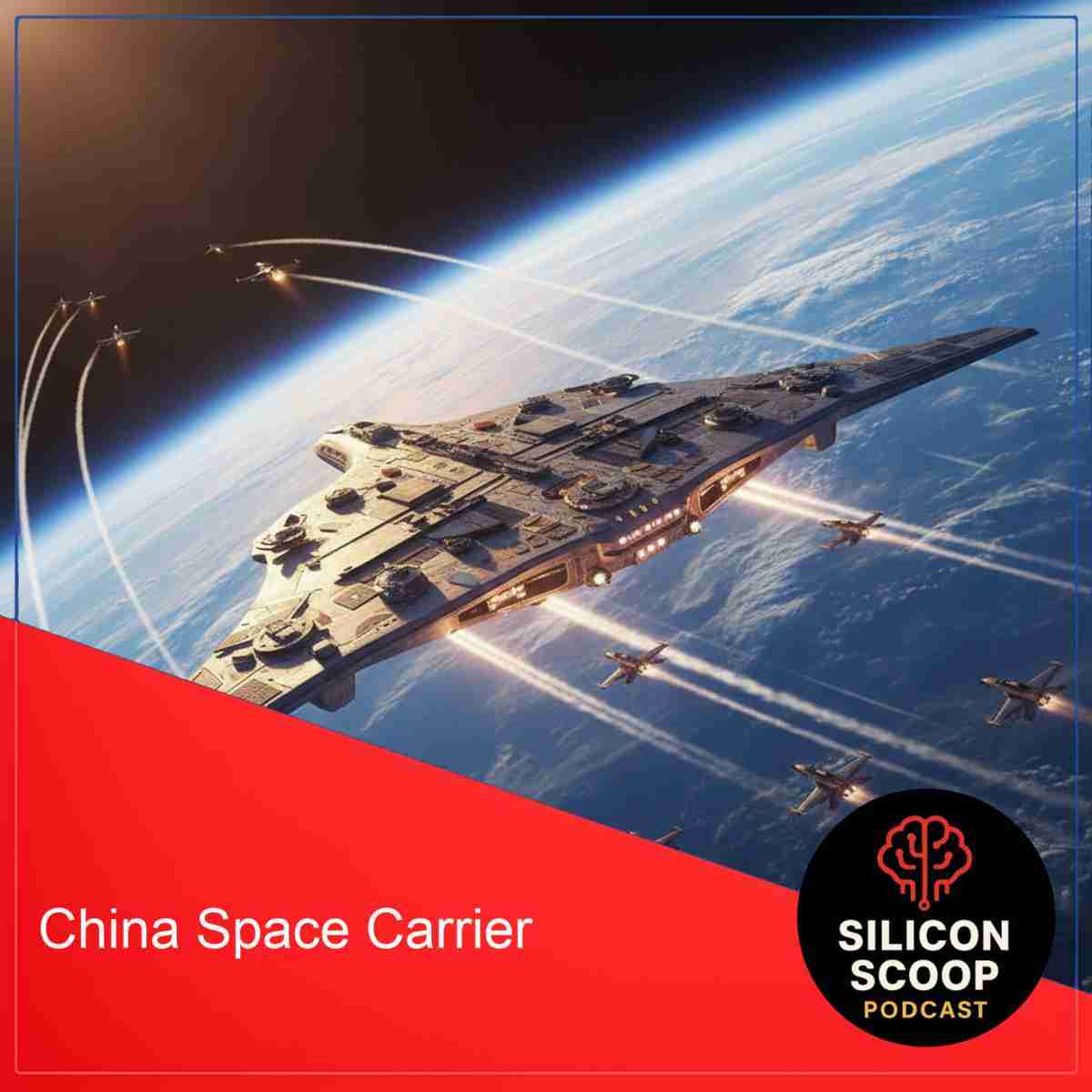
China Space Carrier: The Futuristic Concept, Technical Challenges, and Strategic Implications
Estimated reading time: 20 minutes
Table of contents
- Introduction
- Concept & Design Details of the Space Carrier
- Media Framing & Public Perception of China’s Space Warfare Plans
- Future-Proof Your Business ⚙️
- Technical Feasibility & Expert Assessment of Near-Space Operations
- Strategic, Legal, & Arms-Control Implications of Near-Space Militarization
- Conclusion & Future Outlook for China’s Space Carrier Ambitions
- Don’t Wait for the Future – Automate Now! ⏱️
- Frequently Asked Questions (FAQ)
Introduction
The China space carrier concept represents one of the most ambitious and futuristic ideas to emerge from Chinese aerospace research in recent years. This near-space platform is designed to operate at the edge of Earth’s atmosphere and launch unmanned fighter jets capable of deploying hypersonic missiles from extreme altitudes. The concept has captured global attention, with media outlets drawing comparisons to “Star Wars” due to its theatrical depictions and seemingly science-fiction qualities.
Chinese state-linked aerospace designers have publicized conceptual plans for this large, reusable platform—sometimes called an “aerospace mothership”—that would function in the upper stratosphere or near-space region. From this carrier, unmanned combat vehicles would launch to carry out long-range strikes at speeds and altitudes beyond the reach of conventional aircraft. The designs feature computer-generated imagery showing a massive carrier craft releasing smaller fighter-like drones that could fire missiles from heights where traditional air defenses struggle to operate.
The China space program has invested heavily in related technologies, including hypersonic glide vehicles, reusable rockets, and high-altitude platforms. The space carrier concept sits at the intersection of these research priorities, representing China’s ambition to blur the lines between atmospheric and space-based military operations. However, despite the impressive visuals and forward-looking rhetoric in Chinese media, the technical feasibility of such a system remains highly debated among international experts.
Western defense analysts and aerospace engineers have expressed significant skepticism about the concept. Many characterize it as a propaganda tool or publicity stunt rather than an indication of imminent military capability. The gap between the dramatic presentations at defense exhibitions and the current state of aerospace technology is substantial. No operational prototypes have been publicly documented, and no verified flight tests have occurred.
While the China space carrier concept serves strategic and symbolic purposes—signaling advanced ambitions and technological prowess—the reality is that building such a platform faces enormous engineering challenges. These include propulsion systems capable of operating at the edge of atmosphere, thermal stress management, guidance systems for unmanned vehicles in near-space conditions, and the integration of reliable weapons systems deployable from such extreme altitudes.
Concept & Design Details of the Space Carrier
The China space carrier concept envisions a very large, reusable near-space platform that would revolutionize military operations by bridging the gap between traditional aircraft and spacecraft. This aerospace mothership is designed to cruise at the edge of Earth’s atmosphere, operating in what aerospace engineers call the near-space region—typically between 20 and 100 kilometers altitude, where the atmosphere becomes extremely thin but hasn’t yet transitioned to the vacuum of space.
Multi-Stage Operational Architecture
The proposed system follows a sophisticated multi-stage approach to combat operations:
- The massive space carrier ascends to near-space altitudes using advanced propulsion systems
- Once positioned at the edge of atmosphere, the carrier releases unmanned air vehicles or combat drones
- These smaller craft then accelerate further, potentially reaching hypersonic speeds
- The unmanned fighter jets can launch missiles from their extreme altitude positions
- The carrier itself returns to base for reuse, theoretically allowing repeated deployment cycles
This operational concept differs fundamentally from traditional aircraft carriers or even strategic bombers. Rather than operating within Earth’s atmosphere like conventional military aircraft, the platform would exploit the unique characteristics of near-space—where air resistance is minimal but gravitational effects still allow for controlled flight using aerodynamic surfaces.
Design Visualization and Promotional Materials
Chinese state-linked media have showcased the concept through elaborate computer-generated imagery and schematic diagrams. These visualizations typically depict:
- A enormous carrier craft with a wingspan potentially measuring hundreds of meters
- Sleek, futuristic aesthetics reminiscent of science-fiction spacecraft
- Multiple unmanned fighter jets stored within or attached to the main platform
- Launch sequences showing the smaller craft separating and accelerating away from the mothership
- Missile deployment from the unmanned fighter jets at extreme altitudes
However, these remain entirely conceptual renderings. No photographs of actual hardware, wind tunnel models, or prototype components have been released to verify that physical development has occurred beyond the drawing board.
Technical Hurdles Identified by Experts
Aerospace specialists have identified numerous critical challenges that make the space carrier concept extraordinarily difficult to realize:
Propulsion and Lift Challenges: Operating a large platform at the edge of atmosphere requires propulsion systems that can function in extremely thin air. Conventional jet engines become inefficient or cease functioning entirely at such altitudes. Rocket engines could provide thrust but consume enormous amounts of fuel, making sustained flight impractical. Hybrid systems or exotic propulsion technologies would be necessary, but none have been demonstrated at the required scale.
Structural and Thermal Stress: A very large carrier body faces immense structural loads during ascent, operation at altitude, and descent. The thermal environment fluctuates dramatically as the platform transitions through different atmospheric layers. Materials must withstand temperature extremes, radiation exposure, and mechanical stresses while remaining light enough for the craft to reach its operational altitude.
Guidance, Communications, and Control: Coordinating multiple unmanned fighter jets in near-space presents unprecedented challenges. Communication signals may be disrupted, GPS accuracy could be compromised, and the autonomous systems must function in an environment where traditional aircraft controls behave differently. The thin atmosphere at these altitudes means control surfaces have reduced effectiveness, requiring alternative maneuvering methods.
Power and Energy Density: Sustaining operations for a large platform and multiple combat drones requires massive power generation and storage capabilities. Current battery and fuel cell technologies struggle to provide the energy density needed for extended near-space missions.
Reusability and Turnaround: For the concept to have military value, the carrier must be able to launch, complete its mission, return safely, and be prepared for another deployment relatively quickly. Achieving airline-like reusability for a near-space vehicle remains an unsolved challenge even for much smaller spacecraft.
As reported by Chinese state-linked aerospace designers and highlighted at defense-related forums, the space carrier represents an aspirational goal rather than current capability. The conceptual nature of the project is evident in the reliance on artistic renderings rather than engineering prototypes or test data. https://flowgrammer.ca/
Media Framing & Public Perception of China’s Space Warfare Plans
The China space program has strategically unveiled the space carrier concept through carefully orchestrated media presentations and defense exhibitions. Chinese state-linked outlets have framed the platform as a revolutionary advancement in military technology, using dramatic language and futuristic imagery to capture public imagination both domestically and internationally.
Promotional Strategy and Public Unveiling
Chinese media coverage of the space carrier emphasizes several key themes:
- Suborbital operations: Descriptions portray the platform as operating in a realm between traditional flight and space travel
- Near-space combat: The concept is positioned as opening a new domain for military operations
- Space-based force projection: Promotional materials suggest the carrier could project power globally from the edge of atmosphere
- Next-generation aerospace combat systems: The technology is presented as representing China’s emergence as a leader in advanced military technology
Defense-related forums and exhibitions have featured polished presentations with computer animations showing the carrier deploying its unmanned fighter jets against hypothetical targets. These demonstrations use cinematic techniques—dramatic camera angles, sleek visual effects, and orchestral soundtracks—that heighten the theatrical impact while obscuring the distinction between engineering reality and speculative vision.
“Star Wars” Comparisons and Science-Fiction Aesthetics
Western coverage of the concept has repeatedly invoked “Star Wars” and other science-fiction references. These comparisons stem from several factors:
- The visual presentation closely resembles spacecraft carriers from popular science-fiction films and television series
- The operational concept of a large mothership launching smaller fighters mirrors classic space battle scenarios
- The near-space setting evokes images of combat at the boundary between Earth and the cosmos
- The dramatic gap between the depicted capabilities and known aerospace technology recalls fictional rather than practical military systems
Aerospace experts quoted in international media use these “Star Wars” comparisons to highlight the speculative nature of the concept. By drawing parallels to fictional technology, analysts emphasize that the Chinese presentations should be understood as aspirational visions rather than imminent operational systems.
Expert Skepticism and “Publicity Stunt” Characterizations
Defense and aerospace analysts interviewed in Western and Asian outlets have expressed substantial doubts about the project’s status as a genuine weapons development program. Several prominent themes emerge from expert assessments:
- Lack of Verifiable Evidence: No public documentation indicates operational prototypes, flight tests, or allocated procurement budgets specifically for a near-space carrier. The absence of concrete developmental milestones suggests the concept remains at the theoretical or very early conceptual stage.
- Pattern of Ambitious Announcements: Commentators note that Chinese defense media have previously showcased ambitious concepts—orbital bombardment systems, exotic drone swarms, electromagnetic weapons—long before any proof of full-scale testing or deployment emerged. Some of these concepts never materialized, while others took decades longer than initial presentations suggested.
- Strategic Messaging Over Engineering: Several experts characterize the space carrier as primarily a messaging tool. The concept may serve to:
- Signal advanced capability to deter adversaries
- Inspire domestic pride and confidence in Chinese technological progress
- Attract funding and talent to aerospace research programs
- Shape international perceptions of China’s military modernization trajectory
- “Technology Demonstrator on Paper”: Rather than an active development program, analysts frequently describe the concept as existing primarily in presentations and promotional materials. This “paper demonstrator” approach allows designers to explore ideas and generate attention without committing to the enormous expense and risk of actual hardware development.
The strategic value of such presentations should not be dismissed entirely, however. Even speculative research signals China’s ambitions in military technology and space warfare, potentially influencing defense planning among competing nations. The concept keeps adversaries uncertain about future capabilities while potentially directing their investment toward countermeasures against systems that may never exist in the depicted form.
International media coverage reflects this tension between skepticism about technical feasibility and acknowledgment that the presentations serve China’s strategic communication goals regardless of near-term engineering reality. https://flowgrammer.ca/
Future-Proof Your Business ⚙️
While nations dream of space fighters, you can achieve real business advantages today. Automate your processes to drive efficiency, reduce costs, and focus on innovation, not science fiction!
Explore Automation Solutions
https://flowgrammer.ca/
Technical Feasibility & Expert Assessment of Near-Space Operations
The enormous gap between the promotional imagery of China’s space carrier concept and current aerospace capabilities becomes clear when examining the technical challenges in detail. Independent aerospace specialists and defense analysts have systematically identified why such a platform remains far beyond demonstrated technology.
Propulsion System Challenges at the Edge of Atmosphere
Operating unmanned fighter jets and a large carrier platform at near-space altitudes requires solving propulsion challenges that no nation has yet overcome for operational military systems:
Altitude Performance Gap: Conventional jet engines rely on atmospheric oxygen for combustion and become increasingly inefficient above approximately 20 kilometers altitude. Pure rocket engines can function in thin air or vacuum but consume fuel at rates that make sustained flight impractical. The space carrier concept would require either:
- Advanced hybrid propulsion combining air-breathing and rocket modes
- Exotic technologies like scramjets or combined-cycle engines
- Novel propulsion approaches not yet demonstrated at operational scale
Thrust-to-Weight Constraints: A very large carrier must generate enough thrust to lift its own mass plus the payload of multiple combat drones and weapons to extreme altitudes. The fuel required for this ascent adds weight, creating a vicious cycle where more propulsion capability requires more fuel, which requires more propulsion capability.
Sustained Operations: Unlike a ballistic missile that briefly passes through near-space, a combat platform must loiter, maneuver, and conduct operations while maintaining altitude. Maintaining stable flight in the thin atmosphere at the edge of atmosphere demands continuous thrust, further multiplying fuel requirements.
According to independent aerospace specialists, no current propulsion system combines the necessary efficiency, power output, fuel economy, and operational flexibility required for the depicted space carrier concept. Incremental progress in hypersonic propulsion research occurs worldwide, but scaling these technologies to support a massive reusable platform remains an unsolved engineering challenge.
Thermal and Structural Engineering Obstacles
The physical demands on a near-space carrier platform exceed those of any currently operational aerospace vehicle:
Thermal Cycling: During ascent, the carrier would experience rapidly changing temperatures as it climbs through atmospheric layers. Aerodynamic heating during high-speed flight could raise surface temperatures to hundreds of degrees. In near-space, thermal radiation becomes the primary heat transfer mechanism, requiring different materials and cooling approaches than atmospheric flight.
Structural Loads: The carrier structure must withstand:
- Aerodynamic forces during ascent and descent through dense atmosphere
- Vibration and acoustic loads from powerful engines
- Mechanical stresses of deploying and potentially recovering unmanned fighter jets
- Pressure differentials between internal systems and the near-vacuum environment
- Repeated thermal expansion and contraction cycles if the platform is truly reusable
Material Science Limitations: While advanced composite materials and heat-resistant alloys exist, combining light weight, high strength, thermal resistance, and reasonable cost in a structure the size of the proposed carrier remains extraordinarily difficult. Each design choice involves tradeoffs between competing requirements.
Guidance, Control, and Autonomous Systems Complexity
Coordinating combat operations involving a large carrier and multiple unmanned fighter jets in near-space presents unprecedented challenges in autonomous systems and flight control:
Navigation Precision: GPS signals may be less reliable at extreme altitudes due to satellite geometry and ionospheric effects. Alternative navigation methods must maintain high accuracy for weapons deployment and formation flying.
Flight Control Dynamics: The thin atmosphere at near-space altitudes means traditional control surfaces—rudders, ailerons, elevators—provide minimal aerodynamic force. Thrust vectoring, reaction control systems, or hybrid approaches become necessary, requiring sophisticated flight control software and hardware.
Communication Links: Maintaining reliable communication between the carrier, deployed drones, missile systems, and ground control across hundreds or thousands of kilometers while managing potential jamming or interference requires robust, redundant systems.
Autonomous Decision-Making: If the platform operates beyond real-time control ranges, onboard artificial intelligence must handle target identification, threat assessment, weapons deployment, and emergency procedures. The reliability and trustworthiness of such autonomous combat systems remain active areas of research and ethical debate.
Integration of Hypersonic Missiles and Weapons Systems: Even if a platform could reach near-space and deploy unmanned fighter jets, successfully employing weapons from such altitudes introduces additional complications:
- Missile Launch Environment: Deploying hypersonic missiles from a drone flying at extreme altitude in thin atmosphere differs fundamentally from conventional launch scenarios. Missile guidance systems must function immediately upon separation in an environment where aerodynamic surfaces have limited effectiveness.
- Targeting and Accuracy: Striking targets from near-space altitudes requires extremely precise trajectory calculations accounting for atmospheric density variations, target movement, and the weapon’s flight characteristics through multiple altitude regimes.
- Payload Trade-offs: Each kilogram devoted to weapons, targeting sensors, and communications reduces the fuel available for the drone’s own propulsion and maneuvering, limiting operational flexibility.
Expert consensus on feasibility timeline
- Short-term (0-10 years): Very low probability. No evidence suggests China or any other nation is close to fielding an operational near-space mothership deploying missile-armed combat drones. Fundamental technology gaps remain.
- Medium-term (10-25 years): Highly uncertain. While incremental progress in related technologies is plausible—improved high-altitude drones, more efficient propulsion systems, advances in autonomous flight control—integrating these into a functional combat platform as depicted faces enormous challenges. More modest systems exploiting some of these technologies seem more likely than the full space carrier vision.
- Long-term (25+ years): Constrained possibility. If major breakthroughs occur in materials science, propulsion, energy storage, and autonomous systems, some version of near-space combat platforms could become technically feasible. However, whether such systems would offer sufficient military advantages over alternative technologies (advanced missiles, stealth aircraft, satellites, directed-energy weapons) remains unclear. The consensus emphasizes that even discussing timeline projections is speculative when the basic engineering challenges have not been solved and no development program has been verified to exist beyond conceptual studies. https://flowgrammer.ca/
Strategic, Legal, & Arms-Control Implications of Near-Space Militarization
The China space carrier concept, regardless of its technical feasibility, fits within broader strategic contexts involving aerospace competition, regional security dynamics, and the evolving legal frameworks governing military activities at the boundary between atmosphere and space.
China’s Broader Near-Space and Aerospace Ambitions
The space carrier concept does not exist in isolation but connects to several strands of the China space program and military modernization efforts:
- High-Altitude Platform Research: China has invested in various near-space systems including:
- High-altitude balloons for surveillance, communications relay, and potentially early warning
- Solar-powered pseudo-satellites designed to loiter at extreme altitudes for extended periods
- Stratospheric airships and unmanned platforms for communications and intelligence gathering
- Hypersonic Weapon Development: China has publicly tested various hypersonic missiles and glide vehicles, including:
- The DF-17 medium-range ballistic missile with a hypersonic glide vehicle
- The DF-ZF (previously WU-14) hypersonic glide vehicle
- Various experimental waverider and scramjet-propelled craft
- Reusable Launch and Spaceplane Efforts: China has pursued reusable rocket technology and spaceplane concepts, including:
- Tests of vertical-takeoff, vertical-landing rocket stages
- Development of what appears to be a reusable spaceplane (sometimes called the Chinese X-37B equivalent)
- Academic and industrial research on combined-cycle engines and other advanced propulsion
While these efforts remain less mature than U.S. or some commercial programs, they indicate sustained interest in the technologies that would underpin a near-space carrier. The space carrier concept represents an ambitious synthesis of these research threads—combining high-altitude platforms, hypersonic weapons, unmanned systems, and reusable aerospace vehicles into a single dramatic vision of future military technology.
Comparisons to U.S. Programs and Historical Precedents
To understand the context of China’s space carrier concept, it helps to examine analogous Western programs and historical efforts:
- U.S. X-37B Orbital Test Vehicle: This unmanned spaceplane has conducted multiple long-duration missions in low Earth orbit, demonstrating reusable space access for military purposes. However, it:
- Operates in actual orbit rather than near-space
- Does not deploy other combat vehicles
- Serves primarily as an experimental platform rather than an operational weapons system
- Maintains an ambiguous mission profile with little public information about specific activities
- Cold War-Era Concepts: Both the United States and Soviet Union explored various aerospace plane and orbital weapons concepts during the Cold War:
- The U.S. Dyna-Soar program (cancelled 1963) aimed to develop a piloted spaceplane with potential reconnaissance and weapons delivery roles
- Soviet Spiral program pursued similar aerospace plane concepts
- Various “bomber in space” concepts that would orbit and deploy weapons on demand
- These programs consumed enormous resources, faced insurmountable technical challenges with available technology, and were ultimately abandoned in favor of ICBMs, satellites, and more conventional strategic systems. The historical parallel suggests caution about assuming dramatic new aerospace weapons concepts will necessarily come to fruition.
- Air-Launch Systems: Proven technologies like the Pegasus rocket (launched from a carrier aircraft) demonstrate that air-launch concepts can work, but at much lower altitudes and for satellite deployment rather than weapons. These systems validate the general principle while highlighting the enormous gap to the near-space combat platform vision.
Legal and Arms-Control Considerations for Space Warfare
If the space carrier concept were to advance beyond the conceptual stage, it would raise significant questions about the application of existing international law:
- Outer Space Treaty: The 1967 Outer Space Treaty prohibits placing weapons of mass destruction in orbit and claims of sovereignty over celestial bodies. However:
- A near-space platform might operate below the generally-accepted boundary of outer space (the Kármán line at 100 km altitude)
- The treaty does not explicitly prohibit conventional weapons in space or near-space
- Attribution and verification challenges would complicate enforcement
- Grey Zones in International Law: The legal regime governing military activities in near-space remains underdeveloped:
- Traditional airspace sovereignty extends only to a country’s territorial airspace, but the upper altitude limit remains poorly defined
- Near-space platforms might operate in regions beyond national jurisdiction but below the formal beginning of outer space
- Dual-use technologies (the same systems enabling satellite launch could support weapons delivery) complicate efforts to restrict military applications
- Hypothetical Arms-Control Challenges: If multiple nations pursued near-space combat platforms, verification and arms-control would face obstacles:
- Distinguishing civilian from military near-space platforms might be difficult
- Inspection and monitoring regimes would need to address a new operational domain
- Dual-use technologies (the same systems enabling satellite launch could support weapons delivery) complicate efforts to restrict military applications
Defense analysts stress, however, that these legal implications remain largely hypothetical. With no operational space-based or near-space offensive weapons platform currently existing, discussions of arms control frameworks remain speculative. With existing and emerging systems like anti-satellite weapons, cyber capabilities targeting space infrastructure, and the militarization of Earth orbit by satellites with potential offensive or defensive roles, the immediate concerns are different.
Final Assessment: Ambition Meets Reality
The China space carrier concept showcases the tension between ambitious aerospace visions and current engineering capabilities. While the promotional materials depict a revolutionary combat platform, expert consensus indicates that such a system remains far beyond demonstrated technology and may never emerge in the depicted form.
More immediate developments in the China space program involve evolutionary improvements in hypersonic weapons, unmanned systems, satellite capabilities, and conventional aerospace platforms. These incremental advances pose concrete strategic challenges, unlike the speculative space carrier.
For observers seeking to understand China’s military aerospace trajectory, the space carrier concept serves as a reminder to distinguish between dramatic presentations and verified capabilities, between aspirational visions and funded programs, and between computer-generated imagery and operational hardware. The concept’s significance lies not in imminent deployment but in what it reveals about China’s strategic ambitions, technological priorities, and approach to shaping international perceptions of its military modernization.
As aerospace technology continues advancing globally, some elements of the near-space combat vision may eventually become feasible. However, the pathway from current capabilities to anything resembling the publicized space carrier will likely involve decades of incremental progress, substantial technological breakthroughs, and enormous investment—if indeed such a system ever proves strategically valuable compared to alternative approaches for achieving similar military objectives. https://flowgrammer.ca/
Don’t Wait for the Future – Automate Now! ⏱️
Hypersonic space carriers might be decades away, but increased efficiency and cost savings are within your reach today. Discover how Flowgrammer can automate your workflows and optimize your business for success.
Get Your Free Automation Assessment
https://flowgrammer.ca/
Frequently Asked Questions (FAQ)
Q: What is the “China space carrier” and how does it differ from traditional aerospace vehicles?
A: The China space carrier is a conceptual near-space platform designed to operate at the edge of Earth’s atmosphere, approximately 20-100 kilometers altitude. Unlike traditional aircraft that fly within the dense atmosphere or spacecraft that orbit in the vacuum of space, this proposed carrier would function in the transitional near-space region. It would serve as a mothership deploying unmanned fighter jets capable of launching missiles from extreme altitudes. Traditional aerospace vehicles operate in single domains—either atmosphere or space—while the space carrier concept attempts to bridge these domains, creating a hybrid platform. However, this ambitious design remains entirely conceptual, with no verified prototypes or operational systems demonstrated.
Q: How realistic is the technical feasibility of deploying unmanned fighter jets from near-space?
A: The technical feasibility of deploying unmanned fighter jets from the edge of atmosphere faces enormous challenges that have not been solved by any nation. Propulsion systems struggle at such altitudes where air is too thin for conventional jet engines but rocket engines consume fuel too quickly for sustained operations. Guidance and control systems must function in an environment where traditional aerodynamic surfaces have minimal effectiveness. The structural demands of a large reusable platform capable of repeatedly ascending to near-space, deploying combat drones, and returning safely exceed demonstrated aerospace capabilities. Aerospace experts assess short-term feasibility as very low, with medium-to-long term prospects remaining highly uncertain and dependent on major technological breakthroughs in multiple fields simultaneously.
Q: Is the concept merely propaganda or does it indicate a real shift in China’s military strategy?
A: The China space carrier concept likely serves multiple purposes. From a propaganda perspective, it projects technological sophistication, signals advanced military ambitions, and generates domestic pride in Chinese aerospace achievements. The “Star Wars” imagery and dramatic presentations suggest strategic messaging plays a significant role. However, dismissing the concept as purely propaganda oversimplifies the situation. The China space program has made genuine investments in related technologies including hypersonic missiles, high-altitude platforms, and reusable launch systems. The space carrier may represent an aspirational vision guiding long-term research directions, even if the specific depicted system never materializes. The concept likely indicates genuine interest in near-space military technology while simultaneously serving strategic communication purposes.
Q: What are the potential legal implications if such a carrier were to be operational?
A: If a space carrier became operational, it would raise complex legal questions about the militarization of near-space and the application of existing treaties. The Outer Space Treaty prohibits weapons of mass destruction in orbit but does not clearly address conventional weapons in near-space or platforms operating below the formal boundary of outer space. The altitude band where such a carrier would operate exists in a legal grey zone—potentially above territorial airspace but below formal outer space. Arms-control verification would face challenges distinguishing military from civilian platforms and monitoring activities in this domain. However, these legal implications remain hypothetical since no operational near-space weapons platform currently exists. More immediate legal and arms-control concerns involve existing systems like anti-satellite weapons and the militarization of Earth orbit.
Q: How does the China space carrier compare to the U.S. X-37B program?
A: The U.S. X-37B is an unmanned spaceplane that has conducted multiple long-duration missions in low Earth orbit, demonstrating reusable military space access. However, it differs fundamentally from the proposed China space carrier. The X-37B operates in actual orbit rather than near-space, does not deploy other combat vehicles, and serves primarily as an experimental platform for classified research rather than an operational weapons system. The X-37B proves that reusable military spaceplanes can be developed and operated, but its mission profile and capabilities differ substantially from the near-space combat platform concept. The Chinese space carrier concept is more ambitious in scope but remains entirely conceptual, while the X-37B represents demonstrated technology with multiple successful missions completed.
Q: What are hypersonic missiles and why would launching them from near-space be advantageous?
A: Hypersonic missiles are weapons that travel at speeds exceeding Mach 5 (five times the speed of sound), typically using either hypersonic glide vehicles or hypersonic cruise missiles with scramjet propulsion. Launching such weapons from near-space altitudes could theoretically provide several advantages: extended range due to the initial altitude, reduced atmospheric drag during portions of the flight, potentially unpredictable trajectories that complicate defense systems, and rapid strike capability against distant targets. However, deploying hypersonic missiles from unmanned fighter jets at the edge of atmosphere introduces enormous technical challenges including missile guidance in thin atmosphere, communication and targeting from extreme altitudes, and integration with a platform that itself faces unresolved engineering hurdles. Existing ground-launched and air-launched hypersonic systems already provide many of these advantages with more mature technology.
Q: What other near-space technologies is China developing?
A: The China space program has invested in various near-space systems beyond the conceptual space carrier. These include high-altitude balloons for surveillance and communications relay, solar-powered pseudo-satellites designed to loiter at extreme altitudes for extended periods, and stratospheric airships for intelligence gathering. China has also tested various hypersonic missiles and glide vehicles including the operational DF-17 system. Reusable rocket technology and experimental spaceplanes are under development, though less mature than comparable Western programs. China operates an extensive satellite network and has demonstrated anti-satellite capabilities. These diverse programs indicate serious investment in technologies spanning the full range from upper atmosphere to low Earth orbit, providing context for the space carrier concept as part of broader aerospace ambitions.
Q: When might we see an operational space carrier if development continues?
A: Expert assessments suggest that an operational space carrier as depicted in Chinese promotional materials remains decades away at minimum, if it proves feasible at all. Fundamental technological challenges in propulsion, materials, autonomous systems, and weapons integration have not been solved. No verified development program with prototypes and test schedules has been documented in open sources. Even with sustained investment, aerospace specialists estimate that achieving something resembling the space carrier concept would require 25+ years and depend on major breakthroughs in multiple technology areas. More realistic near-term developments involve incremental improvements in related technologies like high-altitude drones, hypersonic weapons, and reusable launch systems. These evolutionary advances may eventually enable capabilities sharing some characteristics with the space carrier vision, but likely in forms differing substantially from current conceptual imagery.
Q: How do experts distinguish between genuine military developments and propaganda concepts?
A: Defense analysts use several criteria to assess whether announced military technology concepts represent genuine development programs or primarily propaganda tools. Key indicators include: verification of actual hardware through photographs, independent observation, or flight tests rather than just computer-generated imagery; documented development milestones with timelines and budget allocations; technical specifications detailed enough for independent feasibility assessment; consistency with a nation’s demonstrated technological capabilities in related fields; and patterns of previous announcements and their outcomes. The China space carrier concept scores poorly on most criteria—relying on CGI rather than hardware, lacking verifiable specifications, exceeding demonstrated capabilities substantially, and following a pattern of ambitious announcements without near-term realization. This assessment methodology helps analysts separate aspirational visions from imminent operational capabilities.
Q: What should the public understand about “Star Wars”-style military technology announcements?
A: When encountering “Star Wars”-style military technology announcements like the China space carrier, the public should maintain healthy skepticism while recognizing multiple layers of significance. First, dramatic presentations often prioritize visual impact over engineering reality, using science-fiction aesthetics to capture attention and shape perceptions. Second, the gap between conceptual imagery and operational capability can span decades or may never be bridged. Third, such announcements often serve strategic messaging purposes—signaling ambitions, influencing adversary planning, and generating domestic support—independent of near-term feasibility. Fourth, even speculative concepts can guide research directions and investment priorities, potentially yielding incremental advances in related technologies. Finally, understanding these announcements requires distinguishing verified capabilities from aspirational visions, consulting expert assessments, and recognizing that impressive computer graphics do not equate to engineering breakthroughs. Critical thinking and source evaluation remain essential when evaluating futuristic space warfare concepts.
Additional Links
Flowgrammer.ca – 💡 Unlock AI-Powered Automation! Let flowgrammer.ca handle complex workflows so you can focus on growing your business.
Flowgrammers.ca – 💡 Join Toronto’s Fastest Growing AI and Busiess Automation Community..
OpenClaw Toronto – Toronto’s OpenClaw Community
-
-
- Silicon Scoop Podcast – Stay Informed, Stay Ahead!
- Startup Talk Podcast
- Flowgrammer Podcast –
- Startup Investor Drinks – Join Toronto’s Startup Community and connect with fellow startup enthusiasts and investors.
- TorontoStarts Startup and Entrepreneur Community – Become a part of Toronto’s thriving startup ecosystem.
- Workhaus – Discover flexible workspace solutions for your business needs.
- Work with The Startup Coach – Get expert guidance and mentorship for your startup journey.
- Reach out to Jon Irwin on LinkedIn – Connect with our co-host and technology expert.
-
Episode transcript
Read the full transcript
Craig: imagine a massive aircraft carrier, but instead of floating on the ocean, it's parking itself at the very edge of space to launch drone swarms. china has just unveiled a concept of a hypersonic mothership that looks straight out of a sci fi movie, and we need to separate the facts from the cgi. china is actively researching a space carrier, a reasonable near space platform designed to hover between the earth's atmosphere and open space. from this high altitude, it would release unmanned fighter jets capable of firing hypersonic missiles. while currently just a concept, it is making headlines because it signals a terrifying leap in the military ambition, blurring the lines between an airplane and a spaceship to dominate global warfare. what do you think about this, john?
Jon: this is cool. and when i started reading this, i immediately thought of the avengers helicarrier.
Craig: of course.
Jon: yeah. but, so i like this, but let's let's just set the groundwork here. okay? despite the bold visuals, if you go look at the article and stuff like that, the technology required to build or deploy such a carrier like this doesn't exist yet. sorry to to to to ruin your your hopes, but it's still cool. and i like the fact that there's this is outside of a story. like, this is something that china has kinda come up with. right? so, there's here's some of the fundamental obstacles that experts have pointed out. so the propulsion in flight dynamics. so sustaining a 120,000 ton structure at the edge of space or in orbit would require propulsion systems and fuel capacities far beyond current engineering capabilities. now i know in the past we've covered, different ion engines and different things like that. if those advance, then maybe yes. i think so. the other thing, launch and assembly logistics. so there is no launch system in operation today, not even heavy lift vehicles that could loft such a massive structure intact into orbit. so modular assembly in space is theoretically possible, but it would demand significant advancements in robotics, docking systems, and space constructions. now, again, we do have, there are some talks of the of new space stations and things like that. maybe that's gonna help. who knows? now the other thing is power cooling and defense. so that's operating at near space altitudes. so that presents challenges in energy generation, but, who knows if solar power could be enough at that height, thermal management, and protection from space debris and radiation. because we have tons of satellites up there. there's tons of space debris. there's tons of space garbage. but they can overcome all of that. they will have it. so, i like that we're covering this article because this is really, really silicon scoop future techs kind of stuff. and i like that they're thinking so big, if that makes sense. what are your thoughts?
Craig: i like that they're thinking so big, but, this just justifies my statement i made on the last thing we talked about, why he's putting data center elon musk is putting huge ai data centers in space because these satellites will see all this stuff coming. yeah. anyway, you mentioned it. it's a giant mothership that flies between 20 and a 100 kilometers, too high for planes, but too low for satellites and drops smaller, faster drones to do the fighting. it exploits current blind spot in defense, current air defense shoot down planes, or satellites, higher. a ship in this near space is incredibly hard to target. so the research into heat resistant materials and engines could eventually speed up the commercial air travel, london to sydney. some benefits from the technology that they're researching. expect more space force style news and increased military spending, which impacts, tax dollars. and increased militarization of this zone could threaten gps and comm satellites, our phones rely on. but, you know, based on everything, this is decades away, twenty five plus years.
Jon: i would say a little i would say even further. like, we're almost talking star trek kind of stuff, like like, the size that they're talking about. right?
Craig: yeah. it i don't think it i think it's flying at the wrong satellite. i think it would have to exist outside the atmosphere if it wanted to fly that way and stay, that way wouldn't
Jon: it be a spaceship then?
Craig: i guess so. and then i just saying because, otherwise, you're not getting the power from the sun. i guess if you're a 100% nuclear powered, maybe, but we're a ways away from that. so don't panic. treat this as comps that are not breaking a news threat. it is not operational. many experts believe this is a paper tiger propaganda designed to scare the west and boost national pride rather than imminent, weapon. the star wars comparison aren't a compliment. they imply it's just pure science fiction. so let's watch. but
Jon: yeah. here's the thing. here's why here's why we're talking about this. right? because if you follow our podcast, which you should go back and listen, but there are technologies being developed that are still in the lab phase that if they are scale if they become production worthy, this sky carrier could become reality. so, it's not too far fetched. it's obviously further out than most things that we cover, but there it is possible.
Craig: well, not only that, but i think informing people of all this stuff is cool. people wanna stay on the cutting edge, but it's also business related. when you look at this stuff and say, oh, so china's doing this and got a space carrier. so the us is gonna be spending and western companies are gonna be spending a lot more money military, on space, on that contracts will become available. what are the business opportunities for us in this space to take advantage of what's happening? like, it's looking at things like this to say, alright. that means this is, shot off the bow. other people are gonna respond with more space and whatever protection just in case it happens. so they're gonna have to do a year, fifteen year, twenty five year development of a counter weapon towards this. so that's why i'm it's like, what's the next canadian space arm? right? like, what how can we start jumping on these things when we see the spending? can we do more satellite tracking? can we do all these things, and how can canada be involved or, anybody who happens to be listening? so, i mean, it's interesting news, but it's also you know, we like to keep track of the news, but it potentially, business savvy people can take advantage of these types of things because it does impact finances across the world.
Jon: for sure.
Craig: yep. so surprising fact, we don't actually know who owns near space. international, law covers airspace for planes and outer space satellites, but this carrier operates in a legal gray zone where no treaties currently apply. so this space carrier is physically possible, but technologically improbable
Jon: for
Craig: at least another two decades. you say much longer, which is great. it's a signal of ambition, not ability. so is this glimpse of a world war three or just a very expensive publicity stunt? let us know what you think in the comments below, and don't forget to hit a follow for that reality check on future tech.
More from Silicon Scoop
All episodes
silicon-scoop · October 16, 2026
Meta’s $18 Billion Teen Safety Settlement: Soft Guardrails, Hard Leverage Over TikTok and YouTube
Deep dive on Meta teen safety settlement, social media addiction lawsuit, new Facebook Instagram time limits and pressure on TikTok YouTube age verification.
View episode

silicon-scoop · October 15, 2026
How Claude Mythos Is Reshaping Cryptanalysis: HAWK, AES and the Rise of AI-Driven Crypto Research
Claude Mythos cryptanalysis weakens HAWK post-quantum signature, speeds AES Möbius Bridge attack, and powers CryptanalysisBench benchmark in AI-driven crypto research.
View episode

silicon-scoop · October 14, 2026
Nvidia’s $12.9 Billion Hugging Face Bet: How Controlling the Open-Source Model Hub Reshapes AI Chips, Cloud, And Competition
Nvidia Hugging Face acquisition could reshape open source AI models, AI chip dominance, and the global developer model hub, raising antitrust and neutrality questions.
View episode