
Plasma Rocket Engine to Mars
Revolutionizing Mars Missions: The Promise of a Plasma Rocket Engine to Mars Estimated reading time: 8 minutes Key Takeaways Scientists at Rosatom have developed a laboratory prototype of a high‐power plasma electric rocket engine that could soon change how we travel in space. Rosatom’s recent research reveals a prototype operating with an average power of […]
With Craig Major and Jon Irwin
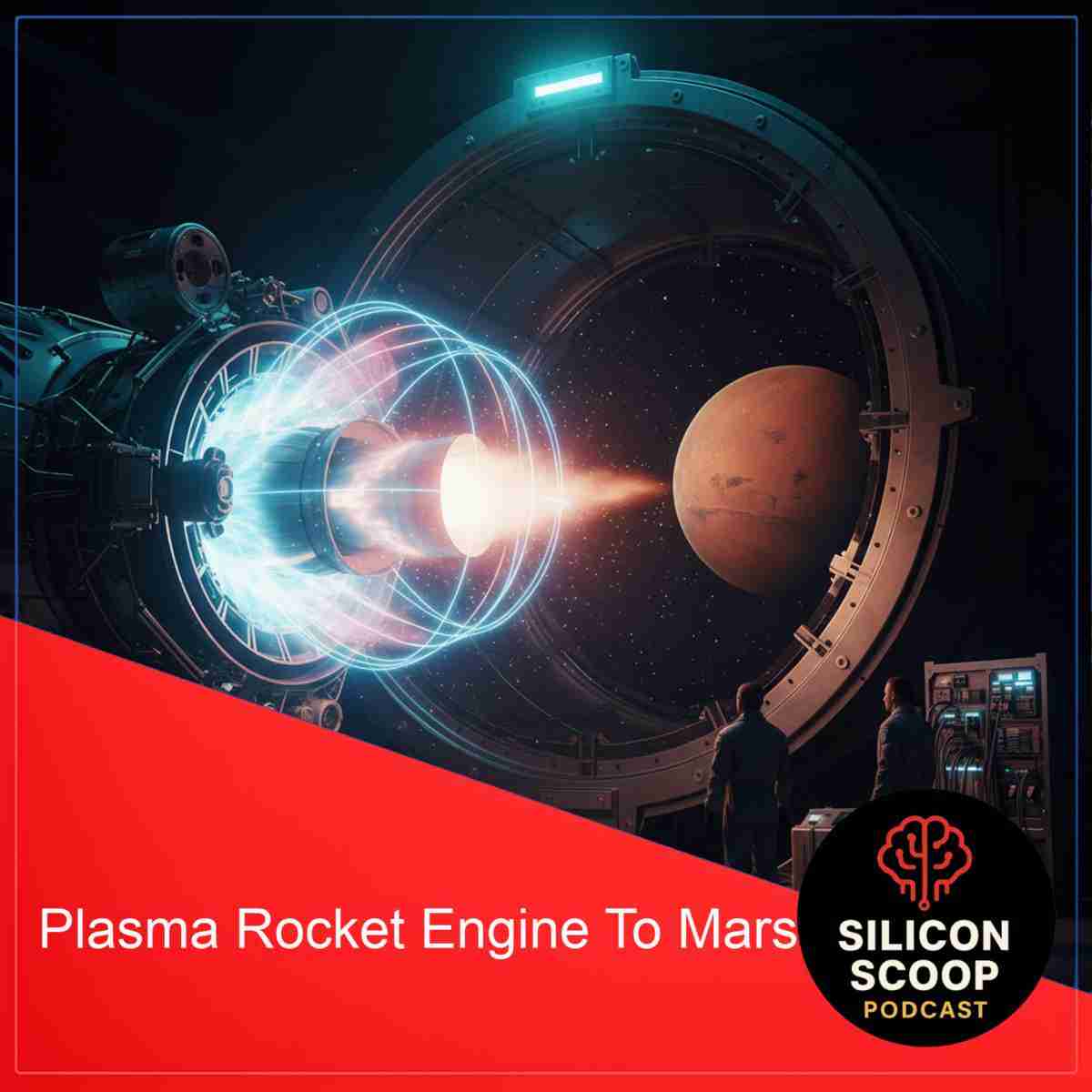
Revolutionizing Mars Missions: The Promise of a Plasma Rocket Engine to Mars
Estimated reading time: 8 minutes
Key Takeaways
- Scientists at Rosatom have developed a laboratory prototype of a high‐power plasma electric rocket engine that could soon change how we travel in space.
- Rosatom’s recent research reveals a prototype operating with an average power of 300 kW, producing approximately 6 newtons of thrust and accelerating plasma particles to speeds near 100 km/s.
- The demonstration model shows promise for reducing a crewed Mars mission—normally nearly a year in duration—to just 30–60 days.
- Key implications for Mars missions include dramatic reductions in flight time, enhanced safety for astronauts, and lower overall mission mass due to more efficient use of propellant.
- Many technical challenges remain, including electrode erosion, power electronics reliability, integration with power sources, and thermal management.
Table of contents
- Revolutionizing Mars Missions: The Promise of a Plasma Rocket Engine to Mars
- Introduction
- Section I – The Basics of Plasma Rocket Engine Technology
- Section II – Advanced Technology Behind Rosatom’s Prototype
- Section III – Implications for Mars Missions and Interplanetary Travel
- Section IV – Global Context, Challenges, and Future Prospects
- Section V – FAQ and Conclusion
- FAQ Section
- Conclusion
Introduction
A breakthrough in electric propulsion is on the horizon. Scientists at Rosatom have developed a laboratory prototype of a high‐power plasma electric rocket engine that could soon change how we travel in space. This plasma rocket engine to Mars is based on a Rosatom plasma engine that uses principles of nuclear electric rocket engine technology. In this post, we explain how plasma engines work, compare them with conventional rockets, and explore how this advancement may lower Mars travel time reduction challenges.
Rosatom’s recent research reveals a prototype operating with an average power of 300 kW, producing approximately 6 newtons of thrust and accelerating plasma particles to speeds near 100 km/s. Built around a large vacuum chamber (14 m long and 4 m in diameter) in Troitsk, the demonstration model shows promise for reducing a crewed Mars mission—normally nearly a year in duration—to just 30–60 days. With the enhanced safety for crews and lower exposure to cosmic radiation, this nuclear electric rocket engine could mark a turning point in interplanetary travel speed 2030 targets.
For readers looking to understand the specifics, we will dive into what plasma engines are, how they differ from chemical rockets (plasma engine vs conventional rocket), and the technical breakthroughs behind the 300kW magnetic plasma accelerator. These details are critical as we seek to understand not only the potential but also the challenges of this emerging technology.
Call to Action 1:
———————————————————————
Section I – The Basics of Plasma Rocket Engine Technology
What Is a Plasma Rocket Engine?
A plasma rocket engine is an electric propulsion system that uses electric energy to turn a gas into plasma. In simple words, it turns a normal gas into a charged state to push a spacecraft forward. Here’s how plasma engines work:
- • A high voltage is applied between two or more electrodes.
- • This voltage ionizes a propellant gas, creating plasma.
- • Electric and magnetic fields then push the plasma out of the engine nozzle hard.
The momentum that comes from ejecting the plasma creates thrust. Although the thrust is lower compared to chemical rockets, the high exhaust velocity means plasma engines use less propellant overall. This makes them very efficient for long‐distance missions.
Plasma Engine vs Conventional Rocket
When comparing a plasma engine vs conventional rocket, the difference is clear:
- • Chemical rockets depend on fuel combustion, which produces high thrust but wastes fuel quickly.
- • Plasma engines, while producing lower thrust, keep pushing over long durations, meaning they achieve higher specific impulse (efficiency).
- • Their low thrust, high-efficiency method makes them more suitable for the long, deep-space cruise phase rather than launch.
Operating in a pulsed‑periodic mode, the Rosatom prototype fires in short, intense bursts. This design produces an average power output of around 300 kW but includes higher peaks for each pulse. It uses carefully controlled electric and magnetic forces to accelerate the plasma.
Technical Parameters in Brief:
- • 300kW magnetic plasma accelerator provides the backbone for the system.
- • Approximately 6 newtons of thrust, which is modest compared to chemical engines.
- • Capable of accelerating particles to about 100 km/s, leading to a high exhaust velocity.
These specifications show that while the thrust is low, the efficiency of the plasma rocket engine to Mars makes it a promising candidate for long space flights. Similar electric propulsion systems—like ion and Hall thrusters—have been used on deep‑space missions, and this Rosatom plasma engine builds upon that knowledge base.
Call to Action 1:
———————————————————————
Section II – Advanced Technology Behind Rosatom’s Prototype
300kW Magnetic Plasma Accelerator and Key Breakthroughs
The heart of Rosatom’s work is its advanced technology based on a 300kW magnetic plasma accelerator. Also known as the magnetic plasma accelerator prototype, this engine is a step forward in high‑power electric propulsion. Here are its main features:
• Operating Mode:
– The engine operates in a pulsed‑periodic mode, delivering high-power pulses that average out to about 300 kW.
– Each pulse has a much higher instantaneous power, contributing to its effectiveness.
• Thrust and Plasma Dynamics:
– It produces roughly 6 newtons of thrust.
– The plasma is accelerated to speeds near 100 km/s, which ensures a high specific impulse.
– These parameters indicate an engine design optimized for efficiency over short bursts of high power.
• Test Facilities and Infrastructure:
– A vastly sized vacuum chamber (14 m long and 4 m in diameter) is being built in Troitsk to simulate space conditions.
– This facility is essential for testing how the plasma engine performs in near‑space-equivalent conditions.
Comparisons with Other Electric Propulsion Systems
For context, let’s compare the Rosatom plasma engine with other technologies:
• Ion Thrusters:
– Ion thrusters produce lower thrust but have well-tested reliability in space.
– Their typical exhaust velocities are in the range of 20–50 km/s.
• Hall Thrusters:
– They operate at moderate thrust levels with exhaust velocities around 15–25 km/s.
– Hall thrusters are used steadily in many current space missions.
The nuclear electric rocket engine approach taken by Rosatom pushes these numbers into new territory and can be seen as a hybrid between established electric propulsion and more experimental plasma techniques. The breakthrough here is not merely in power levels but in the application of pulsed energy bursts that may overcome limitations in conventional designs.
The research findings from Rosatom and media reports (Izvestia and RIA Novosti/TASS) link these advances directly to future high‑power missions, bringing us a step closer to faster, more efficient space travel.
———————————————————————
Section III – Implications for Mars Missions and Interplanetary Travel
Shortening Mars Transit Times
One of the most exciting prospects of this plasma engine is its potential for Mars travel time reduction. Current chemical rocket missions to Mars can take almost one year. With this advanced electric propulsion system, transit time could drop dramatically to between 30 and 60 days for a crewed mission. This faster journey not only saves time but also reduces risks:
- • Less time in deep space means reduced exposure to harmful cosmic rays.
- • A shorter transit decreases the negative effects of microgravity on the human body.
- • Overall mission logistics become more manageable with fewer consumables required.
Crew Safety and Scientific Advancements
Shorter flight times are a game changer when it comes to astronaut safety. With less exposure to radiation and the hazards that come from prolonged microgravity, the risks associated with crewed missions drop considerably. These potential safety improvements are a central reason for exploring nuclear electric rocket engine technologies like this one.
Meeting the 2030 Vision for Interplanetary Travel
The claims around this plasma engine are strategically tied to the goal of interplanetary travel speed 2030. Reaching this milestone would not only place Rosatom at the forefront of advanced propulsion research but also help the global space community set new standards for high-efficiency, low-risk deep-space travel. The promise of a flight-ready model by 2030, although aspirational, aligns with the push from agencies like NASA and ESA. International private sector initiatives, such as the work on VASIMR, are also exploring similar topics.
Key implications for Mars missions include:
- • Dramatic reductions in flight time potentially leading to 30–60 day journeys.
- • Enhanced safety for astronauts through reduced radiation exposure.
- • Lower overall mission mass due to more efficient use of propellant.
These changes could allow more frequent Mars missions and a step-change in how we plan interplanetary journeys.
Call to Action 2:
———————————————————————
Section IV – Global Context, Challenges, and Future Prospects
Global Competition and the Emerging Propulsion Landscape
Rosatom’s prototype fits within a growing international effort to develop high‑power electric propulsion. Agencies and organizations such as NASA, ESA, and various private companies are exploring similar propulsion solutions. Global research is now looking at:
- • Nuclear electric propulsion as a long‑term alternative to chemical rockets.
- • The integration of high‑power plasma systems to improve specific impulse and fuel efficiency.
- • Next‑generation designs that promise faster interplanetary travel speeds and safer manned missions.
Rosatom’s approach, by using a 300kW magnetic plasma accelerator and demonstrating key breakthroughs, is an example of how advanced propulsion can set the stage for a revolution in space travel. The international community is watching closely, and competitive research in this area is intensifying.
Major Technical and Integration Challenges
Despite the promise, many technical challenges remain, including:
- • Electrode erosion – High-energy plasma pulses can damage engine components quickly.
- • Power electronics reliability – Ensuring that the systems can handle brief surges of high voltage continuously.
- • Integration with power sources – Matching high‑power plasma engines with nuclear reactors or other compact sources of power is a significant engineering task.
- • Thermal management – Keeping the engine and supporting systems cool while handling high energy is a central challenge.
Even though the Rosatom plasma engine offers impressive numbers on paper, its transition from a laboratory prototype to a flight model is influenced by these issues. The engineering challenges demand further research and extensive testing before the system can be confidently integrated into crewed space missions.
Future Developments and the 2030 Vision
Looking ahead, there is strong optimism that by 2030 an operational version of this engine could be achieved. The roadmap includes:
- • Further testing in the large vacuum chamber to verify performance claims.
- • Refinement of pulsed‑periodic operation modes to optimize efficiency and lifespan.
- • Integration with spacecraft systems, ensuring that all safety and reliability standards are met.
- • Incremental advances that begin with robotic missions before full crewed missions are attempted.
If successful, the nuclear electric rocket engine based on plasma propulsion could transition from a laboratory demonstrator to a critical component of crewed Mars and deep‑space missions. This technology is a key piece in the evolving landscape of global space exploration and high‑power electric propulsion.
———————————————————————
Section V – FAQ and Conclusion
Before we wrap up, here is one final call to action:
Call to Action:
FAQ Section
1. What exactly is a plasma rocket engine and how does it work?
A plasma rocket engine uses high voltage to turn a gas into plasma and then accelerates that charged gas using electric and magnetic fields. This process explains how plasma engines work and highlights their high specific impulse, even if the thrust is lower compared to chemical rockets.
2. How does the Rosatom plasma engine compare with conventional chemical rocket systems?
Rosatom’s design, known as a plasma engine vs conventional rocket, produces far lower thrust but with much greater fuel efficiency over long periods. Conventional rockets rely on rapid chemical combustion, while the plasma engine uses continuous, pulsed energy bursts that make it ideal for deep-space missions.
3. What are the benefits of a 300kW magnetic plasma accelerator?
A 300kW magnetic plasma accelerator is capable of generating high energy pulses that accelerate plasma to speeds near 100 km/s. This results in high efficiency (specific impulse) and makes the engine suitable for tasks like interplanetary travel speed 2030. It is a significant step forward in nuclear electric rocket engine technology.
4. How does short Mars transit time benefit astronauts?
Reducing Mars travel time can lead to 30–60 day journeys, greatly lowering exposure to cosmic radiation and the harmful effects of long-term microgravity. This Mars travel time reduction is crucial for crew safety and improving mission logistics.
5. What makes this engine a nuclear electric rocket engine?
The term “nuclear electric rocket engine” refers to the system’s capability to use nuclear power as an energy source for electric propulsion. In the case of the Rosatom plasma engine, the design could eventually be integrated with nuclear reactors to supply the immense power required for propulsion.
6. How does this technology relate to interplanetary travel speed 2030 goals?
Reaching interplanetary travel speed 2030 means achieving faster transit times for crewed missions beyond Earth orbit. The promising performance of the Rosatom plasma engine, with high exhaust velocities and efficient propulsion, supports the vision of dramatically shortening flight durations to Mars and other destinations.
7. Why is the engine designed to operate in a pulsed‑periodic mode?
Pulsed‑periodic operation allows the engine to deliver high-power bursts periodically, leading to an average power output of about 300 kW. This mode is efficient in managing the high energy requirements while mitigating issues like electrode erosion and thermal stress.
8. What is the significance of building a vacuum chamber in Troitsk?
The vacuum chamber, measuring 14 m in length and 4 m in diameter, is critical for simulating space‑like conditions. Testing the engine in such an environment helps engineers understand how the plasma engine behaves in the vacuum of space and validate its performance parameters.
9. How does the Rosatom plasma engine compare as a design with other electric propulsion systems?
When compared to ion and Hall thrusters, the Rosatom engine shows advances in power capability and exhaust velocity. While ion and Hall systems are designed for small-scale propulsion, this high‑power plasma engine could serve as a backbone for long-duration, deep‑space missions, marking a clear differentiation in engineering approaches.
10. What are the next steps before this technology can be used for crewed Mars missions?
Before the engine is used in actual missions, further testing, refinement, and integration with spacecraft systems are needed. Engineers must overcome technical challenges such as material erosion, thermal management, and reliable coupling with power sources, all of which determine when a flight model might be ready—potentially by 2030.
Conclusion
In summary, the development of a plasma rocket engine to Mars marks a significant scientific milestone. Rosatom’s laboratory prototype using a 300kW magnetic plasma accelerator is pushing the boundaries of electric propulsion. Its high efficiency may shorten Mars flight times from a year to as few as 30–60 days, reducing crew risks and paving the way for faster interplanetary travel. Although challenges remain in power management, materials science, and system integration, this breakthrough represents a key step toward a new generation of nuclear electric rocket engines.
While these technology claims are still under review by the broader scientific community, the progress made by Rosatom provides a glimpse into the future of space exploration—a future where Mars may be reached in just a couple of months. Stay tuned as we continue to follow developments in plasma propulsion, which could reshape not just crewed Mars missions but the entire landscape of deep‑space travel.
Thank you for reading our deep dive into the promising plasma rocket engine technology. Stay updated with the latest breakthroughs in space propulsion and Mars mission design as we move closer to the era of rapid interplanetary travel.
Additional Links
Flowgrammer.ca – 💡 Unlock AI-Powered Automation! Let flowgrammer.ca handle complex workflows so you can focus on growing your business.
- Silicon Scoop Podcast – Stay Informed, Stay Ahead!
- Startup Talk Podcast
- Flowgrammer Podcast –
- Startup Investor Drinks – Join Toronto’s Startup Community and connect with fellow startup enthusiasts and investors.
- TorontoStarts Startup and Entrepreneur Community – Become a part of Toronto’s thriving startup ecosystem.
- Workhaus – Discover flexible workspace solutions for your business needs.
- Work with The Startup Coach – Get expert guidance and mentorship for your startup journey.
- Reach out to Jon Irwin on LinkedIn – Connect with our co-host and technology expert.
Flowgrammers.ca – 💡 Join Toronto’s Fastest Growing AI and Busiess Automation Community..
Flowgramming.space – 💡 AI Agent and Workflow Marketplace..
Episode transcript
Read the full transcript
Craig: we always accepted that a human trip to mars takes nearly a year and irradiates the crew, but a new propulsion prototype that just shredded that timeline, if these lab results hold up, we aren't looking at a year long odyssey. we're looking at reaching the red planet in just thirty days. scientists at ross atom have successfully tested a 300 kilowatt plasma engine prototype that uses magnetic fields to accelerate particles to a 100 kilometers per second. unlike traditional rockets that burn fuel instantly, the engine pulses energy to build massive speeds over time. speed equals safety in space. cutting travel time by 90% drastically reduces astronaut exposure to cosmic radiation and microgravity bone loss, making human colonization actually biologically viable. what do you think about this, john?
Jon: yeah. i love this. i love, technology. i love engine technology. we've covered tons of these. so just to kind of talk to you or let you know how a plasma propulsion engine works. the plasma engine, it doesn't burn fuel like a traditional rocket. instead, it ionizes a propellant, often hydrogen, which i love, and uses magnetic fields to rapidly accelerate those ions. so for example, so and by the way, this is a russian company, russian scientist at rosatom, have claimed they can accelerate particles to a 100 kilometers per second, which is about 62 miles per second, which is far above traditional chemical rocket exhaust velocities. so at that speed, the average transit time to mars could drop to thirty to sixty days if sustained, which is the basis for a lot of these dramatic headlines. however, achieving such thrust in vacuum with realistic spacecraft mass and power systems is a huge challenge. okay? the theoretical speeds are reachable, but the power sources, heat rejection, and long duration reliability of such a system are still unproven in space conditions. so even if, a propulsion tech could constantly accelerate a spacecraft at high velocity, reaching mars in thirty days requires sustaining high thrust for weeks, then decelerating on approach, which is a huge engineering trade off. so the immense delta v, which is the change in velocity required, isn't just about going fast. you also need to stop at the end. and managing that energy efficiently, that requires massive power and innovative system architecture. so you essentially, there there's there's the theory for this, but there's no theory for the braking system for this. so, that's kinda where we're at now. the most promising technology for fast transit right now, it's not a single magic engine, and i put magic in quotes. but it's more of a class of electric and advanced propulsion systems. so we're talking plasma thrusters. we're talking magneto plasma rockets, even fusion concepts. so, although this is great, what are your thoughts on this plasma propulsion, craig?
Craig: well, we'll have to see. right? we'll have to see it in, like, it's great that we think we can do this. and when i say we think we can do this, i mean, it works. but is it really gonna work on a thirty day trip bursting every few seconds or however long it has to burst the whole way there and then slow down and then the whole way like, i mean, that is different than saying, hey. we can do this. we tested it once. so i is this the technology that's gonna get us there? i don't know. but i think the concept of a constant, burst, either via a nuclear onboard reactor or something else that, continues to allow it to accelerate over time. but you're right. the problem is acceleration and deceleration. humans can only handle so much, and it it might take days to decelerate or weeks depending on you know? and are you at that point in time, are you leaning forward and being held back by your seat belt the whole time kind of situation? because, you know, the inertial dampeners that we see everywhere don't really exist in life. so, the humans have to take it.
Jon: yeah. like, there's and there's so many, like and it's not like there's there's new challenges because of this, but there's still the same challenges. right? there's, there's the deep space hazards. there's cosmic radiation. there's microgravity effects on health. there's reliable life support, psychological well-being. now the psychological well-being is probably cut down because faster travel reduces some of these risks. but there's still a lot of risks with this. but the biggest one is the deceleration. and so, i didn't even think about that until i read this article. it makes total sense. right now, in order to decelerate because they're not going too fast is i think they're using, like, air thrusters in space to kinda change direction and slow down and things like that. that's as far as we've come, as far as i know. and and obviously using the same rocket when you're landing on the moon and things like that, but that's as far as we've come as far as breaking systems. we're using air to break. and so if we're traveling at what was it? a 100, kilometers per second or 62 miles per second, air is not gonna stop us, or it's gonna take a lot of air.
Craig: yeah. i like to think of, this is a difference between a top fuel dragster and a maglev train. you know, a chemical rocket like a spacex starship is the dragster. it burns all its fuel in minutes to get off the line fast, but then coast. this plasma engine is like a maglev. it starts slow producing only a tiny amount of push, but it never stops pushing. so it accelerates constantly for weeks, eventually reading speeds that the dragster could only dream of. so the target timeline is twenty thirty for a flight ready model, though this is optimistic. this is strictly a deep space transit, so we'll need to take a look at where where they're testing this and what their plan is when they say deep space. is this, like, just can we try to the moon and back, or is this something that takes a little bit longer? yeah. i'm really excited about this. and, you know, while six newtons sounds pathetic, in the vacuum of space, continuous acceleration adds up. if you accelerate at just a fraction of a g continuously, you can cross the solar system in weeks, not years. this is the premise of a constant acceleration drives. but rossetom isn't alone. the us company ad astra has been developing the vasimir engine, the variable specific impulse magno magneto plasma rocket for decades with similar goals. so we're officially in a plasma race, and the elephant in the room is the power source. to get a 300 kilowatt of constant power in deep space, solar panels are too heavy and inefficient past mars. the engine requires a nuclear fission reactor onboard the spaceship to work. and we've talked about several companies that are building those, nuclear reactors for them, and we've not haven't looked at them in a few months. i'm not sure where they are.
Jon: yeah. and then there's also, there's also researchers who are exploring laser driven light sales, fusion engines, which we touched on. so there's a lot of different concepts out there, which is good because, obviously, one of them has to work, but we still need a braking system. so, please, someone work on the braking system.
Craig: yeah. and high energy plasma eats away at the engine's internal. so if the engine degrades after forty days of firing, is the crew, stranded in deep space? also, launching a nuclear reactor into orbit to power this is a huge regulatory nightmare that's gonna be a problem. so the physics is solid, but the engineering challenge of keeping this engine from melting itself is the final boss battle of space travel. would you volunteer for a thirty day fast track to mars if it meant sleeping on top of a nuclear reactor? drop a radiant or a risky in the chat. let us know.
Jon: wonder if anyone's working on warp drives.
More from Silicon Scoop
All episodes
silicon-scoop · October 16, 2026
Meta’s $18 Billion Teen Safety Settlement: Soft Guardrails, Hard Leverage Over TikTok and YouTube
Deep dive on Meta teen safety settlement, social media addiction lawsuit, new Facebook Instagram time limits and pressure on TikTok YouTube age verification.
View episode

silicon-scoop · October 15, 2026
How Claude Mythos Is Reshaping Cryptanalysis: HAWK, AES and the Rise of AI-Driven Crypto Research
Claude Mythos cryptanalysis weakens HAWK post-quantum signature, speeds AES Möbius Bridge attack, and powers CryptanalysisBench benchmark in AI-driven crypto research.
View episode

silicon-scoop · October 14, 2026
Nvidia’s $12.9 Billion Hugging Face Bet: How Controlling the Open-Source Model Hub Reshapes AI Chips, Cloud, And Competition
Nvidia Hugging Face acquisition could reshape open source AI models, AI chip dominance, and the global developer model hub, raising antitrust and neutrality questions.
View episode