
Fluidic Logic Circuits, DIY Vacuum Transistors, and Pneumatic Control Systems
Exploring Soft Robotics Microfluidics: Fluidic Logic Circuits, DIY Vacuum Transistors & Pneumatic Control Systems Estimated reading time: 10 minutes Key Takeaways Soft robotics microfluidics uses flexible materials and fluid flows to operate devices. Fluidic logic circuits provide a gentle introduction to complex computation using simple analogies. Water powered computer projects show that even gravity-fed water […]
With Craig Major and Jon Irwin
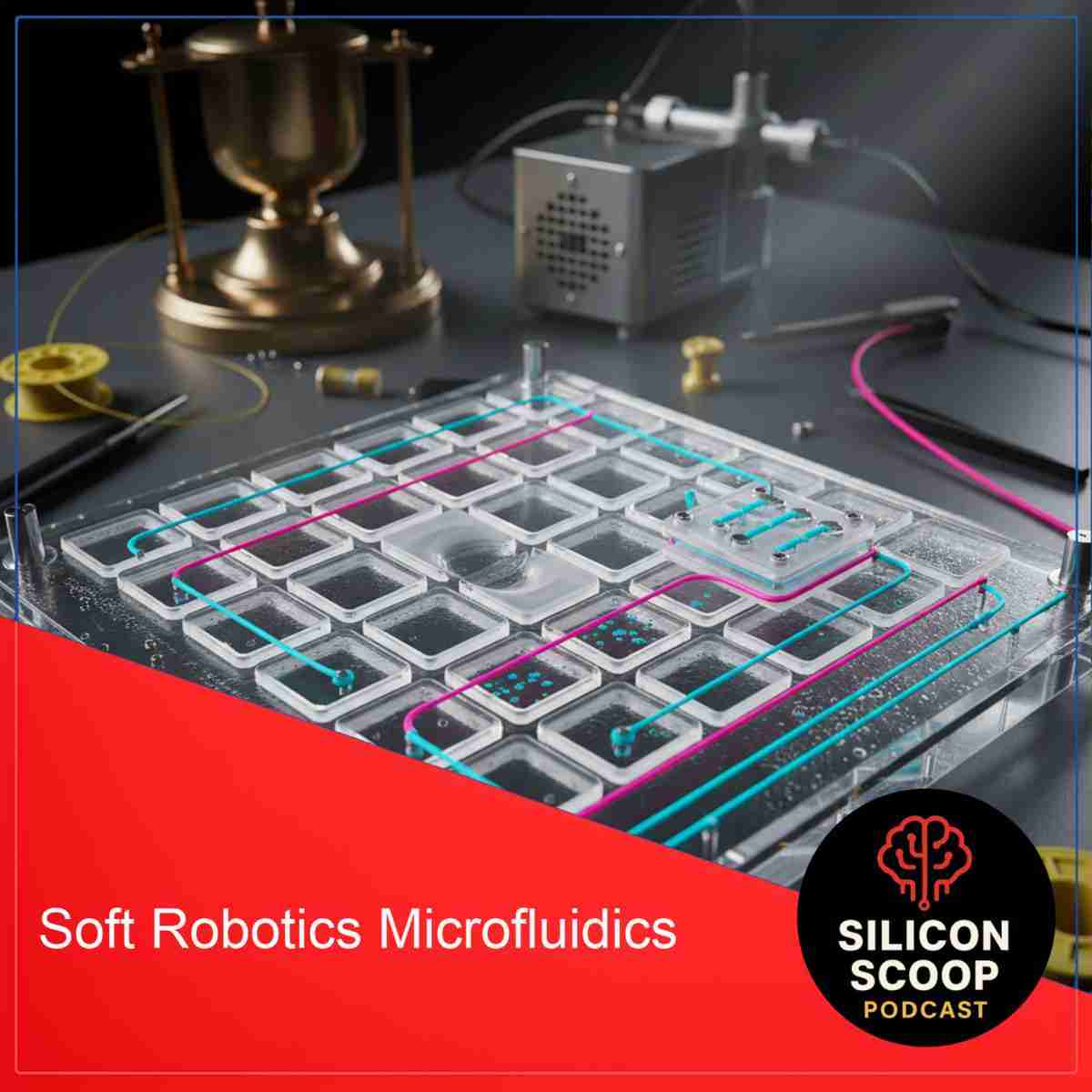
Exploring Soft Robotics Microfluidics: Fluidic Logic Circuits, DIY Vacuum Transistors & Pneumatic Control Systems
Estimated reading time: 10 minutes
Key Takeaways
- Soft robotics microfluidics uses flexible materials and fluid flows to operate devices.
- Fluidic logic circuits provide a gentle introduction to complex computation using simple analogies.
- Water powered computer projects show that even gravity-fed water systems can perform logic operations.
Table of contents
- Exploring Soft Robotics Microfluidics: Fluidic Logic Circuits, DIY Vacuum Transistors & Pneumatic Control Systems
- Introduction – Soft Robotics Microfluidics
- Historical Background & Fluidic Computation Foundations – Fluidic Logic Circuits
- Modern Device Architecture & Operating Principles – DIY Vacuum Transistor
- Engineering Implications, Fabrication Techniques & Practical Applications – Pneumatic Control System
- Engineering Implications, Fabrication Techniques & Practical Applications – Continued
- Frequently Asked Questions (FAQ)
- Conclusion & Key Takeaways
Introduction – Soft Robotics Microfluidics
Soft robotics microfluidics is an exciting blend of soft robotic engineering and fluid-powered logic. In this post, we explore innovative projects where air or water flows create fluidic logic circuits, DIY vacuum transistors, and pneumatic control systems. You will see how soft robotics for beginners ideas and fun water powered computer projects have evolved from historical water integrators to silicone membrane actuators today. Educators, hobbyists, and newcomers will find value in projects that take an abstract idea and transform it into something tangible.
- Soft robotics microfluidics uses flexible materials and fluid flows to operate devices.
- Fluidic logic circuits provide a gentle introduction to complex computation using simple analogies.
- Water powered computer projects show that even gravity-fed water systems can perform logic operations.
Historical Background & Fluidic Computation Foundations – Fluidic Logic Circuits
Historical fluidic computation has a fascinating story that pairs everyday fluid behavior with the complex ideas of electrical circuits. The electricity–fluid analogy provides an easy way to understand voltage as pressure difference, current as flow rate, and wires as pipes. Here’s how history and science connect:
- Voltage is like the pressure difference in pipes.
- Current is similar to the flow rate of water or air.
- Wires correspond to pipes that deliver the fluid.
Fluidic Computation Origins
- In the 1950s–1960s, fluidic logic systems used air or water flows in industrial controls and aviation.
- Soviet water integrators used interconnected tanks, pipes, and adjustable weirs to solve differential equations. These early hydraulic computers set the stage for modern fluidic logic circuits.
- Educators have used water-flow analogies, and creators like Steve Mould show us water powered computer concepts that bring logic to life with water channels.
Key historical details include:
– Fluidic analogies were meant to simplify basic circuit principles. (Source: historical literature on Soviet water integrators – historical literature on Soviet water integrators)
– Steve Mould’s YouTube channel presents water powered computers that demonstrate fluidic logic circuits practically. (Source: Steve Mould’s YouTube channel)
Modern Device Architecture & Operating Principles – DIY Vacuum Transistor
Modern soft robotics microfluidic displays combine detailed design and innovative engineering. A prime example is the air‑powered display demonstrated by Soiboi Soft. Let’s break down the device architecture and operating principles:
Pixel Design and Silicone Membrane Actuators
- • Each pixel is built as an open-faced cavity capped with a thin, flexible silicone membrane.
- • In the “on” state, a vacuum applied to the cavity makes the membrane form a concave dimple. In the “off” state, without vacuum, it remains flat.
- • This flexible behavior makes it similar to other forms of silicone membrane actuators used in soft robotics.
Row and Column Addressing Technique
- • Each row and each column is connected by its own vacuum line.
- • A pixel is activated only when vacuum is applied to both its row and column, essentially forming an AND gate.
- • This addressing technique is similar to multiplexing in LED matrices but adapted for fluidic logic.
Fluidic Logic Elements and DIY Vacuum Transistor
- • Microfluidics logic gates mimic the behavior of transistors using vacuum or pressure.
- • A DIY vacuum transistor is a layered silicone device where a control port directs vacuum flow to an output port.
- • This device acts as a switch, very much like a transistor in electronics, allowing pilots and educators to build custom pneumatic control systems.
Additional details from Soiboi Soft’s demonstration include:
– Construction involves layering silicone sheets with etched channels that guide vacuum logic and use fluidic AND gate concepts. (Source: Soiboi Soft’s demonstration)
– Using air instead of water comes with advantages: the compressibility of air eases pressure spikes, simplifies leak management, and pairs naturally with soft materials. (Source: Using air instead of water)
Engineering Implications, Fabrication Techniques & Practical Applications – Pneumatic Control System
Understanding the engineering details, fabrication methods, and potential applications of fluidic systems is crucial to innovating in soft robotics microfluidics. This section explains the tradeoffs and techniques used to build these systems.
Comparing Water vs. Air in Fluidic Systems
- • Water’s non‑compressibility leads to water hammer effects. Its high inertia means the momentum can be hard to control.
- • In contrast, air is compressible. This allows a cushioning effect that eases sudden pressure changes.
- • Air leaks, though not ideal, tend to only result in lost performance rather than catastrophic failure.
– These comparisons are essential when designing a pneumatic control system for soft robotics. (Source: liquids vs. gases)
Fabrication Challenges and Techniques
- • Multi-layered Construction:
– Fluidic devices often require several layers of silicone elastomers.
– Precise alignment of these layers is critical to create effective microfluidics and functional channels. - • Materials Considerations:
– Durable silicone membrane actuators require high-quality silicone elastomers (platinum‑cure or tin‑cure types).
– Rigid support frames, such as those made of acrylic or 3D‑printed plastics, ensure structural stability. - • DIY Vacuum Transistor Fabrication:
– This involves creating a layered silicone device that directs vacuum through microfluidic channels.
– The fabrication method is similar to chip stacking in semiconductor devices—even if the materials differ, the concepts of channel routing and logical design are comparable.
– Attention to alignment and channel depth is critical to successful operation. (Source: fabrication techniques)
Performance and Practical Applications
- • Speed Limitations:
– Fluidic systems are slower than electronic circuits because fluids move at finite speeds through channels.
– However, the slower operation can be ideal for tactile displays and interactive soft robotics. - • Applications in Soft Robotics and Beyond:
– Soft Displays: Create tactile interfaces, refreshable braille, or dynamically reconfigurable surfaces.
– Wearable Devices: Use pneumatic control systems for enhanced safety and smooth integration with human motion.
– Educational Tools: Fluidic logic circuits demonstrate that logic and computation are substrate-independent, making them accessible lessons for beginners. - • Additional Keywords and Concepts:
– Modern designs incorporate microfluidics logic gates and DIY vacuum transistors, providing both analogy and practical function.
– Pneumatic control systems in these projects offer an alternative to traditional rigid electronics, showing innovative ways to solve control problems. (Source: soft robotics applications)
Engineering Implications, Fabrication Techniques & Practical Applications – Continued
Tradeoffs in Material and Design
- • Fluidic logic circuits come with design challenges due to the physical properties of liquids and gases.
– Water’s non‑compressibility requires careful design to prevent shockwaves or “water hammer.”
– Air offers better damping but needs precise control to maintain the desired vacuum or pressure. - • Complex Channel Routing:
– As devices scale up (beyond simple 4×4 pixel arrays), the complexity of the channel routing increases.
– Multiple vacuum or pressure lines must be synchronized to ensure the correct pixel is activated. - • Energy Consumption and Noise Issues:
– Vacuum pumps and valves may lead to increased energy usage and audible noise. Designers often incorporate noise reduction and energy-saving features in advanced pneumatic control systems. (Source: engineering implications fluidics)
Real World Applications for Soft Robotics Microfluidics
- • Tactile and Soft Displays:
– Applications include dynamic art installations, interactive public displays, or interfaces for visually impaired users.
– A soft, air‑driven display surface can provide both haptic feedback and visual cues. - • Wearable and Adaptive Devices:
– Soft robotics microfluidics can lead to better wearable interfaces that adapt to the body, ensuring comfort and functionality.
– Pneumatic control systems integrate seamlessly with flexible, wearable materials. - • Educational and Outreach Tools:
– Fluidic logic circuits serve as a fantastic demonstration of how computation works outside of silicon chips.
– Projects such as the water powered computer help beginners understand fundamental engineering concepts while igniting creativity. (Source: applications soft robotics)
Frequently Asked Questions (FAQ)
1. What is soft robotics microfluidics and how does it differ from traditional robotics?
– Soft robotics microfluidics uses flexible, silicone-based materials and fluid-driven actuation instead of rigid parts.
– It relies on mechanisms like silicone membrane actuators and vacuum logic, making it ideal for safe, adaptable robots.
(Keywords: soft robotics microfluidics, silicone membrane actuators)
2. How do microfluidics logic gates work in these displays?
– They work by controlling the flow of vacuum or pressure through designed channels.
– For a pixel to activate, both the row and column vacuum lines must be active, creating an AND gate effect similar to electronic logic.
(Keywords: microfluidics logic gates, DIY vacuum transistor)
3. What is a DIY vacuum transistor and how does it function?
– A DIY vacuum transistor is a layered silicone device where a control port directs vacuum flow to an output port.
– Functioning like an electronic transistor, it acts as a switch using air pressure instead of electrons.
(Keywords: DIY vacuum transistor)
4. What are the benefits and limitations of using a pneumatic control system in these projects?
– Benefits include soft actuation, safe operation (air leaks are less damaging), and easy integration with soft robotics.
– Limitations are slower switching speeds, design complexities, and potential noise from vacuum pumps.
(Keyword: pneumatic control system)
5. Can beginners start with soft robotics projects involving fluidic logic?
– Yes. Soft robotics for beginners projects often include simple water powered computer setups or basic soft displays that illustrate these principles.
(Keyword: soft robotics for beginners)
6. Why is air preferred over water in modern fluidic devices?
– Air’s compressibility offers a cushioning effect that helps manage pressure spikes, unlike water which is non‑compressible and can cause damaging water hammer effects.
(Keywords: pneumatic control system, fluidic logic circuits)
7. How are silicone membrane actuators used in these technologies?
– They form the core of the display pixels in soft robotic microfluidic devices, activating (dimpling) when a vacuum is applied and remaining flat when off.
(Keywords: silicone membrane actuators)
8. How do row and column addressing techniques work in soft microfluidic displays?
– Each row and column has a dedicated vacuum line; a pixel is activated only when both intersecting lines are under vacuum, mimicking an AND gate in logic circuits.
(Keywords: microfluidics logic gates)
9. What practical applications exist for these fluidic logic devices?
– They can be applied in soft tactile displays, wearable adaptive interfaces, educational tools, and even art installations that require dynamic, safe, and soft operation.
(Keywords: soft robotics microfluidics, pneumatic control system)
10. How does historical fluidic logic influence today’s soft robotics?
– Historical designs like Soviet water integrators and educational water powered computers provided foundational models. They inspire today’s designs by showing that computation can be achieved with fluid flows and flexible materials.
(Keywords: water powered computer, fluidic logic circuits)
Conclusion & Key Takeaways
This journey from early fluidic computation to modern soft robotics microfluidic displays illustrates the evolution from simple water analogies to sophisticated, flexible devices. Fluidic logic circuits were once only teaching tools, but today they inspire real-world designs using silicone membrane actuators and DIY vacuum transistors.
Key Summaries Include:
- • Historical fluidic logic, exemplified by Soviet water integrators, laid the groundwork for understanding pressure, flow, and computation. (Source: Soviet water integrators)
- • Modern designs by creators like Soiboi Soft use layered silicone and vacuum-driven displays to provide tactile, responsive outputs. (Source: Soiboi Soft)
- • The engineering principles, including the tradeoffs between water and air, and fabrication techniques, are critical when building a pneumatic control system for soft robotics. (Source: engineering implications fluidics)
- • Soft robotics microfluidics shows us that logic is substrate‑independent. Whether using electrons, water, or air, the same fundamental ideas of computation connect different technologies.
In conclusion, soft robotics microfluidics bridges the gap between historical fluidic logic and modern responsive systems. The design features such as layered silicone membranes, vacuum-driven actuation, and fluidic AND logic offer a promising future. From educational water powered computer projects to advanced tactile displays, fluidic computation is proof that computation does not depend solely on electrons.
Thank you for reading and exploring the versatile world of soft robotics microfluidics. Stay tuned for more insights and innovative projects that push the boundaries of what soft, fluid-based computing can achieve.
Additional Links
Flowgrammer.ca – 💡 Unlock AI-Powered Automation! Let flowgrammer.ca handle complex workflows so you can focus on growing your business.
Flowgrammers.ca – 💡 Join Toronto’s Fastest Growing AI and Busiess Automation Community..
-
-
- Silicon Scoop Podcast – Stay Informed, Stay Ahead!
- Startup Talk Podcast
- Flowgrammer Podcast –
- Startup Investor Drinks – Join Toronto’s Startup Community and connect with fellow startup enthusiasts and investors.
- TorontoStarts Startup and Entrepreneur Community – Become a part of Toronto’s thriving startup ecosystem.
- Workhaus – Discover flexible workspace solutions for your business needs.
- Work with The Startup Coach – Get expert guidance and mentorship for your startup journey.
- Reach out to Jon Irwin on LinkedIn – Connect with our co-host and technology expert.
-
Episode transcript
Read the full transcript
Craig: we spent decades shrinking silicon chips to power our screens, but an engineer just built a fully functional matrix display using nothing but air, vacuum tubes, and silicone. this breakthrough in fluid logic proves you don't need a single drop of electricity engineers are creating pneumatic displays and control systems relying entirely on microfluid logistic logic gates and diy vacuum transistors. by routing air pressure through layered silicone channels, these systems calculate and physically actuate pixels without any electronic components in the matrix. what's going on here, john?
Jon: i think this is pretty cool. so there's this youtuber and maker. his nickname is soy boy soft, i think. so he built soft, a small soft display that's made out of silicon and air pressure instead of electronics. so each pixel, it's basically a little silicon membrane over a tiny cell that moves inward when air is sucked out, creating a bump or depression that can spell out text or simple images. so the system is powered by vacuum pumps and valves rather than electricity and leds. it's actually pretty cool to watch. i don't know if you watched the video, so it's cool because instead of relying on actual electrical pixels like lcds and oleds, the system's using pneumatic actuation to move the silicon membrane. so, when a vacuum line removes the air breath of membrane, it pulls the membrane into depression, which creates a visible change. when the vacuum is released, the membrane releases mhmm. and springs back flat, so effectively creating an off state. so i like, although the project is functional, the charm comes like, if you actually watch the video, it's kind of an asmr sensory kind of video, because you've got these sounds and sensory experience of watching it. so if you guys get a chance, go watch the video. but you've got the combination of hissing air, clicking valves, and membrane motion. it produces this satisfying audio effect. so not only is it cool technology that's kind of using basic, technology to create something cool, there's also this sensory effect too to it. there we go. yeah. what do you think about this, craig?
Craig: we're playing the video. yeah. we're just not playing the audio. so we're the audio. why. yeah. that's just because it's better not to because it will get probably copyright struck for something. this lays a groundwork for indestructible soft touch wearables, tactile interfaces that can operate safely in extreme environments where traditional electronics would instantly short circuit. i like to think of this like an update to us, like a city's plumbing system masquerading as a computer processor instead of electric switches flipping on and off, to light up a bulb. imagine microscopic network of pipes where a drop in air pressure physically sucks a tiny silicon bulb inward to create a pixel. if you open a valve, on both the row and the column pipe simultaneously, bam, the intersection gets sucked in acting exactly like a mass microscopic and in your smartphone. yeah. so i think this is really cool. i don't think, we'll have to see, like, actually what kind of really cool things people will develop with that. we saw the led displays that it can do, but that's just the beginning. right?
Jon: yeah. yeah. this is cool. i'm excited to see where the next steps goes with this and what other people, do with this. this is really cool.
Craig: yeah. let me just see if i can jump to a spot where you can see it displaying anything.
Jon: there we go. that's it working in real life. yep. so
Craig: the fluid logic was heavily researched by the military and aerospace, industries in nineteen sixties because the mechanical air logic gates are entirely immune to electric magnetic puzzle pulses and extreme radiation. so this will be interesting to see if what this, makes their way to and what new interactive type devices we can use with this, technology. i'm really interesting to see whether soft robotics and micro fluids prove that logic is a universal language turning simple silicon and air into tactile display of the future. would you trust a wearable health monitor run entirely entirely by microscopic air tubes instead of a battery and a microchip? let us know in the chat.
More from Silicon Scoop
All episodes
silicon-scoop · October 16, 2026
Meta’s $18 Billion Teen Safety Settlement: Soft Guardrails, Hard Leverage Over TikTok and YouTube
Deep dive on Meta teen safety settlement, social media addiction lawsuit, new Facebook Instagram time limits and pressure on TikTok YouTube age verification.
View episode

silicon-scoop · October 15, 2026
How Claude Mythos Is Reshaping Cryptanalysis: HAWK, AES and the Rise of AI-Driven Crypto Research
Claude Mythos cryptanalysis weakens HAWK post-quantum signature, speeds AES Möbius Bridge attack, and powers CryptanalysisBench benchmark in AI-driven crypto research.
View episode

silicon-scoop · October 14, 2026
Nvidia’s $12.9 Billion Hugging Face Bet: How Controlling the Open-Source Model Hub Reshapes AI Chips, Cloud, And Competition
Nvidia Hugging Face acquisition could reshape open source AI models, AI chip dominance, and the global developer model hub, raising antitrust and neutrality questions.
View episode