
Apple Scaffolds Just Made Lab-grown Cartilage Cheaper
Apple Scaffolds Just Made Lab-grown Cartilage Cheaper https://torontostarts.com/silicon-scoop/ Flowgrammer.ca -> https://flowgrammer.ca/ AI News and Resources -> https://flowgrammers.ca OpenClaw Toronto -> https://openclawto.com/ Stop Losing Hours to Busywork Automate quotes, follow-ups, invoicing, and reporting so your team focuses on revenue—not repetitive clicks. Book an automation consult https://flowgrammer.ca Startup Investor Drinks Toronto - https://startupdrinksto.com/ Toronto’s Startup Community - https://torontostarts.com/ Silicon Scoop Silicon Scoop Podcast - https://torontostarts.com/silicon-scoop/ Apple: https://podcasts.apple.com/us/podcast/silicon-scoop/id1758711826 Spotify: https://open.spotify.com/show/5bAzF0MwV6TtLhJAhvHayI YouTube: https://www.youtube.com/playlist?list=PLj4v-RoA7A-gT62vrEYqh1zCv-0Hj-o5J Startup Talk Startup Talk Podcast -> https://torontostarts.com/startup-talk-toronto-startup-podcast/ Apple -> https://podcasts.apple.com/us/podcast/startup-talk/id1763804003 Spotify -> https://open.spotify.com/show/1siJMILILidHAiAsrX2VBU YouTube: https://youtube.com/playlist?list=PLj4v-RoA7A-jxV5FHs5e61oIsuvUJYmT_&si=LYegRe5GYLKNQ7xL
With Craig Major and Jon Irwin
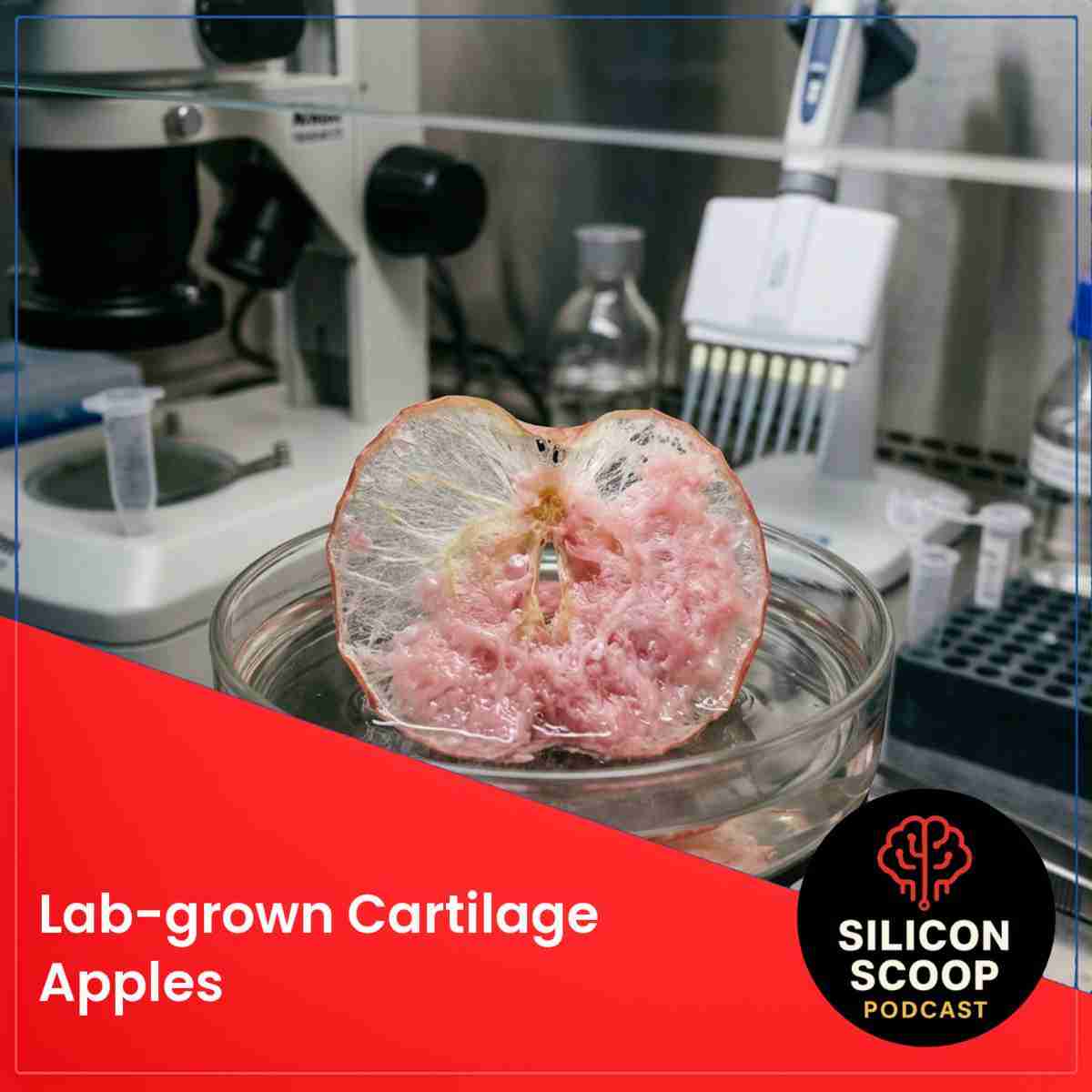
Lab-Grown Cartilage from Apples: The Breakthrough Reshaping Tissue Engineering in 2026
Estimated reading time: 10 minutes
Key Takeaways
- Researchers at the University of Caen Normandy in France have successfully grown human cartilage in a lab dish using slices of decellularized apples as a scaffold — combined with human stem cells.
- The findings were published in the Journal of Biological Engineering in April 2025 and represent a genuine world first.
- This is not just a quirky science story. It has real implications for millions of people suffering from cartilage damage caused by osteoarthritis, injury, cancer, or trauma.
- Apple scaffolds produced 2 to 3 times higher expression of key cartilage genes (COL2A1, SOX9) compared to standard alginate hydrogels, and suppressed scar-tissue gene expression (COL1).
- This study is a proof of concept, and the next steps include animal trials, then human clinical trials, followed by regulatory approval.
Table of contents
- Lab-Grown Cartilage from Apples: The Breakthrough Reshaping Tissue Engineering in 2026
- Introduction: How Apples Are Helping Rebuild Human Cartilage
- What Is Tissue Engineering and Why Does Cartilage Regeneration Matter?
- Decellularized Apple Scaffolds: The Science Behind the Breakthrough
- Stem Cells on Apple Scaffolds: What the Lab Results Showed
- Apple Scaffolds vs. Alginate Hydrogels: A Clear Winner
- Real-World Applications: Where This Cartilage Regeneration Technology Could Be Used
- What Comes Next: The Road from Lab Dish to Human Patient
- FAQ: Lab-Grown Cartilage from Apples
- Conclusion
Introduction: How Apples Are Helping Rebuild Human Cartilage
The idea of growing lab-grown cartilage from apples sounds like science fiction. It is not.
Researchers at the University of Caen Normandy in France have done exactly that. Their Bioconnect Laboratory has successfully grown human cartilage in a lab dish using slices of decellularized apples as a scaffold — combined with human stem cells.
The findings were published in the Journal of Biological Engineering in April 2025 and represent a genuine world first. No research team had ever used a plant-based support material to rebuild cartilage before this study.
This is not just a quirky science story. It has real implications for millions of people suffering from cartilage damage caused by osteoarthritis, injury, cancer, or trauma. And it points toward a future where affordable, plant-based biomaterials replace costly and hard-to-source human tissue for surgical grafts.
Let’s break down exactly what happened, how it works, and why it matters.
What Is Tissue Engineering and Why Does Cartilage Regeneration Matter?
Tissue engineering is a field of science focused on rebuilding human tissues in a laboratory setting. The goal is to create functional tissue that can later be transplanted into a patient’s body to repair damage.
The process works by:
- Taking a patient’s own cells (or compatible donor cells)
- Placing them onto a supportive material called a scaffold
- Growing the cells under the right lab conditions
- Allowing them to form real, structured tissue like bone, muscle, or cartilage
Why Cartilage Is Especially Difficult to Repair
Cartilage is the smooth, rubbery tissue that cushions your joints. Unlike skin or bone, cartilage has almost no blood supply. This means it cannot repair itself naturally once damaged.
Conditions that destroy cartilage include:
- Osteoarthritis — a degenerative joint disease affecting over 500 million people globally according to the World Health Organization
- Trauma — sports injuries, accidents, and falls
- Cancer surgeries — removing tumors from areas like the nose or ear often destroys cartilage in the process
Finding donor tissue for transplant is extremely difficult. Donors are rare, and immune rejection is a constant risk. Tissue engineering offers a workaround: use the patient’s own cells and grow new tissue in the lab.
The global cartilage regeneration market is valued at USD 1.58 billion in 2026, growing at a compound annual growth rate (CAGR) of 7.8%. The demand is enormous and growing fast.
Developing lab-grown human cartilage using apples
Cartilage regeneration tchnology market
Osteoarthritis
Decellularized Apple Scaffolds: The Science Behind the Breakthrough
The key innovation in this research is the use of decellularized apple scaffolds — apple tissue with all its original plant cells removed, leaving only the structural framework behind.
How the Apple Scaffolds Were Made
The research team used Granny Smith apples, sliced to:
- 5mm thick
- 10mm in diameter
The apple slices were then treated with 1% sodium dodecyl sulfate (SDS) for 24 hours. This chemical process strips away all the apple’s original cells, leaving a clean, porous cellulose scaffold. The result contained less than 50 nanograms of DNA per milligram of tissue — meaning the apple’s own biological material was almost entirely removed.
What remains is a sponge-like, three-dimensional plant-based structure. This is the scaffold — the framework that human cells can move into and grow on.
Why Plant-Based Biomaterials Work So Well
Plants are not random choices for tissue scaffolding. They offer several key advantages over synthetic materials:
- Widely available — apples are one of the most common fruits on the planet
- Very cheap — compared to lab-synthesized polymers or harvested human tissue
- Already biocompatible — plant cellulose structures have been shown to be compatible with mammalian cells
- Easy to shape — they can be cut and formed to match the exact dimensions of the tissue being repaired
The idea of using apples specifically came from a Canadian study that demonstrated decellularized apples were compatible with mammalian cells. The Bioconnect team then applied this to their area of expertise: cartilage.
PMC12012941
journal.pone.0097835
S2215016123003813
Stem Cells on Apple Scaffolds: What the Lab Results Showed
The scaffold is only one half of the equation. The other half is which human cells work best on it.
Seeding the Scaffolds with Human Stem Cells
The research team seeded the apple scaffolds with 7 million cells per slice — a high-density approach designed to encourage tissue formation.
They tested multiple types of progenitor stem cells to see which performed best at forming cartilage — a process called chondrogenesis.
The Standout Performer: Auricular Perichondrium Progenitors
The clear winner was auricular perichondrium progenitor cells (AuP) — cells harvested from the tissue surrounding ear cartilage.
When grown on apple scaffolds, AuP cells showed remarkable gene activity:
- COL2A1 (collagen type II, the main protein in healthy cartilage): upregulated 2 to 3 times higher than the same cells grown on standard alginate hydrogels
- SOX9 (a master regulator gene for cartilage development): similarly upregulated by 2 to 3 fold
- ELN (elastin, important for flexible cartilage like in the ear): also significantly upregulated
- COL1 (collagen type I, associated with scar tissue formation rather than true cartilage): downregulated — meaning less fibrous, scar-like tissue was produced
This is a critical result. The apple scaffold did not just support cell growth — it actively encouraged the cells to behave more like genuine cartilage tissue.
Oxygen Levels Also Played a Role
The researchers also found that hypoxic conditions (low oxygen environments) further enhanced chondrogenesis in bone marrow stem cells (BMSCs) grown on the apple scaffolds. This mirrors the natural environment of cartilage in the body, which receives very little oxygen.
This research was funded by the Fondation des Gueules Cassées (Grant #10-2021) and FHU SURFACE, and followed ethics approval from CPP Nord-Ouest III.
PMC12012941
Lab-grown human cartilage apples
Apple Scaffolds vs. Alginate Hydrogels: A Clear Winner
For years, alginate hydrogels have been a common scaffold material in cartilage tissue engineering. Alginate is a gel derived from seaweed that creates a soft, three-dimensional environment for cells.
But the apple scaffold outperformed alginate in several important ways:
| Feature | Alginate Hydrogel | Decellularized Apple Scaffold |
|—|—|—|
| Cost | Moderate | Very low |
| Availability | Requires processing | Widely available |
| COL2A1 gene expression | Baseline | 2–3x higher |
| SOX9 gene expression | Baseline | 2–3x higher |
| COL1 expression (scar tissue) | Present | Downregulated |
| 3D structural support | Moderate | Strong |
| Shapeability | Limited | Easy to cut and form |
The gene expression data tells the most important story. Cells grown on apple scaffolds produced more of the right proteins — and less of the wrong ones — than cells grown in the industry-standard material.
> ## Stop Losing Hours to Busywork
>
> Automate quotes, follow-ups, invoicing, and reporting so your team focuses on revenue — not repetitive clicks.
>
> Book an automation consult
Real-World Applications: Where This Cartilage Regeneration Technology Could Be Used
This research opens the door to multiple clinical applications. Lead researcher Karim Boumédiene and the Bioconnect team have identified several areas where apple-based cartilage regeneration could make a real difference for patients.
1. Joint Cartilage Repair
The most common target is the knee. Osteoarthritis progressively destroys the cartilage lining the knee joint, leading to pain, stiffness, and eventually disability. A lab-grown cartilage patch grown on an apple scaffold could be used to resurface damaged joint areas.
2. Nasal Cartilage Reconstruction
After trauma or cancer surgery, the nose often requires complex cartilage reconstruction. Current methods rely on harvesting cartilage from the patient’s ribs or ears — painful procedures with limited supply. Apple-scaffold cartilage could replace this.
3. Ear Cartilage
Given that auricular perichondrium progenitor cells performed best in this study, ear cartilage reconstruction is a natural application. This is particularly relevant for patients born with ear deformities or those who have lost ear tissue to injury or surgery.
4. Organoids and Reducing Animal Testing
Beyond surgical repair, lab-grown cartilage tissue can serve as a model for studying disease and testing drugs. These organoid models can replicate human tissue behavior far better than animal models, helping researchers:
- Understand how osteoarthritis progresses
- Test potential treatments before clinical trials
- Reduce or replace animal experimentation in medical research
Developing lab-grown human cartilage using apples
s43586-022-00174-y
S0142961203005064
What Comes Next: The Road from Lab Dish to Human Patient
This study is a proof of concept. The cartilage was grown in Petri dishes, not inside a human body. Before this technology reaches patients, several additional steps are required.
The Research Pipeline
1. Further lab optimization — refining seeding density, scaffold preparation, and growth conditions
2. Animal trials — testing the implanted scaffolds in animal models to assess safety, integration, and long-term durability
3. Human clinical trials — regulated trials in human patients under strict ethics oversight
4. Regulatory approval — obtaining clearance from health authorities in relevant countries
This timeline typically spans 5 to 15 years from lab discovery to clinical use, depending on the results of each stage.
The Bigger Picture: Exploring Other Plants
Apples are just the beginning. The researchers emphasize that the plant kingdom is incredibly diverse. Celery is already being studied as another scaffold candidate. Different plants, or even different parts of the same plant, may produce scaffolds better suited to rebuilding specific types of human tissue — cartilage, bone, muscle, or even organs.
The diversity of plant structures means this field of plant-based biomaterial research has enormous untapped potential.
Lab-grown human cartilage apples
PMC12012941
FAQ: Lab-Grown Cartilage from Apples
1. What is lab-grown cartilage from apples?
It is human cartilage tissue grown in a laboratory using slices of decellularized apple as a scaffold. The apple’s own cells are removed, and human stem cells are placed onto the remaining structure, where they grow into cartilage tissue.
2. What does decellularized mean?
Decellularized means all the original cells have been removed from a tissue, leaving only its structural framework behind. For apples, this is done using a chemical solution, leaving a clean cellulose scaffold that human cells can grow on.
3. Which apples were used in the research?
The researchers used Granny Smith apples, sliced to 5mm thick and 10mm in diameter, then treated with 1% SDS for 24 hours to remove the apple’s cells.
4. What type of stem cells were used?
Multiple types were tested. Auricular perichondrium progenitor cells (AuP) — taken from tissue around the ear — performed best, showing the strongest cartilage-specific gene expression on the apple scaffolds.
5. How is an apple scaffold better than traditional materials?
Apple scaffolds produced 2 to 3 times higher expression of key cartilage genes (COL2A1, SOX9) compared to standard alginate hydrogels. They also suppressed scar-tissue gene expression (COL1), making them more effective at producing genuine cartilage tissue.
6. What conditions could this technology help treat?
Potential applications include joint cartilage damage from osteoarthritis, nasal cartilage reconstruction after trauma or cancer surgery, and ear cartilage repair. It could also be used in disease modeling and drug testing.
7. Is this technology available for patients yet?
No. This research is still at the early lab stage. The next steps include animal trials, then human clinical trials, followed by regulatory approval. This process typically takes many years.
8. Why is cartilage so hard to repair naturally?
Cartilage has very little blood supply, which means it cannot regenerate itself after damage. Once cartilage is destroyed, it generally stays destroyed without medical intervention.
9. How big is the cartilage regeneration market?
The global cartilage regeneration market is valued at approximately USD 1.58 billion in 2026 and is growing at a CAGR of 7.8%, reflecting the huge demand for effective treatment options.
10. Are other plants being studied as scaffolds?
Yes. Celery is among the plants currently being investigated. Researchers believe different plants may be better suited to rebuilding different types of human tissue, and the field of plant-based biomaterials is still in its early stages of exploration.
Conclusion
The Bioconnect Laboratory’s work is a landmark moment in tissue engineering. By combining the structural simplicity of a decellularized apple with the regenerative potential of human progenitor stem cells, researchers have created a genuine world first — lab-grown human cartilage using a plant-based scaffold.
The results are not just interesting. They are measurably better than existing methods. The gene expression data makes a compelling case that apple scaffolds are a superior environment for growing true cartilage tissue.
The technology is affordable, scalable, and grounded in rigorous science. It may still be years from reaching operating rooms, but the foundation has been laid. For the hundreds of millions of people living with cartilage damage around the world, that foundation matters enormously.
PMC12012941
Developing lab-grown human cartilage using apples
Lab-grown human cartilage apples
Cartilage regeneration tchnology market
Additional Links
Flowgrammer.ca – 💡 Unlock AI-Powered Automation! Let flowgrammer.ca handle complex workflows so you can focus on growing your business.
Flowgrammers.ca – 💡 Join Toronto’s Fastest Growing AI and Business Automation Community.
- SRED Funding Solutions – Maximize your R&D tax credits and secure funding for your innovation.
- Silicon Scoop Podcast – Stay Informed, Stay Ahead!
- Startup Talk Podcast
- Flowgrammer Youtube
- Startup Investor Drinks – Join Toronto’s Startup Community and connect with fellow startup enthusiasts and investors.
- TorontoStarts Startup and Entrepreneur Community – Become a part of Toronto’s thriving startup ecosystem.
- Workhaus – Discover flexible workspace solutions for your business needs.
- Work with The Startup Coach – Get expert guidance and mentorship for your startup journey.
- Reach out to Jon Irwin on LinkedIn – Connect with our co-host and technology expert.
Episode transcript
Read the full transcript
Craig: we are using granny smith apples to rebuild the human body, and the data shows it actually outperforms our current medical tech. if you or someone you know suffers from joint pain, this plant based breakthrough is about to completely change the economics of modern surgery. now apples rebuild human joint cartilage. scientists have discovered grown functional human cartilage by stripping the cells have sorry. scientists have successfully grown. i said discovered. i don't know what i'm doing. scientists have successfully grown functional human cartilage by stripping the cells out of ordinary apples and seeding the remaining structural skeleton with human stem cells. this provides a cheap, perfectly shaped three d porous framework that encourages cell to grow into actual tissue. this completely disrupts the 1,580,000,000 cartilage regeneration market by replacing expensive, hard to source synthetic or human donor scaffolds with an abundant pennies on the dollar kitchen fruit. what do you think about this, john?
Jon: i love this. so we we've been trying to cover this for the last couple weeks. so i'm super excited about this because, like, for those of you that don't know, cartilage itself, it's very difficult to repair. it's one of the hardest tissues in the body to regenerate because it has no blood supply. it contains very few cells. nutrient delivery is limited, and healing capacity is extremely poor. so, and and those of you that are getting older know this. like, once cartilage and joints degrade such as osteoarthritis, the body has very limited ability to rebuild it naturally. and so current treatments are often imperfect. so you've got steroid injections. you've got pain management, which sucks. you've got microfracture surgery. you've got artificial implants, joint replacements. and so tissue engineering, that aims to create biologically functional replacement cartilage instead. now the major challenge is not merely growing cells. it's more organizing them into durable, mechanically functional tissue that's capable of surviving inside joints under enormous compressive stress. so why apples? right? where does this come from? so at first glance, you would think that apples are biologically unrelated to cartilage. and like you said here, the important feature, it's not the biology, it's the structure. so the internal porous architecture of apple tissue contains interconnected microchannels. it mimics extracellular matrix organization. it allows nutrient diffusion. it supports cell attachment and provides mechanical support. so cellulose itself is biocompatible. it's nontoxic. it's structurally stable. it's easily shaped and widely available. right? so researchers have been exploring plant derived scaffolds for over a decade because plants contain, naturally vascular like structures and fibrous frameworks that resemble human tissue scaffolds surprisingly well. and the apple's pore structure is particularly interesting because its geometry, it actually resembles some aspects of trabecular bone and cartilage tissue organization, which i like, if i hadn't read this article, i wouldn't believe it to be true. what are your thoughts on this, greg? i think this could be a potential game changer for a lot of people.
Craig: well, it sounds like it's a potential game changer for a lot of different things now that, we've discovered you can do this with an apple. what else could you do this with? and or, what other types of things and cartilage can you make with an apple or these other products that can change? yeah. this is a game changer for the industry. you're not relying on, a lot of the really expensive and, whatnot, mechanics related to the joint. i've had a buddy who had a hip surgery and had his hip replaced and stuff, and it would have been a completely different scenario with this. think of this update like renovating an old house. instead of paying a fortune to manufacture a brand new steel frame from scratch, scientists are taking an old wooden barn, the apple, gutting everything inside, cleaning it down to the studs, and use the exact same existing framework to build a modern luxury home. the plant structure serves as a perfect prebuilt scaffolding. the human stem cells are just constructing crew the construction crew moving into the end to finish the job. so this is currently in the laboratory as a proof of concept, and it faces a standard five to fifteen year biomedical pipeline spanning animal trials, human clinical trials, and regulatory approval before hitting hospitals. so we're not likely to see this, in a while. they are targeting patients suffering from osteoarthritis, over five hundred million people globally, sports industries, or those requiring reconstructive ear or nose surgeries following cancer or trauma treatment.
Jon: what's so i know i touched on it briefly, but, the biggest challenge is the mechanical strength of this. right? so the engineered cartilage, it has to survive enormous mechanical strikes. because if you think of cartilage, like, it connects a bunch of things. so it within the joints, and it's within the human joints. so they experience compression. they experience sheer force, repetitive loading, constant motion. and so up to now, many lab grown tissues look promising by but look promising biologically, but fail mechanically. and so this is why they're continuing to study the scaffold structures, cross linking, reinforcing materials, and mechanical condition inside bioreactors. so there's a lot of studies that actually note that apple derived scaffold may currently be more suitable for more lower load applications unless further engineered. so maybe it's not just the apple based cartilage. it's a mixture of a bunch of different things. but this discovery of of the of the potential apple being used in this is huge.
Craig: yeah. this is the potential applications and what we can do for the treatment of humans, in a few years as a result of this, potential is amazing. the dimensions, apple slices to exactly five millimeters thick and 10 millimeters in diameter. they were treated with 1% sodium docile sulfate for twenty four hours to completely decellularize the tissue. the resulting plant scaffolds contain less than 50 nanograms of dna per milligram of tissue. so just trying to show you, what it was like on a purity point of view. you talked about the plant derived cellulose. the biological magic trick here relies on hypoxia. cartilage naturally lives in a very low oxygen environment within the human body because it lacks blood supply. researchers found that mimicking this exact low oxygen state in a lab supercharged the stem cells ability to transition into cartilage on the appled scaffolding. while the french team at the universes, the knee normandie achieved this cartilage milestone, they actually built upon a foundation, biopolymer research out of canada, where open source proof of concepts originally proved mammalian cells could happily survive on plant cellulose. so shout out to canada there. and, apples are just a gateway fruit. did you know that, john? apples are just a gateway fruit. be careful. the plant kingdom is highly specialized because different tissues require different structural architects. scientists are currently experimenting with celery to see if it's long, fibrous channels can be used to map out the human blood vessels or spinal cord nerve pass and other things. so we wanna keep that in mind. but keep in mind, petri dishes are not people, while cellular gene expression looks phenomenal in a lab dish real test in mechanical durability and immune response. plant cellulose cannot be naturally degraded by human enzymes. we don't know yet how a human joint will handle permanent piece of modified apple infrastructure under physical stress, walking, or running over ten years. so keep an eye on this. i love this. nature spent millions of years perfecting cellular architecture, and medicine is finally smart enough to stop reinventing the wheel and just copy and paste from the produce file. if you needed a joist for joint replacement, would you trust a piece of high-tech synthetic plastic, or would you let doctors implant a modified granny smith apple in your knee? let us know in the chat.
More from Silicon Scoop
All episodes
silicon-scoop · October 16, 2026
Meta’s $18 Billion Teen Safety Settlement: Soft Guardrails, Hard Leverage Over TikTok and YouTube
Deep dive on Meta teen safety settlement, social media addiction lawsuit, new Facebook Instagram time limits and pressure on TikTok YouTube age verification.
View episode

silicon-scoop · October 15, 2026
How Claude Mythos Is Reshaping Cryptanalysis: HAWK, AES and the Rise of AI-Driven Crypto Research
Claude Mythos cryptanalysis weakens HAWK post-quantum signature, speeds AES Möbius Bridge attack, and powers CryptanalysisBench benchmark in AI-driven crypto research.
View episode

silicon-scoop · October 14, 2026
Nvidia’s $12.9 Billion Hugging Face Bet: How Controlling the Open-Source Model Hub Reshapes AI Chips, Cloud, And Competition
Nvidia Hugging Face acquisition could reshape open source AI models, AI chip dominance, and the global developer model hub, raising antitrust and neutrality questions.
View episode