
LG Smart TV Spying Allegations Escalate as Security Flaws, Ad Telemetry and Legal Risks Draw Global Scrutiny
LG smart TV privacy backlash grows as spying claims, smart TV security vulnerabilities, and automatic content recognition tracking trigger global scrutiny.
With Craig Major and Jon Irwin
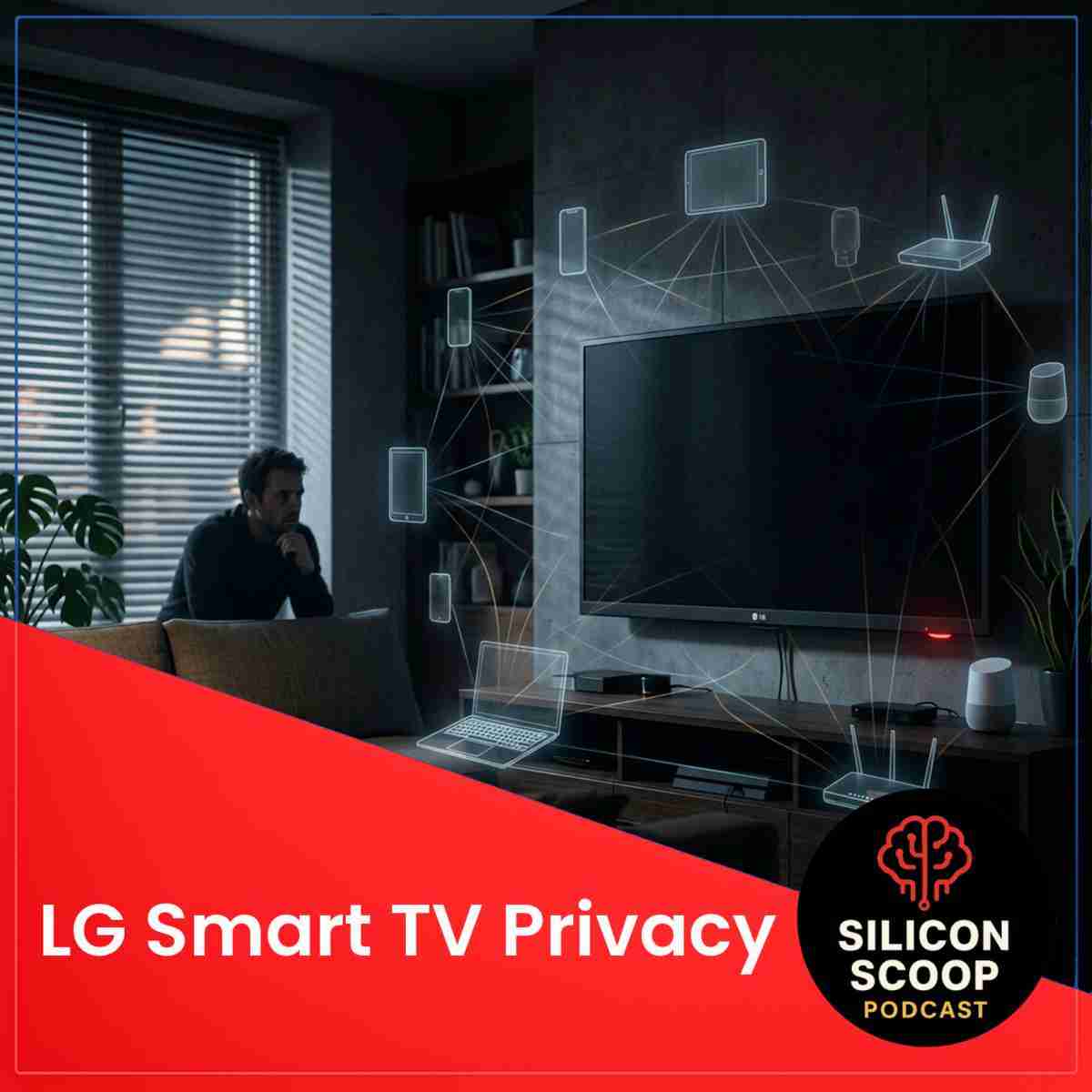
LG Smart TV Privacy Puts 216 Million Homes at Risk
Estimated reading time: 12 minutes
Key Takeaways
- The words "smart TV" used to mean better picture quality and streaming apps.
- Gamers Nexus estimates the potential exposure affects up to 216 million LG smart TVs worldwide, based on LG's unit sales and installed base figures referenced in its report.
- LG does not deny that its TVs scan local networks, but frames it as a standard function for identifying and connecting with other devices.
- ACR works on HDMI inputs.
- Security and privacy blogs report that within approximately twelve days of the original Gamers Nexus video going live, LG introduced or significantly emphasized forced arbitration language in its smart TV terms of service.
Table of contents
- LG Smart TV Privacy Puts 216 Million Homes at Risk
- Key Takeaways
- What the Gamers Nexus Investigation Actually Found (LG TV Spying Claims Examined)
- LG's Official Response and What It Actually Admits
- Your Business Is Probably Leaking Time the Same Way Your TV Leaks Data
- What the Smart TV Security Vulnerabilities Actually Mean for You
- Automatic Content Recognition Tracking and the Ad Telemetry Deep Dive
- The Legal Fallout and the Arbitration Clause Move
- What Experts Agree On and What It Means for the Smart TV Industry
- 10 Frequently Asked Questions About LG Smart TV Privacy
The words "smart TV" used to mean better picture quality and streaming apps. Today, for millions of LG TV owners, those same words are raising a very different question: is your television watching you back?
LG smart TV privacy has become one of the hottest and most contested topics in consumer technology heading into late 2026. A deep-dive investigation by Gamers Nexus — running a staggering 135 minutes — set off a firestorm of technical analysis, media coverage, and legal commentary that LG has been scrambling to contain ever since. The company denies the most serious allegations. But independent security researchers, packet capture data, and firmware analysis tell a more complicated story.
This article breaks down exactly what was found, what LG says about it, where the experts actually agree, and what you can do right now to protect your household.
---
What the Gamers Nexus Investigation Actually Found (LG TV Spying Claims Examined)
The Gamers Nexus report focused primarily on recent LG OLED and WebOS-based smart TV models, including at least one OLED G5. Researchers used packet capture tools — software that intercepts and records data traveling across a network — along with firmware analysis to examine what the televisions were sending and receiving.
Here is what the investigation reported:
- Local network scanning: The TVs were observed scanning the local area network (LAN), identifying connected devices such as phones, computers, printers, switches, and smart home gadgets. Beyond just finding those devices, the TVs were also collecting the hostnames and MAC addresses of each one — essentially building a detailed map of everything in your home network.
- Wi-Fi fingerprinting: The TVs were seen collecting nearby Wi-Fi network names (SSIDs), signal strength, and channel data — including networks that belong to neighboring households, not just the owner's own router.
- Audio capture in standby: In a particularly alarming demonstration, researchers showed that a compromised TV was capturing room audio even while appearing to be in standby mode. The device stored that audio locally while it was offline, then uploaded it once it reconnected to the internet.
- ACR telemetry sent at high frequency: Automatic Content Recognition (ACR) and ad telemetry data was reportedly being transmitted to LG's ad arm — LG Ad Solutions — at roughly 20 times per minute over an HDMI-only connection. That means approximately 1,200 location and viewing data beacons sent every single hour, from a single TV, even when using a device plugged into HDMI rather than the TV's own apps.
- USB webcam exploitation: Security researchers, including analysis published on Hackaday, noted that exploitation paths demonstrated during the investigation could grant local root access to the TV. This means an attacker with that access could potentially activate attached devices like USB webcams to record.
One particularly concerning hardware detail: on some LG TV models, the microphone "kill switch" does not electrically disconnect the microphone. Instead, it reportedly only reduces the microphone's gain (its sensitivity). With sufficient audio amplification applied after the fact, researchers argued that audio could still be recovered from those supposedly silenced sessions.
Gamers Nexus estimates the potential exposure affects up to 216 million LG smart TVs worldwide, based on LG's unit sales and installed base figures referenced in its report.
Sources: Malwarebytes | Ars Technica | Hackaday
---
LG's Official Response and What It Actually Admits
LG has pushed back firmly against the most headline-grabbing claims. In its public statements, the company drew clear lines around what it says its TVs do and do not do.
On voice data and audio recording:
LG states that voice data is only processed when a user either presses the voice button on the remote or speaks a recognized wake word. The company insists that ambient conversations happening in the room are never collected or recorded unless the voice functionality is explicitly activated by the user.
For devices with Far-Field Voice Recognition enabled, LG says that while the TV does monitor for wake words in standby, any audio that does not match a wake word is processed locally on the device and then immediately deleted. It is never sent to LG's servers.
On network scanning:
LG does not deny that its TVs scan local networks. However, it frames this as a standard function for any modern smart TV — a necessary step for identifying and connecting with other devices on the same network, such as speakers, phones, and streaming devices, in order to provide enhanced functionality.
On Automatic Content Recognition (ACR):
LG describes ACR as an opt-in feature designed to deliver personalized content recommendations and relevant advertising. The company states it is not used without user consent and that users have full control over their data and consent settings through the TV's settings menu.
On security:
LG states that it prioritizes data security and works with outside experts on a continuous basis to identify and patch vulnerabilities.
The important caveat:
Tom's Hardware, which originally covered LG's response, was transparent in noting that it had not independently verified either the Gamers Nexus claims or LG's counterclaims. That matters. Both sides are asking you to take their word for it — and that is precisely why the third-party technical analysis discussed in this article carries so much weight.
Sources: CyberKendra | PPC.land
---
Your Business Is Probably Leaking Time the Same Way Your TV Leaks Data
Manual processes, copy-paste workflows, and repetitive admin tasks are quietly draining hours from your business every single week — and most owners don't realize how much until they look at the numbers.
At Flowgrammer, we design and implement business automation systems that eliminate the manual work slowing you down. Whether it's client onboarding, data entry, reporting, or follow-up sequences, we build the systems that run while you focus on what actually grows your business.
👉 See How Flowgrammer Can Automate Your Business (Flowgrammer Can Automate Your Business)
---
What the Smart TV Security Vulnerabilities Actually Mean for You
This is where things get more nuanced — and more important to understand clearly.
The distinction Malwarebytes drew:
Malwarebytes published one of the most balanced technical analyses of the situation. Their privacy team made a critical clarification that got somewhat lost in the media noise: the dramatic audio capture demonstration — the one where the TV recorded room audio in standby, stored it, and uploaded it later — relied on a TV that had already been compromised by an attacker.
In other words, the researchers were not showing that a stock, out-of-the-box LG TV sitting in your living room is routinely recording your conversations. They were demonstrating what becomes possible if a malicious actor exploits the known security vulnerabilities in the device's software stack.
That is still deeply alarming. But it is a different kind of alarm than "your TV is spying on you right now." It is more like: "Your TV has security holes that, if exploited, could turn it into a covert listening device, and those holes need to be patched urgently."
Why the distinction matters and why it also doesn't fully let LG off the hook:
Even setting aside the compromised-device scenario, the telemetry data — the ACR fingerprinting, the LAN scanning, the Wi-Fi mapping, the 20-times-per-minute location data transmissions — does not require a hacker. That data flow appears to happen on stock devices under normal operating conditions, based on the packet capture evidence researchers presented.
Collecting the MAC addresses and hostnames of every device on your home network is not a feature most users would knowingly consent to if it were described plainly in plain English. Mapping neighboring Wi-Fi networks is even further outside what a typical TV owner would consider "my TV's job."
The microphone kill switch problem:
The claim that some LG TV microphone mute controls reduce gain rather than electrically disconnecting the hardware is particularly significant from a security design standpoint. An attacker who gains root access on such a device does not have to bypass a hardware switch. The microphone remains technically active; its output is simply quieter. That is a meaningful difference in the threat model.
Sources: Malwarebytes | Hackaday
---
Automatic Content Recognition Tracking and the Ad Telemetry Deep Dive
ACR is worth spending time on because it is central to this entire controversy — and it is also deeply misunderstood by most TV owners.
What ACR actually does:
Automatic Content Recognition is technology embedded in smart TVs that continuously takes "fingerprints" of whatever is displayed on screen. It compares those fingerprints against a massive database to identify what you are watching — not just on streaming apps, but on any input, including HDMI sources like a gaming console, cable box, or Blu-ray player.
That data is then used to build a viewing profile of your household, which is sold to or used by advertisers to serve targeted ads — either on the TV itself or through connected ad networks.
The key point most users miss: ACR works on HDMI inputs. It does not matter that you are not using the TV's built-in apps. If you are watching anything on a screen connected to an LG TV with ACR enabled, the TV may be fingerprinting that content.
What the packet capture data showed:
One of the most striking pieces of evidence came from detailed technical analysis at PPC.land, which published data showing an LG TV transmitting fields that included location data to LG Ad Solutions approximately 20 times per minute, even when the TV was connected only through HDMI. That is not a streaming session. That is simply having a device plugged into the TV's HDMI port.
The telemetry fields captured included:
- Public IP address (which gives approximate geographic location)
- Wi-Fi fingerprint data capable of resolving to street-level location when cross-referenced with public Wi-Fi mapping databases
- On-screen content fingerprints from both TV apps and HDMI inputs
- Application usage patterns
- Device hostnames and MAC addresses of other devices on the home network
When you combine a precise street-level location derived from Wi-Fi mapping with a continuous log of everything being watched on every input, the result is a genuinely detailed household profile — far beyond what most people think they signed up for when they accepted a smart TV's terms of service.
The opt-in question:
LG insists ACR is opt-in. But security and privacy commentators have noted that smart TV setup wizards are frequently designed in ways that make opting in the path of least resistance — and opting out requires navigating multiple settings menus that most users never visit.
Sources: PPC.land | Ars Technica
---
The Legal Fallout and the Arbitration Clause Move
Perhaps the most telling development in this entire story did not come from a technical researcher. It came from LG's lawyers.
Security and privacy blogs report that within approximately twelve days of the original Gamers Nexus video going live, LG introduced or significantly emphasized forced arbitration language in its smart TV terms of service.
Forced arbitration clauses prevent users from joining class-action lawsuits. Instead of suing LG collectively — which is how consumers typically win cases against large corporations over data practices — affected users would be required to pursue individual arbitration, a process that is significantly more expensive and difficult for an individual consumer to win.
Legal commentators in the security space have been direct about what this timing suggests: LG's legal team moved quickly to limit its exposure before potential class-action litigation could organize.
The regulatory backdrop:
No LG-specific law or executive order has been passed in the 60 days surrounding this controversy. However, analysts are framing the regulatory risk against two existing frameworks:
- The EU's General Data Protection Regulation (GDPR): Under GDPR, collecting and processing personal data — including location data and device identifiers — without clear, informed consent carries fines of up to 4% of global annual revenue. The kind of telemetry described in this investigation would face serious scrutiny under GDPR's consent and data minimization principles.
- California's Privacy Laws (CCPA and CPRA): California residents have the right to know what data is collected about them, the right to opt out of its sale, and the right to delete it. The combination of ACR, LAN scanning, and location telemetry described here covers multiple categories of personal information that California law explicitly protects.
The broader industry takeaway: privacy regulators in both the EU and North America were already looking at smart TV ad-tech practices before this investigation. This controversy has almost certainly accelerated those conversations.
Sources: PPC.land | Gamers Nexus via YouTube
---
What Experts Agree On and What It Means for the Smart TV Industry
Despite the back-and-forth between LG and the research community, a clear expert consensus has emerged across security researchers, privacy firms, and technology media.
Point one: The telemetry is unusually aggressive.
There is broad agreement that LG's data collection stack — combining ACR, LAN scanning, and Wi-Fi fingerprinting — goes well beyond traditional viewing data. The result is a detailed profile of the household and its devices that most users would not recognize as part of the "smart TV experience" they consented to.
Point two: The security risk is real, even if routine surveillance is not proven.
Researchers and privacy analysts broadly agree that while LG disputes the claim that its TVs routinely record ambient audio without activation, the demonstrated ability to convert a compromised set into a covert listening device — and to log audio locally in standby for later upload — is a serious, real-world security risk. The speed and completeness of patching those vulnerabilities will be a key test of LG's stated commitment to security.
Point three: This is a watershed moment for the smart TV market.
Analysts see this controversy as likely to trigger renewed scrutiny of ACR and ad-tech integrations across all major smart TV manufacturers — not just LG. Samsung, Vizio, Roku, and others all use ACR and telemetry systems. This investigation has put the entire industry's data collection practices under a microscope.
What you can do right now:
- Go into your LG TV's settings and disable ACR (often listed under "Live Plus" or "Interest-Based Advertising").
- Disable Far-Field Voice Recognition if you do not use it.
- Review your TV's privacy settings and revoke consent for data sharing where possible.
- Update your TV's firmware immediately to apply any available security patches.
- Consider placing your smart TV on a separate network segment (a guest Wi-Fi network, for example) to limit its access to your other devices.
- If you use HDMI for a cable box or gaming console, be aware that ACR may still be fingerprinting that content unless specifically disabled.
Sources: Malwarebytes | PPC.land | Ars Technica
---
10 Frequently Asked Questions About LG Smart TV Privacy
1. Is my LG TV recording my conversations right now?
Based on the current evidence, a stock LG TV that has not been compromised by an attacker is not routinely recording your ambient conversations. LG states that audio is only processed when the voice button is pressed or a wake word is detected, with non-matching audio deleted locally. However, if your TV's firmware contains unpatched vulnerabilities and a malicious actor exploits them, recording becomes possible. Update your firmware and disable Far-Field Voice Recognition if you are concerned.
---
2. What is Automatic Content Recognition and why does it matter?
ACR is technology that takes continuous "fingerprints" of everything displayed on your TV screen — including content played through HDMI inputs from external devices — and matches those fingerprints against a database to identify what you are watching. That viewing data is used to build a household profile for targeted advertising. It works across all inputs, not just streaming apps, and packet capture data suggests it can transmit telemetry data to LG's ad arm dozens of times per minute.
---
3. How do I turn off ACR on my LG TV?
On most LG WebOS TVs, go to Settings → All Settings → General → Additional Settings and look for "Live Plus" — this is LG's branded name for its ACR system. Toggle it off. You should also check Settings → All Settings → General → About This TV → User Agreements to review and revoke consent for interest-based advertising and viewing information sharing.
---
4. What is Wi-Fi fingerprinting and how does my TV use it?
Wi-Fi fingerprinting involves collecting data about nearby wireless networks — their names (SSIDs), signal strength, and channel information. When cross-referenced with public databases of Wi-Fi access point locations (similar to how Google Maps locates devices), this data can resolve a device's location to street level, even without GPS. Researchers found LG TVs collecting this data from neighboring networks as well as the owner's own network.
---
5. Why is LG's TV scanning the other devices on my home network?
LG describes local network scanning as a standard function that helps the TV identify and connect with other devices for features like screen mirroring, multi-device control, and smart home integration. However, researchers found that the TV collects and transmits the MAC addresses and hostnames of identified devices, which goes beyond what is needed for basic connectivity. This data can be used to build a profile of the devices in a household.
---
6. What is the forced arbitration clause and why did LG update its terms?
Forced arbitration is a legal clause that requires disputes to be resolved through private arbitration rather than through the courts. It effectively prevents users from joining class-action lawsuits. Security commentators reported that LG updated or emphasized this clause in its smart TV terms of service within roughly twelve days of the Gamers Nexus video's release. Legal analysts interpret this timing as LG limiting its exposure to potential mass litigation over data collection practices.
---
7. How many LG TVs are potentially affected?
Gamers Nexus cited estimates suggesting up to 216 million LG smart TVs worldwide could be affected, based on LG's unit sales and global installed base figures. The investigation focused particularly on recent WebOS-based models including the OLED G series, but the broader telemetry and ACR practices described apply to LG's wider smart TV lineup.
---
8. Does the microphone mute button on my LG TV actually turn off the microphone?
On some LG TV models, the microphone mute function reportedly reduces the microphone's gain (sensitivity) rather than physically or electrically disconnecting it. Security researchers argued that on a compromised device, an attacker could apply amplification to recover audio even from a "muted" microphone. This is a hardware design concern that goes beyond software settings and patches.
---
9. What are the potential legal consequences for LG under GDPR and California privacy law?
Under the EU's GDPR, processing personal data — including location data and device identifiers — without lawful basis and informed consent can result in fines up to 4% of global annual revenue. California's CCPA and CPRA grant residents the right to know what data is collected, opt out of its sale, and request deletion. The combination of location telemetry, device scanning, and continuous ACR fingerprinting described in this investigation covers multiple categories of protected personal data under both frameworks. No formal enforcement action specific to this investigation had been announced as of mid-September 2026.
---
10. Should I stop buying smart TVs or disconnect my current one?
That is a personal decision based on your own privacy comfort level. However, the more practical short-term steps are: update your LG TV's firmware immediately, disable ACR and interest-based advertising in settings, turn off Far-Field Voice Recognition, and place your TV on a separate guest Wi-Fi network isolated from your computers, phones, and sensitive smart home devices. These steps significantly reduce — though do not eliminate — the data exposure described in this investigation. The broader issue of smart TV ad-tech and telemetry is not unique to LG, and the industry as a whole is likely to face increased regulatory pressure on these practices in the months ahead.
Additional Links
Flowgrammer.ca – 💡 Unlock AI-Powered Automation! Let flowgrammer.ca handle complex workflows so you can focus on growing your business.
Flowgrammers.ca – 💡 Join Toronto's Fastest Growing AI and Business Automation Community.
- SRED Funding Solutions – Maximize your R&D tax credits and secure funding for your innovation.
- Silicon Scoop Podcast – Stay Informed, Stay Ahead!
- Startup Talk Podcast
- Flowgrammer Youtube
- Startup Investor Drinks – Join Toronto’s Startup Community and connect with fellow startup enthusiasts and investors.
- TorontoStarts Startup and Entrepreneur Community – Become a part of Toronto’s thriving startup ecosystem.
- Workhaus – Discover flexible workspace solutions for your business needs.
- Work with The Startup Coach – Get expert guidance and mentorship for your startup journey.
- Reach out to Jon Irwin on LinkedIn – Connect with our co-host and technology expert.
Episode transcript
Read the full transcript
Craig: your television may know what you watch, what is plugged into it, what else... who else and what else lives on your network. a major investigation says some lg tvs collect far more household information than buyers expect, and security flaws could make that hardware even more invasive... basis. gamers, nexus level one text and independent research examine four retail lg webos displays using network captures, firmware analytics, and controlled exploits. they reported extensive content recognition, network discovery, wi fi scanning, and vulnerabilities that allowed audio capture after tv was compromised. lg says optional tracking is off by default and denies routinely recording ambient conversations. however, the unresolved questions are exactly what leaves each model under each constant state and whether the newly reported securly faas have been patched. what do you think about this, john?
Jon: yeah. first off, i'd call bs on lg's response. like, if you... i don't know if you watched the video from gamers nexus, but i watched a lot of it, and it scared the living crap out of me. so what these guys did was, they spent hundreds of hours. okay? they didn't just like, oh, let's just test this and this and this. they spent hundreds of hours, and it was independently tested by four other people. right? so they examined lg smart tvs, and they claim they found behavior that goes far beyond what most people probably imagine a television does. the biggest scariest thing was that, the listening when your tv was off, that is... that scares the crap out of me. okay? so what their... let's let's talk about what their test reportedly showed. so they reportedly showed tvs scanning home networks for other connected devices. they identified nearby wi fi networks. they were tracking what viewers were watching using a technology called automatic content recognition or acr. and the one that i think is the most controversial finding, creating text transcriptions from sounds picked up by microphones while the television appeared to be in standby or offline. and the researchers argued that some of this information could be retained and later transmitted once the television reconnected to the internet. now what lg said? they said that the most alarming interpret... interpretation is simply wrong. and so according to their detailed september 12 response, they say its tvs do not continuously record household conversations, which, again, bs. if users enable hands free voice control, the television may listen locally for a wake phrase such as hi, lg, including while in standby. but lg says the audio is immediately discarded unless the wake phrase is detected. so actual speak to text processing begins only after the wake word is detected or the user presses the microphone button. lg says an active voice recognition session can last up to eighteen seconds, and nearby conversations can therefore appear in a transcript after or during that active session, which, again, like, that is not an explanation. that doesn't make me feel any better. they didn't address the fact that it can't be later transmitted. they didn't discuss the fact that, like, there's so much that they didn't address. and that's why i feel like their response is bs. but the one thing which does make sense to me, except for, well, maybe the the dis... network discovery is the, the acr stuff, the automatic content recognition. so, acr derived viewing information can be shared with lg ad solutions for audience measurement and with additional consent in advertising and stuff like that, which... fine. that's fine. like, it replaces those, nelson boxes. remember those ones from back in the day with the hotel? so i think that's fine. i think that's great because that can help tv shows get... stay relevant, and continue on and keep filming with multiple seasons. so i'm fine with that. the thing that kinda scares me is the local network device discovery, and it can, yeah, it can connect it to wi fi networks. anyways, what are your thoughts on this? i went on a big rant here.
Craig: viewing fingerprints, connected device details, network identifiers, and location signals can create a detailed house profile that supports an advertising business long after the television's original sale. it also means a poorly secured tv can become a foothold inside a home or office. so i also don't know... i wanna be able to opt in to acr. so it says it's an opt in feature, but i don't know if that's true. like, the nielsen box, you... it comes to your home. you plug it in or you don't plug it in. right? you... it's one of those things. you either participate or you don't participate. do you want this stuff listening to find out what else you might be watching on your ipad and whatnot so it can start targeting ads or display different content to you? that's totally up to you, but that's kind of what we're doing with this acr stuff. so acr converts short samples of program audio or video into compact fingerprints that compares them with a reference database. it can recognize content coming through cable, a console, on a computer. it can analyze what the tv processes, not merely which streaming app is open. so keep that in mind. and research estimate that four gig of acr, traffic per month under their, tested usage per tv.
Jon: what was that?
Craig: one eight... pardon?
Jon: what was that? sorry.
Craig: four gig of acr traffic per month, per tv. a one hdi monitor test reportedly contacted 29 endpoints across a 107 connections. that's and separate separate, captures reportedly show telemetry exchanges reaching roughly 20 per minute during one test, not a proven rate for every tv or configuration. like, think of this like shazam built in, to the television, but instead of identifying one song or any asset, it can identify what crosses the screen and attach that knowledge to an advertising profile when the relevant features are enabled. so keep all of that in mind. i'm... it's very interesting. they all... they're all spying on you all the time. it just becomes worse and worse, when you start digging into it because you didn't think they'd be able to get this information.
Jon: yeah. and let me just put this very clearly. so lg is essentially saying, the microphone can be listening for a wake word, but we are not continuously recording your conversations. what the investigators are saying is that we found evidence that the system can capture more speech than consumers would reasonably expect and preserve resulting data. and so the claims are not necessarily identical, but that's why this argument has become so messy is because they're not addressing the concern. they're not addressing what these investigators found. they've just come up with this bullcrap, kinda high level response, and they're hoping it goes away, which i hope it doesn't. i hope there's a deeper dive. i hope there's an investigation. like, i'm fine with, like, using whatever i let... whatever i watch. that's fine. i don't care. like, whatever. but, like, listening... actually listening to my conversations when the tv is off is not okay, in my opinion.
Craig: and the people testing this have noted that the smart tv setup wizards are frequently designed in ways making opting in the path of least resistance or, you know, the tyranny of the default you have to physically change to opt out. the opting out requires navigating multiple settings menus that menus that most users never visit. so by default, you know, you have to opt in, but that's part of some, setup screen that you agree to as you go. and if to change it, you have to go through multiple things to change it. so, the legal under gdpr rules collecting processing and personal data, including location and device identify... identifiers of clear informed consent carries fine up to 4% global annual revenue. this kind of telemetry described in this investigation would face serious scrutiny under gdpr's consent and data rules. plus, we've got california laws. california residents have the right to know what data is being collected about them, the right is right to opt out its sale, and the right to delete it. the combination of acr land scanning and location telemetry described here covers multiple categories of personal information that california law, explicitly protects. so we'll have to see where this goes, but this isn't... you know, it's not the only tv brand doing this. right?
Jon: no.
Craig: i'm looking at, i did a little report. besides lg, the major smart tv tracking players include vizio, the clearest proven case in 2017. vizio paid 2,200,000 to settle ftc and new jersey allegation that it tracked second by second viewing on 11,000,000 tvs without informed consent. samsung uses acr across tv inputs. texas sued samsung, over allegedly inadequate disclosure and consent. samsung settled in 2026 and agreed to obtain express consent before collecting acr data. sony is named in a texas 2025 acr lawsuit campaign. the case concerned viewing data collection and consent and remained unresolved. so a lot of these are using acr. hisense is using acr, and they're involved in a texas lawsuit. tcl also sued by texas over our alleged acr collection. televisions may additionally run roku tv, google tv, fire tv, so tracking can involve both manufacturing and the platform. roku, its acr features, smart tv experience, or use info from inputs can direct, can identify content from antennas and connected devices, not just, you know, whatever. and the roku remote, wakes up when you pick it up and move it around. so there's data being sent, based on that. amazon fire and google both collect platform level usage, advertising diagnostic data, and other roku brands, do the same thing, include and carry roku's input recognition system. so lg may be, the company under the microscope today, but tracking what appears on your screen is standard smart tv technology. samsung, vizio, roku, sony, hisense, and tcl have all been faced with regulatory scrutiny over it. just looks like, lg is about to be hit big, and i'm curious to see, do you think it's gonna change the smart tv industry at all, or do you think things will just keep moving?
Jon: i think things will just keep moving. i think there'll be some sort of new eula or something that people are gonna have to click on, but most people in the world are not gonna know about this nor care about this. and so, unfortunately, it's just, it's gonna continue.
Craig: so the real impact is not the proof that millions of tvs are secretly recording rooms. it is the evidence that a modern television can expose far more about a household than most owners reasonably expect. so a screen connected to the internet deserves the same suspicion as any other computer. check your settings and tell us should viewing data collection ever be part of a television you already pay for? let us know what your comments are in the comments below.
More from Silicon Scoop
All episodes
silicon-scoop · October 30, 2026
Anthropic Threat Report Reveals AI Misuse in Bioweapons, Cyber Ops, and Influence Campaigns
Anthropic threat report details biological weapons, AI misuse, and Claude AI abuse across cyber ops, influence campaigns, and weapons development.
View episode

silicon-scoop · October 29, 2026
Canada’s National AI Literacy Initiative: Inside the $2.3B Strategy to Train a Million Students
Canada’s National AI Literacy Initiative under the AI strategy aims to train 1M students, educators and workers with free AI literacy courses via Amii and partners.
View episode

silicon-scoop · October 28, 2026
OpenAI Cuts Cursor Off After SpaceX’s $60B Deal: How Model Access Became a Strategic Weapon
OpenAI Cursor fallout: SpaceX acquisition triggers change-of-control clause, AI model access cutoff, and a new era of strategic control over developer tools.
View episode