
Silicon Scoop · Technology
Meta Humanoid Robot Max Reportedly Built With Fourier
Craig Major·November 17, 2026
Meta humanoid robot reportedly built with Fourier in about three months, plus Assured Robot Intelligence. What it means for founders and hardware teams.
Estimated reading time: 10 minutes
Key Takeaways
- Speed: Meta reportedly built its Max humanoid prototype with China's Fourier in about three months. The Next Web and Digital Trends both report this.
- Already moving on: Work on a second version, Max 2, reportedly began in September 2026. Planned changes include a redesigned torso, better hands, a projector and extra sensors for stairs. These are plans, not finished features.
- Specs: Max is reportedly about 1.5 meters (five feet) tall and about 48 kilograms (106 pounds). It reportedly runs on Nvidia Jetson Thor chips and has five-fingered hands.
- Software side: Meta acquired Assured Robot Intelligence on May 1, 2026, according to TechCrunch and Bloomberg. The available reporting gives no purchase price.
- No product yet: Meta reportedly says it has no plans to sell these prototypes. No launch date has been reported.
Table of contents
- What the Meta Humanoid Robot Called Max Reportedly Looks Like
- The Fourier Meta Robot Partnership: A Factory Floor and a Short Clock
- Max 2: The Second Version Is Already in Progress
- Assured Robot Intelligence and Muse: The Software Behind the Hardware
- No Launch Date, No Sale Plans: What Is Proven and What Is Not
- What This Means for Startups and Small Businesses
- Frequently Asked Questions
Meta reportedly went from a standing start to a working Meta humanoid robot prototype in about three months. A second version was already underway by September 2026. The robot is codenamed Max, and Meta reportedly built it with Chinese robotics company Fourier.
For founders and operators, the lesson is about speed. A big platform company can use a hardware partner to compress a robotics timeline. That raises the bar for anyone building home robots, robot parts or the software that runs on them.
Max is not a product. It is a research prototype, and Meta has said it has no plans to sell it. Still, the pace, the partner choice and the software purchases around it show where Meta's robotics effort is heading.
This article separates what is reported, what is in progress and what is only planned.
What the Meta Humanoid Robot Called Max Reportedly Looks Like
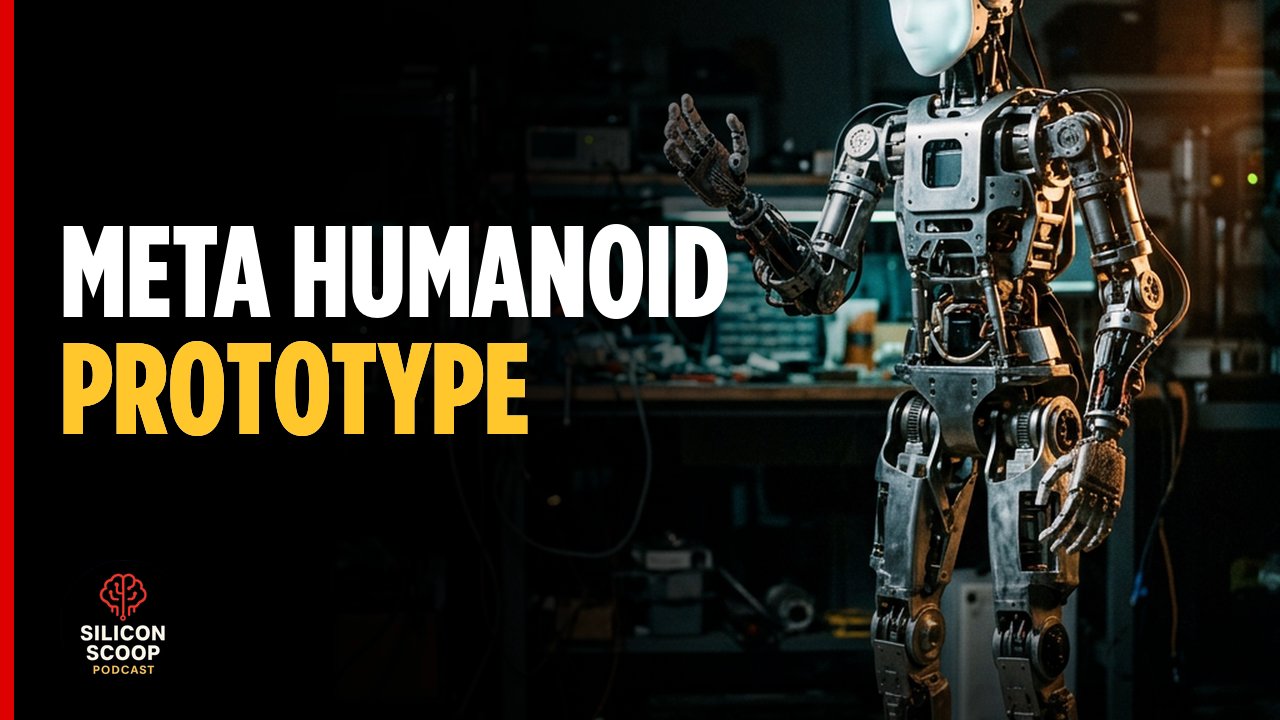
Max is a humanoid robot, meaning it has a human-like body shape. Reports describe it as a test platform for Meta's wider goal of building robots that could one day do everyday tasks in homes.
The reported specs
The Next Web reports these details, and the Digital Trends report matches the build time:
- Height: about 1.5 meters, or roughly five feet
- Weight: about 48 kilograms
- Build time: about three months, together with Fourier
- Chips: Nvidia Jetson Thor
- Body features: a screen, built-in speakers and five-fingered hands for picking up small objects
Jetson Thor is a line of Nvidia computer chips made to run AI inside robots. Running AI on the robot itself helps it react quickly without waiting on a distant server.
The source report we worked from adds more detail. It gives the weight as roughly 106 pounds. It says the screen can show or mimic facial expressions. Those extra details come from that report, which credits The Information. We could not match them to a separate retrieved page, so treat them as reported.
What Max can reportedly do
Digital Trends reports that the prototype can pick up small objects, including bottles and toys. That is a useful skill for a home robot.
It is also a long way from running a household. The source report says picking up small items is still far from reliably managing an entire home. Max is a research tool, not a household helper.
Many people searching for a Max humanoid robot assume it is a product. It is not. It is an internal test machine.
Source: The Next Web report on Max and Fourier, published November 1, 2026; Digital Trends report on Meta's second-generation robot, published November 1, 2026; Engadget source report summarizing The Information's reporting
The Fourier Meta Robot Partnership: A Factory Floor and a Short Clock
The most useful detail for operators is how the robot was reportedly made. Meta did not build every part alone. It worked with Fourier, a Chinese robotics company.
Shanghai and the factory visit
According to the source report, Meta's robotics team traveled to Shanghai to work with Fourier. It also says Li-Chen Miller, Meta's vice president of product for robotics, spent almost two months at Fourier's factory while the prototype was being developed.
That detail comes from the source report alone. The other retrieved pages do not confirm it, so we attribute it to that report.
If it is accurate, it shows how hands-on the process was. A senior product leader on the factory floor can shorten the loop between design and testing.
What "three months" does and does not mean
The Next Web and Digital Trends both report that Max was built in about three months. That is the reported build time. The sources do not say how long Meta planned the project before building began.
The same applies to the Fourier Meta robot partnership. We do not have reported terms, such as who owns the designs or how costs were shared. Do not assume details the reporting does not give.
The internal demo
Digital Trends reports that Max was shown to some Meta employees at an internal robotics summit in August 2026. That is the only public showing described in the reporting, and it was internal. Nobody outside Meta is reported to have used the robot.
Both The Next Web and Digital Trends published their reports on November 1, 2026. That is when the project became public. It is not necessarily when the prototype was finished.
Source: The Next Web report on Max and Fourier, published November 1, 2026; Digital Trends report on the August summit and Max 2, published November 1, 2026; Engadget source report summarizing The Information's reporting
Robots Do Physical Work. Flowgrammer Handles the Digital Kind.
Most small teams lose hours each week to repeat tasks like copying data between tools, sending follow-ups and updating spreadsheets. Flowgrammer builds business automations that take over that manual work, so you can grow without adding headcount.
Max 2: The Second Version Is Already in Progress
Meta has reportedly started a follow-up prototype, codenamed Max 2. Digital Trends places the start of work in September 2026. The Next Web also reports that Meta is already working on a second version.
The status matters here. Max 2 is in development. It is not finished, and it has not been shown publicly.
Planned changes
Digital Trends reports these planned improvements for Max 2:
- A redesigned torso
- Better hands for handling objects
- A projector
- More sensors to help with stairs
Each item is a plan or goal. None has been reported as built, tested or working.
Why stairs and hands matter
Homes are messy and uneven. Stairs, clutter and small objects are hard for robots that do well in clean labs.
Better hands point to the main challenge in home robotics, which is handling many different objects safely. Extra sensors for stairs suggest Meta wants the robot to move through a multi-level home. That is an engineering direction, not a promise of a product.
A caution on timelines
The reporting gives a September 2026 start for Max 2 and an August 2026 internal demo for Max. It does not say that Max 2 is late or early, or that it replaces Max. We should not read a schedule into those dates.
What we can say is simple. Meta reportedly moved to a second design soon after showing the first. That points to a fast test-and-redesign loop.
Source: Digital Trends report on Max 2 plans, published November 1, 2026; The Next Web report on Max and a second version, published November 1, 2026
Assured Robot Intelligence and Muse: The Software Behind the Hardware
A robot body is only half the job. The other half is the AI that tells it what to do. That is where Meta's other robotics moves come in.
The acquisition
Meta acquired Assured Robot Intelligence on May 1, 2026. TechCrunch reports that Meta bought the robotics startup to bolster its humanoid AI ambitions. Bloomberg reports that the purchase is part of a major initiative to build humanoid technology. This is a completed deal, unlike the in-progress Max 2 work.
The source report describes the startup as focused on AI software for robots. The available reporting does not give a purchase price, so we do not report one.
The Max reporting says Meta's robotics team worked with Fourier. It does not say Assured Robot Intelligence's technology is inside Max. Do not link the two beyond what the sources state.
Where Muse fits
The source report says Meta's larger goal is to connect humanoid robots with Muse, its AI agent. An AI agent is software that can take actions for a user, not only answer questions. Under that view, a humanoid robot could be a physical body for Muse, letting it do household tasks.
This Muse link comes from the source report, which credits The Information. We could not match it to a separate retrieved page. Treat it as a reported ambition, not a confirmed product plan.
Why this pairing matters
Meta is working on several pieces at once:
- Hardware, through the Fourier partnership and the Max prototypes
- Robot AI software, through the Assured Robot Intelligence purchase
- A general AI agent, through Muse, as an intended brain
That mix is what makes this story bigger than one prototype. It shows a company building several layers of a robotics stack.
Source: TechCrunch report on Meta buying Assured Robot Intelligence, May 1, 2026; Bloomberg report on the acquisition, May 1, 2026; Engadget source report summarizing The Information's reporting on Muse
No Launch Date, No Sale Plans: What Is Proven and What Is Not
It is easy to read too much into a prototype story. Here is a plain status check.
Status at a glance
Completed or reported as built
- Max prototype, built with Fourier in about three months (reported)
- Internal demo to some Meta employees in August 2026 (reported)
- Acquisition of Assured Robot Intelligence on May 1, 2026
In progress
- Max 2, started in September 2026
Planned or expected, not delivered
- Max 2's redesigned torso, better hands, projector and stair sensors
- The wider goal of linking humanoid robots with Muse
Not announced
- A launch date or product target for a mass-market Max
- Any sale of these prototypes
- The price Meta paid for Assured Robot Intelligence
What Meta says
Digital Trends reports that Meta says it has no plans to sell the prototypes. Per the source report, the Fourier work is for internal research and experimentation. This is a company statement. It describes Meta's current position and could change.
A note on "expert consensus"
The research briefing says coverage broadly treats this as a sign that home robotics is becoming a near-term race. None of the retrieved sources contains named independent analysts or experts saying that. It is the briefing's summary of the reporting, so we do not present it as expert agreement.
What the reports do share is narrower:
- The engineering direction is a humanoid shape, object handling and a second-generation redesign.
- The project is internal research and development.
- The commercial timeline is unclear.
A reasonable reading is that the race is a possibility, not a proven fact. Independent expert analysis was not available in our sources.
Source: Digital Trends report on Meta's no-sale statement, published November 1, 2026; The Next Web report on Max and Fourier, published November 1, 2026; TechCrunch report on the Assured Robot Intelligence acquisition, May 1, 2026; Engadget source report summarizing The Information's reporting
What This Means for Startups and Small Businesses
You do not need to build a robot to learn from this story. Here are practical takeaways.
1. Expect shorter hardware cycles
If Meta reportedly built a prototype in about three months with a partner, big players can move fast. Startups in robotics, sensors or smart-home devices should plan for competitors who iterate quickly. Speed of testing may matter as much as the first design.
2. Partnerships are a core strategy
Meta reportedly relied on Fourier's factory and team. Small hardware companies can do the same. A good manufacturing partner can shorten development, but you should check who owns the designs and where the parts come from.
3. Software is where you can stand out
Meta bought a robot AI software startup, Assured Robot Intelligence. That suggests the software layer is valuable. Startups could focus on narrow tasks such as grasping, safety checks, navigation or testing tools that big companies may want to buy or license.
4. Do not build your plan on a rumor of a launch
There is no reported launch date and Meta says it has no plans to sell the prototypes. Do not plan a product around a Meta home robot arriving soon. Watch for official announcements instead.
5. Look for the boring wins in your own business
Home robots are years of work away, if they arrive at all. Software automation is available today. Tasks like lead follow-up, invoicing, reporting and data entry can be automated now, at far lower cost than hardware.
6. Track the signals that matter
- A named launch target or pricing from Meta
- News about Max 2's progress
- Details of the Fourier relationship
- Any use of Muse in a robot
Each would change how real this market looks.
Source: The Next Web report on Max and Fourier, published November 1, 2026; Digital Trends report on Max 2 and Meta's no-sale statement, published November 1, 2026; TechCrunch report on the Assured Robot Intelligence acquisition, May 1, 2026
Frequently Asked Questions
Q: What is the Meta humanoid robot?
A: It is a prototype humanoid robot codenamed Max, which Meta reportedly built to test tasks around the home. It is an internal research project, not a product for sale.
Q: Who built the Max humanoid robot with Meta?
A: Meta reportedly built Max with Fourier, a Chinese robotics company. The Next Web and Digital Trends both report the partnership.
Q: How long did it take Meta to build Max?
A: The Next Web and Digital Trends both report about three months. The sources do not say how long planning took before the build.
Q: How tall is the Max humanoid robot and how much does it weigh?
A: The Next Web reports about 1.5 meters (five feet) tall and about 48 kilograms. The source report gives the weight as roughly 106 pounds.
Q: What chips does the Meta humanoid robot use?
A: The Next Web reports that Max uses Nvidia Jetson Thor chips. These are chips designed to run AI inside robots.
Q: What is Max 2?
A: Max 2 is the second prototype Meta is reportedly developing, with work starting in September 2026. Planned changes include a redesigned torso, better hands, a projector and more sensors for stairs. These are plans, not finished features.
Q: What does the Fourier Meta robot partnership involve?
A: The source report says Meta's team traveled to Shanghai and that Li-Chen Miller, Meta's vice president of product for robotics, spent almost two months at Fourier's factory. The reporting does not give the commercial terms of the deal.
Q: What is Assured Robot Intelligence?
A: It is a robotics startup that Meta acquired on May 1, 2026, according to TechCrunch and Bloomberg. The source report describes it as focused on AI software for robots. No purchase price appears in the available reporting.
Q: Will Meta sell its humanoid robot?
A: Meta reportedly says it has no plans to sell these prototypes. No launch date or product target has been reported for a mass-market version.
Q: Is Max connected to Meta's Muse AI agent?
A: The source report says Meta sees humanoid robots as a possible physical body for Muse, its AI agent. That is described as a longer-term ambition. We could not confirm it in a separate retrieved page, and no finished integration has been reported.
Source: The Next Web report on Max and Fourier, published November 1, 2026; Digital Trends report on Max 2 and Meta's no-sale statement, published November 1, 2026; TechCrunch report on the Assured Robot Intelligence acquisition, May 1, 2026; Bloomberg report on the acquisition, May 1, 2026; Engadget source report summarizing The Information's reporting
Additional Links
Flowgrammer.ca – 💡 Unlock AI-Powered Automation! Let flowgrammer.ca handle complex workflows so you can focus on growing your business.
Flowgrammers.ca – 💡 Join Toronto's Fastest Growing AI and Business Automation Community.
- SRED Funding Solutions – Maximize your R&D tax credits and secure funding for your innovation.
- Silicon Scoop Podcast – Stay Informed, Stay Ahead!
- Startup Talk Podcast
- Flowgrammer Youtube
- Startup Investor Drinks – Join Toronto’s Startup Community and connect with fellow startup enthusiasts and investors.
- TorontoStarts Startup and Entrepreneur Community – Become a part of Toronto’s thriving startup ecosystem.
- Workhaus – Discover flexible workspace solutions for your business needs.
- Work with The Startup Coach – Get expert guidance and mentorship for your startup journey.
- Reach out to Jon Irwin on LinkedIn – Connect with our co-host and technology expert.