
Silicon Scoop · Technology
Biological Data Center Prototype Unveiled at NUS Singapore
Craig Major·November 24, 2026
The biological data center prototype at NUS pairs DayOne with 20 Cortical Labs CL1 units. Learn what it is, what partners claim and what's unproven.
Estimated reading time: 10 minutes
Key Takeaways
- The Singapore prototype is built from 20 CL1 units in a single rack. The partners describe it as the world's first independently operated biologically integrated server rack. That is their own description, not a verdict from outside reviewers.
- Each CL1 holds about 800,000 lab-grown human brain cells. Across 20 units that is roughly 16 million cells, the figure in the source article's headline.
- DayOne and Cortical Labs announced their partnership plan on March 10, 2026. DayOne announced its prototype launch on August 15, and NUS Medicine publicly unveiled the prototype on August 17.
- Lower power use and uses in drug discovery, robotics, cybersecurity and fraud detection are goals stated by project participants. The sources show no independent expert consensus on performance or cost.
- No funding round, grant total or regulatory filing was identified in the retrieved sources. Treat this as a live research deployment, not a finished commercial data center.
Table of contents
- Inside the Rack: 20 Cortical Labs CL1 Units at the NUS Life Sciences Institute
- From a March Plan to an August Unveiling: The NUS DayOne Partnership Timeline
- How Living Neurons Computing Differs From a Silicon Server Room
- The Power Question Behind the Biological Data Center
- Where Partners See Uses for Cortical Labs CL1, and What Remains Unproven
- What We Still Do Not Know About This Prototype
- What This Means for Startups and Small Businesses
- Frequently Asked Questions
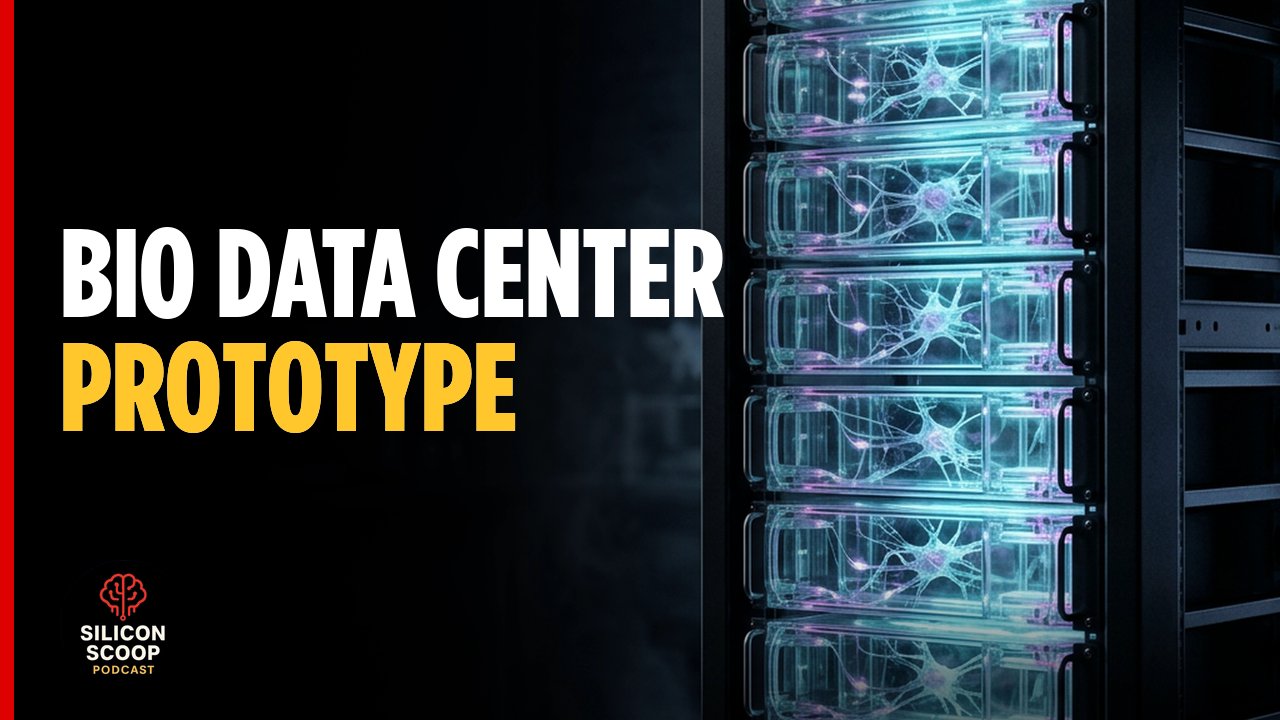
Researchers in Singapore have put 20 CL1 units, each built around living human brain cells, into one server rack. The partners call it the world's first independently operated biologically integrated server rack. The result is a biological data center prototype at the NUS Life Sciences Institute.
The project joins the Yong Loo Lin School of Medicine at the National University of Singapore (NUS Medicine), data center developer DayOne and biological computing startup Cortical Labs.
Why should founders and operators care? The project hints at a possible new compute stack for niche AI workloads and bioscience tooling. It also shows what it takes to bring frontier hardware to market: long lead times, biosafety constraints and strong infrastructure partners.
This post separates what is confirmed from what is only planned or hoped for. Most of the claims come from the companies and the university themselves.
Inside the Rack: 20 Cortical Labs CL1 Units at the NUS Life Sciences Institute
The prototype sits at the NUS Life Sciences Institute in Singapore. According to the NUS Medicine press release of August 17, 2026, NUS Medicine, DayOne and Cortical Labs unveiled it there. The same release says the deployment uses 20 CL1 biological computing units.
The CL1 is Cortical Labs' product. The source article describes it as the world's first commercial, code-deployable biological computer. "Code-deployable" means developers can send software instructions to it. That description comes from the company side, and the retrieved sources include no independent test of it.
Each CL1 is powered by about 800,000 lab-grown human brain cells. Twenty units at that figure give roughly 16 million cells. The source article's headline uses that same 16 million number.
Cortical Labs said it launched the CL1 in March 2025. Data Center Dynamics, an independent trade publication, repeated this in its November 12, 2026 report. The launch date is the company's own claim. Data Center Dynamics also describes the Singapore setup as a 20-unit CL1 system at NUS Medicine.
The "world's first" label
The phrase "world's first independently operated biologically integrated server rack" appears in DayOne's launch announcement. It describes a 20-unit CL1 system. Rickie Patani, PhD, a professor of Neuroscience at NUS Medicine, used similar words in the source article.
He also said: "This partnership marks a genuine shift in how we think about computing and its broader scientific potential." That is a statement from a project participant. It is not a finding from an outside review.
Source: NUS Medicine press release, August 17, 2026; DayOne prototype launch announcement, August 15, 2026; Data Center Dynamics report, November 12, 2026
From a March Plan to an August Unveiling: The NUS DayOne Partnership Timeline
The NUS DayOne partnership did not appear overnight. On March 10, 2026, DayOne announced it would work with Cortical Labs to build Singapore's first major biological data center. That was a plan, not a finished build.
DayOne's March announcement said DayOne would provide capital and strategic input. It also said the project would work with NUS Medicine to set up a prototype for wetware computing. Wetware means computing that uses living biological material.
The announcement did not give a dollar amount in the sources we retrieved. We found no verified financing round, grant total or regulatory filing.
Three dates to keep straight
- March 10, 2026: DayOne announces the partnership plan with Cortical Labs.
- August 15, 2026: DayOne announces it has launched the prototype with Cortical Labs and NUS Medicine.
- August 17, 2026: NUS Medicine publicly unveils the prototype at the NUS Life Sciences Institute.
The gap between March and August is about five months. That is the time between the plan announcement and the prototype announcements. It says nothing about delays, because no source gave a target date for the prototype.
The August 15 and August 17 dates come from two different organizations. Each published its own announcement. We cite each one under its own date.
Both are company or university announcements. They are not independent reporting. Data Center Dynamics covered the deployment later, on November 12.
Data Center Dynamics also frames Singapore as part of a broader effort to put biological computing into data center settings. That effort is still a goal. The briefing adds that Cortical Labs presents Singapore as extending its biological computing push beyond Australia. We could not tie that line to a specific retrieved page, so treat it as the company's framing.
Source: DayOne partnership announcement, March 10, 2026; DayOne prototype launch announcement, August 15, 2026; NUS Medicine press release, August 17, 2026; Data Center Dynamics report, November 12, 2026
Automate the Work That Slows Your Team Down
Frontier projects like this succeed when specialists spend their time on the hard problems, not on repeat tasks. Flowgrammer builds business automation that handles routine work such as data entry, follow-ups and reporting, so your team can grow output without growing headcount.
How Living Neurons Computing Differs From a Silicon Server Room
A normal data center runs on silicon processors and general-purpose central processing units (CPUs). The source article says these facilities typically use standard air cooling. They handle cloud computing, web hosting and database storage.
Living neurons computing works differently. It uses wetware: neurons grown from stem cells. Stem cells are cells that can be coaxed into becoming other cell types, such as brain cells.
The NUS announcement says the prototype uses living biological neurons derived from stem cells, rather than silicon alone. That wording matters. The rack is not a pure biological machine. It still depends on digital hardware.
How cells and chips talk
According to the source article, the neurons connect to computing hardware through microelectrode arrays. These are tiny electrical contacts that sit next to the cells. They let electrical signals pass in both directions between the living cells and the digital systems.
In simple terms, the chips send signals to the neurons and read what the neurons send back. The cells are the processing part. The electronics are the bridge.
Cells need care
Silicon chips do not need feeding. Living cells do. The source article says NUS Medicine will provide the expertise to maintain the living cells. The team will grow and care for them under Patani's supervision.
That is why a university medical school sits at the center of a data center project. The partners did not publish operating details such as how long cells stay healthy or how often units are replaced. We cannot say how this care work scales.
Source: NUS Medicine press release, August 17, 2026
The Power Question Behind the Biological Data Center
The strongest argument for this project is energy. The researchers believe biological computing could run on a fraction of the power that conventional digital computers need. That is a belief and a goal. The sources include no measured power data from the Singapore rack.
The timing explains the interest. The source article cites the International Energy Agency (IEA) for the finding that data center electricity demand jumped 17 percent in 2025. The IEA's own page is titled around data centre electricity use surging in 2025, and the 17 percent figure is as reported in the source article.
AI is a major reason demand is rising. That makes any approach that might cut power use worth watching.
Chong, Cortical Labs' founder and CEO, put it this way in the press release: "Ultimately, this is about offering a more sustainable path for the technologies humankind depends on." Khoo, DayOne's CEO, spoke of Singapore as "one of the world's most sustainability-driven markets."
What the sustainability claim does and does not say
The claim is about potential. It is not proof that this rack uses less power than a silicon rack doing the same job. A fair test would compare the same task on both setups, and we found no such test.
Living cells also need heat control, nutrients and lab-grade care. Those needs use resources too. No source quantifies them.
Source: IEA page on data centre electricity use in 2025; NUS Medicine press release, August 17, 2026
Where Partners See Uses for Cortical Labs CL1, and What Remains Unproven
Cortical Labs says the technology could complement AI, especially for tasks where little data is available. The company says living neural systems can learn from limited information and adapt as conditions change. Those are company claims.
Chong named several potential uses:
- Drug discovery: testing how compounds affect living neural tissue.
- Humanoid robotics: control systems that adapt to changing conditions.
- Cybersecurity: spotting unusual activity.
- Fraud detection: finding odd patterns with limited examples.
The source article also says the technology could support neurological disease research and speed up new drug development. All of these are potential applications. None has been shown at scale in the retrieved sources.
Khoo said the project could help bring biological computing to market. He added: "We are proud to contribute to translating frontier scientific research into practical impact, with world-class partners, in one of the world's most sustainability-driven markets."
What outside experts say
The commentary we found comes mostly from project participants. They frame the deployment as a sustainability and frontier-computing milestone. They do not claim it is a proven commercial replacement for silicon.
We found no independent expert consensus on performance or economics. Data Center Dynamics reported on the deployment, but the details we could confirm from it are the 20-unit CL1 system at NUS Medicine, the March 2025 CL1 launch claim and the broader biological computing effort. It is not a performance review.
Until independent benchmarks appear, readers should treat speed, accuracy, cost and lifespan as open questions.
Source: NUS Medicine press release, August 17, 2026; Data Center Dynamics report, November 12, 2026
What We Still Do Not Know About This Prototype
A prototype announcement leaves many questions open. Here is what the retrieved sources do not tell us.
- Money: No verified funding round, grant total or project cost was identified. DayOne said it would provide capital, but the amount is not given.
- Regulation: We found no regulatory filing tied to the project.
- Scale: The Singapore project is a live research deployment, not a full commercial data center. Nothing in the sources shows customers renting capacity.
- Performance: There are no published benchmarks comparing the rack with silicon systems.
- Operations: The sources do not say how long the cells live, how they are replaced or what the maintenance schedule looks like.
Why that matters
Hardware stories often blur "announced," "built" and "proven." This one has three separate stages:
- Announced as a plan on March 10, 2026.
- Launched or unveiled as a prototype on August 15 and 17, 2026.
- Proven for commercial use: not yet shown.
Only the first two have documents behind them. Treat the third as a future goal.
Source: DayOne partnership announcement, March 10, 2026; NUS Medicine press release, August 17, 2026; Data Center Dynamics report, November 12, 2026
What This Means for Startups and Small Businesses
Most small teams will never build a biological data center. Still, the project offers practical lessons.
1. Frontier hardware needs partners with different skills
This project combines a university medical school, a data center developer and a biocomputing startup. Each brings something the others lack: cell-care expertise, infrastructure and capital, and the CL1 platform. If you build deep tech, plan for partners early.
2. Expect long lead times
DayOne announced its plan in March 2026, and the prototype was unveiled in August. The product it uses, the CL1, was said to launch in March 2025. Hardware timelines run in years, so plan your cash and your pitch for that.
3. Biosafety and operations are product features
Living cells need constant care. If your business touches biology, build care, safety and quality control into the model from day one.
4. Separate "announced" from "proven" in your own claims
Investors, customers and journalists will check your wording. Say "prototype" when it is a prototype. Say "plan" when it is a plan.
5. Watch niche workloads, not general computing
The partners point to tasks with little data, such as drug discovery and fraud detection. If you serve those fields, follow this space. Do not rebuild your tech stack around it yet.
6. Energy cost is a rising business issue
The source article cites the IEA's 17 percent rise in data center electricity demand for 2025. Even if you never touch wetware, power use may show up in your cloud bills and your customers' questions.
Source: DayOne partnership announcement, March 10, 2026; NUS Medicine press release, August 17, 2026; Data Center Dynamics report, November 12, 2026
Frequently Asked Questions
Q: What is a biological data center?
A: A biological data center uses living cells, such as lab-grown neurons, to help process information instead of relying only on silicon chips. The Singapore prototype pairs living neurons with digital hardware.
Q: What is the Cortical Labs CL1?
A: The CL1 is a biological computing unit from Cortical Labs. The source article calls it the first commercial, code-deployable biological computer, powered by about 800,000 lab-grown human brain cells. Cortical Labs says it launched the CL1 in March 2025.
Q: Where is the biological data center prototype located?
A: It is at the NUS Life Sciences Institute in Singapore. NUS Medicine, DayOne and Cortical Labs unveiled it, with NUS Medicine's announcement dated August 17, 2026.
Q: How many CL1 units and neurons does the Singapore prototype use?
A: It uses 20 CL1 units. With about 800,000 cells per unit, that works out to roughly 16 million cells, the number in the source article's headline.
Q: What is the NUS DayOne partnership?
A: It is a collaboration among DayOne, Cortical Labs and NUS Medicine. DayOne announced the plan on March 10, 2026, and said it would provide capital and strategic input. The prototype followed in August 2026.
Q: How does living neurons computing work?
A: Neurons grown from stem cells connect to digital hardware through microelectrode arrays. These tiny electrical contacts pass signals between the cells and the computer.
Q: Is a biological data center more energy efficient than a normal one?
A: The researchers believe biological computing could use a fraction of the power of conventional computers. That is a stated expectation. The sources include no measured power comparison from the Singapore rack.
Q: What could a biological data center be used for?
A: Partners point to drug discovery, humanoid robotics, cybersecurity, fraud detection and neurological disease research. These are potential uses. Cortical Labs also says the technology could complement AI where data is scarce.
Q: Can startups buy or use Cortical Labs CL1 units?
A: The source article calls the CL1 commercial and code-deployable. The retrieved sources do not give pricing, availability or access terms, so check directly with Cortical Labs.
Q: Will a biological data center replace silicon data centers?
A: Nothing in the sources says so. The Singapore project is a prototype and research deployment. Participants frame it as a sustainability and frontier-computing step, and no independent expert consensus on performance or economics was found.
Additional Links
Flowgrammer.ca – 💡 Unlock AI-Powered Automation! Let flowgrammer.ca handle complex workflows so you can focus on growing your business.
Flowgrammers.ca – 💡 Join Toronto's Fastest Growing AI and Business Automation Community.
- SRED Funding Solutions – Maximize your R&D tax credits and secure funding for your innovation.
- Silicon Scoop Podcast – Stay Informed, Stay Ahead!
- Startup Talk Podcast
- Flowgrammer Youtube
- Startup Investor Drinks – Join Toronto’s Startup Community and connect with fellow startup enthusiasts and investors.
- TorontoStarts Startup and Entrepreneur Community – Become a part of Toronto’s thriving startup ecosystem.
- Workhaus – Discover flexible workspace solutions for your business needs.
- Work with The Startup Coach – Get expert guidance and mentorship for your startup journey.
- Reach out to Jon Irwin on LinkedIn – Connect with our co-host and technology expert.