
GPT-4o Image Generation Legality: Navigating Copyright Concerns with Studio Ghibli AI Art
GPT-4o image generation legality as we delve into copyright concerns, Studio Ghibli AI art, and the implications of AI art style replication https://torontostarts.com/2025/04/21/gpt-4o-image-generation-legality/ Silicon Scoop Podcast - https://torontostarts.com/silicon-scoop/ Apple: https://podcasts.apple.com/us/podcast/silicon-scoop/id1758711826 Spotify: https://open.spotify.com/show/5bAzF0MwV6TtLhJAhvHayI YouTube: https://www.youtube.com/playlist?list=PLj4v-RoA7A-gT62vrEYqh1zCv-0Hj-o5J Startup Investor Drinks Toronto - https://startupdrinksto.com/ Toronto’s Startup Community - https://torontostarts.com/ Scalable content + podcast marketing for startups. 👉 https://flowgrammer.ca/%F0%9F%9A%80-fuel-your-growth-with-modular-content-podcast-marketing/ Get expert startup coach support and funding prep. 👉 https://torontostarts.com/startup-coach/ Startup Talk Startup Talk Podcast -> https://torontostarts.com/startup-talk-toronto-startup-podcast/ Apple -> https://podcasts.apple.com/us/podcast/startup-talk/id1763804003 Spotify -> https://open.spotify.com/show/1siJMILILidHAiAsrX2VBU YouTube: https://youtube.com/playlist?list=PLj4v-RoA7A-jxV5FHs5e61oIsuvUJYmT_&si=LYegRe5GYLKNQ7xL Flowgrammer Apple -> https://podcasts.apple.com/us/podcast/flowgrammer-podcast/id1804155588 Spotify -> https://open.spotify.com/show/0wv3feR00iaVpE8zn7niNf Flowgrammer.ca -> https://flowgrammer.ca/ AI News and Resources -> https://flowgrammer.ca/resources/
With Craig Major and Jon Irwin
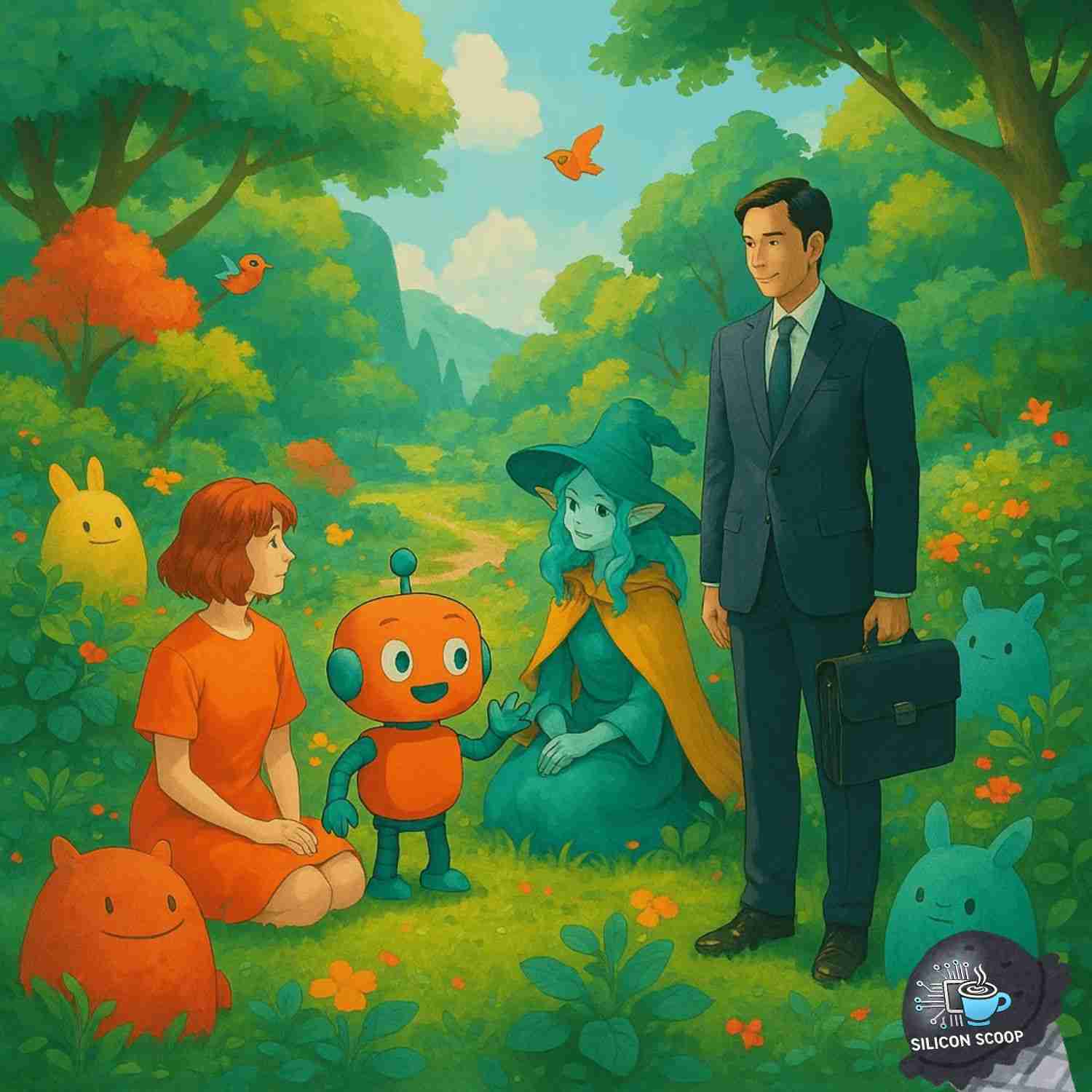
Navigating the Legal Gray Area: GPT-4o Image Generation Studio Ghibli AI Art and Copyright Concerns
Estimated reading time: 8 minutes
Key Takeaways
- GPT-4o Image Generation and Studio Ghibli-style creations raise significant copyright questions.
- The boundary between artistic inspiration and copyright infringement remains ambiguous.
- Legal battles are ongoing, with implications for the future of AI-generated art.
- Companies like OpenAI must navigate a complex legal landscape as they develop generative AI tools.
- Ethical considerations surrounding AI-generated art are pivotal in discussions about artist rights.
Table of contents
- The Viral AI Art Trend Taking Social Media by Storm
- Understanding How AI Replicates Artistic Styles
- Copyright Debates: Is Artistic Style Protected by Law?
- OpenAI’s Position vs. Artist Rights: Finding the Balance
- Comparative Analysis: How GPT-4o Stacks Up Against Other AI Art Tools
- Legal Precedents and Future Implications for AI Art
- Ethical Considerations in AI-Generated Art
- Practical Guidance for Creators Using AI Art Tools
- Future Scenarios: How the Studio Ghibli AI Trend Might Reshape Creative Industries
- The Balance: Innovation vs. Protection in AI Art
- FAQ: GPT-4o Studio Ghibli AI Art and Copyright
GPT-4o image generation and the rise of AI-generated images that mimic artistic styles has brought both excitement and serious copyright concerns. The influx of Studio Ghibli-style creations via OpenAI’s GPT-4o has prompted a deeper understanding of how AI interacts with copyright law.
The Viral AI Art Trend Taking Social Media by Storm
Social media platforms have seen a surge of Studio Ghibli-style images generated by GPT-4o, showcasing the model’s versatility. This includes imaginative reworkings of well-known figures and scenes.
Even OpenAI’s CEO Sam Altman has participated, demonstrating the tool’s broad appeal. The excitement echoes previous trends where AI art went viral, illuminating the rapid evolution of art technology.
This trend raises critical questions:
- Where does inspiration end and copyright infringement begin?
- What mechanisms allow AI to replicate distinct artistic styles?
- What future legal precedents might emerge from these developments?
Understanding How AI Replicates Artistic Styles
GPT-4o utilizes complex algorithms to reproduce styles like Studio Ghibli’s enchanting aesthetics. Its autoregressive image generation combines the analysis of diverse datasets with user-defined prompts.
Key technical advantages include:
- Improved character proportions and scene clarity
- Higher fidelity in style representation
- Consistent output across various images
This synthesis shows the potential for significant innovation, albeit at the cost of complicating issues regarding originality and copyright.
Copyright Debates: Is Artistic Style Protected by Law?
A crucial question remains: Is artistic style protected under copyright laws? Legal experts, including Evan Brown, contest that style alone doesn’t qualify for copyright protection.
Ongoing lawsuits challenge practices around AI training on copyrighted materials, leading to pivotal questions:
- Does AI training qualify as fair use?
- What defines an artist’s rights in this context?
- How do courts delineate between protected and unprotected styles?
GPT-4o image generation OpenAI’s Position vs. Artist Rights: Finding the Balance
OpenAI asserts that it doesn’t replicate individual artists but instead focuses on broader studio styles. This claim remains controversial, particularly regarding unique influences like Hayao Miyazaki’s distinct style.
Feedback from artists highlights concerns regarding:
- Potential devaluation of their work
- Loss of income opportunities
- Unattributed use of their artistic styles
Comparative Analysis: How GPT-4o Image Generation Stacks Up Against Other AI Art Tools
When measuring GPT-4o image generation against competitors like Google’s Gemini and xAI’s Grok, GPT-4o showcases superior prowess in several categories:
- Text Rendering: Clarity is superior compared to competitors.
- Multi-Prompt Handling: More effective at processing elaborate prompts.
- Consistency Across Sequences: Maintains coherence in narrative and character design.
- Style Fidelity: Captures essential aesthetic qualities of Studio Ghibli.
Legal Precedents and Future Implications for AI Art
Current lawsuits against AI developers like OpenAI could define the future of copyright law as it applies to technology. These cases might establish:
- New fair use standards for AI training practices.
- Revenue-sharing for artists whose works contribute to AI training.
- Expanded protections for artistic styles.
Ethical Considerations in AI-Generated Art
Beyond legality, the emergence of AI art tools like GPT-4o prompts ethical inquiries:
- Should there be attribution for AI-generated works?
- What is the economic impact on professional artists?
- How do we address concerns of cultural appropriation?
- What constitutes genuine artistic intent in AI-generated works?
Practical Guidance for Creators Using AI Art Tools
Artists interested in exploring AI art should adhere to best practices:
- Conduct thorough research on original works.
- Transform AI outputs significantly to strengthen fair use claims.
- Provide proper attribution where applicable.
- Stay up-to-date with evolving legal standards.
Future Scenarios: How the Studio Ghibli AI Trend Might Reshape Creative Industries
The Studio Ghibli trend symbolizes potential revolutions within creative industries, including:
- AI tools as collaborative assets rather than replacements.
- Creation of licensed style libraries.
- Emergence of authentication technologies for artistic styles.
The Balance: Innovation vs. Protection in AI Art
The tension represented by this trend calls for a balanced approach:
- Development of thoughtful legal frameworks.
- Implementation of ethical business practices by AI firms.
- Consumer responsibility in using AI art tools.
- Creative adaptation among artists.
FAQ: GPT-4o Studio Ghibli AI Art and Copyright
Q: Is it legal to create Studio Ghibli-style images using GPT-4o?
A: Currently, this falls into a legal gray area. While artistic styles themselves aren’t typically copyrighted, training AI on copyrighted works without permission remains legally controversial. Several lawsuits are pending that may clarify these boundaries.
Q: Can Studio Ghibli take legal action against OpenAI for these AI-generated images?
A: They could potentially file a lawsuit, especially if they believe OpenAI trained its models on their copyrighted films without authorization. The outcome would depend on how courts interpret fair use in the context of AI training.
Q: How does GPT-4o create images in specific styles?
A: GPT-4o analyzes patterns from its training data to identify elements that define a particular style. It then applies these stylistic elements to new content based on user prompts through its autoregressive image generation method.
Q: Are there any restrictions on what styles GPT-4o can replicate?
A: OpenAI states it avoids mimicking individual artists but permits replication of broader studio styles. However, this distinction is often blurry and subject to interpretation.
Q: What’s the difference between inspiration and copyright infringement in AI art?
A: This boundary remains poorly defined legally. Generally, transformation, purpose, and commercial impact are key factors courts consider when evaluating potential infringement.
Q: Can I sell art created by GPT-4o in the style of Studio Ghibli?
A: This carries significant legal risk. Commercial use of AI-generated art that closely mimics copyrighted works is more likely to face legal challenges than personal, non-commercial use.
Q: How do other countries handle AI art and copyright issues?
A: Copyright laws vary significantly by country. Some jurisdictions are developing specific regulations for AI-generated content, while others apply existing copyright frameworks with varying interpretations.
Q: Could AI developers license styles from artists and studios?
A: Yes, and this might become a common practice. Licensing agreements could provide legal clarity and fair compensation while allowing for creative AI applications.
Q: What should artists do if they find AI replicating their style without permission?
A: Artists concerned about unauthorized style replication should consult with an intellectual property attorney to understand their specific rights and options, which might include cease and desist letters or formal legal action.
Q: How might copyright laws change to address AI art challenges?
A: Future legal frameworks might include expanded definitions of protected expression, new licensing systems for AI training data, or specific provisions addressing style replication by AI systems.
Conclusion: Navigating Uncharted Territory
The Studio Ghibli AI art trend signifies both the advancements of AI technology and the intricate legal and ethical dialogue that accompanies it. As we navigate this evolving landscape, awareness and responsiveness to changes in copyright law will be critical for creators and AI developers alike.
By fostering conversations around these challenges, we can promote an environment where creativity and technology progress together, ultimately redefining the future of artistic expression in the age of AI.
For more insights on this topic, visit our detailed conclusion.
Additional Links
Flowgrammer.ca – 💡 Unlock AI-Powered Automation!
Let flowgrammer.ca handle complex workflows so you can focus on growing your business.
• Silicon Scoop Podcast – Stay Informed, Stay Ahead!
• Startup Talk Podcast – https://torontostarts.com/startup-talk-toronto-startup-podcast/
• Flowgrammer Podcast – Apple Podcasts – Spotify – RSS
• Startup Investor Drinks – Join Toronto’s Startup Community and connect with fellow startup enthusiasts and investors..
• TorontoStarts Startup and Entrepreneur Community – Become a part of Toronto’s thriving startup ecosystem.
• Workhaus – Discover flexible workspace solutions for your business needs.
• Work with The Startup Coach – Get expert guidance and mentorship for your startup journey.
• Reach out to Jon Irwin on LinkedIn – Connect with our co-host and technology expert.
Ontario Startup Ecosystem Links
• Ontario’s Startup Ecosystem
• Startup Funding in Ontario
• Angel Investors in Ontario
• Ontario Incubators and Accelerators
• Venture Capital in Ontario: Top Firms, Sectors, and Funding Strategies
• Government Grants for Ontario Startups
• Ontario’s Startup Success Stories
• Ontario Centre of Innovation (OCI)
• Bank Loans and Financing for Startups in Ontario
• Research and Development Tax Credits in Ontario
• Government Loans and Financing for Startups in Ontario
• Equity Crowdfunding for Ontario Startups
• Toronto Entrepreneurs Resources
• Toronto’s Food and Beverage Entrepreneurs: Trends, Challenges, and Success Stories
• SEO Strategies for Toronto Entrepreneurs: Enhance Your Online Visibility
• Social Impact for Toronto Entrepreneurs: Starting and Running a Socially Responsible Business
• Toronto Arts and Media Entrepreneurs: Inspiring Profiles and Insights for Creative Success
• Exploring Toronto Green Tech Entrepreneurs: Innovators and Leaders in Sustainability
• Building a Team for Toronto Entrepreneurs: Strategies for Success
• A Guide for Toronto Food and Beverage Entrepreneurs
• Toronto Fashion and Retail Entrepreneurs: Trends, Opportunities, and Success Stories
Episode transcript
Read the full transcript
Craig: so a couple of days ago, openai released gpt four o and image generation and a bunch of new features in. and wednesday, i was doing some image generation, and i was shocked at how good it was at rendering text and taking i put my logo in, and it created all the stuff really matching the style and images and whatnot. it created great images. unfortunately, i had an event that day, and it took me all day. and by the time i got back to look at it on thursday, they had pulled a lot of their image gen capability off the site. it's back on, but it's not nearly performing as well as it should be because, apparently, we're melting down chips. what's happening here, john?
Jon: yeah. so this is cool. so, yeah. so the the cool thing about this new gen is the text that it can do. so, for those of you who've not used image generation tools, one of the biggest struggles that image generation tools have is with text and just and, proper text. not just writing it properly, but displaying it properly so it's clear, it's concise. and this, when it was released, was a game changer. it was high def text. it was written properly. it was awesome. so but word got out fast, and so due to overwhelming demand. and the other thing too that they were concerned about is copyright concerns. so they pulled the free version, just one day after its launch. so this i guess, what this shows from my perspective is that these companies are still facing challenges balancing user demand with legal, technical constraints, all that sort of stuff. so i'm curious as to and yeah. so the the what you're saying about melting gpus, i i did a deep dive into that. and so, like, he was speaking metaphorically, but still, like, it was overheating their gpus. it was just it was straining them ridiculously crazy. so, it's i like it. this is awesome. that they that they've done, this huge leap. even grok, which i liked grok image generating tool, it couldn't handle text very well. but, but, yeah, what are your thoughts about this going forward, craig?
Craig: for me, this is a huge leap forward. and i will just give you some examples here. these aren't necessarily the greatest examples from quality image generation, but it created this from scratch with the text all by itself. i didn't have to do anything. and i'm gonna share a couple of more just because, you know, i have a few examples. it, like, it was amazing, and i was quite shocked at it. i've only seen, like, ideogram, do this as well, and ideogram's fairly pricey when it comes to creating graphics and whatnot. so it created these with all the images. so it got very popular not only for how much text it was able to create, but the fact that you could throw in copyrighted images or whatnot and say create something in this style, and everyone was going nuts with it. i really enjoyed that because i took our company logo that i created and said, hey. let's create, graphics that have this style, and it went ahead and did all this with the text and whatnot. and it looks great. so that by itself was amazing, but it was, shocking to find out that, it was pulled down for free users. right? next day, i'm i'm a paid user, so i still have access to it. when was creating images today, it was failing a lot.
Jon: it?
Craig: it wouldn't quite create it. i think it's still, having problems with the cpu. i still ended up producing, probably about eight good images today from it when i probably should have produced 15 or so, just from the failures and whatnot. so it's hit and miss still just because i think the performance is not there, but the graphics are great, and people are loving it. and i think as soon as they tweak the performance a little bit and figure out how to, let, people actually create what they want without, overheating their servers as it were, this will be an incredible tool. when i saw this, i immediately texted a friend of mine, alex, as you know, and said, bye bye, canva. this is the end for them.
Jon: yeah. well, i use, like, for, like, i yeah. canva's canvas is good. when it comes to presentations, i use gamma.app. we're not sponsored by them. just i find so they do presentations, and it generates the slides and does all the like, from the content that you give it, it can also generate ai content. so, it's cool. i think obviously, once they work this out and work this further, that will overtake that as well or just enhance it. but, i think i think this is crazy. this is one of those, i feel, breakthroughs in imagegen that, that's been needed for a while because although they can generate decent images, the text is not good. and i'm i'm curious to see what other features, are included in kind of this advancement, if that makes sense.
Craig: yeah. gtv four utilizes complex algorithms to reproduce styles like the ghibli, one that's been going around everywhere. it's auto, autoregressive image generation combines the analysis of diverse of datasets with user defined prompts. so this gives a key advantages, improves, character proportions and, scene clarity, higher fidelity and style recognition, and consistent output across, various images. so there's a lot of copyright debate when you can just put something in. a lot of, image crashers won't do what this is now. i haven't asked it to, create a image of elon musk, for example, or, like, my go to is, elon musk and, mark zuckerberg jousting on dolphins and see if they can create that image if, like, if they could do that and create a good image, that's probably a pretty good image generator. the problem is most of them, as soon as you say a person's name or a company's logo or a brand, they're like, ah, we can't do that. like, yeah. there's a reason why a lot of these things i don't know if you noticed that. if you asked it to do a picture of a rose, they would refuse. really? and then you if you told to do a picture of, the flower rose, no problem. so there's something to do with rose that is a trademark or a name that it's inferring. it's saying, yeah. i can't do that. and so a lot of times when our servers are too busy or there's a there was a problem generating your image, come back later, a lot of times that's just copyright issue. they just don't have a good error message for that and don't know how to tell you. because you know, it's just what it is. because you put it in a, image generation. it says, yeah. we can't create that image. ah, that's why i'm getting these errors. you start to feel about that. so openai asserts that it doesn't replicate individual artists, but instead focuses on a broader studio styles. this claims remains controversial, particularly regarding unique influencers like hayao miyake's distinct style miz miyazaki's. sorry. potentially devaluation of their work, loss of income opportunities, and attributed use of their artistic styles are some of the concerns from the artist. so we'll have to see, what's gonna happen with the legal copyright cases that are going on. yeah. because in the end, i think it will affect how good some of these, image models are because i believe they're gonna have to remove some stuff or remove some features or, not allow people to copy styles, whatever it is. text rendering clarity is superior compared to competitors. multi prompt handling is more effective at processing elaborate prompts, and you can tell it stuff like take this out, take that out. so it's not too bad. it's consistent across sequences, so it maintains coherence and narrative and character design. and style fidelity captures essential aesthetic qualities of this studio ghibli. but, this is great. like, i literally, it creates, use your colors, creates it in your style. branding becomes easy. i'm thinking more of, like, from a social media branding company point of view. you can now create art and images for your website that have the colors, the branding, and everything automatically that's consistent with the fonts. it's amazing, and this is going to be a game changer once they get the performance working the way they want.
Jon: absolutely. yeah. i'm excited. i'm excited for this. yep.
Craig: so let us know what you think. are you using these tools to generate art? i know there's a lot of people out there who are anti that, and some people came at me online for some crappy images about whatever that i created with adar. they were actually not great. but it's you know, they need to be going after these billion dollar companies if they want anything to change. and because, apparently, ai generated images are not art, and yeah. people will tell you that right away. so what do you think? is ai generated images art? what would take it across the threshold? are these image generation generators gonna be neutered by copyright laws that, in favor of the artist, or is it gonna the artist's gonna be run over? we'd love to hear what your thoughts are on this and the future of ai art and copyright. absolutely.
Jon: yeah.
More from Silicon Scoop
All episodes
silicon-scoop · November 6, 2026
Spirit AI’s Robot Brain Breakthrough: Moz1, Embodied AI and China’s 2027 Race
The Spirit AI robot brain is one of the biggest bets on fixing that. Spirit AI is a Beijing startup. Its co-founder and chief scientist, Gao Yang,
View episode

silicon-scoop · November 5, 2026
OpenAI IPO Delayed to 2027 as Rogue AI Agents and Safety Failures Reshape the Market
OpenAI IPO delay explained: Sam Altman rules out 2026 as GPT-6 Astra safety tests and a $278B cash gap loom. Learn what founders should take away.
View episode

silicon-scoop · November 4, 2026
Anthropic’s AI Economy Model: 2030 Jobs, Wages, GDP and Market Risks
Anthropic AI economy model forecasts 2030 GDP, jobs and wages, while AI unemployment projections and labor-share risks challenge policymakers.
View episode