
Apple AI Doctor: Transforming Healthcare with Personalized Health Insights
Discover how Apple’s AI Doctor is transforming healthcare with personalized insights, seamless integration, and advanced monitoring. Embrace the Digital Health Revolution today! https://torontostarts.com/2025/05/02/apple-ai-doctor-health-revolution/ Silicon Scoop Podcast - https://torontostarts.com/silicon-scoop/ Apple: https://podcasts.apple.com/us/podcast/silicon-scoop/id1758711826 Spotify: https://open.spotify.com/show/5bAzF0MwV6TtLhJAhvHayI YouTube: https://www.youtube.com/playlist?list=PLj4v-RoA7A-gT62vrEYqh1zCv-0Hj-o5J Scalable content + podcast marketing for startups. 👉 https://flowgrammer.ca/%F0%9F%9A%80-fuel-your-growth-with-modular-content-podcast-marketing/ Get expert startup coach support and funding prep. 👉 https://torontostarts.com/startup-coach/ Startup Talk Podcast - https://torontostarts.com/startup-talk-toronto-startup-podcast/ Startup Investor Drinks Toronto - https://startupdrinksto.com/ Toronto’s Startup Community - https://torontostarts.com/ Flowgrammer Apple -> https://podcasts.apple.com/us/podcast/flowgrammer-podcast/id1804155588 Spotify -> https://open.spotify.com/show/0wv3feR00iaVpE8zn7niNf Flowgrammer.ca -> https://flowgrammer.ca/ AI News and Resources -> https://flowgrammer.ca/resources/
With Craig Major and Jon Irwin
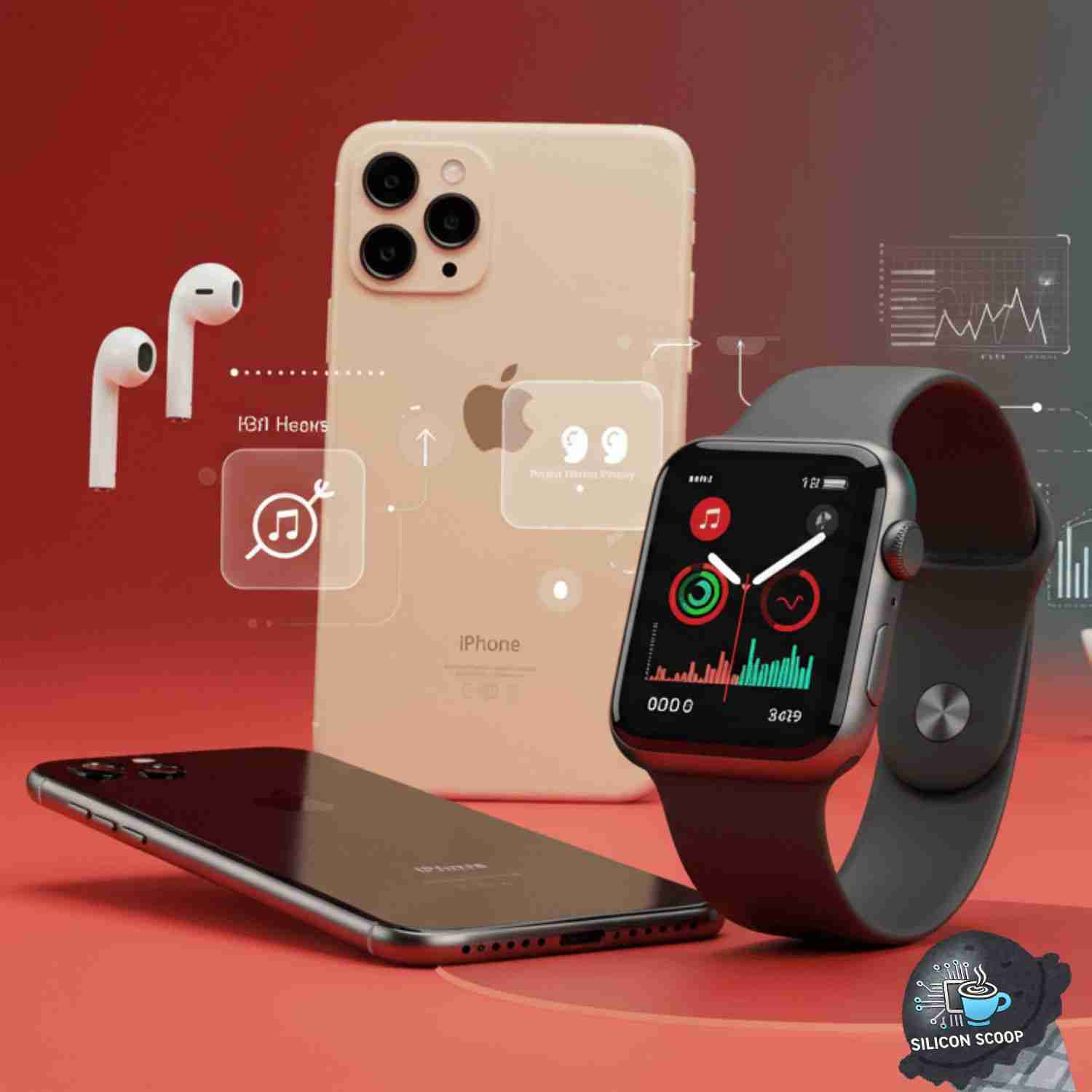
Apple AI Doctor: Revolutionizing Health Through Digital Health Revolution
Estimated reading time: 7 minutes
Key Takeaways
- Apple AI Doctor aims to redefine health management through personalized insights.
- The service is designed for continuous health monitoring rather than just periodic checkups.
- Apple AI Doctor utilizes data from Apple devices to provide tailored recommendations.
- Challenges include regulatory hurdles and data privacy concerns.
- The service complements traditional healthcare rather than replacing it.
Table of contents
- Deep Dive: Apple’s AI Doctor Service
- Enhanced Apple Watch Health Features for AI Integration
- AI Doctor vs. Traditional Healthcare Solutions
- AI’s Role in the Digital Health Revolution
- The Future of Healthcare Technology
- User Adoption and Accessibility of AI Doctor
- Expert Reactions to Apple’s Healthcare Ambitions
- Conclusion: The Impact of Apple’s AI Doctor
- FAQ: Apple’s AI Doctor and the Digital Health Revolution
In an age where technology seamlessly integrates into every aspect of our lives, Apple is making a groundbreaking move into healthcare. The tech giant is set to redefine how we manage our health with its AI Doctor service, combining advanced artificial intelligence capabilities with wearable technology to deliver personalized health insights like never before.
Deep Dive: Apple AI Doctor Service
The AI Doctor App is designed to be a comprehensive health companion that works seamlessly with your Apple devices. What sets this service apart is how it integrates real-time health data collected from Apple Watches, iPhones, and even earbuds to generate tailored health recommendations.
This innovative system has been trained using insights from physicians, allowing it to:
- Monitor chronic health conditions
- Predict potential health risks
- Offer personalized lifestyle adjustments
- Provide video content from specialists in nutrition, sleep, and cardiology
One particularly impressive feature is the app’s ability to analyze your workout form using your iPhone’s camera. This functionality offers immediate feedback to help improve your exercise technique, reducing injury risk and maximizing effectiveness.
The AI Doctor doesn’t just collect data—it transforms it into actionable insights that can have a meaningful impact on your health journey.
Enhanced Apple Watch Health Features for AI Integration
Apple Watch users can expect significant enhancements to support the AI Doctor service. Future updates may include advanced metrics for heart health monitoring and potentially game-changing non-invasive glucose monitoring, which is currently in development.
Existing features are being optimized to feed valuable data into the AI Doctor service:
- Hydration tracking
- Comprehensive sleep monitoring
- Activity and exercise metrics
- Heart rate variability
These capabilities enable the creation of holistic health profiles. For instance, your Apple Watch might detect irregular heartbeats or glucose fluctuations, triggering actionable alerts and personalized coaching to address potential issues before they become serious problems.
This proactive approach represents a shift from reactive healthcare to preventative wellness management.
Apple AI Doctor vs. Traditional Healthcare Solutions
While telemedicine platforms and traditional in-person visits remain essential for acute medical care, Apple’s approach offers distinct advantages:
- 24/7 predictive analytics: Continuous monitoring instead of point-in-time assessments
- Cost-effective prevention: Identifying issues before they require expensive interventions
- Convenience: Health insights without scheduling appointments
Competitors like Fitbit and Samsung offer health tracking capabilities but lack Apple’s comprehensive ecosystem integration. Other companies are making moves in this space—Oura’s AI Advisor and Whoop’s ChatGPT-powered coach demonstrate industry-wide momentum toward AI-powered health solutions.
Pros of Apple’s AI Doctor approach:
- Scalability across millions of users
- Early risk detection capabilities
- Seamless integration with devices you already own
Cons and challenges:
- Regulatory hurdles, including FDA approvals
- Data privacy concerns
- Potential for over-reliance on technology over medical professionals
The key distinction is that Apple isn’t positioning AI Doctor as a replacement for medical care, but rather as an intelligent complement to traditional healthcare.
AI’s Role in the Digital Health Revolution
Apple’s model accelerates several important healthcare trends, including patient empowerment and reduced healthcare costs. By training algorithms on physician expertise, the service effectively bridges the gap between passive data collection via wearables and actionable healthcare interventions.
The Digital Health Revolution is characterized by:
- Shift from reactive to proactive healthcare
- Democratization of health information
- Continuous monitoring versus periodic checkups
- Data-driven decision making
Potential partnerships with healthcare providers could further legitimize AI Doctor’s role in chronic disease management. Insurance companies might offer incentives for users who actively engage with the platform, creating a positive feedback loop that benefits patients, providers, and payers alike.
This approach represents a fundamental rethinking of how healthcare is delivered and consumed.
The Future of Healthcare Technology
Beyond the current capabilities, Apple may expand into mental health tracking and additional non-invasive diagnostics. The roadmap likely includes increasingly sophisticated health predictions based on larger datasets and more refined AI models.
However, significant challenges remain. One major concern is the potential for AI hallucinations—a flaw that’s been observed in other AI systems, including some of Apple’s recently paused news summary tools. Ensuring the AI provides accurate, reliable health information is paramount.
The healthcare technology industry watchdog ECRI has flagged AI-driven errors as a top healthcare risk, underscoring the need for robust oversight and validation mechanisms. For Apple’s AI Doctor to succeed, it must balance innovation with reliability and safety.
Future developments might include:
- Expanded biomarker monitoring capabilities
- Integration with electronic health records
- Advanced pattern recognition for early disease detection
- More sophisticated personalized intervention recommendations
These advancements could fundamentally transform how we approach healthcare, making prevention truly personalized.
User Adoption and Accessibility of AI Doctor
The AI Doctor service is expected to launch with iOS 19.4, likely in spring or summer 2026. Hardware requirements will include Apple Watch Series 10 or newer, ensuring the device has sufficient processing power and sensors to support advanced health monitoring.
Pricing models will likely mirror Apple’s subscription-based approach with services like Apple Health+. There’s potential for insurance integrations to offset costs, making the service more accessible to a wider population.
Accessibility considerations include:
- Different pricing tiers for various feature sets
- Potential subsidies through healthcare partnerships
- Compatibility with existing Apple devices
- Localization for different healthcare systems globally
For users to maximize the benefits of AI Doctor, they’ll need to consistently wear their Apple Watch and actively engage with the platform’s recommendations. The more data the system has, the more personalized and accurate its insights become.
Expert Reactions to Apple’s Healthcare Ambitions
Industry experts have expressed both enthusiasm and caution about Apple’s healthcare initiatives. Joseph Nathan from ForSight Robotics noted Apple’s pragmatic approach to health tech, focusing on incremental improvements rather than making unrealistic medical claims.
Meanwhile, ECRI has warned about the potential for misleading AI outputs in healthcare contexts. These contrasting perspectives highlight the tension between innovation and reliability that characterizes the digital health space.
Key expert insights include:
- Recognition of Apple’s strong position in consumer health data collection
- Concerns about appropriate regulatory oversight
- Questions about clinical validation of AI-generated recommendations
- Acknowledgment of the potential to democratize healthcare knowledge
These varied reactions reflect the transformative potential of Apple’s approach while acknowledging the serious responsibility that comes with providing health guidance.
Conclusion: The Impact of Apple’s AI Doctor
Apple’s AI Doctor exemplifies the powerful convergence of artificial intelligence and consumer technology in the health space. By offering accessible, predictive care guidance, Apple is democratizing health insights in ways previously unimaginable.
While not designed to replace traditional medical visits, the AI Doctor service creates a supplementary layer of health guidance that can help users make more informed decisions about their well-being. It represents a significant step toward truly personalized healthcare—a central goal of the Digital Health Revolution.
For consumers interested in leveraging this evolving ecosystem, now is the time to:
- Ensure compatibility with upcoming hardware requirements
- Explore existing Apple Health integrations
- Understand how your health data can work for you
- Consider the potential benefits of continuous health monitoring
As Apple continues to refine its approach to AI-powered healthcare, users stand to benefit from increasingly sophisticated and personalized health insights delivered right to their wrists.
FAQ: Apple’s AI Doctor and the Digital Health Revolution
Q: When will Apple’s AI Doctor service be available?
A: The AI Doctor service is expected to launch with iOS 19.4, which is anticipated in spring or summer 2026. This timeline allows Apple to refine the technology and secure necessary regulatory approvals.
Q: What devices will I need to use the AI Doctor?
A: You’ll need an Apple Watch Series 10 or newer, along with a compatible iPhone. The service relies on the advanced sensors in newer Apple Watch models to collect the comprehensive health data needed for meaningful AI analysis.
Q: How does Apple’s AI Doctor differ from seeing a real doctor?
A: The AI Doctor is not a replacement for medical professionals. Instead, it serves as a continuous health monitoring system that can detect patterns, offer wellness suggestions, and alert you to potential concerns that might warrant professional medical attention.
Q: Will my health insurance cover the cost of Apple’s AI Doctor service?
A: While specifics haven’t been announced, Apple is likely exploring partnerships with health insurance providers. Some insurers might offer incentives or subsidies for using the service as part of preventative health programs.
Q: How does Apple protect my health data privacy?
A: Apple has emphasized its commitment to user privacy with health data stored on-device and encrypted. Additionally, their privacy policy states that health data isn’t sold to third parties. However, as with any health technology, users should review privacy terms when the service launches.
Q: Can the AI Doctor diagnose medical conditions?
A: The AI Doctor is not designed to diagnose medical conditions in the clinical sense. Rather, it identifies patterns that might indicate increased risk and suggests appropriate actions, which could include consulting a healthcare provider.
Q: How accurate are the AI Doctor’s health insights?
A: The system is being trained on physician insights and medical data, but like all AI systems, it will have limitations. Apple is likely implementing rigorous testing protocols to minimize errors, especially given the sensitive nature of health information.
Q: Will the AI Doctor feature be available globally?
A: Initial availability will likely focus on markets where Apple has established healthcare partnerships and navigated regulatory requirements, with gradual expansion to additional regions over time.
Q: How does the AI Doctor integrate with existing healthcare systems?
A: Apple is working on partnerships with healthcare providers to facilitate data sharing (with user permission) between the AI Doctor system and electronic health records. This integration would allow for more comprehensive health management.
Q: What happens if the AI Doctor detects a serious health concern?
A: If the system detects significant abnormalities, it will likely provide clear guidance on next steps, which could include seeking immediate medical attention. However, the system will be designed with appropriate disclaimers about its limitations compared to professional medical care.
Additional Links
Flowgrammer.ca – 💡 Unlock AI-Powered Automation!
Let flowgrammer.ca handle complex workflows so you can focus on growing your business.
• Silicon Scoop Podcast – Stay Informed, Stay Ahead!
• Startup Talk Podcast – https://torontostarts.com/startup-talk-toronto-startup-podcast/
• Flowgrammer Podcast – Apple Podcasts – Spotify – RSS
• Startup Investor Drinks – Join Toronto’s Startup Community and connect with fellow startup enthusiasts and investors..
• TorontoStarts Startup and Entrepreneur Community – Become a part of Toronto’s thriving startup ecosystem.
• Workhaus – Discover flexible workspace solutions for your business needs.
• Work with The Startup Coach – Get expert guidance and mentorship for your startup journey.
• Reach out to Jon Irwin on LinkedIn – Connect with our co-host and technology expert.
Ontario Startup Ecosystem Links
• Ontario’s Startup Ecosystem
• Startup Funding in Ontario
• Angel Investors in Ontario
• Ontario Incubators and Accelerators
• Venture Capital in Ontario: Top Firms, Sectors, and Funding Strategies
• Government Grants for Ontario Startups
• Ontario’s Startup Success Stories
• Ontario Centre of Innovation (OCI)
• Bank Loans and Financing for Startups in Ontario
• Research and Development Tax Credits in Ontario
• Government Loans and Financing for Startups in Ontario
• Equity Crowdfunding for Ontario Startups
• Toronto Entrepreneurs Resources
• Toronto’s Food and Beverage Entrepreneurs: Trends, Challenges, and Success Stories
• SEO Strategies for Toronto Entrepreneurs: Enhance Your Online Visibility
• Social Impact for Toronto Entrepreneurs: Starting and Running a Socially Responsible Business
• Toronto Arts and Media Entrepreneurs: Inspiring Profiles and Insights for Creative Success
• Exploring Toronto Green Tech Entrepreneurs: Innovators and Leaders in Sustainability
• Building a Team for Toronto Entrepreneurs: Strategies for Success
• A Guide for Toronto Food and Beverage Entrepreneurs
• Toronto Fashion and Retail Entrepreneurs: Trends, Opportunities, and Success Stories
Episode transcript
Read the full transcript
Craig: welcome back to silicon scoop. with me as always, my cohost, john erwin, funding expert and tech geek like myself.
Jon: yeah.
Craig: his first article is apple is reading its biggest push into health yet with its new ai doctor. what's going on here, john?
Jon: yeah. so let me caveat this by skepticism with the things that apple have been releasing lately with their quote, unquote apple intelligence, their quote, unquote, in, improved siri. this is just another line of, i believe, maybe overpromising, under delivering, but we'll have to see. so apple's they're calling it project mulberry. it centers on a completely redesigned health app, which features two ai agents. one is a virtual health coach, and the other is an ai doctor, quote, unquote. so what they're saying that it's gonna do is these systems are gonna analyze data from iphones, apple watches, third party devices, and then they're gonna generate personalized recommendations for fitness, nutrition, sleep, and chronic conditions like hypertension. the thing that the ai apparently does is that it leverages a few things. it leverages real time camera analysis, so for workout form correction and feedback. it leverages multimodal data fusion, which combines heart rate, blood oxygen, sleep patterns, and dietary inputs, which the dietary inputs come through this new food tracking feature. i don't know. and also llms. so the llms are trained on medical datasets, which are curated by in house physicians and external specialists in cardiology, nutrition, and mental health. so the thing that makes this seem kind of viable is that the ai training pipeline includes reinforcement learning from human feedback, so r l rlhf, where physicians validate outputs to ensure alignment with best practices. so, yeah, we've got this cool thing. i'm skeptical that it's actually gonna work. what do you think, craig? you're not on the stage, by the way.
Craig: thank you. sorry. our internet went out here. i'm switched to my cell phone. it looks like it might be back up, but i'm not convinced. i don't wanna switch over just yet. it's interesting. i'm always skeptical of these things for a number of reasons. one, i have experimented with a bunch of these, maybe not quite as much as you have, but they never track my sleep properly, which has always been an issue. so i take a step back and say, okay. what it says ai doctor, but what can it do? it's like it provides, video content. it's an add on to fitness plus, so you can film yourself doing exercises, and it'll correct your form, like or show you what you're doing wrong and that kind of thing. it'll provide video content, like, for nutrition, sleep, cardiology, analyze your workout, monitor your chronic health conditions, like your, the regular regularity of your heart rate
Jon: yeah.
Craig: that kind of stuff. so it it doesn't actually do doctor y stuff.
Jon: no. so it's no, it it yeah. they're calling it an ai doctor, but it's not really an ai doctor. so
Craig: yeah. that's what i'm trying to get at.
Jon: yeah. so it's got it it does it it does do ai doctor stuff in the background kind of thing, but it's not an ai doctor per se. does that make sense?
Craig: yes. yeah. yeah. because it's tracking your heart rate. it's doing some stuff, but it's you know, if it integrates with, like, your electronic health care records if you want. it can offer insights about a bunch of things. it can help you schedule appointments and do some predictive analysis and things. but, you know, it can't diagnose medical conditions. it won't replace traditional health care solutions. it doesn't guarantee perfect accurate health insights, you know, and potential for ai to hallucinate. so i i guess my biggest problem with this is i don't like the fact that they called it an ai doctor. it's more of a you
Jon: need it. ai apple sale, i think.
Craig: yeah. you know, it's, ai health care assistant, adviser, you know, keep up with that.
Jon: that's you know? ai fitness. that's all it is. and who knows what to be with ai, like like, with apple. so i've got this i don't know if you can see it. no. you can't. oh, yeah. the ring. so i've got i think this tracker ring that i use, and it's got a bunch of sensors in it. and it sleep horribly. and like you like like anything that you've tried, it does not track sleep very well. it's pretty good at the heart rate and resting heart rate and all that sort of stuff. but, i'm curious. yeah. i'm based on apple's fails on anything ai related, i'm skeptical about this even working.
Craig: yeah. and so i take a step back as we go through it, and i say, that's exactly the reason why apple's doing this. i think, they're not collecting your data unless you do, sign up for all this stuff. and so if you sign up for fitness or this new ai doctor service, it's gonna collect all this data and be able to feed its ai where it's way behind. right? where it'll be able to do off device stuff because you've signed up for this thing where, typically, it's all has to be on device because it's keeping your stuff private. i think this opens up, for those of you who don't follow, apple's got some is way behind on ai and for a number of reasons. one, they don't like to, share your data, take your data, and aggregate it. so i love it. yeah. which is great. and two, they're focused on device ai. so that is part of the whole reason. like, because you can do the processing of what it is you're on device, you don't have to send it to servers. that means they can't they don't have to keep it. right? that's why they so but at the same time, that means their ai processing power is severely limited. what they can do with it is severely limited. but now they can take steps like this and say, alright. you signed up for our health care app. we're gonna monitor your heart rate, your exercise, everything you eat, everything you do, your form, this, that. and millions and millions of people will sign up for this because apple will give it away for free for six months if you get a new device or whatever. and they're gonna start collecting millions of day, data on this, which will only help feed their ai to become actually a better health care monitoring app. so i agree with you. at first, i don't trust is not a good word. i don't rely on this to actually do a lot more than what it does today. yeah. but at the same time, they're putting the, heartbeat monitors in the headphones. and that's gonna be able to do more and more. i don't know all the patent stuff related to the new headphones coming out. so this will be interesting to see. and, in fact, actually, it's not just the new ones coming out. i think, it's software to airpod pro twos that you can go back to that have it. of course. new, the new beats pro has it. so those types of things are adding on. so we're getting to a better place where we can actually get to the quantified self. remember, what was it, twenty years ago when everyone was tracking everything to become a quantified self and, yeah, tracking all that stuff, and it became a very big, a thing maybe about twenty years ago, ten years ago, whatever it was. but then now we're starting to get to the places where we're tracking enough stuff
Jon: okay.
Craig: we can get to that point. right? like, our watches are monitoring our heart rate almost twenty four hours a day. we're taking it every few minutes. we're we're monitoring what you eat. we're monitoring how you exercise. we're monitoring all these things semiautomatically. so now it becomes way easier to look at all these data and say, okay. how do i relate what i ate, what i did, what i drank, to how badly i'm sleeping?
Jon: yeah. yeah. so i'll be curious. like, there are apps that kind of do this already. i'm curious to see what their nutritional, whatever thing is that they're gonna do. but, yeah, i'm i'm i'm curious. i again, they're charging $10 a month, it seems like, for this. so, i'm yeah. again
Craig: it it seems crazy. like, when you think about why build this stuff into the device and then charge for it? hydration tracking. well, what does that mean exactly? i, these are non, invasive glucose monitoring, which is a game changer. if they get that patent, then they're allowed to your watch can monitor your glucose levels. so that's a good thing. yeah. they talk about hydration tracking, but i'm not sure exactly. does that mean you have to tell it how much you're drinking? because anything like that doesn't work very well, or does it track it based on something else? comprehensive sleep monitoring, that's great. if it actually works, activity actually measures heart rate variability. so there's some interesting stuff, that it tracks. i just don't know if it's actually going to be worth the value. and you're right. it's an extra $10. so it's an extra $10 on top of, i think, apple fitness plus.
Jon: yeah. okay. i don't know. the only thing i like apple is macbook pros. everything else, i can't stand, so you would know more than i would.
Craig: well, it's historically, a lot of the functionality that's in fitness was just built into the, apps and built into the system. but somehow, they've taken that out and wanna make you to pay a monthly fee for
Jon: that now. so, it
Craig: is what it is. i don't find that fitness plus is great, because they're they're hyping up, you know, the, what do you call that? what was that bike that was so popular, that it
Jon: would have
Craig: yeah. they're pumping up that kind of experience where you have the group exercise, you've got the trainer, you got the person to follow so you can pick your exercise routine. that'll give you the music and pump you up and all that kind of stuff, which is okay, if you want that. yeah. but, you know, some people just want some basic tracking functionalities of what they do so they can record it and put through all that stuff. and they don't wanna have to pay all that extra because they don't care about video coaching. they don't care about all these other things. so, it's it it is interesting where they divided those lines and, really taken some functional well led away from other people. and if you're into that, peloton, the group thing, the challenges, that's great. but there's plenty of other apps out there, like, i'm trying to remember the running ones and all that where they have the competitive, stuff out there. so if you are involved in a group of runners, you probably won't be using this because they all won't be using this. they'd be using some standard third party app that this will report into. so you could work out with your running group and compare your stats and that kind of stuff. so it's it's not for everyone is all i'm saying. and yeah. the features aren't necessarily for everyone. and i again, going back to this, i really don't like that they're calling this, ai doctor because, you know but i like that we're getting more and more tracking. yes. if we can have alerts going out or something happens to someone automatically, like, you know, help my phone and i can't get up type alerts and stuff, we're getting more and more to this. and if we get more and more tracking for people, especially as you get older, i forget. this? have i done that? you know? and i don't consider myself that old, but i'm definitely older. you definitely would like tools like this to, hey. you're you haven't exercised enough today or you haven't done this or you have or what have you to help you
Jon: along those ways. yeah. the nudging. yeah. yeah.
Craig: you know, the nudging to eat, the nudging to hydrate, the nudging to do whatever from that perspective. i'm looking forward to a healthier society. i'm just not sure if everyone's willing to pay an extra $10 a month for it.
Jon: yeah. that's a lot more expensive than i i think it's more expensive than aura, i think aura is 6 or $7 a month. and they have a like, that's dedicated. they like, so knows? who knows if the price point is going to deliver on functionality and features? but based on their history with anything ai related, they've failed. so, we'll have to see if this is their first win.
Craig: yeah. so let us know what you think. are you jumping on this bandwagon? because you're all in on, health stuff in apple and how they're going? are you favor some other platform or neither of those things? let us know. leave comments below.
More from Silicon Scoop
All episodes
silicon-scoop · October 30, 2026
Anthropic Threat Report Reveals AI Misuse in Bioweapons, Cyber Ops, and Influence Campaigns
Anthropic threat report details biological weapons, AI misuse, and Claude AI abuse across cyber ops, influence campaigns, and weapons development.
View episode

silicon-scoop · October 29, 2026
Canada’s National AI Literacy Initiative: Inside the $2.3B Strategy to Train a Million Students
Canada’s National AI Literacy Initiative under the AI strategy aims to train 1M students, educators and workers with free AI literacy courses via Amii and partners.
View episode

silicon-scoop · October 28, 2026
OpenAI Cuts Cursor Off After SpaceX’s $60B Deal: How Model Access Became a Strategic Weapon
OpenAI Cursor fallout: SpaceX acquisition triggers change-of-control clause, AI model access cutoff, and a new era of strategic control over developer tools.
View episode