
Government Grants and Loans for Startups in Canada
ntmage·September 13, 2024
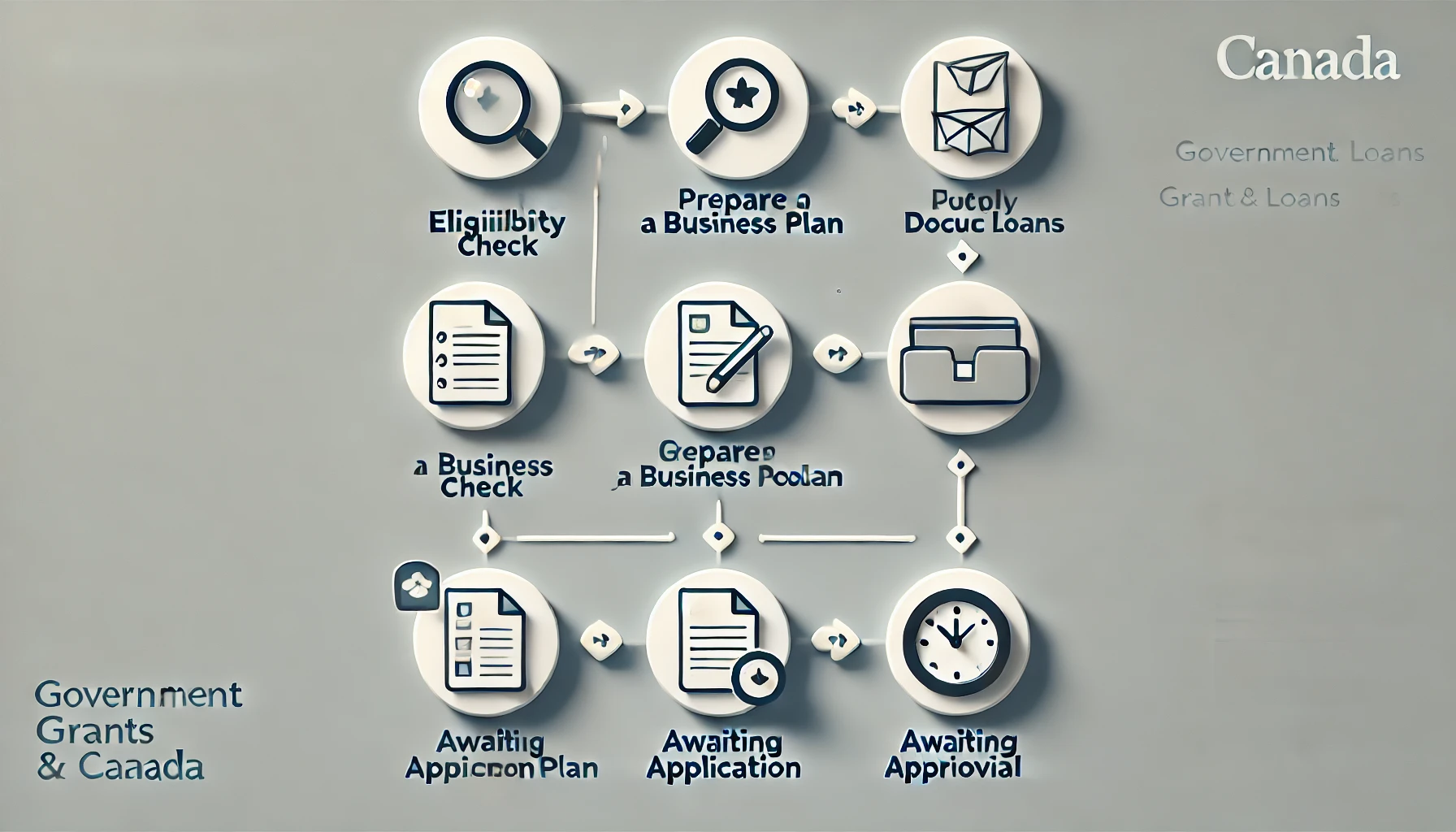
Choose a program around the work you need to fund
Start with your project, then compare who can apply, what the money covers and when you need cash. These are different funding routes; a tax credit or repayable contribution should not be counted as a grant.
| Program | Best fit | Support and cash timing | What to prepare |
|---|---|---|---|
| Starter Company Plus | Ontario residents 18+, citizens or permanent residents, not in full-time school | Up to $5,000; local selection and training requirements apply | Business plan, budget and cash or in-kind contribution of at least 25% of the grant |
| NRC IRAP | Incorporated, for-profit Canadian companies with up to 500 employees developing innovative technology | Project-specific support; funding is assessed individually | Technical project, commercialization plan, team capabilities and Canadian economic benefits |
| Ontario Job Grant | Eligible Ontario employers operating for at least one year | Cost sharing for approved third-party training; standard maximum $10,000 per trainee | Provider quote, training outcomes, employee details and employer contribution |
| CanExport SMEs | Canadian SMEs developing new international markets | 2026–27 support: $10,000–$50,000, up to 50% of eligible project costs. Intake closed August 31, 2026 | Export market plan and cash contribution; wait for a confirmed next intake |
| Summer Company | Eligible Ontario students aged 15–29 returning to school | Up to $3,000 in two stages; Toronto next intake January 25–May 21, 2027. Closed until then | Student eligibility, summer business plan and participation commitments |
| Invest Ontario Fund | High-impact Ontario investment projects | Tailored grants or loans; this is not a general idea-stage grant | Investment scope, jobs, sector fit, budget and project impact |
Worked example: an eligible Ontario founder requests a $5,000 Starter Company Plus grant. The minimum contribution is $1,250, so the plan accounts for at least $6,250 in combined grant and founder contribution. The contribution can be cash or in kind under the provincial rules, but the local centre decides which costs and evidence it accepts. Being eligible does not establish that a local intake is open.
Contrast that with an incorporated technology company planning an R&D experiment. For IRAP, explain the technical objective, people, costs and route to market. A founder looking only for general rent or routine website development should not assume that the project fits. For training, compare Ontario Job Grant instead.
For an illustrative $40,000 CanExport project, a 50% contribution would be $20,000 and the company would need $20,000 in cash. This is a planning example for a future intake, not an invitation to apply to the closed 2026 window. Confirm eligible activities before committing spending.
Which intake can you plan around?
Intake information checked October 26, 2026. A published program and an open application are different things. Toronto dates apply to the Toronto delivery centre; another municipality may use a different window.
| Program | Current application position | Who should prepare | Next practical step |
|---|---|---|---|
| CanExport SMEs | Closed August 31, 2026 at noon Eastern. No next intake announced on the official page | Export-ready Canadian SMEs; up to $50,000 under the closed 2026–27 terms | Prepare market choices, eligible activity quotes and cash contribution. Wait for new intake terms before treating the old guide as an open offer |
| Summer Company — Toronto | Next announced window: January 25–May 21, 2027. Currently closed | Eligible students 15–29 returning to school, starting a new summer business | Build the business plan, start-up budget and revenue forecast. Allow for eight weeks for secondary students or twelve for post-secondary students |
| Black Founders Network | The 2026 cycle is closed; no next cohort dates confirmed on the checked main page | Choose Core, Accelerate or Scale according to stage; cohort selection is separate from community access | Use our stream-specific application guidance below; do not assume last cycle's deadlines or awards apply to the next one |
| NOHFC Invest North — Launch | Official application route available; no fixed Launch deadline stated | Eligible new Northern Ontario ventures with full-time owners; sector exclusions apply | Check regional eligibility and excluded costs first. Prepare a financing plan including the required owner contribution |
| Ontario Creates Screen Marketing and Discoverability | Continuous intake closes December 16, 2026, 5 p.m. Eastern | Eligible screen projects with previous Ontario Creates Production investment | Confirm the prior production investment and linear/interactive stream, then prepare the marketing budget in the official portal |
The Ontario Creates offer above combines the former IDM Discoverability and Commercialization and Film Marketing and Distribution initiatives. It does not make every app, game or software company eligible. Keep the original production-funding agreement with your application evidence.
For programs without a published closing date, begin with the official intake conversation and ask about available budget, eligible start dates and the full application process. Do not book costs against an assumed award.
Government Grants and Loans for Startups in Canada: Comprehensive Guide 2024
1. Introduction to Government Grants and Loans in Canada
Understanding Government Grants and Loans for Startups in Canada
Starting a business in Canada is an exciting venture filled with opportunities and challenges. One of the most significant hurdles for startups is securing adequate funding to turn innovative ideas into reality. Government grants and loans for startups in Canada serve as vital resources, providing the necessary financial support to help businesses launch, scale, and innovate without bearing the full financial burden alone.
Government grants are non-repayable funds designed to support specific projects or initiatives. These are typically awarded based on merit, innovation, or alignment with governmental priorities. On the other hand, government loans are repayable with interest and are intended to help startups manage capital expenses, purchase equipment, or expand operations. Understanding the difference between grants and loans is crucial for startups to choose the right funding option that aligns with their business goals and financial strategy.
Government funding plays a pivotal role in the Canadian startup ecosystem by fostering innovation, promoting economic growth, and supporting entrepreneurs in various stages of their business journey. Whether you’re launching a tech startup in Toronto or an agri-tech venture in Alberta, there’s likely a government-backed financial support program tailored to your needs.
2. Federal-Level Grants and Loans
Top Federal Grants and Loans for Startups in Canada
At the federal level, several programs are designed to support startups across diverse industries. These programs not only provide financial assistance but also offer resources and mentorship to help businesses thrive.
Canada Small Business Financing Program (CSBFP)
The Canada Small Business Financing Program (CSBFP) is a loan program that assists startups and small businesses in acquiring financing for purchasing equipment, improving properties, or expanding operations. This program is ideal for businesses with annual revenues under $10 million, offering up to $1 million in loans.
- Eligibility: Businesses with less than $10 million in annual revenues.
- Link: CSBFP Official Website
Industrial Research Assistance Program (IRAP)
The Industrial Research Assistance Program (IRAP) provides financial support to startups engaged in research and development (R&D) projects. Focused on innovation and technology-based companies, IRAP offers advisory services and funding to help businesses overcome technical challenges.
- Eligibility: Incorporated, profit-oriented small or medium-sized businesses with fewer than 500 employees.
- Link: IRAP Official Page
Canada Media Fund (CMF)
The Canada Media Fund (CMF) supports startups in the media and entertainment industry by funding projects in television and digital media content. This program is perfect for Canadian-controlled companies involved in media production.
- Eligibility: Canadian-controlled media production companies.
- Link: Canada Media Fund Website
Strategic Innovation Fund (SIF)
The Strategic Innovation Fund (SIF) aims to support large-scale, high-impact projects that stimulate innovation and provide economic benefits to Canada. Focusing on advanced manufacturing, clean technology, and digital industries, SIF is geared towards businesses with innovation-driven goals.
- Eligibility: Open to large projects with significant innovation and economic impact.
- Link: Strategic Innovation Fund Page
Women Entrepreneurship Strategy (WES)
The Women Entrepreneurship Strategy (WES) is a federal program that provides funding specifically for women entrepreneurs to help start or grow their businesses. WES aims to address the unique challenges faced by women in the startup ecosystem.
- Eligibility: Women-led or owned businesses.
- Link: WES Official Page
3. Provincial-Level Government Grants and Loans
Provincial Grants and Loans Across Canada
In addition to federal programs, each Canadian province offers its own set of grants and loans tailored to support local startups. These provincial programs often complement federal initiatives, providing additional resources and specialized support based on regional economic priorities.
Ontario
Ontario, being Canada’s largest economy, offers several funding programs for startups:
- Ontario Innovation Tax Credit (OITC): Provides a refundable tax credit for small businesses conducting scientific research and experimental development.
- Ontario Business Support Grant: Offers grants to help businesses cover costs during times of economic hardship, such as the COVID-19 pandemic.
Quebec
Quebec focuses on fostering research and innovation through programs like:
- Programme de soutien aux organismes de recherche et d’innovation (PSO): Grants to support research and innovation in Quebec-based startups.
British Columbia
British Columbia encourages tech innovation with programs such as:
- Innovate BC Ignite Program: Provides funding for tech startups working on innovative solutions in natural resources, applied sciences, and engineering.
Alberta
Alberta supports small and medium-sized businesses through initiatives like:
- Alberta Innovates Voucher Program: Grants for businesses working on innovation and product development.
For detailed information on provincial funding opportunities, explore our Find official regional business support.
4. Industry-Specific Grants and Loans
Sector-Specific Funding Opportunities
Certain government grants and loans are designed to support specific industries, recognizing the unique needs and potential of each sector. These industry-specific programs help startups in targeted fields access tailored financial support and resources.
Technology Grants
Tech startups can benefit from programs like the Industrial Research Assistance Program (IRAP), which supports R&D projects aimed at technological innovation. Additionally, the Digital Skills for Youth Program offers funding for tech-oriented educational initiatives.
Green Tech Funding
Environmental sustainability is a priority in Canada, and programs like the Clean Growth Hub focus on funding startups in the green energy sector. These grants support projects that contribute to clean technology and sustainable practices.
Agriculture Grants
The Canadian Agricultural Partnership supports startups in the agri-tech and farming industries. This program provides funds to enhance agricultural productivity, innovation, and sustainability.
Health Sector Grants
Startups in the healthcare industry can access funding through programs like the Canada Foundation for Innovation (CFI), which supports research infrastructure and innovation in health technologies.
Explore detailed information on each sector’s funding opportunities through our Match funding to your sector and project.
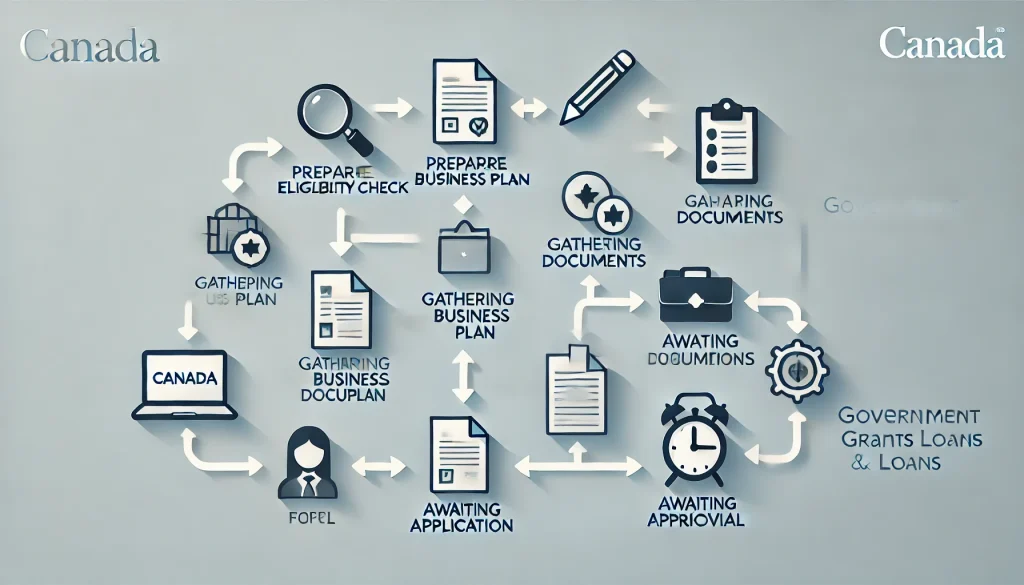
5. How to Apply for Government Grants and Loans
Step-by-Step Guide to Applying for Government Grants and Loans
Securing government grants and loans involves a structured application process. Follow these steps to maximize your chances of success in obtaining funding for your startup.
Eligibility Check
Before applying, ensure your startup meets the eligibility criteria for the specific grant or loan program. Review the program guidelines carefully to understand the requirements, such as business size, industry focus, and project scope.
Prepare a Strong Business Plan
A detailed and compelling business plan is often a crucial component of grant and loan applications. Your business plan should outline your startup’s mission, objectives, market analysis, financial projections, and how the funds will be utilized to achieve growth and innovation.
Gather Required Documents
Prepare all necessary documentation, which may include:
- Financial statements
- Incorporation documents
- Tax records
- Project proposals
- Resumes of key team members
Application Timeline
Be aware of application deadlines and plan accordingly. Some programs have specific submission periods, while others accept applications on a rolling basis. Starting early allows ample time to gather materials and refine your application.
Tips for a Successful Application
- Be Clear and Concise: Clearly articulate your business goals and how the funding will help achieve them.
- Demonstrate Impact: Highlight the potential economic, social, or environmental impact of your project.
- Follow Instructions: Adhere strictly to application guidelines and provide all required information.
- Seek Feedback: Before submission, have your application reviewed by mentors or advisors for constructive feedback.
Helpful Resources
Utilize tools like the BDC Grant Search Tool to find real-time information on available grants. Additionally, consult government websites and seek advice from financial advisors to navigate the application process effectively.
6. Success Stories of Startups Using Government Grants
Inspiring Success Stories from Canadian Startups
Learning from the experiences of other entrepreneurs can provide valuable insights and inspiration. Here are some success stories of Canadian startups that have leveraged government grants and loans to fuel their growth.
Clearco
Clearco, a Toronto-based fintech startup, utilized government loans alongside venture capital to develop its innovative financing platform for e-commerce businesses. The funding allowed Clearco to scale its operations rapidly, helping numerous online retailers access the capital they needed to grow.
Opencare
Opencare, a digital healthcare platform, received government grants to enhance its technology and expand its services across multiple Canadian cities. The funding played a crucial role in developing a user-friendly platform that connects patients with trusted healthcare providers, significantly impacting the healthcare industry.
EcoSense Technologies
EcoSense Technologies, an environmental tech startup in Vancouver, secured funding through the Clean Growth Hub. This grant enabled the company to develop sustainable solutions for waste management, contributing to Canada’s green energy goals and promoting environmental sustainability.
These success stories demonstrate the transformative potential of government grants and loans in supporting startups through various stages of their development.
7. Frequently Asked Questions (FAQs)
Frequently Asked Questions About Government Grants and Loans for Startups in Canada
Navigating the world of government funding can be complex. Here are answers to some of the most common questions startups have about applying for grants and loans in Canada.
- What government grants are available for startups in Canada?
Canada offers various grants such as the Canada Small Business Financing Program (CSBFP), Industrial Research Assistance Program (IRAP), and Canada Media Fund (CMF). These grants cater to different industries and business needs. - How can I get a small business loan in Canada?
To obtain a small business loan, you can apply through programs like the Canada Small Business Financing Program (CSBFP) or the Business Development Bank of Canada (BDC). Ensure you meet the eligibility criteria and prepare a strong business plan. - What is the difference between a grant and a loan for startups?
Grants are non-repayable funds provided to support specific projects or initiatives, whereas loans are repayable with interest and are intended to help manage capital expenses or expansion. - Are government grants for startups taxable in Canada?
Generally, government grants are considered taxable income. However, specific tax implications can vary based on the grant type and how the funds are used. It’s advisable to consult with a tax professional. - How long does it take to get a government loan for my startup?
Processing times for government loans can vary depending on the program and the complexity of your application. On average, it can take anywhere from a few weeks to several months. - What industries are eligible for Canadian government grants?
Eligible industries include technology, healthcare, agriculture, green energy, media, and more. Each grant program may have specific industry focuses, so review the program details carefully. - Can foreign entrepreneurs apply for Canadian government grants?
Most government grants are designed for Canadian residents or businesses incorporated in Canada. However, some programs may have provisions for foreign entrepreneurs, so it’s essential to check the eligibility criteria. - What is the maximum funding amount available for startups?
The maximum funding varies by program. For instance, the Canada Small Business Financing Program (CSBFP) offers loans up to $1 million, while other grants may have different caps based on project scope and industry. - Do I need collateral for government loans for startups?
Some government loan programs may require collateral, while others do not. Programs like the CSBFP often require collateral for loans exceeding a certain amount. Review the specific loan requirements before applying. - Can I apply for multiple grants and loans simultaneously?
Yes, startups can apply for multiple grants and loans to meet their funding needs. However, it’s crucial to manage the commitments and ensure compliance with each program’s terms and conditions.
8. Call to Action (CTA)
Take the Next Step Towards Funding Your Startup
Securing funding is a critical step in transforming your startup vision into reality. Explore province-level funding opportunities tailored to your region’s unique economic landscape, or download our comprehensive grant application guide to streamline your application process. Stay informed and ahead of the curve by signing up for our newsletter, ensuring you receive the latest updates on government grants and loans for startups in Canada.
Get Started Today:
By following this comprehensive guide, Canadian entrepreneurs can effectively navigate the landscape of government grants and loans, securing the financial support needed to propel their startups toward success
Additional Resources
For those looking to dive deeper into the world of tech and entrepreneurship, we recommend checking out the following resources and links:
- Silicon Scoop Podcast – Stay Informed, Stay Ahead!
- Futuretech Podcast – Explore more episodes and stay updated with the latest in technology and innovation.
- Startup Talk Podcast – https://torontostarts.com/startup-talk-toronto-startup-podcast/
- Who Are These Startups Podcast
- Startup Investor Drinks – Join the community and connect with fellow startup enthusiasts and investors.
- TorontoStarts Startup and Entrepreneur Community – Become a part of Toronto’s thriving startup ecosystem.
- Workhaus – Discover flexible workspace solutions for your business needs.
- Work with The Startup Coach – Get expert guidance and mentorship for your startup journey.
- Reach out to Jon Irwin on LinkedIn – Connect with our co-host and technology expert.
Resources and next steps
Start with your location, sector, stage and planned expenditure. Use the funding finder to shortlist existing records and the federal directory for regional support. The workbook below helps prepare a project budget and evidence; it is a TorontoStarts preparation resource.